HYDERABAD, Aug 17: Wapda proposed to the Sindh government to raise embankments of the Left Bank Outfall Drain (LBOD) over a year ago so that it can carry excessive rainfall and saline water, but Sida Managing Director Mohammad Ihsan Leghari said that Wapda had submitted only the report of its consultants without authenticating it. Another proposal requiring rehabilitation of whole the LBOD system called as integrated management organisation at a cost of Rs9 billion is lying with the Sindh government. The plan was worked out by a joint team of the federal and Sindh governments a year ago, according to a Wapda official. However, Sindh government`s position is that it has been handed over the LBOD with a faulty design. The recommendations are with the Sindh Irrigation and Drainage Authority (Sida) which is having a separate study of the LBOD to be completed by early 2013. The LBOD, which is a lengthy system of drains having different components, was completed in 1997. It has a capacity of 4600 cusec of water with a provision of certain amount of rainfall. However, rapidly changing weather patterns have upset all estimates of engineers and resultantly crops, human settlements and livestock are hit very hard by implications of drain. Before falling in Arabian Sea the LBOD — also known as spinal drain — travels in two different directions through Kadhan Pateji Outfall Drain (KPOD) and Dhoro Puran Outfall Drain (DPOD). Wapda`s member water Raghib Shah told Dawn from Lahore on phone that the DPOD was supposed to dispose of spinal drain`s 2000 cusec of water into Shakoor Lake whose 80 per cent area falls in Indian territory and 20 per cent in Pakistani territory. “Remaining 2600 cusec goes to sea through KPOD which is connected with a tidal link.” The Sindh government claims that drain is built with a defective design and drain gets backflows of water whenever there is a high tide in the sea. The drain does not have provision of rainfall runoff in different components [saline water generation in different districts connected with LBOD] especially that of coastal region of Badin with the result that water overtops the drain and leads to breaches it. In addition to it growers cut banks of drains to dispose of rainwater accumulated on their land. According to Shah, initially Nawabshah component of the LBOD was given to the Sindh irrigation department in 1999, Sanghar and Mirpurkhas components in 2000 and spinal drain and tidal link in 2001. “It is the Sindh government that controls/maintains the LBOD now,” he said. Had the study done by Wapda been implemented and its banks` height would have been raised, it would have been able to carry 150mm of rainfall. “Its water carrying capacity will be increased to 9000 from 4600 cusec,” he said. This study was conducted following rains in 2003 and Wapda made a set of recommendations after initiating a study in 2007 and completing it in 2009. REFERENCE: Wapda-Sindh row delaying rectification of LBOD’s faulty design By Mohammad Hussain Khan | From the Newspaper August 18, 2011 http://www.dawn.com/2011/08/18/wapda-sindh-row-delaying-rectification-of-lbods-faulty-design.html
Witness with Quatrina: Why wasn't Flooding prevented? (Part I)
“We submitted our proposal to Sida on Feb 10, 2010. We were then told that Sida is having a separate study conducted through consultants for a left bank region drainage master plan and our study will be merged with that,” he said. “If there is any problem we are open to discussion. We can sit with Sindh government officials to discuss the issue and sort it out,” he asserted. He confirmed that Wapda had proposed that until rehabilitation programme of Rs9 billion worked out jointly by a federal and Sindh governments team is approved. Sindh Secretary Irrigation Khalid Hyder Memon has rejected contentions raised by Wapda`s member on the ground that the provincial government was handed over the drain with a faulty design and the Sindh government has recorded its reservations on day one. “Wapda may build dam but canal infrastructure or drains are quite different systems,” he said. He disagreed with Mr Shah that the drain was design to accommodate 75mm rainfall runoff. “It is actually just 50mm of rainfall that can be received by the drain and Wapda didn`t keep in mind that they are building drain in the coastal region where rainfall can be as high as 400mm to 500mm,” Mr Memon said. According to him, maintenance is the secondary thing. More important are sections, flow and alignment of drains, he said, adding that what the irrigation department could at the most do was to clear weeds. “People of Badin are so scared of the LBOD that they don`t accept anything and they call for restoring old routes of drains like Dhoro Puran which has been closed,” he said. He reiterated that the irrigation department would now go for a short-term strategy to identify old contours. “We will ask our consultants Lois Berger, who are dealing with master plan of drainage works, to submit their findings on the LBOD component of Sindh within certain time limit. “We are currently facing a disaster. Let this be over and we will be talking to our consultants. We have already informed Prime Minister Yusuf Raza Gilani in this regard to seek federal government`s support.” A number of breaches in the LBOD network have played havoc in Badin district in the wake of recent torrential rains, displacing hundreds of people and washing away standing crops on a large swathe. Presently high tide in the sea has stopped flow of drain water in the sea, turning water flowing in reverse direction. REFERENCE: Wapda-Sindh row delaying rectification of LBOD’s faulty design By Mohammad Hussain Khan | From the Newspaper August 18, 2011 http://www.dawn.com/2011/08/18/wapda-sindh-row-delaying-rectification-of-lbods-faulty-design.html
Witness with Quatrina: Floods in Umerkot - Sindh (Episode 2 - part I)
“No Lesson Learnt From History” - The Left Bank Outfall Drain (LBOD) project was intended to drain saline ground, surface water, and storm run-off from an area of approximately 0.5 million ha in three districts of Sindh falling on the lower left side of Indus River. The project was conceived to control water logging of 1.27 million acres in the districts of Nawabshah, Sanghar and Mirpurkhas through a network of open-surface drains that convey the saline effluent pumped by tube wells as well as tidal drains via a spinal drain and a tidal link into the Arabian Sea. The project was started in 1986 and its 80-85 percent work was completed in December 1999, seven years behind schedule, with the remaining work to be taken under the National Drainage Programme (NDP) by 2002.1 The cost of the project exceeded from Rs8,000 million to Rs30,000 million. Due to defective alignment of the tidal link, the drainage effluent instead of going into the sea, flowed backward and sideways that started destroying lands and wetlands. The project-induced problems like flooding, sea intrusion, loss of crops and agricultural land, reduction in fish catch and loss of lives have surfaced with one claiming responsibility. Thirty-two people were killed as a result of the LBOD since it was launched in 1997, while 50,000 acres of agricultural land in eight union councils had been wasted by salinity or water logging, 10,000 fishermen lost their livelihood, four vast wetlands—two of them have been internationally recognized—have been degraded causing damage to biodiversity, and about 52 species of fish in the area had also been damaged. Both the government and the IFIs, including the ADB, did not even identify the problem that the wetlands are seriously threatened with and that the tidal link has played havoc on agriculture lands. The Government of Pakistan accepted the losses but was not ready to take the responsibility. The ADB claims that the safeguard policies are central to achieving sustained development impact and poverty reduction.2 But a critical review of the loan documents and other related papers such as, EIA reports, study of the safeguard policy documents, civil society feedback and research, community complaints, field work and meetings/ dialogue with the community and line department officials reveals that not only the project carries serious implementation flaws but also suffers from gross violation of commitments as agreed in safeguarding the principles of the bank, in terms of protection of the environment, indigenous communities and vulnerably displaced groups. Not on a single item was the local community consulted or any information shared with it in local language. Neither was any consultative dialogue nor a discussion was held with CSOs, CBOs and NGOs at the local level. The ADB, instead of looking at the failures of the LBOD, has further extended its financial loaning and support to the Government of Pakistan and Sindh in various other projects. Nobody is learning any lesson from past failures.3 All affected communities and stakeholders are still protesting the failure of the project and are demanding from the government and donor agencies, specially the ADB and other IFIs, to compensate the damages that the Project has caused to the environment and livelihood of the local communities, specifically the fishermen community and agriculturists. REFERENCE: Untold Realities: How the ADB Safeguards have been violated in Bangladesh, India, Laos, and PDR Pakistan by Zulfiqar Halepoto* October 2006 http://www.adb.org/safeguards/Untold-realities-NGOForum.pdf
Witness with Quatrina: Journey through the flood stricken areas of Umerkot - Sindh (part I)
ISLAMABAD - National Assembly (NA) Speaker Dr Fehmida Mirza on Thursday urged international donors, businessmen and affluent people to come forward and help Badin flood victims. During her visit to Zero Point, Shadi Large, Khoski and Navy Chak, Mirza said the government was fully aware of problems faced by the people and it was trying hard to address them, adding that support from the international community and other segments of society would provide relief to the victims. She said tents, clothing, food items, water and medicines should be given. She said further that the government had also been requested to provide helicopter service for airlifting stranded people. The speaker said the victims were also at a risk of water-borne diseases, adding that LBOD was a perpetual nuisance for Badin district and the current devastation was a result of an inherent fault in its design. REFERENCE: NA speaker urges international donors to help Badin flood victims Friday, 9 Sep 2011 12:59 am http://www.pakistantoday.com.pk/?p=119776
KARACHI, June 6: Almost all the rivers, streams, canals and lakes in Sindh are tainted by faecal and chemical contamination, a report issued by the Sindh Environmental Protection Agency (Sepa) has revealed. The report was presented the other day at a seminar organized jointly by the provincial local government department and Unicef Pakistan. The quality of water coming from the Indus Basin irrigation system, which covers about 70 per cent of the country's geographical area, has been badly affected by the discharge of untreated sewage and industrial effluents into the rivers, streams and canals of the province, according to the report. In an effort to determine the quality of water coming from River Indus, Left Bank Outfall Drainage (LBOD), Kinjhar Lake, Manchar Lake, Hamal Lake, Phulali Canal and Pinyari Canal, samples were collected from 30 locations, said the report. The samples were analysed for pH, conductivity, calcium, magnesium, sodium, potassium, chloride, carbonate, bi-carbonate, sulphate, total dissolved solids, bio-chemical oxygen demand, total suspended solids, alkalinity, pesticides, total coliforms, aluminium, copper, cadmium, chromium, nickel, lead and zinc. However, emphasis was laid on oxygen demand, total coliforms, total dissolved solids and turbidity. The Sepa found that the LBOD was by far the most contaminated, with its samples failing to meet any of the WHO guidelines on oxygen demand, total coliforms, total dissolved solids and turbidity. The samples from the Indus, too, failed to meet the WHO guidelines on oxygen demand, total coliforms, total dissolved solids and turbidity, but the values were not as bad as the LBOD ones. Similar was the status of the Hamal Lake samples. Kinjhar Lake samples had only one parameter, namely total dissolved solids, which met the WHO guideline. In the case of Manchar Lake there was only one parameter - oxygen demand - which was as per the WHO standards. The Phulali Canal samples had low quantities of total dissolved solids, but they did not meet the WHO guidelines in the case of the other three parameters. The most troubling finding of the report is that all the water sources in the province have too much total coliforms. As per the WHO guidelines, there should be zero MPN (most probable number) per 100 millilitres of water". This means that all the sources covered under the Sepa study are tainted with bacteriological or faecal contamination. The Sepa report said the values for this parameter, in the case of the water sources analysed, are: Indus, 700 MPN/ml; LBOD, 1,100 MPN/ml; Kinjhar Lake, 1,100 MPN/ml; Manchar Lake, 1,100 MPN/ml; Hamal Lake, 1,100 MPN/ml; Phulali Canal, 1,100 MPN/ml; and, Pinyari Canal, 1,100 MPN/ml.REFERENCE: KARACHI: Rivers, lakes have polluted water By Our Staff Reporter 07 June 2004 Monday 18 Rabi-us-Saani 1425 http://archives.dawn.com/2004/06/07/local5.htm
KARACHI: It was a unique event in which hundreds of women carrying babies, gathered under a wide area covered by tents to raise their voice against the project, which has almost destroyed their livelihood source for generations. Belonging to fishermen, farmers and herdsmen families, the ordinary stakeholders participated in the programme to show their anger against the World Bank-funded project Left Bank Outfall Drain (LBOD). The Pakistan Fisherfolk Forum convened a Peoples Tribunal, comprising Retired Justice Rashid A Rizvi, Karamat Ali, Director Piler and Jami Chandio, the head of Center for Peace and Civil Society (CPCS), recently outside Badin Town. Stakeholders, water experts, victims, government officials and non-government organizations representatives participated in the Tribunal. Laung Mallah, 50, a victim of the project, describing his plight said he never imagined about what hundreds of the fishermen families are facing at the natural lake ‘Narreri’, internationally recognized Ramsar site, touching Badin and Thatta districts in Sindh province. The Narreri Lake linked to the sea receives poisonous water through the LBOD and other drains. LBOD collects excess irrigation water, saline seepage, pump saline groundwater, rainfall runoff and industrial and municipal wastewater, ending into the sea at Zero Point, Badin District and polluting fresh water lakes near there. Jhubo Lake, also declared Ramsar Site has been destroyed after 1999 Cyclone and now it is no more the attractive for marine life, birds and fishermen. “About 10 years ago we were spending a happy life, with more catch of fish, hunting migratory birds and taking water vegetables at the lake. But now not only fish is dying by poisonous wastewater but no vegetables are there. Migratory birds do not visit the lake, which is dying gradually due to receiving waste of sugar mills, agriculture, municipal institutions, forcing hundreds of families to migrate. “We are unable to catch more fish from the lake, as it has been turned into poisonous. Women travel several miles to fetch water from neighboring areas for domestic use,” Mallah said. Siddiq Mallah, 55, belonging to Mehar Dandal village, located at Narreri Lake said floods in monsoons and high tides in the sea, breaching in the LBOD and other linked drains had put the lives of hundreds of families at stake. They have lost loved ones, along with the boats, fishing nets, shelters and cattle heads in the past incidents. Therefore, they have been living under fear that they may face similar incidents in future. Local grower Natho Khan, 70, said there were more wildlife, fish and plants species which have disappeared due to receding fresh water in the River Indus and its tributaries, inundating fertile land. He called the LBOD project as disastrous, which has caused displacement of the communities. Iqbal Haider, head of the Laar Humanitarian Development Organisation quoting history told The News that Karo Goongro canal, carrying rainwater and irrigation water was to feed the Shakoor Lake, comprising 300sq km— sharing water with India. About 96sq km of the Lake comes under Pakistan while major part of the lake comes under the Indian part. Narreri, Kandri, Jhubo, Sanhro and Mahro lakes, all declared wetland centers, have become poisonous, depriving hundreds of families of their source of livelihoods, Haider pointed out. LBOD aimed to drain out saline water and storm runoff, from 127 million acres of land in three districts Nawabshah, Sanghar and Mirpurkhas of Sindh Province to alleviate water logging and salinity. LBOD project was to bring drainage effluents from the upstream and dispose it of into the Arabian Sea, via the Tidal Link Canal. However, due to some technical problems the drainage effluents instead of going into the sea started destroying lands and internationally recognized wetlands. Prof Shahab Mughal, Researcher and teaching in Mehran University of Engineering and Technology said the project induced problems like flooding, sea intrusion, loss of crops and agriculture land, reduction in fish catch and loss of lives but nobody cared to overcome these faults. Mughal told The News that the National Drainage Programme (NDP) consisted of 1673 drainage wells, 361 scavenger wells, 1623km surface drains, 1500km tile drains, 295km interceptor drains, 2700km electrical distribution lines, remodeling of 470km canals and Chotiary Reservoir with storage capacity of 0.70 million acre feet (maf). He said the WB had ordered an inquiry into alleged violations of its policy guidelines in implementation of Pakistan’s LBOD project and NDP that caused large scale loss to the people, ecological system and agriculture in Badin and adjoining coastal areas of the province. Wapda General Manager Ghulam Ali Soomro negating the version of the affected families and water experts and civil society members said there was no any fault in the feasibility of the project. He justified the feasibility of the project saying had LBOD not been established the wide area of the district Badin would have inundated into the salinity and sea intrusion. It was the LBOD that has protected the life and source of livelihood of hundreds of families residing in the area. The salinity was increasing that might have caused wide destruction and displacement of the communities, deriving their livelihood there. Soomro said the Pakistan government is negotiating with the Indian authorities to release the waste through drains into the major Shakoor Lake. Because, he said earlier the neighbouring country’s government took objection over the release of effluent into the lake sharing water with India. He was optimistic about the project, saying they are redesigning it (project) to avoid such losses in future. He contradicted the point raised by experts and said: “if it is true that the agriculture has been destroyed and lands inundated in the area due to LBOD why the number of sugar mills has increased from four earlier to seven at present?” The government officials reveal that when the project was being designed there was sufficient irrigation water and more torrential rains, feeding natural lakes and was prosperous for marine life. Retired Justice Rashid A Rizvi announcing the verdict in the light of public reaction, experts viewpoint and official response, said “planning of the LBOD has failed. Therefore, there should be an independent commission to assess the losses faced by the community, environment, ecology and marine life in the entire affected area.” He said there should be initiated a mega rehabilitation programme for the affected community, ecology and ensure it’s proper implementation. In this regard, he suggested to compensate the affected communities and the loss of environment. Apart from this he said the government should block the Tidal Link, which is responsible to this human loss and environmental degradation. The Jury head also urged the Sindh Coastal Development Authority to focus on the people of Indus Delta, affected by this mega project. He said in future the government should ensure participation of all the stakeholders before designing any project so that it can avoid losses to the life and livelihood of the community. He responding the official version pointed out that if the feasibility of the project was right and fault-free why the government is redesigning the same project. It proves that there was a defect, which caused this problem, destroyed sources of livelihoods and creating uncertainty among the locals. REFERENCE: Stakeholders raise voice against LBOD project in ‘People’s Tribunal’ November 02, 2008 By Jan Khaskheli http://www.sacw.net/article264.html
The World Bank has offered a new action plan to Pakistan to mitigate the adverse fallout of the Left Bank Outfall Drain (LBOD) project on wetland fisheries habitats, resulting in great suffering for the people of Badin and Thatta districts in Sindh. Because of bad planning, designing, monitoring and execution, the project has proved to be an engineering, environmental, human and socio-economic disaster. As the World Bank president says, everyone could have done a better job in mitigating risks and impact of natural disasters within and outside of the project areas. Everyone here includes the officials of the World Bank, the governments of Pakistan and Sindh and Wapda. The tragic part of the whole story is that the concerns of local experts and the community were ignored, with the result that ultimately, it was they who were proved right. It was only after the breakdown of the project and its aftermath that grassroot representatives persuaded the World Bank to appoint an independent panel to look into the episode. The panel has identified serious flaws in the project whose initial cost escalated from Rs8.5 billion to over Rs31 billion. The unfinished project was then merged with National Drainage Project (NDP). Officials responsible for the project were less systemic, less informed and more ad hoc, says the panel.Now the World Bank wants to make amends. It says that improving the livelihood of thousands of poor families who have suffered adverse impact at the tail end of the Indus River system is at the core of a new water management action plan. But will the poor families, who have suffered, be compensated for the loss of their livelihood and their near and dear ones. The flood response plan is planned to be worked out with local officials to ensure better management of this risk, including early warning and evacuation plans and flood refuge structures. The programme would focus on those people living close to the LBOD or for whom the panel found the LBOD was a contributing factor to flood damage. LBOD is not an isolated case where the World Bank and the country receiving its assistance handle projects, completely oblivious of their implications, whether it be the framing of feasibility reports or monitoring and execution of programmes. One serious consequence is the problem of cost over-runs that make projects unduly costly and create bad debts. Pakistan has been heavily dependent on external assistance to finance its economic development and face balance of payments difficulties, especially when the multilateral lending agencies like the IMF and the World Bank provide the credit. Currently, too, these agencies are financing public sector development programme while government reforms are still to be implemented, with improvement in governance linked to much delayed fiscal probity. With the delivery system being weak, the outcome is not known. The World Bank has done the right thing by accepting the massive failure on its part in case of the LBOD project. But what is no less important is that stakeholders in any programme or project must have an effective say, particularly those who are to be its beneficiaries. Though belatedly, the World Bank has set an example for Pakistan to follow. Similarly, the multinational agencies like the IMF and the World Bank often blame the aid recipients for failures and do not normally share the blame for their own lapses as has been brought out by the panel report in the LBOD case. It is time for two-way accountability. REFERENCE: Editorial LBOD: victim of flawed planning LBOD project in Southern Pakistan is a social and ecological disaster - ’People’s Tribunals’ of 2008 and 2007 A compilation of reports from media and from the citizens movement by sacw.net Tuesday 11 November 2008 http://www.sacw.net/article264.html
Content from the People’s Tribunal of 2007 and a campaign letter to the World Bank
Proceedings and Decisions of Awami Adalat organized by Anti-LBOD Tahreek September 09, 2007 at Roopa Mari, Badin Sindh Pakistan. The Awami Adalat (Peoples Tribunal) was organized by Anti-LBOD Tahreek at Roopa Mari, Badin Sindh Pakistan on September 09, 2007. There were three tribunal Judges including Karamat Ali, Ali Ercelawn and Professor Nauman. The tribunal was attended by more than 2000 men and women of the project affected area. Key Decisions of the Tribunal 1. Until and unless compensation of the losses is not made and proper solution of long term disposal issue is not implemented, people will not allow any organization to launch a new project in this area, which gives impression that people are receiving projects. The small projects in the name of LBOD compensation are jokes and trying to sabotage the struggle and pacify the community movement, thus it was decided that local people will boycott the PPAF initiated project in Badin and Thatta.
2. It was decided that the organizations initiating project in the name of LBOD compensation should share the information with affected people, which should include the list of projects, costs and locations.
3. It was decided that Anti-LBOD Tahreek will write individually to the organizations involved in coastal area development project to withdraw from the project, don’t be the sub-contractor of World Bank and show solidarity with affected people.
4. More than 7000 signature have been collected and it was decided that a fresh letter of demands will be sent to WB, ADB and all other relevant stakeholders including the executive directors of World Bank.
In the start of tribunal proceedings Mr. Mohd Ali Shah described the problems of the project to the tribunal judges. The key points of Mr. Shah’s speech is given below: • The coastal areas of Badin was rich and its was the area where six rivers were falling • Roopa Mari where the tribunal is being held was capital of soomra rulers • Till the 1960’s area has abundance of grazing, livestock and agriculture • The Left Bank Outfall Drain Project was initiated in 1980’s to evacuate drainage effluent of Sanghar, Nawabshah and Mirpurkhas districts through Badin to sea. • The project consisted on network of drains, installation of tubewells, construction of chotiari reservoir and 42-km tidal link • Project created following problems during implementation: o Completely ignored community concerns o Cost over run from $ 634 million to $ 1 billion o Completed in twice the deisgn time o Huge corruption in land acquisition and construction contracts o Weak inter-agency cooperation, when project was completed Sindh government refused to take over
• Post-operation problems: o Destroyed the wetlands two of them are ramsar sites o Completely damaged grazing area’ o Caused serious environmental degradation o Loss of agriculture land o Caused sea intrusion through tidal link o Economic losses o Human losses , several people has died in drowning in the floods caused by this project network o Displacement of people and disturbances o Loss of crops, houses, livestock, boats, nets and other livelihood means
• Project has violated following fundamental rights o Right to life o Right to development o Right to education o Right Food o Right to water o Ramsar Convention
Community Struggle
• Struggle is as old as project, local people have meeting with concerned authorities, wrote in newspapers • After 2003 flood communities revitalized the struggles. They organized protest rallies, wrote letters to WB, ADB, president of Pakistan, observed hunger strike at Islamabad, addressed press conference and send an inspection request. • Inspection panel findings clearly indicated the policy violations by World Bank • In response management prepared an action plan that was rejected by the requesters and communities on the grounds that it was too vague, paved way for another loan, does not address the fundamental problem of disposal system, does not included compensation to the losses. The action plan comprised on short term, medium term and long term measures which included Sindh Coastal Area Development Project, An study of Wetlands and Water Sector Improvement Project. • After the four years of struggle and huge losses the management action plan was joke with the justice. In the end of his case Mr. Mohd Ali Shah repeated the demands which are: 1. World Bank and Asian Development Bank must compensate people who lost their lives in 2003 flood, whose houses were damaged and crops destroyed. Coastal communities are bearing this loss since 1994, there must be an independent commission to assess the loss to lives, livelihood, environment, and species since 1994 to 2007 and all the losses must be paid to communities for revival. 2. World Bank and Asian Development Bank should write off entire loan of LBOD project. There is no moral and economic justification of paying the loan of a totally failed project. The entire amount must be spent on the rehabilitation of the affected people and environment in collaboration with local government and communities. 3. Every district is responsible for the disposal of waste it generates, thus LBOD project was wrongly designed to transport waste from distance. It has now proved that project has incurred huge economic, social and environmental losses to the coastal areas of Badin and Thatta. It is demanded that LBOD spinal drain should be closed before entering into Badin district. Till the arrangement to dispose the upstream effluent is made, entire effluent coming through spinal drain should be diverted to Dhoro Puran Outfall Drain (DPOD) 4. Tidal link should be disconnected from Kadhan Pateji Outfall Drain. Since tidal link is a main source of brining sea water to inland areas in Badin, it must be closed at shah Samando creek and protection Bunds should be constructed from Jati to Ali Bunder to protect the villages. The depth of tidal link has increased tremendously and during the high tide the sea water with high velocity is not just intruding from surface but it has been mixed with ground water and damaging agriculture land and creating desertification. 5. Project has affected several biologically significant and ecologically important Dhands including two Ramsar site. World Bank, Asian Development and government of Pakistan immediately initiate a comprehensive plan for the restoration of these wetlands. It must be ensured that sea water is not entering into wetlands as well as kotri barrage surface drains are not draining industrial waste into Dhands. The death of Dhands came after the collapse of choleri weir. 6. World Bank in collaboration with district government and affected communities must initiate a livelihood development plan for the affected area. The coastal development project mentioned in action plan is inadequate, people have no say in it and it has not started after the 4 years of 2003 devastation. The comprehensive plan should cover but not limited to following areas: a. evival of Agriculture b. Improvement in fishing and provision of fishing equipments c. Promotion of livestock and dairy development d. Income generation activities including short term employment generation e. Long term plan for revival of education and health facilities f. Provision of safe drinking water
Several Witnesses were called to talk on the issues described by Mr. Mohd Ali Shah. The prominent witnesses who talked were:
1. Allah Bachayo Jamali, prominent Journalist and community activist 2. Faqir Natho Lund, Community Intellectual 3. Bahadur Khan Lund, Local affectee 4. Dedar Talpur, Local farmer 5. Abdul Majeed Mallah, local Journlaist 6. Khadim Talpur, Inspection requester 7. Dr. Najma Junejo, member of district assembly Badin and inspection requester 8. Ms. Chagal, local women rights activist 9. Hassan Mallah, local fisher folk 10. Mithan Mallah, local fisher folk 11. Ms. Jaman, local women activist 12. Ramzan Pathan, local affectee 13. Mohd Qasim Mallah, local activist 14. Noor Mohd Themor, community activist from Jati district Thatta
Key points raised by the witnesses: • Money is being wasted in repair projects, people are dying while officials has made it a business • We want to live and right to life • All the losses should be compensated immediately • We are being killed in the name of development • More than 109 kinds of birds, 66 kinds of grasses and 56 kinds of trees have been eliminated • More than 200000 acres of land has been degraded and 15000 people have migrated due to LBOD in Jati area • Tidal link was damaged in 1998 and WAPDA told local people to help to close the creek, people suggested putting earth and wood, they did it but all was taken by sea water. • In the Sindh Assembly proceeding in 1972 the then MPA Nabi Bux Bhurgari opposed the LBOD project • Our villages are under threat to be flooded by the breaches of LBOD • The livelihood of fisherfolk has seriously damaged by the LBOD project and degradation of wetlands • We will not allow World Bank and others involved to sit in peace while we are dying, we will continue the protest • Why World Bank financed this project, what kind of punishment is being given to us, what is our fault? • We will never forget this cruelty and violation of rights • Narreri lake has been totally destroyed, there were lacs of birds coming in season but now lake is giving deserted look. REFERENCE: Content from the People’s Tribunal of 2007 and a campaign letter to the World Bank 1. Awami Adalat ( Peoples Tribunal) —Badin - 19th September 2007 Awami Adalat ( Peoples Tribunal) LBOD project in Southern Pakistan is a social and ecological disaster - ’People’s Tribunals’ of 2008 and 2007 A compilation of reports from media and from the citizens movement by sacw.net Tuesday 11 November 2008 http://www.sacw.net/article264.html
Petition: Complete Reparation for losses of LBOD project by Coordination Committee Anti-LBOD Tahreek
President
World Bank
Washington DC
President
Asian Development Bank
Manila
CC: All Executive Directors of World Bank
All Executive Directors of Asian Development Bank
Inspection Panel, World Bank
United Nations Commission on Human Rights
August 21, 2007
Subject: Complete Reparation for losses of LBOD project
We would like to take this opportunity to write that after four years continuous struggle for the protection of fundamental rights violated by the World Bank and ADB financed Left Bank Outfall Drain project in Southern Pakistan, neither the World Bank management nor ADB has taken any serious measures to fix the problem and compensate people. The World Bank inspection panel has produced very comprehensive report of the violation of World Bank policies and devastation of the project. But management, despite clear directions from executive directors, is not serious in resolving the long term environmental, social and economic problems generated by the project.
Looking into the irresponsible attitude of World Bank officials and no response at all by ADB in the rehabilitation of coastal people affected by LBOD, in two separate meeting at Karachi and Badin held in July 2007, anti LBOD Tahreek has been launched with the following demands:
1. World Bank and Asian Development Bank must compensate people who lost their lives in 2003 flood, whose houses were damaged and crops destroyed. Coastal communities are bearing this loss since 1994, there must be an independent commission to assess the loss to lives, livelihood, environment, and species since 1994 to 2007 and all the losses must be paid to communities for revival.
2. World Bank and Asian Development Bank should write off entire loan of LBOD project. There is no moral and economic justification of paying the loan of a totally failed project. The entire amount must be spent on the rehabilitation of the affected people and environment in collaboration with local government and communities.
3. It is demanded that LBOD spinal drain should be closed before entering into Badin district. Till the arrangement to dispose the upstream effluent is made, entire effluent coming through spinal drain should be diverted to Dhoro Puran Outfall Drain (DPOD).
4. Tidal link should be disconnected from Kadhan Pateji Outfall Drain. Since tidal link is a main source of brining sea water to inland areas in Badin, it must be closed at shah Samando creek and protection Bunds should be constructed from Jati to Ali Bunder to protect the villages. The depth of tidal link has increased tremendously and during the high tide the sea water with high velocity is not just intruding from surface but it has been mixed with ground water and damaging agriculture land and creating desertification.
5. Project has affected several biologically significant and ecologically important Dhands including two Ramsar site. World Bank, Asian Development and government of Pakistan immediately initiate a comprehensive plan for the restoration of these wetlands. It must be ensured that sea water is not entering into wetlands as well as kotri barrage surface drains are not draining industrial waste into Dhands. The death of Dhands came after the collapse of choleri weir.
6. World Bank in collaboration with district government and affected communities must initiate a livelihood development plan for the affected area. The Sindh Coastal Area Development (SCAD) project mentioned in action plan which is initiated by Pakistan Poverty Alleviation Fund is inadequate; poorly designed, wrongly targeted, and people have no say in it. Livelihoods plan should be restructured with proper allocation of money and plan should be prepared in consultation with local government, affected communities and local NGOs. Plan should be prepared for long term period eg. For ten years and at least one fourth ($ 250 million) of the project money is spent on it or Bank should forgive the interest payment on LBOD loan, that money should be diverted to finance the rehabilitation activities.
7. Livelihood plan should not be made vague and linked with entire coastal area. The specific activities for the rehabilitation of LBOD affected area should be separately financed reported and monitored. Affected communities/requesters should be given chance to contribute and monitor the activities under livelihoods program. The comprehensive plan should cover but not limited to following areas:
Revival of Agriculture
Improvement in fishing and provision of fishing equipments
Promotion of livestock and dairy development
Income generation activities including short term employment generation
Long term plan for revival of education and health facilities
Provision of safe drinking water
We would like to request you for boldly taking responsibility of failed project and respect for extra-territorial obligations for the protection of human rights; direct the concerned officials of World Bank and Asian Development Bank in Pakistan to prepare a comprehensive plan for the reparation of affected communities and long term solution of the drainage project.
Coordination Committee
Anti-LBOD Tahreek
REFERENCE: LBOD project in Southern Pakistan is a social and ecological disaster - ’People’s Tribunals’ of 2008 and 2007 A compilation of reports from media and from the citizens movement by sacw.net Tuesday 11 November 2008 http://www.sacw.net/article264.html
KARACHI: The central leader of PML-N, Sardar Zulfiqar Khan Khosa has announced his party’s complete support for strike call by Sindh Nationalist elements against heavy irregularities and fake entries in Karachi census. Talking to journalists after his talks with chairman Safe Sindh Movement (SSM), Syed Shah Mahmood Shah, Khosa said that his main objective of Karachi visit was in response to vandalizing of PML-N’s Karachi office, which was easy ‘to respond’ in kind; but however PML-N would rather give a befitting reply of the act in political arena. He said that Mina Shahbaz Sharif’s statement was presented as against its context, after which this act of vandalizing of PML-N office, and Provincial leader’s restaurant; both of which rekindled a deja-vu of Musharraf regime, ironically amid a democratic setup.
PML (Nawaz) Worker Attack Each other
Jalal Mahmood Shah Interview
URL: http://youtu.be/cxwn0F3iAqg
Sayed Jalal Mehmood Shah Exclusive interview on Dawn News Part 1.flv
URL: http://youtu.be/mkD9pwgZxI4
Nationalist alliance lashes out at PPP By Our Staff Correspondent | From the Newspaper January 8, 2011 http://www.dawn.com/2011/01/08/nationalist-alliance-lashes-out-at-ppp.html Magsi sees nationalists as alternative to PPP By Mohammad Hussain Khan | From the Newspaper March 23, 2011 http://www.dawn.com/2011/03/23/magsi-sees-nationalists-as-alternative-to-ppp.html
Sayed Jalal Mehmood Shah Exclusive interview on Dawn News Part 2.flv
URL: http://youtu.be/bew23T0mte8
Nationalist alliance lashes out at PPP By Our Staff Correspondent | From the Newspaper January 8, 2011 http://www.dawn.com/2011/01/08/nationalist-alliance-lashes-out-at-ppp.html Magsi sees nationalists as alternative to PPP By Mohammad Hussain Khan | From the Newspaper March 23, 2011 http://www.dawn.com/2011/03/23/magsi-sees-nationalists-as-alternative-to-ppp.html
Sayed Jalal Mehmood Shah Exclusive interview on Dawn News Part 3.flv
URL: http://youtu.be/u-w23Aw1w98
Nationalist alliance lashes out at PPP By Our Staff Correspondent | From the Newspaper January 8, 2011 http://www.dawn.com/2011/01/08/nationalist-alliance-lashes-out-at-ppp.html Magsi sees nationalists as alternative to PPP By Mohammad Hussain Khan | From the Newspaper March 23, 2011 http://www.dawn.com/2011/03/23/magsi-sees-nationalists-as-alternative-to-ppp.html
Sayed Jalal Mehmood Shah Exclusive interview on Dawn News Part 4.flv
URL: http://youtu.be/ws4wzjf3NbU
Nationalist alliance lashes out at PPP By Our Staff Correspondent | From the Newspaper January 8, 2011 http://www.dawn.com/2011/01/08/nationalist-alliance-lashes-out-at-ppp.html Magsi sees nationalists as alternative to PPP By Mohammad Hussain Khan | From the Newspaper March 23, 2011 http://www.dawn.com/2011/03/23/magsi-sees-nationalists-as-alternative-to-ppp.html
He also reiterated PML-N’s resolve to pinpoint all irregularities and fake entries, committed in the first phase of census and those responsible would be unveiled as well. Announcing PML-N’s full support for call of strike by Sindhi nationalist elements, over disregard for their evidences regarding irregularities and fake entries in census, and warned that if these irregularities and fake actions were also carried out in Punjab, these would also be dealt with, by calling for strike in Punjab. He strongly rejected, that Punjab CM, Mian Shahbaz Sharif had ever talked of making a separate province out of Karachi City, as one cannot even think of changing its name; and said that PML-N supported provinces based on ethnic and administrative divisions. Replying to a question regarding Kalabagh Dam, he said that Mian Nawaz Sharif had already clarified his stance over the National issue, that he would never support the dam, until all Provinces agreed over a joint consensus.
Rasul Bux Palijo ; SANA Sindh convention 2005 Part 1
URL: http://www.youtube.com/watch?v=XNka4sSDQqI
Earlier the chairman SSM, Syed Shah Mahmood Shah thanked the support of PML-N over the census issue, and declared that such interaction was best for the integrity and harmony of Pakistan. He lamented that Sindh had been totally being handed over to terrorists as a hostage City, while after successful strike, special terrorist and criminal elements were threatening the traders’ community with dire consequences, warning that any tampering with the strike would elicit a Nationwide strike call. On the occasion, the chairman census monitoring committee formed by nationalist, Jalal Mahmood Shah berated bogus entries in census details, while much of Karachi entries were forcefully forged. REFERENCE: Khosa declares PML-N’s support for strike call by Sindh Nationalist elements against irregularities in Karachi census
Rasul Bux Palijo ; SANA Sindh convention 2005 Part 2
URL: http://youtu.be/hrcKgQNeD8Y
Islamabad: The leader of PML(N) Mian Nawaz Sharif has constituted a committee to remove the apprehensions of the Sindhi nationalist leaders on the statement of Shahbaz Sharif about making Karachi a separate province. The five member committee would be lead by the leader of PML(N)) and former Chief Minister Khyber Pakhtunkhuwa Sardar Mehtab Ahmed . The other members of the committee will be Sardar Zulfiqar Khosa, Iqbal Zafar Jhagra, Ismail Rao and Saleem Zia . Nawaz Sharif has given the task to the committee to contact all the nationalist leaders hailed from Sindh. The committee would meet nationalist leaders of Sindh today(Friday) and take them into confidence regarding the statement of Chief Minister Punjab Mian Shahbaz Sharif so as their anxiety may be finished. It is pertinent to mention here that on the statement of Shahbaz Sharif about the division of Sindh , strong reaction was seen which resulted in ransacking of office of PML(N) at Karachi besides setting on fire the portraits of Sharif brothers. REFERENCE: PML-N committee formed to contact nationalist Sindhi leaders on Shahbaz’s statement
A very Rare Footage of M A Jinnah's Friend G M Syed - 1
A very Rare Footage of M A Jinnah's Friend G M Syed - 2
A very Rare Footage of M A Jinnah's Friend G M Syed - 3
Mutineer G M Syed with Patriot Muhammad Ali Jinnah
The Working Committee meets in Bombay, 1942
LATE. Mr. Ghulam Murtaza Shah AKA G M SYED [A DIE-HARD COMPANION OF LATE. JINNAH]
Read the Sindh Assembly Resolution:
“QUOTE”
SEVENTEENTH SESSION
RESOLUTION ON MATTERS OF GENERAL PUBLIC IMPORTANCE
On 3rd March, 1943, Mr. G.M. Syed moved the Historical Pakistan Resolution:-
“This House recommends to Government to convey to His Majesty’s Government through His Excellency the Viceroy, the sentiments and wishes of the Muslims of this Province that whereas Muslims of India are a separate nation possessing religion, philosophy, social customs, literature, traditions, political and economic theories of their own, quite different from those of Hindus, they are justly entitled to the right, as a single, separate nation, to have independent national states of their own, craved out in the zones where they are in majority in the sub-continent of India.
“Whereas they emphatically declare that no constitution shall be acceptable to them that will place the Muslims under a Central Government dominated by another nation, as in order the order of things to come, it is necessary for them to have independent National States of their own and hence any attempt to subject the Muslims of India under one Central Government is bound to result in Civil War with grave unhappy consequences.”
Walkout by Hindu Members
The Honourable mover of the resolution stated that his resolution was intended to convey the views and sentiments of only the Mussalmans of Sind and not of the entire population of Sind. The Chair also held that it was only the wish of the Mussalmans of Sind which was going to be conveyed by this resolution. In view of this ruling of the Chair that the Hindus had no interest in the resolution and that it was only the religion and sentiments of the Mussalmans of Sind that were to be conveyed through it, the following Hindu members left the House.
Mr. Nihchaldas C. Vazirani, Mr. Dialmal Doulatram, Mr. Ghanumal Tarachand, Mr. Partabrai Khasukhdas, mr. Akhji Ratansing Sodho, Mr. Mukhi Gobindram and Rao Bahadur Hotchand Hiranand.
Division
The Resolution was pressed to division.
RESULT OF DIVISION ON PAKISTAN RESOLUTION.
YES.
SHAIKH ABDUL MAJID
KHAN BAHADUR ALLAH BAKHSH K.GABOL
KHAN BAHADUR HAJI AMIR ALI LAHORI.
MR. ARBAB TOGACHI.
MIR BANDEHALI KHAN TALPUR.
MIR GHULAM ALI KHAN TALPUR.
HONOURABLE SIR GHULAM HUSSAIN HIDAYATULLAH.
KHAN BAHADUR GHULAM MUHAMMAD ISRAN.
SAYED GHULAM MURTAZA SHAH.
KHAN BAHADUR SAYED GHULAM NABI SHAH.
HONOURABLE PIR ILLAHI BAKHSH NAWAZ ALI.
NAWAB HAJI JAM JAN MUHAMMAD.
MRS. JENUBAI G. ALLANA.
S.B. SARDAR KAISER KHAN.
SYED MUHAMMAD ALI SHAH
HONOURABLE KHAN BAHADUR M. A. KHUHRO.
HONOURABLE HAJI MUHAMMAD HASHIM GAZDAR.
MR. MUHAMMAD USMAN SOOMRO.
MR. MUHAMMAD YURI CHANDIO.
SAYED NUR MUHAMMAD SHAH.
RAIS RASUL BAKHSH KHAN UNER.
MR. ALI GOHAR KHAN MEHAR.
MR. SHAMSUDDIN KHAN BARAKZAI
KHAN SAHIB SOHRAB KHAN SARKI.
NOES.
THE HONOURABLE RAI SAHIB GOKALDAS MEWALDAS
THE HONOURABLE DR. HEMANDAS R. WADHWAN
MR. LOLUMAL R. MOTWANI.
The Historical Pakistan Resolution was passed by the Sindh Legislative Assembly on 3rd March, 1943 during the Session, out of 38 Members 24 Members favoured and 3 Members opposed the Pakistan Resolution.
“UNQUOTE”
Past Alliance of Nawaz Sharif with "Nationalists" (Second Government of Mr. Nawaz Sharif - 1997 - 1999)
ISLAMABAD, July 29: The political crisis in Balochistan on Wednesday ended with the decision of Chief Minister Sardar Akhtar Mengal to step down after the federal government declined to give him any further support. Mr Mengal chose to take the bitter decision after a series of meetings here throughout the day between a team of federal ministers, headed by Punjab Chief Minister Shahbaz Sharif, and thePML MPAs of Balochistan. Protracted talks between the two sides, mediated by therepresentatives of the federal government, broke down on Wednesday night after which Mr Mengal informed the aides to the prime minister that he would relinquish his post.
Rasul Bux Palijo ; SANA Sindh convention 2005 Part 3
URL: http://youtu.be/Uz3mxO8ObpQ
His removal as chief minister came after he had survived an abortive no-trust motion tabled against him by the PML-MPAs and later a revolt within his own Balochistan National Party (BNP) some days ago. The aides to the prime minister are believed to have conveyed to Prime Minister Nawaz Sharif the decision of Mr Mengal. They have also given a go-ahead signal to the PML MPAs to reach consensus ona new leader of the house. "The game is over and all of us may be leaving for Quetta tomorrow to win support for a new face," Saleh Bhotani, a PML MPA, told Dawn on Wednesday night. Earlier, all hopes that Mr Mengal would win over PML MPAs to avert collapse of his government had dimmed when the MPAs disregarded mediation by the federal government and refused to lend him any support.
Rasul Bux Palijo ; SANA Sindh convention 2005 Part 4
URL: http://youtu.be/MhGETBU0YOs
There were day-long meetings to the effect as the aides to the prime minister shuttled between Mr Mengal and the PML MPAs. Punjab Chief Minister Shahbaz Sharif had specially arrived here to intervene but he left for Lahore after the talks broke down. Mr Mengal, however, said at the meeting that he would not leave the ground open for the opposition and fight to the end. Soon after the meetings in the capital were over, he went into a session with some of his confidants in the Balochistan House. Meanwhile, the PML MPAs are preparing to end their week-long stay in Islamabad and are expected to leave for Quetta to contact other parties represented in the Balochistan Assembly. Sardar Saleh Bhotani confirmed that the MPAs might be leaving on Thursday to look for a new beginning. REFERENCE: Mengal resigns as centre refuses to extend support DAWN WIRE SERVICE Week Ending: 01 August 1998 Issue:04/30 http://www.lib.virginia.edu/area-studies/SouthAsia/SAserials/Dawn/1998/01Aug98.html#meng
Rasul Bux Palijo ; SANA Sindh convention 2005 Part 5
URL: http://youtu.be/0OgUTjiGx-8
ISLAMABAD, June 11: Prime Minister Nawaz Sharif announced on Thursday his national agenda that sought to recover over 1.25 million acres of land from landlords to be distributed among landless peasants, construction of Kalabagh dam, imposition of the GST, recovery of loans from defaulters and selling of state-owned property including the PM secretariat and the PM house. Announcing the national agenda on radio and television he vowed to implement his plans even if he had to amend the constitution and said he would not brook any opposition in this behalf.
Front Line - 19th feb 2010 - Qadir Magsi - Part 1
URL: http://youtu.be/EmKuDz7DpXM
Unfolding his agenda, the prime minister said that agriculture sector would be given maximum attention and the lands in possession of landlords in violation of agriculture land reforms would be taken back and distributed among poor peasants. He said 1.25 million acres of lands had been identified which would be recovered forcefully if the occupants failed to return them voluntarily. About the Kalabagh dam, he said, it would be constructed. Mr Sharif said he had decided to earmark Rs40 billion for giving loans to farmers on easy terms during the next financial year compared to Rs30 billion in 1997-98. The price of agricultural machinery would be reduced in order to boost agriculture production, he said adding that the cost of each tractor had been reduced by Rs100,000. In addition to that sales tax on bulldozers, harvesters combined and other machinery had been withdrawn. He said that he had frozen foreign currency accounts with a heavy heart because it was in the national interest. He said he was happy that nobody complained against the freezing of his accounts by the government. The prime minister called upon Pakistanis living in the country and abroad to give generous donations to help the country tide over the financial problems cropped up in the wake of sanctions. The prime minister offered to pay back all loans outstanding against Ittefaq group and said he would offer Ittefaq group's assets to banks so that the loans could be recovered by them.
Front Line - 19th feb 2010 - Qadir Magsi - Part 2
URL: http://youtu.be/xOzJy3jhCrM
The prime minister announced that overseas Pakistanis would be offered 25,000 plots in Karachi, Lahore, Quetta and Peshawar which they could acquire by paying in foreign currency. "Those Pakistanis who would transfer $100,000 by Sept 30 through banks will be allowed to purchase duty free goods worth up to Rs400,000", he said. Likewise, those who would remit $50,000 would be entitled to buy duty free goods worth Rs200,000. He said that overseas Pakistanis would be issued 100-page passports so that they do not face problems in their renewal every now and then. They will be charged $150 for the new passport. The prime minister also appealed to the Pakistanis living abroad to send $1000 to their relatives through banks and not through Hundi.
Front Line - 19th feb 2010 - Qadir Magsi - Part 3
URL: http://youtu.be/WYAgen6q-IA
Mr Sharif said he had decided to ensure education for every child in the country and appealed to the people to bear the expenses for theeducation of at least one child outside their family. Uneducated youth, he said, would be given loans ranging from Rs10,000 to Rs300,000. Diploma and degree holders could seek loan up to Rs5 million to set up cottage industry. He said he had already announced to quit the prime minister's secretariat and now he had decided to vacate the prime minister house in Islamabad. "The PM secretariat will be sold while the PM house will be made a guest house", he said. "Similarly, a decision has been taken to convert governor houses into guest houses to save undue expenditure. We have decided to sell all state guest houses in Lahore, Karachi and Rawalpindi and spend the money for debt retirement," the prime minister said. All official residences at tehsil and headquarters level would be sold and money collected thus would be spent on providing basis facilities to the people. He said that 50 per cent reduction in expenditure had already been announced and now the government planned to reduce 50 per cent staff of Pakistani missions abroad.
Front Line - 19th feb 2010 - Qadir Magsi - Part 4
URL: http://youtu.be/Z-qR6K_Ed_4
Front Line - 19th feb 2010 - Qadir Magsi - Part 5
URL: http://youtu.be/mndKo-EX_X4
The prime minister said that in line with the austerity drive all official purchases had been stopped and no new car, furniture, refrigerator and air conditioner would be purchased. Fifty per cent cut had also been imposed on the purchase of stationery. All foreign trips of government officers had been banned and no official ceremony would take place in any hotel. He appealed to the people to curtail the use of tea and imported oil to save precious foreign exchange. He said a decision had been taken to replace what he termed "rotten and old tax system". "All the black sheep in the tax department will be thrown out of government offices", he declared. The prime minister also announced the levy of GST and said details would be announced by the finance minister in his budget speech on Friday.
Front Line - 19th feb 2010 - Qadir Magsi - Part 6
URL: http://youtu.be/Xnan3kgZZsI
He said the government of Sindh and Balochistan had been directed to enact a law for the recovery of agriculture tax. This tax would also be recovered in Punjab and elsewhere, he added. The prime minister gave four weeks to defaulters to return their loans failing which action would be taken against them. Mr Sharif called for discouraging smuggling and appealed to shopkeepers to stop selling smuggled goods. Issuing a warning to utility bill defaulters he said that those who failed to pay their electricity and gas bills would be sent to jails and the money would be recovered by selling their property. The prime minister said that after conducting nuclear tests time had come to offer sacrifices for the larger national interest. Mr Sharif declared that Kalabagh dam would be constructed and said that " we surprised the entire world by conducting a nuclear test on May 28, we would surprise the nation by undertaking this huge project." He said that despite problems, national defence would be strengthened at all costs. He said Pakistan had joined the nuclear club of seven countries which was not an ordinary matter. REFERENCE: Kalabagh Dam will be built, says Nawaz Bureau Report DAWN WIRE SERVICE Week Ending: 13 June 1998 Issue : 04/23 http://www.lib.virginia.edu/area-studies/SouthAsia/SAserials/Dawn/1998/13Jun98.html#kala
Jawab Deyh - 21st March 2010 - Dr Qadir Magsi - Part 1
URL: http://youtu.be/CqkO-quyKzQ
Jawab Deyh - 21st March 2010 - Dr Qadir Magsi - Part 2
URL: http://youtu.be/II8iKWJcNE4
QUETTA, June 12: The Pakistan Muslim League filed a no-confidence motion against Balochistan Chief Minister Sardar Mohammad Akhtar Mengal on Friday. "I received a notice about the no-trust motion against the chief minister late Thursday night," Speaker Mir Abdul Jabbar told Dawn. The no-trust notice was given by members of the Pakistan Muslim League (PML), a coalition partner of the Mengal government,following serious differences on various issues, including the nuclear tests conducted at Chaghi district of Balochistan. The motion was signed by 11 PML members, including six ministers of the party, the speaker said. "After receiving the no-trust motion notice against the chief minister, I have summoned the assembly session on June 15 at 11 am," the speaker said. He said he had also received another notice signed by 11 MPAs of PML and the Jamhoori Watan Party (JWP) for the requisition of an assembly session.
Jawab Deyh - 21st March 2010 - Dr Qadir Magsi - Part 3
URL: http://youtu.be/HXp26i5UD1Y
Jawab Deyh - 21st March 2010 - Dr Qadir Magsi - Part 4
URL: http://youtu.be/1Q-lDCC0sXY
The no-confidence motion was signed by Nawab Zulfiqar Ali Magsi, Syed Saeed Hashmi, Jam Ali Akbar, Malik Sarwar Khan Kakar, Sardar Nisar Ali Hazara, Sardar Salah Mohammad Bhotani, Sardar Abdul Rehman Khetran, Mir Jan Mohammad Khan Jamali, Mir Faiq Ali Jamali, Haji Jafar Khan Mandokhel and Shaukat Masih. The requisition notice was also signed by the same members, excluding Sardar Salah Mohammad Bhotani. It was also signed by JWP's Nawabzada Saleem Akbar Bugti. Serious differences developed between the PML and the ruling BNP after last month's nuclear tests. REFERENCE: No-trust move filed against Mengal By Our Correspondent DAWN WIRE SERVICE Week Ending: 13 June 1998 Issue:04/23 http://www.lib.virginia.edu/area-studies/SouthAsia/SAserials/Dawn/1998/13Jun98.html#kala
Rasul Bux Palijo in Jawabdeyh Part - 1
URL: http://youtu.be/R7Z52RxGWkU
Rasul Bux Palijo in Jawabdeyh Part - 2
URL: http://www.youtube.com/watch?v=2V1TC_iEhSE
LONDON, June 14: Prime Minister Nawaz Sharif said on Sunday that the government would take into confidence political parties of the "smaller provinces" over the construction of Kalabagh dam and try to convince them about the utility of the project. "We will try to remove their fears over the construction of the dam by explaining to them technical details of the dam," the prime minister told reporters after holding a meeting with MQM chief Altaf Hussain at a hotel in London. Mr Altaf Hussain told reporters that the issue was discussed at Sunday's meeting and he had expressed MQM's reservations over it. "I emphasized upon the prime minister that he should take the elected political parties of smaller provinces into confidence and that a national consensus should be built before embarking on the project," the MQM chief said. Prime Minister Nawaz Sharif, however, said all the provinces would benefit from the project. "All rural and urban areas will benefit from this dam," he said. "It will be beneficial for the Frontier, Punjab and Sindh alike."
Ayaz Latif Palejo talking about MQM too
URL: http://youtu.be/jFowiZ-BkTM
He said work on the dam had been delayed because of political reasons and that he would brief all smaller provinces about the importance of the project. "During my meeting I told the prime minister that there should be a consensus on the issue and even smaller political parties which had been elected in the past should be consulted and briefed about the project," Mr Altaf said. Earlier, Prime Minister Nawaz Sharif and the MQM chief held an hour-long talks. The first 45-minute session was attended, on the government side, by Information Minister Mushahid Hussain and Minister of State for Water and Power, Mr Haleem Siddiqi. From the MQM side, Altaf Hussain's political adviser Nusrat Nadeem, Senator Mustafa Kamal and MNA Farrukh Naeem attended the first Session. The second 20-minute session was a one-to-one meeting between the prime minister and Altaf Hussain. An MQM spokesman told Dawn that during the first session, the prime minister briefed the MQM chief about the steps taken by the government, particularly the austerity measures, to face the economic hardships. He said the prime minister painted an overall view of Pakistan's economic situation and explained how the package announced by him would help the country gear up the hard days ahead. "Mr Altaf Hussain also took this opportunity to congratulate the prime minister, Pakistani scientists and the Pakistani nation for exploding nuclear devices," the spokesman said. He said cooperation between the two parties at the national and provincial level was also discussed and Mr Altaf expressed concern over the recent spate of killings in Karachi. He said a list of MQM workers who were killed this month in Karachi, was handed over to the prime minister. REFERENCE: Provinces to be convinced on dam issue: PM Correspondent http://www.lib.virginia.edu/area-studies/SouthAsia/SAserials/Dawn/1998/20Jun98.html#prov
SECOND OPINION: Dr Qadir Magsi reveals himself —Khaled Ahmed’s TV Review
Dr Magsi has obviously not been challenged to defend his stance rationally. It is a measure of his isolation from the federation that he was not prepared to answer certain questions effectively. He has too long been talking to people who want him to say what he says. It is also a measure of how the federation is allowing the ‘nationalists’ to become isolated in their own provinces
When states develop in a lopsided manner the aggrieved parts evolve extreme worldviews. It usually means that, after having complained a lot without proper redress, elements in the smaller provinces no longer wish to communicate. They posit conditions that the federation cannot fulfil without undoing itself, or so it thinks. The ‘nationalists’ of Sindh and Balochistan tend to think like the ‘nationalists’ of East Pakistan of yore. They represent the emotional, not the rational, side of the people in the two provinces. And that is very significant.
GEO (August 31, 2004) Iftikhar Ahmad interviewed Sindhi nationalist leader of Taraqqi Pasand Party Dr Qadir Magsi in his Jawabdeh programme. Dr Magsi said there was a state of war between three provinces on the one hand and Punjab on the other. When asked whether his party abided by the 1991 water accord between Punjab and Sindh, Dr Magsi was not sure. He was not sure whether the Sindh Assembly had accepted it. He said the Sindh chief minister then was a Sindhi but acting at the behest of Punjab ruling at the Centre. Dr Magsi said he wanted Sindh to be azad and khud mukhtar (independent and sovereign/autonomous). He said elections in Sindh were suspect because of horse-trading and that Sindh Assembly was not representative. He said he wanted Pakistan to be a federation of azad riyasatain (independent/autonomous states) but not a confederation. It should be federation of five nations (quamain) including muhajir as the fifth one. He said for this a new constitution was needed and for framing a new constitution elections for a constituent assembly should be held. He said he did not accept the present Constitution.
It was an excellent interview by Iftikhar Ahmad. Dr Magsi has obviously not been challenged to defend his stance rationally. It is a measure of his isolation from the federation that he was not prepared to answer certain questions effectively. He has too long been talking to people who want him to say what he says. It is also a measure of how the federation is allowing the ‘nationalists’ to become isolated in their own provinces. This leads to a spiral of extremism that comes to the fore only when a dialogue like the one on Geo is seen by all the people of the country. He obviously doesn’t yet want to raise the matter of a confederation but wants the federation to be loose enough to make the units almost as autonomous as confederal units. Such an obfuscation is possible because no confederation is actually functioning successfully in the world today.
When asked about the 1973 Constitution, Dr Magsi said he and his party had protested against the 1973 Constitution after it was passed by all the parties. He said the new Constitution should contain no provincial and federal list of subjects. Only defence, finance and foreign policy should be with the Centre. When told that all over the world federation had a list of subjects, he said that the Highway in Sindh earned a lot of money but its toll went to the federal government. He said he was opposed to earnings from Sindhi land going to the Centre. He said Punjab had all the population which means Sindhis could never get their rights through legislation at the Centre. He said he wanted Sindh to have the pre-1947 shanakht (identity).
The 1973 constitution contains more provincial autonomy than any other past constitution and there is a possibility in it to expand the provincial rights without breaking it. The rejection of the 1973 constitution is therefore a part of the rejectionist aspect of the ‘nationalist’ reaction. Dr Magsi recognises indirectly the inconvenience of having Punjab represent over 60 percent of the population but he will not consider more provinces in Pakistan if that also means creating more provinces out of Sindh. Indirectly that implies his support to Punjab to continue as it is.
Dr Magsi said he entered politics in 1982. He was originally a Baloch but was a naturalised Sindhi. He said he would not allow the division of Sindh to create another province for muhajirs. He said muhajirs could become Sindhis like him. He claimed that muhajirs were accepted in Sindh after they had been rejected by Punjab. When the refugees from the UP came to the railway station in Lahore the Punjabis stood there telling them Pakistan agay hai (Pakistan is at the next station). When asked where he had read this, he said that GM Syed had written it in his book. He said the muhajirs had not made Pakistan as claimed by them just as the Afghan refugees had not made Pakistan. When told that his party had asked for Rs 100 billion to be paid to Sindh, he did not remember the charter of his party. He was upset about questions asked about Nabeela Shah, a worker of his party whose father had accused Magsi of having exploited her and killed her in 1996. The host said that his party had claimed in 1998 that she was alive and living with her lover. Dr Magsi said that Nabeela belonged to his party but she left it and got married but this marriage had not worked and she had got a divorce. He said he was never formally charged with her murder.
It is certain that Dr Magsi has been talking only to the Sindhis. Partition literature doesn’t prove his point. The Punjabis did not force UP refugees to go to Sindh. In fact there is evidence to the contrary. The UP refugees were from an area in India which took them in as state employees. Karachi as the capital attracted them because there were more salaried jobs there in state and private sectors. ENDS
HYDERABAD: Syed Naseer Hussain Shah, father of Nabeela Shah, on the second day of his token hunger strike in front of the Hyderabad Press Club appealed to Abdul Sattar Edhi to guard the body of his daughter till it was exhumed and reburied in Khairpur. He claimed that it was the indifferent attitude of the government which had forced him to observe hunger strike. Speaking to journalists, Nasser Shah said he feared that Magsi’s men might dig up the body buried by the Edhi volunteers in Mochko Goth graveyard and hide it. He also criticised the role of ‘A Police’ Khairpur for not acting on the FIR in which STPP chief Dr Qadir Magsi and two others had been nominated as accused of murdering his daughter Nabeela Shah. Dr Qadir Magsi made good his escape from his long march after the publication of the photos of Nabeela Shah’s body in some newspapers. He added that this step of Dr Magsi had proved that he was the real killer of his daughter. He claimed that if the agencies were not backing him, Dr Qadir Magsi would have been arrested before taking part in his long march. REFERENCE: Edhi asked to protect Nabeela Shah’s body DAWN / NEWS International, Karachi 30 March 1998 Monday 01 Zilhaj 1418 http://www.karachipage.com/news/mar98/033098.txt
THATTA, March 21: The body of a Sindhi literary figure, Nabeela Shah (27), was identified by her relatives who visited Edhi centre and a police station here on Saturday. The victim had been missing since May 29, 1996, and her father, Syed Naseer Hussain Shah, at a recent news conference at Hyderabad Press Club, had alleged that Dr Qadir Magsi, chairman of the Sindh Taraqqi Pasand Party, was involved in the affair. He had claimed that she had gone with Dr Magsi when he visited her home in Khairpur on May 28, 1996, and that her whereabouts were not known since then. Dr Magsi and other STPP leaders have rejected the allegation, saying the whole story had been concocted to sabotage the party’s long march, started on Saturday from Sukkur, and to defame the party chairman. REFERENCE: Nabeela’s murder confirmed DAWN / NEWS International, Karachi 22 March 1998 Sunday 22 Ziqa’ad 1418 http://www.karachipage.com/news/mar98/032298.txt
جس روز شہر کا قتل ہوا۔۔۔
حسن مجتبی
سان ڈیاگو، کیلیفورنیا
کہا جاتا ہے کہ سب سے زیادہ متاثرین لیاقت میڈیکل کالج حیدرآباد لائے گئے
یہ ایک ’منی گیارہ ستمبر‘ تھا جب اس شہر کا قتل ہوا تھا۔ جب انیس سو اٹھاسی میں، اسی تیس ستمبر، اسی جمعے کے دن حیدرآباد سندھ کی سڑکوں، بازاروں، گلیوں اور محلوں میں کاروں پر سوار مسلح افراد نے تین سو لوگوں کو قتل کیا تھا۔ کئی لوگ اسے’ کالا جمعہ‘ بھی کہتے ہیں۔
جن لوگوں نے بھی حیدرآبار کی شامیں دیکھی ہیں انہیں وہ شامِ اودھ اور، اگر کہیں ہے، تو جنت میں بھی یاد آئیں گی۔ اور وہ بھیانک ایسی شام ہوکر شہر پر اتری تھی لیکن اس شام شہر میں غیر معمولی رش تھا۔
ابھی بھٹائی کا میلہ ختم ہوا تھا اور اندرون سندھ اور حیدرآبار کے دور دراز سے آئے ہوئے میلے کے زائرین بھی گھروں اور دیہاتوں کو واپس جانے سے پہلےایک چکر ریشم گلی، شاہی بازار اور مارکیٹ کا لگانے اور خریداری کو آئے تھے، علی کے قدمگاہ کی زیارت بھی کرنی تھی اور اس ستمبر کو امام حسین کے چہلم کے بھی دن تھے۔
کراچی اور اندرون سندھ جانیوالی بسوں کے اسٹاپوں پر بھی رش تھا۔ سنیما گھروں میں میٹنی شو ابھی ختم ہی ہوا تھا۔ پورے شہر میں کرکٹ کھیلنے والے بچوں کے ٹیمیں شور مچاتی اپنے گھروں کو واپس جانے لگی تھیں۔ پھلیلی ہو کہ لطیف آباد کے گنجان علاقے بقول شخصے کھوے سے کھوا چھل رہا تھا۔
پکے قلعے پر مشہور حاجی ربڑی والے کی دکان پر خریداروں کا تانتا بندھا تھا اور کہتے ہیں کراچی کے سفر سے پہلےگاڑیوں کے قافلے میں ایک دولہے اور دلہن سمیت ایک بارات بھی ربڑی کے خریداروں میں تھی اور لوگوں کی ایسے ہی ایک بھیڑ ہیرآباد میں مشہور’ گلاب پان ہاؤس‘ پر تھی۔ یہی حال کھدڑا گلی عرف پھول گلی کا تھا۔
حیدرآباد ميں ستمبر کی وہ شام سندھی شاعر میر کاظم تالپور کی اس اب شہرہ آفاق غزل کی طرح تھی جس کی دھنیں اب قومی اور بین الاقوامی سطح پر بار بار چوری ہوئی ہیں: ’شام جو ہی پھر نانو اساں جے کیو‘ ( ’شام کا یہ پہر میرے نام کرو‘)۔ اسی شام کراچی کی ایک ادبی تقریب میں وائسز موسیقی گروپ کے منور پٹھان نے بھی قیض اور ایاز کی شاعری گائی تھی۔ منور پٹھان کراچی کی شاہ فیصل کالونی نمبر ایک میں رہتا تھا۔
نیویارک شہر کے بالائی حصے میں سینٹرل پارک کے باہر ہارلیم والے علاقے میں لوگوں کی طرح حیدرآباد سندھ کے بھی لیڈی ڈفرن ہسپتال کے قریب سٹیشن روڈ اور سرفراز چاڑہی کے قریب سول ہسپتال روڈ پر ابھی شطرنج کے کھلاڑیوں نے اپنی بساط جمائی ہی تھی۔ مارکیٹ روڈ پر زرین شادی ہال اور لطیف آباد کے مسرت شادی ہال میں شادیوں کی تقریبات شروع ہی ہوئی تھیں۔
ابھی ابھی شام کے اندھیرے اترتے ، بتیاں جلنے کو ہی تھیں کہ شہر کے بہت سے علاقوں میں بجلی چلی گئی۔ دیکھنے والوں نے دیکھا کہ لوگوں کے اژدہام کو چیرتی تیز رفتار کاروں سے ہتھیار بندوں نے کلاشنکوفوں اور رائفلوں سے لوگوں پر اندھا دھند گولیاں برسانی شروع کردیں۔
ابھی شام کے اندھیرے ڈھلے ہی تھے
ابھی ابھی شام کے اندھیرے اترتے ، بتیاں جلنے کو ہی تھیں کہ شہر کے بہت سے علاقوں میں بجلی چلی گئی۔ دیکھنے والوں نے دیکھا کہ لوگوں کے اژدہام کو چیرتی تیز رفتار کاروں سے ہتھیار بندوں نے کلاشنکوفوں اور رائفلوں سے لوگوں پر اندھا دھند گولیاں برسانی شروع کردیں۔
یہ مناظر نیویارک شہر میں انیس سو چھہتر میں ہونیوالے قتل عام پر بننے والی فلم ’سمر آف سام‘ کا سِین لگتے تھے۔ چھہتر کے نیویارک میں وہ قتل عام تو کسی ایک جنونی دہشت گرد کی کاروائی تھی لیکن یہ تو کہتے ہیں حیدرآباد میں کم از کم ستر جگہوں پر ایک ہی وقت پر ننجا ایکشن کی طرح کاروائی تھی۔
اس واقعے کے چشم دید گواہوں میں سے چند کا دعوٰی تھا کہ ریشم گلی اور بعض دوسرے مقامات پر انہوں نے دو دو کلاشنکوف برداروں کو کاروں سے اتر کر پیٹھ سے پیٹھ ملا کر لوگوں پر اندھا دھند گولیاں برساتے دیکھا۔ کہا جاتا ہے کہ گنجان علاقوں اور تنگ گلیوں میں بھی حملہ آوروں نے گھس کر تڑا تڑ گولیاں برسائیں۔
تیس ستمبر کو حیدرآباد میں یہ حملے زیادہ تر ان علاقوں میں ہوئے جہاں بڑی اکثریت سے مہاجر یا اردو بولنے والی آبادی بستی ہے اور اس میں ہر زبان، جنس، عمر اور زبان کے لوگ شامل تھے لیکن مرنے اور زخمی ہونیوالوں میں بڑی تعداد اردو بولنے والوں کی تھی۔ رپورٹوں کے مطابق کوئی تین سو کے قریب لوگ مارے جانیوالے لوگوں میں اسّی سندھی بولنے والے بھی تھے۔ سول ہسپتال اور شادی ہالوں پر بھی فائرنگ ہوئی۔ اسٹیشن روڈ کی قریب تعزیت کیلیے بیٹھے ہوئے لوگوں نے دریاں سمیٹيں۔
بیس لاکھ کی آبادی والے شہر میں ایک ہی وقت کاروں پر سوار قاتلوں کی ان ٹولیوں نے ایک ہی وقت بہت سے علاقوں میں گولیاں برسائیں۔ کہتے ہیں کہ ایک ٹولی نے فرار ہوتے وقت سٹرل جیل پر بھی ہوائی فائرنگ کی اور نعرے لگائے جس کا جواب سینٹرل حیل کی دیواروں سے بھی نعروں میں دیا گیا۔
اگرچہ اگلے روز صبح کے اخبارات میں صرف یہ روزنامہ ’جنگ‘میں خبر تھی کہ حیدرآباد کے تیس ستمبر کے قتلِ عام میں مبینہ طور سندھی قوم پرست رہنما ڈاکٹر قادر مگسی اور ان کی اس وقت کی پارٹی جیے سندھ ترقی پسند پارٹی کے لوگ ملوث تھے لیکن غیر مصدقہ اطلاعات یہ ہیں کہ جامشورو سے لیکر قاسم آباد میں بہت سی سندھی آبادیوں میں یہ بات اسی شام ہی جنگل کی آگ کی طرح پھیل چکی تھی کہ یہ کارروائی کن لوگوں نے کی تھی۔
مبینہ طور جہاں حیدرآباد کے تیس ستمبر کے قتل عام میں ڈاکٹر قادر مگسی اور ان کی پارٹی کے لوگوں کے نام لیے گئے تھے وہاں ان کے ساتھ جو اس واقعے میں نام آئے ان میں سندھ کے بدنام ڈاکو جانو آرائیں، نور جان مگسی، حسن چانڈیو، لائق چانڈیو اور دیگر سیاسی و غیر جرائم پیشہ افراد کے نام بھی لیے گئے تھے۔
وہاں ایسے کمانڈو ایکشن کی طرح کے حملوں کے بعد حیدرآبد اور کراچی میں بھی مبینہ طور ایم کیو ایم اور دیگر مہاجر مسلح گروپ سڑکوں اور محلوں میں نکل آۓ اور صبح تک صرف کراچی میں ایک سو کے قریب سندھی مرد، عورتیں اور بچے قتل کیے جا چکے تھے۔
کہتے ہیں کراچی میں حیدرآباد کے ردعمل میں قتل عام کے ہدایت کاروں میں مبینہ طور ایم کیو ایم کے رہنما سلیم شہزاد اور اشفاق چیف شامل تھے۔ کہتے ہیں کہ رات گئے تک الطاف حسین کی صدارت میں ایم کیو ایم کی مرکزی کمیٹی کے اجلاس میں اس شام حیدرآباد کے واقعات کے ردعمل کو روکنے کیلیے انہوں نے (الطاف حسین نے) بہت بحث کے بعد ایم کیو ایم کی زیادہ انتہا پسند مرکزی کمیٹی کے اراکین کے سامنےگھٹنے ٹیک دیے تھے اور ایسے ’ردعمل‘ کی ’مجبوراً توثیق‘ کر دی تھی۔
تیس ستمبر کی شام اور پہلی اکتوبر کی صبح تک حیدرآباد اور کراچی میں چار سو سے زائد مرد، عورتیں اور بچے قتل اور سینکڑوں زخمی اور بےگھر ہوچکے تھے۔
شاہ فیصل کالونی نمبر ایک پر اپنے گھر پر حملے میں وائیسز گروپ کا فنکار منور
پٹھان بھی مارا گیا اور اس کے دوسرے ساتھی فنکار شاھد کے ماموں اپنےکچھ اہل خانہ سمیت قتل ہوئے۔
حیدرآباد اور کراچی کا یہ قتل عام جنوبی ایشیا میں ایک وقت نسلی خونریزی کا بدترین واقعہ تھا- ایک منی ہولوکاسٹ تھا-
A person is known by the company he keep and I am talking about Hamid Gul:)
A blast from the past read the names in All Pakistan Democratic Movement: ISLAMABAD: The All Parties Democratic Movement (APDM) on Tuesday decided to launch a campaign against the January 8 elections after Eidul Azha. The decision was taken at the national conference of the alliance held here under the chairmanship of APDM Convener Mahmood Khan Achakzai. President of Muttahida Majlis-e-Amal (MMA) and Jamaat-e-Islami (JI) chief Qazi Hussain Ahmad, Chairman Pakistan Tehrik-e-Insaf (PTI) Imran Khan, Dr. Qadir Magsi, Dr. Abdul Hayee Baloch, Abid Hassan Minto, Ghulam Mustafa Khar, Rasul Bakhsh Palejo, Hamid Khan, Hamid Gul and others attended the conference. APDM to launch poll boycott drive after Eid Wednesday December 19, 2007 (0902 PST) http://www.paktribune.com/news/index.shtml?195670Politics is about public and masses and a person is known by the company he keeps. Those who attended the meeting also included Ghulam Ahmad Bilour, Dr Abdul Hayee Baloch, Dr Qadir Magsi, Chaudhry Nisar Ali Khan, Rasul Baksh Palejo, Syed Muhammad Bilal, Abid Hassan Minto, Nawaz Gondal, Hamid Gul, Abdul Majeed Hazarvi, Mian Muhammad Aslam, Dr Tariq Fazal Chaudhry, Chaudhry Tanvir, Sardar Naseem, Nawaz Gondal, Abul Khair Zubair, Zahid Khan and others. APDM announces polls boycott Sets four-day deadline for acceptance of demands Sunday, November 25, 2007 http://www.thenews.com.pk/print3.asp?id=11362The All Parties Democratic Movement (APDM) name was ok but what Hamid Gul was doing in it???? Should we forget Nazir Abbasi, Thori Phatak, Military Operation in Moro, K N Shah, Mehar, Dadu and Lakhat during MRD Days, above all should we forget Hamid Gul’s proverbial hate towards Sindhis. [Introduction of Hamid Gul: Hamid Gul callling Baitullah Mehsud and Faqir Muhammad “Mujahids” http://criticalppp.com/archives/20304Lt Gen (retd) Hameed Gul told The News that like Ms Bhutto, Maulana Fazl has also cut a deal with the Americans and was playing a dubious political role as per the script written by the US. He said that in the All Parties Democratic Movement (APDM) meeting, Hafiz Hussain Ahmad had assured the opposition leaders that the Maulana had given his assent to the resignation move. Benazir, Fazl doing US bidding Sunday, September 23, 2007 http://www.thenews.com.pk/print3.asp?id=10263General Hamid Gul [APDM] was saying that Benazir Bhutto was an American Agent whereas read Dr Qadir Magsi [APDM] says— HYDERABAD, Jan 7: The Sindh Taraqi Pasand Party chairman, Dr Qadir Magsi, has said that PPP leader Benazir Bhutto was the symbol of federation and her murder was ‘tantamount to murder of Pakistan,’ adding that Pakistan has now become alien for Sindhis. HYDERABAD: Benazir was symbol of federation, says Magsi Bureau Report January 08, 2008
آخر مسئلہ کیا ہے کہ آئے دن سندھ کےلوگ احتجاج اور مظاہرے کرتے رہتے ہیں اور آزادی کے ساٹھ برس گزارنے کے بعد بھی اپنے آپ کو خوش نہیں پا رہے ہیں۔
وہ وفاق کے ہر منصوبے کو بڑے شک و شبہے کی نظر سے دیکھتے ہیں۔
قیامِ پاکستان کے بعد سندھ میں کیا ہوا، اور سندھی عوام کے ساتھ کیا ہوا؟
دراصل یہی وہ اسباب ہیں جس کی وجہ سے سندھ کے قدیم باشندے ناخوش ہیں۔
آزادی سے لے کر اب تک کی سندھ کی سیاسی، معاشی اور سماجی صورتحال پر سرسری نظر اسباب و وجوہات کو عیاں کردیتی ہے۔
زبان اور ثقافت
قیام پاکستان کے بعد سندھ سے مجموعی آْبادی کی بیس فیصد ہندو آبادی کے انخلاء اور اس کے بدلے بھارت کے مختلف صوبوں سے آ کر بسنے والی بڑی آبادی کی وجہ سے سندھ کے سماجی، ثقافتی اور سیاسی حیثیت متاثر ہوئی۔
ہندو آبادی زبان اور ثقافت کے لحاظ سے سندھ کا حصہ تھی۔ ہندوؤں نے مختلف شہروں میں سکول، کالج، تفریح گاہوں اور ہسپتالوں کے حوالوں سے کئی فلاحی کام کیے تھے۔ قیامِ پاکستان کے بعد سندھ میں ایسے کاموں اور ایسی سہولیات بڑھانے اور برقرار رکھنےکا سلسلہ رک گیا۔
دوسری زبانیں بولنے والوں کی ایک بڑی آبادی کے بسنے سے سندھ کی زبان اور کلچر پر برا اثر پڑا۔
اس کے علاوہ حکومتی سطح پر بھی بعض ایسے اقدامات کیے گئے جس سے سندھی زبان کی حیثیت مزید متاثر ہوئی۔
لیاقت علی خان امریکی صدر ٹرومین کے ساتھ
آزادی کے ایک سال بعد سندھ یونیورسٹی کو کراچی سے حیدر آباد منتقل کر دیاگیا اور کراچی کے لیے الگ یونیورسٹی قائم کی گئی۔ سندھ کے ممتاز دانشور محمد ابراہیم جویو نے ایک مقالے میں کہا تھا کہ سندھ یونیورسٹی کی حیدر آباد منتقلی کے وقت وزیرِاعظم لیاقت علی خان نے خوش گپیوں میں کہا تھا کہ یہ یونیورسٹی اونٹ اور گدھا گاڑی کلچر والوں کے لیے ہے۔
آئندہ پانچ برسوں میں کراچی یونیورسٹی میں سندھی کو امتحانی زبان کے طور پر ختم کردیاگیا اور صرف اردو، بنگالی اور انگریزی میں امتحان دینے کی اجازت دی گئی۔ کچھ ہی عرصہ بعد کراچی میں بعض سندھی سکول بند کر دیےگئے یا غیر سندھیوں کو بطور اساتذۃ مقرر کیا گیا۔
زمینیں
1947 میں ہریانہ اور راجپوتانہ سے نقل مکانی تو بند ہوگئی لیکن یو پی اور سی پی سے ہجرت کا سلسلہ کئی سال تک جاری رہا۔ باہر سے آنے والے لوگوں کی تعداد یہاں سے جانے والوں کے مقابلے میں کئی گنا زیادہ تھی۔ اس صورتحال پر سندھ کے وزیرِاعلیٰ ایوب کھوڑو کو مجبوراً یہ کہنا پڑا کہ سندھ نے صرف سات لاکھ مہاجر قبول کرنا منظور کیے تھے، مزید لوگ نہ بھیجے جائیں۔
مہاجروں کی آبادکاری کے لیے وزارتِ بحالیات اور کئی چھوٹے بڑے ادارے قائم کیے گئے۔ چنانچہ جعلی کلیموں کے ذریعے بڑی بڑی جائیدادیں ہتھیانے کا سلسلہ شروع ہوگیا۔
ون یونٹ بنانے کے اہم کردار ایوب کھوڑو جن کو سندھ لوگ اب بھی اچھے الفاظ میں یاد نہیں کرتے
حکومت کے بیشتر اہلکار مہاجر یا پھر پنجابی تھے۔ انہوں نے افسرشاہی کو اپنے قبضے میں لے کر ہندوؤں کی متروکہ شہری جائیدادوں کے کلیم منظور کرانے کے ساتھ ساتھ زرخیز اور قابل کاشت دیہی زمینوں پر بھی قبضہ کرلیا جو ہندو چھوڑ گئے تھے۔ ان زمینوں کے حقیقی وارث سندھی کسان تھے لیکن آزادی کے خواب کی تعبیر کے برعکس ہندو کی جگہ مسلمان مہاجر آگیا۔
پنجاب کے ایک محقق احمد سلیم اس صورتحال کے بارے میں لکھتے ہیں کہ یہ کلیم یا تو بالکل جھوٹے ہوتے تھے یا پھر اصل سے زیادہ۔
قیامِ پاکستان سے چند ہی ماہ قبل سندھ اسمبلی نے ایک بل منظور کیا تھا کہ صوبے میں ہندوؤں کے پاس مسلمانوں کی جو زمینیں گروی ہیں ان کو وہ بیچ نہیں سکتے۔ اس قانون پر پنجاب میں توعمل درآمد کیا گیا لیکن سندھ میں گورنر نے بل پر دستخط نہیں کیے اور وہ باقاعدہ قانون نہ بن سکا۔ پھر جب پاکستان بنا تو یہ زمینیں ہندوؤں کی ملکیت قرار دے دی گئیں اور کلیموں کے ذریعے مہاجروں کو ملیں۔ مقامی لوگ زمین کی ملکیت سے محروم ہوگئے۔ بعض دستاویزات کے مطابق یہ اراضی40 لاکھ ایکڑ یا کل زرعی زمین کا بیالیس فی صد تھی۔
اسی کے ساتھ سندھ ریفیوجی رجسٹریشن آف لینڈ کلیم ایکٹ کے تحت مارچ 1947 کے بعد ہندوؤں کی بیچی گئی زمینوں کے معاہدوں کو منسوخ قرارا دے دیا گیا۔
سندھ ریفیوجی ایکٹ کے تحت ہجرت کر کے آنے والوں کو بھارت میں اپنی جائیداد کے ثبوت سے مستثنیٰ قرار دیاگیا۔
صدر ایوب خان نے 1961 میں مارشل ریگولیشن کے ذریعے کلیموں کی دوبارہ تصدیق لازمی قرار دی
جب بھارتی حکومت نے زرعی اصلاحات کے تحت زمینیں ضبط کیں تو حیدرآباد دکن، یو پی، سی پی وغیرہ کے ان متاثرہ لوگوں کا نقصان پورا کرنے کرنے کے لئے1958 میں ایک اور قانون بنایا گیا۔ بعد میں جب حکومت کو محسوس ہوا کہ معاملہ گڑبڑ ہے تو صدر ایوب خان نے 1961 میں مارشل ریگولیشن کے ذریعے کلیموں کی دوبارہ تصدیق لازمی قرار دی لیکن چند ہی ماہ میں انہیں یہ قانون واپس لینا پڑا۔
شہری جائیدادیں
پچاس کی دہائی میں ہی ایک اور قانون بنایاگیا کہ مقامی لوگ دس ہزار روپے سے زیادہ مالیت کی شہری جائیداد نہیں خرید سکتے۔ بڑے بڑے مکانات، ہوٹل، سینما ہاؤس نیلام کیےگئے اور ان کی ادائیگی کلیم کے کاغذات کے ذریعے کی گئی جن کا یا تو وجود نہ تھا یا کوئی ثبوت نہ تھا۔
پچاس ہی کے عشرے میں کوٹری بیراج بنا تو اس کے زیرِ کمانڈ تین لاکھ چالیس ہزار ایکڑ زمین سول اور فوجی نوکرشاہی کو دی گئی۔
پروفیسر عزیزاحمد اپنی کتاب ’کیا ہم اکٹھے رہ سکتے ہیں‘ میں لکھتے ہیں کہ زمینیں سندھی ہاریوں کے پاس جانے کی بجائے پنجابیوں، مہاجروں اور پٹھانوں کے ہاتھوں میں جانا شروع ہوئیں۔
ایوب خان گڈو بیراج کا افتتاح کر رہے ہیں
انیس سو اکیاون میں ایک سندھی روزنامہ نے اپنے اداریے میں لکھا: ’سندھ کے لوگوں کے ذہنوں میں شکوک بڑھ رہے ہیں کہ نئے بیراج کی زمینیں باہر کے لوگوں کو دی جائیں گی۔ اگر ایسا کیا جا رہا ہے تو اس کے بعد سندھ اور وفاقی حکومتیں سندھ کے لوگوں سے تعاون کی توقع نہ رکھیں۔ سندھ کے ہاریوں کا ان زمینوں پر پہلا حق ہے۔ سندھ کے ہاری کے پاس ہل نہیں تھا وہ ہندوؤں کی زمینیں کاشت کرتے تھے۔ اور اب پہلے سے زیرِ کاشت زمینیں مہاجروں کو دی گئی ہیں، اور نئی زمینیں نوکر شاہی کو دی جائیں گی‘۔ اس اداریے میں سندھ کی سیاسی جماعتوں اور لوگوں سے اپیل کی گئی تھی کہ وہ اس کے خلاف آواز اٹھائیں۔
ساٹھ کے عشرے میں گدو بیراج تعمیر ہوا تو تربیلا ڈیم ، منگلا ڈیم، اور اسلام آباد کے متاثرین، ریٹائرڈ اور عنقریب ریٹائرڈ ہونے والے ملازمین، انعام اور خطاب پانے والوں کو اور نیلام کے ذریعے یہ زمین دینے کا فارمولہ بنایاگیا۔
صورتحال یہ بنی کہ زمین حاصل کرنے والے 172 سرکاری اہلکاروں میں صرف ایک سندھی تھا۔ نیلامی کی زمینوں کا فائدہ صرف پنجاب کو ہوا۔ سندھ میں کہاوت کے طور پر کہا جانے لگا کہ خدا کرے کسی کو کوئی خطاب نہ ملے یا کوئی کھلاڑی اچھا کھیل نہ کھیلے کیونکہ اس کا معاوضہ سندھ کی ہی زمین دینے کی شکل میں ادا کیا جائےگا۔ سندھی عوام کی مہاجروں اور پنجابیوں سے ان بن کی جڑیں اسی غیر منصفانہ تقسیم میں ہیں۔
جب ون یونٹ بنا تو فیصلہ سازی، تمام سرکاری ریکارڈ، سب کچھ لاہور منتقل ہوگیا۔ ملازمتوں کے دروازے بھی سندھ کے لوگوں کے لیے بند ہوگئے۔ اختیار و اقتدار کی لاہور منتقلی اور ون یونٹ کا قیام اور مزید پنجابی آبادی کے سندھ میں بسنے کا باعث بنی۔
پیر علی محمد راشدی بادشاہ گر لیکن ون یونٹ بنانے میں پیش پیش
کراچی کو سندھ سے الگ کرنا
ابھی دیہی و شہری آبادی میں جائیدادوں پر قبضے کے معاملے چل ہی رہے تھے کہ سندھ کے عوام پر دوسرا حملہ کیا گیا۔ سندھیوں کے معاشی، سیاسی اور ثقافتی مرکز کراچی کو وفاقی دارالحکومت بنانے اوراسے وفاق کے حوالے کرنے کا منصوبہ بنایا گیا۔
سندھی لیڈروں کے وفد نے زیارت میں جا کر قائد اعظم سے ملاقات کی اور کراچی کو وفاق کے حوالے کرنے کی مخالفت کی۔ قائد اعظم کا کہنا تھا کہ اس سے سندھ کے لوگوں کا فائدہ ہے۔ جولائی انیس سو اڑتالیس کو گورنر جنرل کے حکم پر کراچی اور اس سے ملحقہ علاقوں سمیت 812 مربع میل مرکزی حکومت کے حوالے کردیا گیا۔
قائد اعظم انتقال کر گئے اور ان کے بعد کراچی کے سلسلے میں سندھی عوام کے خدشات درست ثابت ہوئے۔
کراچی کو سندھ سے الگ کرکے وفاقی علاقہ بنانے کے فیصلے کے خلاف سندھ سراپا احتجاج بن گیا۔ اس مسئلے پر قائم ہونے والے سندھ عوامی محاذ کے سینکڑوں کارکنوں کو جیل بھیج دیا گیا۔ بگڑتی ہوئی صورتحال کےپیشِ نظر وزیر اعظم لیاقت علی خان نے ایک پنجابی وکیل دین محمد کو سندھ کا گورنر بنایا۔ اس پر سندھ کے عوام نے مزید ناراضگی کا اظہار کیا۔ نئے گورنر نے سندھ میں اسیمبلی توڑ کر گورنر راج نافذ کردیا۔
کراچی کو وفاق کی تحویل میں دینے سے سندھ کو زبردست مالی نقصان اٹھانا پڑا۔ دستور ساز اسمبلی کی رپورٹ نے نقصان کا اندازہ چھ سو سے آٹھ سو ملین روپے تک لگایا۔ جن عمارتوں میں وفاقی ادارے قائم کیے گئے ان کی مالیت پینتالیس کروڑ بنتی تھی۔ وعدے کے مطابق یہ خسارہ وفاق کو پورا کرنا تھا لیکن ایسا کوئی قدم نہیں اٹھایا گیا۔
سندھ عوامی محاذ کے سینکڑوں کارکنوں کو جیل بھیج دیا گیا
وفاق کی تحویل میں جانے کے باوجود کراچی میں سب سے بڑے ہسپتال، تمام تعلیمی اداروں وغیرہ پر اٹھنے والے اخراجات حکومتِ سندھ ادا کرتی رہی۔
دستور ساز اسمبلی کی رپورٹ کے مطابق 1955 میں یعنی قیام پاکستان کے سات سال بعد کراچی میں سندھ کی جائیداد کی قیمت 96 کروڑ پچاس لاکھ تھی۔ چنانچہ حکومت سندھ کا بجٹ مستقلاً خسارے کا بجٹ بن کر رہ گیا۔
پانی اور مالیات کے مسائل
سندھ کے حوالے سے دو اور امور بڑے متنازع رہے ہیں جن میں دریائے سندھ کے پانی کی تقسیم اور قومی مالیاتی ایوارڈ شامل ہیں۔ ان دونوں معاملات پر خاص طور پر سندھ اور پنجاب کے درمیاں اتفاق رائے نہیں ہو سکا۔
پانی کا معاہدہ ایک ایسے دور میں ہوا جب سندھ میں مرکز کی مسلّط کردہ جام صادق کی غیر مقبول حکومت تھی۔ سندھیوں کو ہمیشہ شکایت رہی ہے کہ اس معاہدے میں ان کے ساتھ زیادتی ہوئی ہے لیکن آگے چل کر اس معاہدے پر بھی حکومتِ پنجاب نے عمل کرنے سے انکار کردیا۔
قومی مالیاتی ایوارڈ مرکز اور صوبوں کے درمیان مالی وسائل اور آمدن کی تقسیم کا فارمولہ ہوتا ہے۔ اس میں یہ بھی طے کیا جاتا ہے کہ کس صوبے کو کتنی رقم ملے گی۔
اس ایوارڈ کا فیصلہ بھی فاروق لغاری کے نگران دور میں کیا گیا۔ یہ اور بات ہے کہ اس وقت سندھ میں نگراں وزیراعلیٰ ممتاز بھٹو تھے اور اس معاہدے پر ان کی ہی پارٹی کے نبی بخش بھرگڑی کے دستخط ہیں۔
یہ وہ مسائل ہیں جن کو پس منظر میں رکھ کر سندھ کا مسئلہ سمجھا جا سکتا ہے۔ انہی مسائل پر صوبے میں بے چینی اور عدم اطمینان رہا اور وقتاً فوقتاً تحریکیں بھی چلتی رہی ہیں۔
گزشتہ ساٹھ سال کے دوران سندھ میں کئی تحریکیں اٹھیں۔ لیکن ان میں سے تین ایسی تھیں جنہوں نے اسلام آباد کے ایوانوں کو ہلا دیا۔ وہ تحریکیں تھیں 1968 اور 1969 کی ون یونٹ مخالف تحریک، 1983 کی ایم آر ڈی تحریک، اور 1986 کی تحریک۔
ان تینوں تحریکوں کی شدت، مقاصد، کردار وغیرہ الگ الگ تھے لیکن ان تحریکوں کے علاوہ طلباء، مزدوروں اور کسانوں نے بھی کئی تحریکیں چلائیں۔
آٹھ جنوری کی طلبہ تحریک
1953 میں ڈیموکریٹک سٹوڈنٹس فیڈریشن کی اپیل پر کراچی کے طلباء نے احتجاج کیا۔ پولیس نے زبردست لاٹھی چارج کیا اور بڑے پیمانے پرگرفتاریاں کیں۔ دوسرے دن اس سے بھی بڑا جلوس نکالا گیا۔ جس میں عام شہری بھی شامل ہوگئے۔ پولیس نے گولیاں چلائیں۔ ستائیس افراد ہلاک اور درجنوں زخمی ہوگئے۔
سندھ کے قومی حقوق کی تحریک
صوبائی اسمبلی توڑنے کے بعد ضمنی انتخابات ہوئے۔ لبرل رہنما عبدالستار پیرزادہ نے حکومت بنانے کے لیے کراچی کی سندھ کو واپسی، مرکزی اداروں میں سندھیوں سے امتیازی سلوک کا خاتمہ، فوجی افسروں کو سندھ میں زمینیں دینے پر ممانعت جیسے مطالبات رکھے۔ ان دنوں پنجاب سے تعلق رکھنے والے نواب افتخار حسین ممدوٹ کو سندھ کا گورنر بنایاگیا جنہوں نے ستار پیرزادہ کی حکومت ختم کرکے ایوب کھوڑو کو بحال کردیا۔
جی ایم سید کا کارکنوں کے ساتھ گروپ فوٹو
بعد میں ایوب کھوڑو، پیر علی محمد راشدی اور ممدوٹ کے ذریعے ون یونٹ نافذ کردیا گیا۔ ون یونٹ کا قیام ویسے تو بنگال کے ساتھ برابری کے لیے تھا لیکن سندھ کو بھی اس نئے ڈھانچے میں بڑا نقصان ہوا۔
ایک طرف سندھ کے لوگ اپنے معاشی وسائل اور جائیداد ک مسائل محسوس کر رہے تھے تو دوسری طرف انہیں زبان اور ثقافت خطرے میں دکھائی دینے لگی تھی۔ شاید اسی لیے سندھ کی قومی تحریک ایک نکاتی مطالبے پر مرکوز ہوگئی یعنی ون یونٹ کا خاتمہ۔
حیدربخش جتوئی، جی ایم سید اور شیخ عبدالمجید سندھی نے اینٹی ون یونٹ فرنٹ قائم کیا جس کی تائید عوامی لیگ اور آزاد پاکستان پارٹی نے بھی کی۔
اکتوبر سن 58 میں ایوب خان نے مارشل لاء نافذ کردیا جس کی تیاری اگرچہ خاصے عرصے سے تھی لیکن سندھ کے لوگوں کا خیال ہے کہ یہ مارشل لاء ون یونٹ کو بچانے کے لیے لگایا گیا تھا۔
ہاری تحریک
پچاس کی دہائی کے آغاز پر سندھ کے ہاریوں نے حیدر بخش جتوئی کی قیادت میں سندھ اسمبلی کا گھیراؤ کیا اور سندھ ٹیننسی ایکٹ منظور کرایا۔
حیدر بخش جتوئی کی قیادت میں ہاریوں نے سندھ ٹیننسی ایکٹ منظور کرایا
ہاریوں کے حقوق کے لیے بننے والا یہ پہلا قانون تھا۔ اسی کے چند برس بعد ہاریوں نے سندھ میں بٹئی تحریک چلائی جس کا مقصد یہ تھا کہ زرعی پیداوار کے نصف کا مالک ہاری ہوگا۔ یہ تحریک خاصے علاقوں میں بڑے زور وشور سے چلی۔ بعض مقامات پر ہاریوں نے اپنا حصہ لینے کے لیےباضابطہ مزاحمت بھی کی۔
جیئے سندھ تحریک
ان تمام مسلسل واقعات کے بعد سندھ میں پہلے بے قاعدہ اور بعد میں باقاعدہ ایک سوچ، ایک تحریک نے جنم لیا جسے بعد میں جیئے سندھ تحریک کا نام دیاگیا۔ ابتدائی طور پر اس تحریک کو روایتی زمینداروں اور درمیانے طبقے کی حمایت حاصل تھی۔ اس تحریک کے روحِ رواں جی ایم سید تھے تاہم اس کی بنیادوں میں حیدربخش جتوئی، قاضی فیض محمد، شیخ عبدالمجید سندھی، ہاشم گزدر جیسے کئی رہنما اور کئی گمنام کارکن اور رہنما شامل تھے جن کا اب تاریخ میں کوئی باقاعدہ ذکر نہیں ملتا۔
آگے چل کر جب جی ایم سید نے اسے باقاعدہ تنظیمی شکل دی تو جیئے سندھ تحریک پر یہ بھی الزام عائد کیا گیا کہ اس کا بھارتی حکومت سے تعلقات ہیں۔ ابتدائی طور پر یہ تحریک ثقافتی سطح پر رہی اور سیاسی مقاصد کو آگے نہ لا سکی۔
پیپلز پارٹی واحد جماعت سمجھی جاتی تھی جو سندھ کو قابو میں رکھ سکتی تھی
ایوب خان کا سبز انقلاب اور زرعی اصلاحات سندھ کی دیہی آبادی کا کوئی زیادہ بھلا نہ کر سکے۔ البتہ سبز انقلاب کا فائدہ زمینداروں کو ضرور ہوا۔ عجیب بات ہے کہ اس سبز انقلاب سے فائدہ اٹھانے والے زمیندار ہی بعد میں ایوب کے مخالف ہوکر کھڑے ہوگئے۔
اسی اثناء میں ایک زمیندار اور پُرکشش قیادت رکھنے والے ذوالفقار علی بھٹو میدان میں آگئے۔ انہوں نے سندھ کی بے چینی کو استعمال کر کے مقبولیت حاصل کر لی۔ پیپلز پارٹی کا کردار دوہرا رہا۔ وہ صوبائی سطح پر سندھ کے مسائل اور ملکی سطح پر نچلے طبقے کے روٹی، کپڑا اور مکان جیسے مسائل اٹھا رہی تھی۔ اس کے ساتھ ساتھ یہ بھی کہ پیپلز پارٹی واحد جماعت ہے جو سندھ کو قابو میں رکھ سکتی ہے۔
ایوب خان اور ون یونٹ کے خلاف تحریک
ون یونٹ قیام کے بعد سندھ میں چھوٹی بڑی تحریکیں چلتی رہیں لیکن باقاعدہ تحریک کی شکل اس وقت بنی جب مغربی پاکستان کے گورنر کالا باغ نے سندھ یونیورسٹی کے وائس چانسلر کا ایک کمشنر کے کہنے پر تبادلہ کیا۔
چار مارچ 1967 کو سندھ یونیورسٹی کے طلباء جب کیمپس سے بسوں میں سوار ہو کر حیدر آباد شہر میں مظاہرہ کرنے آ رہے تھے تو شہر کے باہر ہی روک کر لاٹھی چارج کیا گیا اور سینکڑوں کی تعداد میں گرفتاریاں ہوئیں۔
ایوب خان نے اقتدار اپنے ساتھی یحییٰ خان کو سونپ دیا
اس واقعے نے سندھ میں سیاسی سرگرمی کو نئی جِلا بخشی اور یہ ایک تحریک کی شکل اختیار کر گئی۔ اس کے بعد اس تحریک میں سندھ کے ادیب، دانشور، اور عام لوگ بھی شامل ہوگئے۔
1968 اور 1969 کی تحریک زیادہ شدید تھی جس نے نہ صرف سندھ کے اندر بلکہ پورے ملک میں ایک انقلابی صورتحال پیدا کردی تھی۔ اس تحریک میں اگرچہ قوم پرستی کا رنگ شامل تھا لیکن اپنے جوہر میں یہ تحریک طبقاتی اور جمہوری تھی۔
یہ واحد موقع تھا جب سندھ کی دیہی اور شہری آبادی متحد تھی اور تمام لسانی، قومی، مذہبی تعصبات سے بالاتر تھی۔ شہری علاقوں میں مزدور تحریک چلا رہے تھے اور دیہی علاقوں میں کسان اور درمیانہ طبقہ بغاوت کیے ہوئے تھا۔
اس دور میں قوم پرستوں کے تمام تر کام کے باوجود بھٹو نے بے پناہ مقبولیت حاصل کی اور جب ستّر کے انتخابات ہوئے تو لوگ پیپلز پارٹی اور بھٹو کے عشق میں اس حد تک چلے گئے کہ ’ووٹ پی پی کا اور سر مرشد کا‘۔
تحریک کے نتیجے میں جنرل ایوب کو جانا پڑا لیکن وہ اقتدار اپنے ساتھی جنرل یحییٰ خان کے حوالے کر گئے۔ ستّر کے انتخابات سے پہلے یحییٰ خان نے ون یونٹ توڑنے اور صوبے بحال کرنے کا اعلان کیا تو کراچی سندھ کو واپس مل گیا۔ اس سے سندھی آبادی کو خاصی تشفی ہوئی۔
لسانی بنیادوں پر تقسیم
سندھ زبان کا بل اور کوٹہ سسٹم کا نفاذ سندھ کے دیہی آبادی کا تو کوئی بھلا نہیں کر پایا بلکہ اس سے سندھ کی شہری آبادی میں لسانی بنیادوں پر تقسیم ہوگئی۔ اس بات نے تنگ نظر چھوٹے مقامی لیڈروں کو مہاجر، پٹھان اور پنجابی آبادیوں میں جنم دیا
عام انتخابات کا اعلان ہوا تو ایک مرتبہ پھر سندھ کے لوگوں نےتحریک کے تسلسل کو جاری رکھا اور مطالبہ کیا کہ انتخابی فہرستیں سندھی میں بنائی جائیں۔ اس کے لیے بھوک ہڑتال کا سلسلہ شروع ہوا جو حیدرآباد شہر کے مشہور حیدر چوک پر کئی دنوں تک جاری رہا۔ اس موقع پر ایک بار پھر سندھی مہاجر فسادات کرانے کی کوشش کی گئی۔
جب صدر جنرل یحییٰ خان نے انتخابی نتائج ماننے سے انکار کیا تو بھٹو نے بطور مغربی پاکستان کے لیڈر کے یحییٰ خان کا ساتھ دیا اور بنگلہ دیش میں سِول لڑائی شروع ہوگئی۔ بنگلہ دیش کی آزادی کی جنگ کے دوران سندھ نے اکّا دکّا اظہار کیا تاہم کوئی بھرپور اظہار سامنے نہیں آیا۔
1971 میں جب پی پی انقلاب کی راہ چھوڑ کر اصلاحات کی طرف آئی تو یہ تحریک دم توڑ گئی اور معاملات لسانی اور قوم پرستی کی بنیادوں پر تقسیم ہوگئے۔ پیپلز پارٹی کی اصلاحات نے قومی سوال کو حل کرنے کی بجائے اس کو مزید الجھایا اور شدید کیا۔
بنگلہ دیش کی آزادی کے بعد مہاجروں کی نئی کھیپ جن کو عرف عام میں بہاری کہا جاتا ہے سندھ میں آنا شروع ہوگئی۔ یہ کھیپ بھی لاکھوں میں تھی۔
سندھ زبان کا بل اور کوٹہ سسٹم کا نفاذ سندھ کے دیہی آبادی کا تو کوئی بھلا نہیں کر پایا لیکناس سے سندھ کی شہری آبادی لسانی بنیادوں پر تقسیم ہوگئی۔ اس بات نے مہاجر، پٹھان اور پنجابی آبادیوں میں تنگ نظر چھوٹے مقامی لیڈروں کو جنم دیا۔ اس زمانے میں سندھی مہاجر فسادات ہوئے جس میں فریقین کے درجنوں افراد ہلاک ہوگئے۔ یہیں سیاست میں تشدد کا عنصر آنا شروع ہوگیا۔
بھٹو کی پھانسی نے سندھ تحریک کو بے پناہ طاقت دی
یہ عجیب بات ہے کہ سندھ میں لسانی فسادات پیپلز پارٹی کے ہی دور میں ہوئے۔ یہ فسادات ایک طرح سے مہاجر آبادی کی ناراضگی کا اظہار تھے جو اقتدار سے محروم ہو چکی تھی۔
بعد میں ان کے اطمینان کے لیے سندھ میں اردو سندھی دونوں کو سرکاری زبان بنایا گیا اور اسی کے ساتھ سابق وزیر اعظم لیاقت علی خان کی بیوی بیگم لیاقت علی خان کو سندھ میں گورنرمقرر کیا گیا اور ون یونٹ ٹوٹنے کے بعد سندھیوں کے تسلّط کا خوف محسوس کرنے والے مہاجروں کے اطمینان کے لیے غیر تحریری طور پر یہ معاہدہ طے ہوا کہ سندھ کا گورنر سندھی نہیں ہوگا۔
لہٰذا آج تک اس پر عمل درآمد ہو رہا ہے۔ مہاجروں کے اس بڑھتے ہوئے اثر کو روکنے کے لیے سندھی قوم پرست طلباء نے اردو بولنے والے لیکن پیپلز پارٹی کے صوبائی وزیر بدیع الحسن زیدی کو کراچی سے حیدر آباد آتے ہوئے جام شورو کے پاس اغواء کر لیا۔ انہیں کئی دن بعد مذاکرات کے ذریعے بازیاب کرایا گیا۔
پیپلز پارٹی کے اقتدار میں آنے سے سندھیوں کو اربنائزیشن (شہری) دھارے میں شامل ہونے کے لئے کچھ جگہ ملی۔
ایم آرڈی تحریک
1979 میں بھٹو حکومت کا تختہ الٹنے اور 1979 میں پھانسی نے سندھ میں قومی تحریک کو بے انتہا طاقت دی۔ اس کی علامت بھٹو تھا جو سندھ سے تعلق رکھتا تھا۔
’ضیاء نے سندھ میں جو مظالم کیے وہ کسی طور پر انگریز سامراجیوں سے کم نہ تھے‘
ضیاء کا پس منظر اور اس کے کام سندھ میں اس کے خلاف نفرت پیدا کرنے کے لیے کافی تھے۔ ایم آر ڈی کی تحریک جو ملک گیر تھی لیکن اس کا عملی اظہار کچھ اس طرح ہوا کہ سندھ میں اس نے اتنی شدت اختیار کر لی کہ یہ تحریک سندھ کی تحریک کے طور پر ہی پہچانی جانے لگی۔
ضیاء نے سندھ میں جو مظالم کیے وہ کسی طور پر انگریز سامراجیوں سے کم نہ تھے جو انہوں نے برصغیر میں روا رکھے تھے۔اس بات نے سندھ میں فوجی حکومت کے خلاف ایک طاقتور تحریک کو جنم دیا۔
سرکاری اعداد وشمار یہ ہیں کہ اس دور میں 1263 لوگوں کو قتل کیا گیا اور ہزاروں کو زخمی کیا گیا۔ مظاہرے، جلوس، قید، کوڑے، پھانسیاں اور فوج کے ہاتھوں لاکھاٹ (سکرنڈ) اور میہڑ (دادو) میں مظاہرین کی ہلاکت اس تحریک کے بہت بڑے واقعات تھے۔
ایم آر ڈی تحریک کے دور میں بہادری اور شجاعت کے کئی ایک واقعات ہوئے جو اب سندھ میں لوک ادب کا حصہ بن گئے ہیں۔
یہ پہلا موقع تھا کہ سندھ کی دیہی آبادی نے فوجی آمریت کے خلاف اور اپنے حقوق کے لیے مکمل طور پر بغاوت کا اعلان کیا۔ سندھ میں شاید ہی ایسا کوئی گھر ہو جس نے اس تحریک میں حصہ نہ لیا ہو۔ اگرچہ اس کا رنگ ایک حد تک قوم پرستانہ تھا لیکن نچلی سطح پر عمومی طبقاتی تھی۔
سندھ میں ضیاء کے خلاف نفرت کو ٹھنڈا کرنے کے لیے جونیجو کو وزیرِ اعظم بنایا گیا
یہ تحریک اس وجہ سے ناکام ہوئی کہ حکمران سندھ اور دیگر صوبوں کے شہروں میں لسانی بینادوں پرنفرت پھیلانے میں کامیاب ہوگئے تھے۔ اس تحریک کے توڑ کے لیے کراچی میں ایم کیو ایم، سندھ پنجابی پشتون اتحاد اور مذہبی بنیاد پرستی کو ابھارا گیا۔ یہ وہ وقت تھا جب تحریک اپنی طبقاتی شکل اختیار کر رہی تھی۔
اس کے باوجود یہ تحریک جاری رہی۔ اس دور میں جب جب قومی تضادات طبقاتی تضادات کے ساتھ جڑے تو معاملہ خاصا گرم ہو گیا۔
اس تحریک اور سندھ میں ضیاء کے خلاف نفرت کو ٹھنڈا کرنے کے لیے غیر جماعتی انتخابات کے نتیجے میں سندھ سے محمد خان جونیجو کو وزیرِ اعظم بنایا گیا لیکن آگے چل کر جنرل ضیاءالحق نے انہیں برطرف کر دیا۔
مبصرین کا کہنا ہے کہ یہ تحریک مزید کامیاب ہو جاتی اگر ایم آر ڈی اور پیپلزپارٹی کے رہنما انقلابی یا طبقاتی مطالبات سے گریز نہ کرتے۔ اگر ایسا ہو جاتا تو صوبوں اور شہری اور دیہی آبادی کے درمیان مزید بھائی چارہ ہوتا لیکن حکمران طبقہ جس میں ایم آر ڈی کے لیڈران بھی شامل تھے اس سے ڈرگئے تھے۔
سندھ کا احساسِ محرومی
پاکستان کی تاریخ میں سندھ سے تین وزیر عظم رہے۔ ذوالفقار علی بھٹو، محمد خان جونیجو، اور بینظیر بھٹو۔ ان تینوں کو فوجی حکومت نے ہٹایا جس وجہ سے ان کی فوج کے خلاف نفرت اور احساس محرومی میں اضافہ ہوا
انیس سو چھیاسی کی تحریک
انیس سو چھیاسی کی تحریک ضیاء کے تابوت میں آخری کیل تھی۔ اس تحریک کا بڑا واقعہ بینظیر بھٹو کی وطن واپسی اور ملک بھر میں نکالی گئی ریلیاں تھیں لیکن بینظیر بھٹو کا اقتدار میں آنا اور جمہوری دور کی آمد معاہدوں کی نذر ہوگئے اور حقیقی مقاصد حاصل ہی نہ ہو سکے اور نہ ہی کوئی بہت بڑی تبدیلی آ سکی۔
یہ رسمی جمہوری دور چھوٹی قومیتوں کے لیے مزید تکلیف کا باعث بنا کہ مجموعی طور پر اظہار اور تقریر و تحریر کی آزادی نے ان لوگوں میں یہ احساس مزید بڑھایا کہ وہ کتنی تکلیف میں ہیں۔ وہ اپنی عدالتوں، اپنے افسران ، ثقافت وغیرہ سے محروم ہیں۔
شہری آبادی کی تحریک
1984 میں ایم کیو ایم وجود میں آئی۔ تجزیہ نگاروں کا کہنا ہے کہ اس کے مقاصد میں چاہے کچھ بھی رکھا گیا ہو لیکن دراصل مہاجر اس پوزیشن کو دوبارہ حاصل کرنا چاہتے تھے جو انہیں پاکستان بننے کے بعد ایک عشرے تک مرکزی اور صوبائی حکومتوں اور فیصلہ سازی میں حاصل تھی۔
یہ پوزیشن دراصل کراچی کے مرکزی دارالحکومت بننے اور پنجاب اور پٹھان آبادی کے بڑے پیمانے پر اس شہر میں آ کر بسنے، ون یونٹ کے بعد مغربی پاکستان کا دارالحکومت لاہور منتقل ہونے سے خاصی متاثر ہوگئی تھی۔
لڑاؤ اور حکومت کرو
ایم کیو ایم کا فروغ ریاست کی سطح پر محنت کش طبقے کو نسلی، لسانی اور قوم پرستانہ بنیادوں پر تقسیم کرنا تھا۔ یہ ’لڑاؤ اور حکومت کرو‘ والی پالیسی کا تسلسل تھا
ایک اور نقصان اس وقت ہوا جب وفاقی دارالحکومت اسلام آباد منتقل ہوگیا۔ یوں مرکزی چیزوں پر پنجابی اور پٹھان نے نہ صرف اپنی حصہ داری بڑھا دی بلکہ باقی حصے میں سندھیوں کو بھی شراکت کرا دی تو مہاجر اپنے آپ کو تنگ محسوس کرنے لگے۔
یوں مہاجروں میں اپنی الگ سیاست کرنے کا خیال پیدا ہوا۔ ایم کیو ایم کا پہلا جھگڑا پٹھانوں کے ہی ساتھ ہوا جب بشرا زیدی کیس میں دونوں فریقین نے ایک دوسرے کے خلاف ہتھیاروں کا استعمال کیا۔
ضیاء حکومت کے غیر جماعتی انتخابات نے ملکی اور صوبائی سیاست پر زیادہ منفی اثرات ڈالے۔
پیپلز پارٹی کو کمزور کرنے کے چکر میں قوم پرستوں کو مراعات دینے یا خوش کرنے کی کوشش کی گئی۔ یہ حکومت کا جانبدارانہ رویہ تھا جس کے جواب میں مہاجریت کو ابھار ملا۔
ایم کیو ایم کا فروغ ریاست کی سطح پر محنت کش طبقے کو نسلی، لسانی اور قوم پرستانہ بنیادوں پر تقسیم کرنا تھا۔ یہ ’لڑاؤ اور حکومت کرو‘ والی پالیسی کا تسلسل تھا۔
افغان جنگ اور اس کی طرف پاکستان کے رویے کے نتیجے میں پندرہ لاکھ سے زیادہ افغانی سندھ میں آگئے جن کی اکثریت اب بھی کراچی میں رہ رہی ہے اور اس کی واپسی کا کوئی امکان نہیں ہے۔
جیئے سندھ نے مارشل لاء حکومت کی جزوی مخالفت اور حمایت والی پالیسی اختیار کی۔ ضیاء کو جی ایم سید کی عیادت کرنے جناح ہسپتال آنا پڑا اور ایم آر ڈی تحریک کے دوران سید کے آبائی گاؤں سن بھی جانا پڑا۔
ستّر اور اسّی کی دہائی میں بائیں بازو کی جماعت اور لیڈروں کی مقبولیت بڑھنا شروع ہوئی۔ اس دور میں کامریڈ جام ساقی اور رسول بخش پلیجو لیڈر کے طور پر ابھرے۔
پاکستان کی تاریخ میں سندھ سے تین وزیر عظم رہے۔ ذوالفقار علی بھٹو، محمد خان جونیجو، اور بینظیر بھٹو۔ ان تینوں کو فوجی حکومت نے ہٹایا جس وجہ سے سندھ میں فوج کے خلاف نفرت بڑھی اور احساس محرومی میں اضافہ ہوا۔
دریائے سندھ کے پانی کی تقسیم اور گریٹر تھل کینال کی تعمیر پر سندھ کی قوم پرست، مذہبی اور وفاق پرست جماعتیں سب متفق ہیں اور وہ انفرادی یا اجتماعی طور پر احتجاج کرتی رہی ہیں۔
اس وقت کالا باغ ڈیم اور وسائل کی تقسیم ایسے معاملات ہیں جن سے دوریاں روز بروز بڑھ رہی ہیں۔
Human Memory is weak and when one is prejudiced then it is more detrimental and that is the case of Mr. Kamran Khan, Senior Correspondent Jang Group of Newspapers/The News International and GEO TV [Judge, Jury & Executioner]. Nowadays "Kamran Khan, Jang Group of Newspapers, GEO TV, and The News International "advising" Nawaz Sharif for the Long March whereas 11 Years ago read what Kamran Khan had filed in The News International/Daily Jang and most hilarious thing is that after 11 Years the same Jang Group [GEO TV] is denying through [Jawab Deyh with Iftikhar Ahmad] their own Chief Correspondent Kamran Khan and his Lies which he used to file under-captioned "The News Intelligence Unit".
"QUOTE"
KARACHI: Less than four dozen individuals from Central Punjab, who had either lived or served in Lahore in the past 15 years, are currently holding the country's 41 most important official assignments -- a situation that is bound to aggravate the prevailing sense of deprivation not only in the three smaller provinces but also in Southern Punjab, according to an investigation by the News Intelligence Unit (NIU). The situation took a delicate turn late on Monday night when Prime Minister Nawaz Sharif stunned the federal cabinet by announcing that he had decided to nominate the former Supreme Court judge and a known Sharif family friend, Mr Justice (retd) Rafiq Ahmed Tarar, as the president of Pakistan. Prime Minister Nawaz Sharif took the decision to appoint a Central Punjabi president against strong recommendations from his cabinet members, parliamentary party members and even his younger brother, Shahbaz Sharif, urging him to pick a presidential candidate from smaller provinces, the sources said. The NIU investigation found that before Senator Tarar's nomination as the president, at least 41 individuals -- mostly with permanent residences in Lahore -- were holding almost all of the, what an independent observer labelled as, "make-or-break appointments" in the country. The NIU study showed that though all of these appointments were not made by Prime Minister Nawaz Sharif, but under his nine-month-old administration the domination and influence of Central Punjabis over the government departments multiplied manifold. With the election of Justice Rafiq Tarar as the president of Pakistan by the end of this month, the country would have a Lahore-based president, prime minister and chairman Senate. Although Justice Tarar hails from Wazirabad near Lahore, he has lived most of his life in Lahore and is believed to be a personal friend and constitutional and legal adviser to the Sharif family. Both Nawaz Sharif and Wasim Sajjad have lived their personal and professional lives in Lahore, where their families are permanently settled.
Seniority, merit and professionalism may have been the criterion, but the fact remains that all three present services chiefs incidentally have Central Punjab background. The present Chief of Naval Staff, Admiral Fasih Bukhari, and Chief of Air Staff Air Chief Marshal P Q Mehdi had been appointed by Prime Minister Nawaz Sharif, while Chief of Army Staff General Jehangir Karamat was selected by President Farooq Ahmed Leghari. The present government handed dual charge of Chairman Joint Chiefs of Staff Committee to Gen Karamat. When Nawaz assumed the charge of the prime minister in February this year, each and every member of his personal team at the Prime Minister's Office had a Central Punjab, particularly Lahore, background. He appointed seasoned civil servant and a scion of a known Lahore family, A K Z Sherdil, as his principal secretary. Because of his Lahore background, Sherdil was personally known to Saifur Rahman Khan, who had initially suggested his name to the prime minister. Even before Sherdil's appointment, Nawaz had decided to appoint another former civil servant, Anwer Zahid, as his special assistant. The Lahore-based Anwer Zahid was the principal secretary to the prime minister during Nawaz's first tenure. Closest in Nawaz Sharif's personal team at the Prime Minister's Secretariat was, and still is, Saifur Rahman Khan -- the chief of Ehtesab Cell. Saifur Rahman like Sherdil and Anwer Zahid, cherished his Lahore background. "The prime minister feels very comfortable with Sherdil, Zahid and Saif. They speak his mind and the language," noted an informed official. The prime minister not only favoured the individuals with Lahore background for top positions of his office, he invited the people with similar background even for mid-level posts in his personal setup. He appointed Rauf Chaudhry and Khayyam Qaiser as his personal staff officers and Qamaruzzaman as his personal secretary. These three personal staff members, like other senior aides in the Prime Minister's Office, have strong Central Punjab background. They not only manage the prime minister's days and weeks, but also serve as his eyes and ears.
Similarly, his Press Secretary Siddiqul Farooq has always lived and worked in Lahore and Central Punjab with no work experience in smaller provinces. The prime minister appointed another old Lahore hand and a former Ittefaq Group employee, Major General Sikander Hayat, as chief of the Prime Minister's Monitoring and Evaluation Cell. He appointed Colonel (retd) Mushtaq Taher Kheli, an individual of similar background, as his political secretary. With the accountability placed at the top of his priority list, Nawaz Sharif decided to operate through his most-trusted Lahore aides. While Senator Saifur Rahman was placed at the driving seat, Nawaz decided to continue with Justice (retd) Ghulam Mujaddid Mirza, another famous Lahorite, as the chief Ehtesab commissioner. He appointed another Central Punjab PML leader Mumtaz Ahmed Tarrar as the chief of Ehtesab Council. Not surprisingly, officials and politicians wanted or arrested in corruption cases from Punjab escaped the net laid by the much-dreaded Ehtesab Cell, while those arrested from Sindh faced a totally different situation. For instance, under extremely intriguing condition a corruption case registered against former RECP chairman Kabir Sheikh, a Lahore-based official, was hurriedly withdrawn. Under identical circumstances, the corruption charges against former petroleum secretary Capt Naseer Ahmed had been withdrawn.
While appointing the federal cabinet, Nawaz Sharif, once more, preferred his trusted Lahore and Central Punjab associates for important cabinet assignments such as commerce. Senior official sources conceded in their background interviews that because of his extreme closeness with Prime Minister Nawaz Sharif, Ishaq Dar's influence reaches frequently the decision-making levels in the Ministry of Finance. Because of his Lahore and Model Town connections, Ishaq Dar has emerged as the prime minister's most trusted aide in the federal cabinet. Dar's closeness with the prime minister can be gauged by the fact that it was he and Saifur Rahman who had negotiated and finalised the power-sharing agreement with the MQM. No PML member from Sindh was included in the team that had negotiated with the MQM after the change of government in February this year. Other Central Punjab PML parliamentarians who received important cabinet slots included Chaudhry Nisar Ali Khan (Petroleum), Chaudhry Shujaat Hussain (Interior), Mushahid Hussain (Information), Shaikh Rashid Ahmed (Labour and Culture), Begum Abida Hussain (Population Welfare), Raja Nadir Pervaiz (Water and Power), and Khalid Anwar (Law). Surprisingly, the entire national security team that is reporting to the prime minister on important security matters also has the similar Central Punjab background.
The present director generals of the Inter-Services Intelligence (ISI), Intelligence Bureau (IB) and the Federal Investigation Agency (FIA) shared this common background. Chaudhry Manzoor Ahmed and Major General (retd) Enayat Niazi had been appointed as the IB director general and the FIA director general, respectively by Prime Minister Nawaz Sharif, while Lt Gen Nasim Rana had been appointed as the ISI director general by the Benazir Bhutto government. Smaller provinces were completely ignored over Central Punjab when Prime Minister Nawaz Sharif decided to appoint members of his party as heads of various government and public sector organisations. He appointed 37-year-old Shahid Khaqqan Abbasi, MNA from Murree, as the PIAC chairman and picked Khawaja Asif to head the Privatisation Commission. Similarly, Humayun Akhter Khan, the MNA from his home town Lahore, was appointed as the chief of Board of Investment (BoI). When it came to the appointment of the attorney general of Pakistan, the prime minister once again preferred a candidate from Lahore. Sources said that before his appointment as the Attorney General, Chaudhry Muhammad Farooq had long served the Sharif family in their business and family matters.
While selecting the team of bureaucrats for his government, the prime minister apparently decided not to disturb the officials with Lahore or Central Punjab background, notwithstanding the fact that they had been appointed by President Farooq Leghari during the caretaker set-up. In a policy decision, the prime minister decided to continue with Dr Muhammad Yaqub as the governor of State Bank of Pakistan, absolving him of his responsibility in the collapse of banking and DFI sector in Pakistan in the past four years. Similarly, he also decided to continue with Chaudhry Moeen Afzal as the secretary of finance and Hafizullah Ishaq as the chairman Board of Revenue -- both gentlemen had a Central Punjab background. The prime minister also appeared comfortable with Afzal Kahut as the establishment secretary and Mian Tayyab Hussain as the cabinet secretary.
The Central Punjab criteria apparently played a significant role as he appointed secretaries to some of the important ministries, for example he selected Mian Iqbal Fareed as the secretary commerce, Mehar Jivan Khan as the interior secretary and Gulfaraz Ahmed as the secretary in the Ministry of Petroleum. The Central Punjab may not exactly be the reason behind the appointment of Lt Gen (retd) Chaudhry Iftikhar Ali Khan as the secretary defence, but it may be the first time that no one from a smaller province is attached to any significant position in the entire Ministry of Defence. Like in Justice (retd) Rafiq Tarar's case, most observers do not dispute the fact that many of the Central Punjab bureaucrats or politicians given important tasks in the government by Prime Minister Nawaz Sharif enjoy good reputation, but they do not believe that the smaller provinces cannot offer individuals with similar reputation and competence. These observers felt that to give a truly national look to his government, particularly after the election of Justice Tarrar as the president, Prime Minister Nawaz Sharif would have to go an extra-mile to neutralise the impression of his being the Central Punjab government. REFERENCE:Central Punjab holds 41 key posts - Disparity may deepen deprivation in smaller provinces - News Intelligence Unit By Kamran Khan The NEWS International, Karachi December 17, 1997 http://www.karachipage.com/news/punjab_rules.htm
ISLAMABAD, April 22: No operation would be launched to end "no-go" areas in Karachi, and the government instead would take administrative measures to ensure that no areas remain inaccessible to anybody. The government and the Muttahida Qaumi Movement both agreed that the issue could be solved through administrative measures rather than operation, said Chaudhry Nisar Ali Khan, minister for petroleum and provincial coordination, while talking to reporters here on Wednesday. Chaudhry Nisar, who had detailed talks with MQM leader Altaf Hussain in London, said he had found Mr Hussain very accommodating. He said the MQM had agreed not to issue any more ultimatums and deadlines in future to avoid misunderstandings between the two sides. Referring to his talks with Mr Hussain, he said all issues had been discussed with the MQM chief. He, however, said that no time limit had been fixed for ending "no-go" areas. Chaudhry Nisar said the two sides had agreed that rangers would stay in Karachi as long as lasting peace was not achieved. It was also decided that an elite force, on the pattern of Punjab, would be set up in Sindh to control the law and order problem. He said a decision had been taken during talks with the MQM leader that competent officers from other provinces would be inducted into the Sindh administration to improve the situation. Responding to a question, the petroleum minister said he was happy that the MQM leadership had agreed with him that rangers should stay in Karachi for the time being. "As long as the new elite force is not established and the police not strengthened to cope with the situation, rangers would continue to operate in Karachi", he said.
He said that no new agreement had been signed during talks with the MQM chief in London, and added that there was no secret agreement with the MQM nor had Mr Hussain put any condition or demand. Chaudhry Nisar said he had held talks with the MQM leadership on the basis of the previous agreement, and added that he had assured Mr Hussain that the agreement would be implemented. To a question, the petroleum minister said that talks with the MQM had been decisive and "I am sure our alliance with the MQM will continue despite various irritants." CASES: To a question, he said that he had assured Mr Hussain that fake cases against MQM leaders and workers would be withdrawn shortly. He said that Sindh chief minister had given approval for the withdrawal of many cases. "But we have made it clear to the MQM leadership that the government could not do anything to withdraw heinous cases against their leaders and workers," he said. REFERENCE: No operation to end 'no-go' areas: Nisar Bureau Report DAWN WIRE SERVICE Week Ending: 25 April 1998 Issue : 04/17 http://www.lib.virginia.edu/area-studies/SouthAsia/SAserials/Dawn/1998/25Apr98.html
LONDON, Sept 18: The first round of talks between Mohajir Qaumi Movement (MQM) and Provincial Coordination Minister Chaudhry Nisar Ali Khan on the issue of MQM’s rejoining the Sindh government remained inconclusive on Friday and MQM leaders said there was still a long way to go. "We have still a reasonable distance to cover,"MQM leader M. Anwar told reporters after the talks which ended around 2030 GMT (0030 PST). The second round will be held on Sunday. The day’s break has beenmade to enable the provincial coordination minister to consult Prime Minister Nawaz Sharif on various issues. Chaudhry Nisar Ali has flown into London to hold emergency talks with the MQM leadership to save the falling Muslim League government in Sindh. However, MQM chief Altaf Hussain distanced himself from these talks and left it up to the MQM Rabita Committee members to decide whether or not to rejoin the Sindh government which is facing a no-confidence motion in the Assembly. Mr Altaf Hussain held an informal meeting with the minister before the talks at MQM’s International Secretariat in north-west London. He later told reporters that the issue of re-joining the government was not discussed during his meeting. The Rabita Committee members, who held four-hour-long talks with the Chaudhry Nisar included Rabita Committee members Anis Ahmad Qaimkhani, M.A. Jalil and Anis Ahmad, advocate. They were assisted by Senator Mustafa Kamal, Mohammad Anwar, chief organiser of MQM UK & Europe and Tariq Mir, joint chief organiser. The visit of Chaudhry Nisar Ali is attributed to the objective of saving the government in Sindh.
A no-confidence motion against Sindh Chief Minister Liaquat Jatoi, moved by opposition Pakistan People’s Party, is scheduled to be discussed on 23th and Chaudhry Nisar Ali’s had apparently come here with two clear objectives either to convince the MQM to rejoin the provincial government or at least stop lending its support to the no-confidence motion. Briefing reporters after the first round of talks, Chaudhry Nisar Ali said that he explained government’s viewpoint on various issues which were raised by the MQM members. "They (MQM’s) told me that they had quit the government because of the non-implementation or very slow implementation on some points of the accord." However, he said that he did not agree with the MQM’s claim. "On our side some think that we have been giving too many concessionsto the MQM and had been accepting their every demand." He said that another major hurdle in the progress of talks had been the clearance of no-go areas in Karachi. "I explained to them the government view point on this issue." Chaudhry Nisar said that MQM leaders also told him that one reason for quitting the government had been that they were not made equal partners in the Sindh government nor were they taken into confidence over the law and order situation in Karachi. "The MQM told me that it was because of this reason that their presence in the provincial cabinet was proving counter- productive for them". REFERENCE: MQM-Govt talks remain inconclusive Nasir Malick DAWN WIRE SERVICE Week Ending: 19 September 1998 Issue:04/37 http://www.lib.virginia.edu/area-studies/SouthAsia/SAserials/Dawn/1998/19Sep98.html#mqmg
KARACHI, Aug 14: The Muttahida Qaumi Movement quit the federal government on Friday in protest against on-going killings in the city. The MQM informed the visiting minister for provincial coordination, Chaudhry Nisar Ali Khan, during more than two hours of talks at the Nine Zero, that its sole member in the federal cabinet, Dr Khalid Maqbool Siddiqui, minister for industries and production, had tendered his resignation in protest against "unabated killing of MQM workers", the North Nazimabad tragedy, helplessness of the government to stop MQM workers'murder, remaining of the killers at large and PML's failure to implement agreements and assurances. The decision to quit the federal cabinet was taken by the Coordination Committee at its emergency meeting held at the Nine Zero soon after the brutal killing of 10 MQM workers on Wednesday night in North Nazimabad by" government agencies and terrorists on their pay rolls." In the light of this decision, Dr Siddiqui resigned from the cabinet on Friday and this was communicated to Chaudhry Nisar when the latter visited Nine Zero along with Chief Minister Liaquat Ali Jatoi on Friday. Dr Siddiqui, who is in London these days after an official visit to the US, informed Chaudhry Nisar by phone at the Nine Zero :" I am talking to you as a former federal minister. Please inform Prime Minister Nawaz Sharif about my decision to resign and that I will formally submit my resignation to him on returning home." Dr Siddiqui's withdrawal from the federal cabinet could be a prelude to quitting of the coalition in the province by the MQM. Sources said the MQM had given 48 hours to the government to honouri s commitments, failing which it might quit the provincial government as well. REFERENCE: Muttahida quits federal cabinet to protest killings Reporter DAWN WIRE SERVICE Week Ending: 15 August 1998 Issue:04/32 http://www.lib.virginia.edu/area-studies/SouthAsia/SAserials/Dawn/1998/15Aug98.html#mutt
LONDON, April 17: Talks between Muttahida Qaumi Movement (MQM) and Pakistan Muslim League (PML) are moving in a positive direction and will arrive at a positive conclusion on Saturday, leaders of the two sides said here after Friday's meeting. "Things are moving towards an understanding and we hope matters will be resolved," MQM chief Altaf Hussain told reporters after the three-hour-long talks held at the Muttahida's International Secretariat in Edgware, north-west London. The PML leaders, Chaudhry Nisar and Sindh Chief Minister Liaquat Jatoi, also sounded optimistic about the outcome and hoped that the talks would end on a positive note. The next session of the second round will be held on Saturday at 11.30am.
He was the first to comment on the negotiations as he emerged from the venue along with PML leaders. Federal minister Chaudhry Nisar Ali, who is leading the government side, told reporters that another session would be held on Saturday and hopefully it would yield "some result". "Another session will be held tomorrow and I am confident that we will arrive at some positive conclusion." Chaudhry Nisar said during Friday talks, the two sides discussed a large number of issues, including the Muttahida's demand to get the "no-go areas" vacated. He said more discussion on the issue would be held during the Saturday session.
The minister said MQM chief Altaf Hussain gave an overview of the MQM-PML relationship. "It was an overall review of PML-MQM relationship of the last 10 years," he said. The government side, he added, placed before him PML's viewpoint on certain issues. "There was a complete consensus between the two sides that joint efforts to preserve the political and democratic process in the country should continue." Referring to differences between the two parties, Chaudhry Nisarsaid such misgivings and misunderstandings did occur between alliances but asserted that these should be removed in a "political manner." "The general tone and tenor (during the talks) was positive and friendly and reflected 10 years of relationship between the two parties," he said."You should see the expression on our faces to know about the atmosphere inside," a beaming minister said. ALTAF: Mutahhida Qaumi Movement chief Altaf Hussain said on Friday that the MQM was entering into talks with the government with an open mind but the result would depend on the intentions of the two sides. "Both sides are present here and they are here to resolve the problems and I would say it all depends on the intentions of both the sides," the MQM chief told reporters before entering into talks with the two-member PML team comprising federal minister forprovincial coordination, Chaudhry Nisar Ali and Sindh chief minister Liaquat Jatoi.
Mr Altaf said the two sides were here with good intentions to resolve the issue and that the Mutahhida was in favour of a solution. "We want to arrive at some conclusion, which will be beneficial for both of us as well as for democracy and the country," he emphasised. He said the meeting would discuss the main agenda i.e. the vacation of the no-go areas in Karachi from its rival Haqqiqi group. Chaudhry Nisar Ali said his party was here with high hopes. He said PML's alliance with Mutahhida was decade-old and had seen many ups and downs. "Invariably we have come out of difficult times and we are hopeful that even this time we will come out," he said. The talks started at 5.00pm London time (9.00pm Pakistan time).
Mr Altaf Hussain is leading his team at the talks which includes Senator Aftab Sheikh, Ms Nasreen Jaleel, Qazi Khalid, Dr Farooq Sattar and Federal Health Minister Khalid Maqbool Siddiqui and Sindh Labour Minister Shoaib Bokhari. The first round of talks between Chaudhry Nisar Ali and Altaf Hussain on Wednesday did not yield any result and it was decided to hold second round of talks to be attended by Sindh chief minister Liaquat Jatoi and members of the MQM coordination committee. The MM meeting ended at 8.00am on Friday morning. REFERENCE: Final round of PML-MQM talks today Correspondent DAWN WIRE SERVICE Week Ending : 18 April 1998 Issue : 04/16 http://www.lib.virginia.edu/area-studies/SouthAsia/SAserials/Dawn/1998/18Apr98.html
ISLAMABAD, July 6: Muttahida Qaumi Movement (MQM) has sought the full partner status with the PML in Sindh to "remove their differences and establish permanent peace in Karachi." A four-member MQM delegation headed by Senator Aftab Sheikh held a detailed meeting with the minister for petroleum and provincial coordination, Chaudhry Nisar Ali Khan, and Chief Minister Liaquat Jatoi on Monday and demanded the assurance that the MQM would be given full role in the decision making process. "We have told them today that they will have to ensure the MQM's full participation in the provincial affairs because of their position as active coalition partners," Dr Farooq Sattar. He told Dawn after the meeting that the situation in Karachi was fast deteriorating which needed the combined efforts of the PML and the MQM to achieve the desired result.
He regretted that the MQM had been kept completely out of the recently formed two high-level committees to supervise the affairs of the Sindh government. "They are not taking us into confidence on various issues nor are they ready to accept our recommendations to improve the law and order situation in Karachi," he said. "But they will have to share the authority with us in Sindh for running the provincial administration effectively," Dr Sattar asserted. Asked what was the response of Chauhdry Nisar and Mr Jatoi to the MQM's demands, he said certain assurances were once again given by them. "We do not want any bickering with our political allies and are still sincerely trying to sort out issues amicably so that the peace is restored to Karachi." REFERENCE: MQM wants full role in decision making Bureau Report DAWN WIRE SERVICE Week Ending : 11 July 1998 Issue : 04/27 http://www.lib.virginia.edu/area-studies/SouthAsia/SAserials/Dawn/1998/11Jul98.html#mqmw
Everybody on the opposition seemed to forget that it was during its tenure in the government that the army was sent to Karachi. Similarly, most of the cases against MQM workers and leaders were registered during its tenure. And when Chaudhry Nisar declared that the cases had been registered on the orders of the former army chief Asif Nawaz, wasn't he admitting that Nawaz Sharif was only a pawn in the hands of those who were actually running the affairs of the country. Chaudhry Nisar also informed the House that at one stage the MQM had agreed to hand over at least six "terrorists" from its ranks to the government. One failed to understand whether Nisar was favouring the MQM or confirming its involvement in acts of terrorism, which it denies even today. The opposition members kept on proclaiming that the budget was of little consequence compared to the Karachi situation, but were not willing to withdraw the cut motions. Their main demand was to hold an immediatedebate followed by a joint session of parliament after the budget to discuss the Karachi situation. The government and the speaker were ready to agree to a debate provided the opposition withdrew their cut motions. However, on the issue of a joint session, it was not ready to make a commitment.
The open offer of the ministers to the opposition for initiating a serious dialogue and its request for cooperation on Karachi was not reciprocated. Speaker Yousaf Raza Gilani was in the most difficult situation trying to balance himself on a tight rope. He was not willing to violate the rules and simultaneously trying to appease the opposition. When Gohar Ayub misquoted the precedence, he at once announced that if there was a precedence he would allow the opposition to move itsresolution seeking suspension of the rules. Deputy Law Minister Raza Rabbani, could hardly veil his annoyance with Gilani. "There is also a precedence of passing a constitutional amendment in 12 minutes when Gohar Ayub was the speaker, will you follow that, too? " he shouted. "It was an irregularity committed by the thengovernment which was acceded to by the then speaker," Rabbani said referring to the Karachi debate which was held in 1992 during the budget session. But the speaker had already made up his mind not to take the blame of disallowing a debate on Karachi and easily shifted it to the treasury benches by allowing Achakzai to move the resolution for suspending the business.
Achakzai, instead of reading a simple resolution calling for the suspension of the rules to discuss the Karachi situation, tried to play with words to give an impression as if the resolution was meant to call for a joint sitting of parliament, but his move was pre-empted by the speaker who did not allow him to go any further. Though the move was rejected by the majority vote in the first place but the opposition called for a division during which the resolution was defeated by 106 to 57 votes. The opposition staged a token walk out as a protest. Interestingly opposition leader Nawaz Sharif who attended both the morning and afternoon sessions, did not utter a word on Karachi. Some parliamentary observers felt that the PML's insistence on convening a joint session of parliament betrayed a lingering fear its much-trumpeted conference on Karachi might not create the impact it desires in the absence of the PPP and veteran leaders like Nawabzada Nasrullah Khan, Ghulam Mustafa Jatoi and Maulana Fazalur Rehman. A joint session could also provide an opportunity to the MQM which is not represented in the National Assembly but has a few senators, to present its side of the story, which the opposition hoped would embarrass the government. But Sharif is faced with a dilemma. He had assured Altaf Hussain that he would get the Karachi seats vacated by his partymen to pave the way for holding fresh elections but he has not been able to convince his MNAs to resign. And there is every fear that this issue would crop up at the Karachi conference and the PML might find itself in quite a spot. REFERENCE: *From Press Gallery : Playing with the sentiments' Nasir Malick DAWN WIRE SERVICE Week Ending: 29 June,1995 Issue:01/25 http://www.lib.virginia.edu/area-studies/SouthAsia/SAserials/Dawn/1995/29Je95.html
Sources told Dawn the prime minister had summoned ministers Chaudhry Nisar Ali Khan, Chaudhry Shujaat Hussain and Majeed Malik to discuss the Karachi unrest. "The incidents involving killings of army jawans on Sunday and attacks on senior officials of Rangers and army personnel on Monday came under specific discussion," they said. There were unconfirmed reports that one of the three ministers might visit Karachi in the next few days. But what officials confirmed here was that the federal government had established contact with the Sindh authorities to express concern over the Monday incident. Chaudhry Nisar Ali Khan briefed the prime minister of his talks with MQM chief Altaf Hussain and his view point on the whole situation. The opposition's move to get in touch with the MQM to form some kind of political understanding also came under discussion. REFERENCE: President, PM discuss Karachi situation DAWN WIRE SERVICE Week Ending: 01 August 1998 Issue : 04/30 http://www.lib.virginia.edu/area-studies/SouthAsia/SAserials/Dawn/1998/01Aug98.html#pres
ISLAMABAD, June 27: Hashimuz Zafar for whose release MQM had given a 48-hour ultimatum to the government at a press conference, held at the PID press centre on Tuesday, claimed that the MQM wanted to create a general desperation where the people of Karachi would be left with no other option but to support the demand of a separate province.”The present spate of terrorism will continue till March 1996 when the MQM has planned to put forth the demand of holding a referendum on the issue of a separate province,” he alleges. “If the government does not accept the demand for a referendum, the MQM would raise the issue at the international level and project it as a denial of the right of self-determination for creating a parity- between Karachi and Kashmir,” he said. Hashimuz Zafar in this regard referred to an open letter of Altaf Hussain of 1994 in which he had reportedly hinted that “agencies” wanted to create Sindhu Desh and greater Punjab and make Karachi a satellite state of a greater Punjab.
Obviously such a situation would not be acceptable to the people of Karachi and they would prefer independence rather than becoming a satellite state of a greater Punjab, he said. Given the geographic importance of Karachi, Western and regional powers would willingly throw their weight behind the demand and force a solution of both the Kashmir and Karachi issues, he added. Zafar accused a former minister and brother of a serving general Chaudhry Nisar Ali, for leaking details of the army operation in Sindh to Altaf Hussain. He also alleged that leaders of the ANP in Karachi had been supplying arms to the MQM. He also named some PML MNAs from Karachi as the financiers of the MQM. Zafar seemed well prepared for the press conference. He had notes with him and in a very systematic way he not only gave details of his crimes but also briefed a hostile press about the MQM’s operational mechanism, its alleged Indian connections, strategy and ultimate goals.He was very confident and conducted the press conference like a seasoned media manager. He also gave full details about eight terrorist groups and their area of operation at present active in Karachi. Hashimuz Zafar, 25, and resident of house No C-17 Sir Syed Town, North Karachi, said he had joined the All Pakistan Muhajir Students Organisation at the age of 17 when he was studying in Government College of Technology. He confessed to involvement in numerous crimes, Including the murder of MQM Chairman Azim Ahmed Tariq. The organisational set-up of the MQM, which comprised units, sectors, zones and main centre at Nine-Zero, he said, was disbanded before the military operation. Now an underground information centre was maintaining a link with 22 different sectors. Some time Altaf Hussain, through Nadeem Nusrat, issues orders to the sectors-in-charge for carrying out different operations on mobile phones. Pagers were also being used to maintain a link and convey messages, he said. The sector in charge of Landhi, Amir Siddique, and the sector in charge of Malir, Qamar Ghalib, are currently manning the information centre,” he claimed. Giving details of various groups active at the sector level, he said the Khalid Taqi Butt group was active in the old city area, Liaquatabad, Lines Area, Society, Clifton, Defence and PIB Colony. The Farooq Dada group was operating in Pak Colony, Baldia Town, Nazimabad, and Gulbahar. The Faheem Commando group is active in Federal B. Area, North Karachi and Nazimabad. Tahir Rafi, Arif Qureshi, Khuram and 10 other boys were the members of the Mubeen Thunta group controlling the Malir and Model Town areas. Then there were other groups, like those headed by Javed Khan, Javed Michael, Asfar, Khaliq Anjum, Kamal Ansari alias Par, and Muhammad Shahid. The MQM, he said, was regularly maintaining a hit list which was update from time to time. Names of the members of MQM Haqiqi political rivals, defectors and known police officers were on this list. Altaf Hussain, he said, personally checked this but list and gave approval. However, a source disclosed that the programme of press conferences would continue for quite some time as a number of MQM “activists” had been arrested in Islamabad during the last one month. One by one all of these would be presented before the press and electronic media. REFERENCE: MQM activist ‘unveils’ party’s plans Bureau Report Week Ending : 29 June, 1995 Issue : 01/25 DAWN WIRE SERVICE http://www.lib.virginia.edu/area-studies/SouthAsia/SAserials/Dawn/1995/29Je95.html

 HYDERABAD, Aug 17: Wapda proposed to the Sindh government to raise embankments of the Left Bank Outfall Drain (LBOD) over a year ago so that it can carry excessive rainfall and saline water, but Sida Managing Director Mohammad Ihsan Leghari said that Wapda had submitted only the report of its consultants without authenticating it. Another proposal requiring rehabilitation of whole the LBOD system called as integrated management organisation at a cost of Rs9 billion is lying with the Sindh government. The plan was worked out by a joint team of the federal and Sindh governments a year ago, according to a Wapda official. However, Sindh government`s position is that it has been handed over the LBOD with a faulty design. The recommendations are with the Sindh Irrigation and Drainage Authority (Sida) which is having a separate study of the LBOD to be completed by early 2013. The LBOD, which is a lengthy system of drains having different components, was completed in 1997. It has a capacity of 4600 cusec of water with a provision of certain amount of rainfall. However, rapidly changing weather patterns have upset all estimates of engineers and resultantly crops, human settlements and livestock are hit very hard by implications of drain. Before falling in Arabian Sea the LBOD — also known as spinal drain — travels in two different directions through Kadhan Pateji Outfall Drain (KPOD) and Dhoro Puran Outfall Drain (DPOD). Wapda`s member water Raghib Shah told Dawn from Lahore on phone that the DPOD was supposed to dispose of spinal drain`s 2000 cusec of water into Shakoor Lake whose 80 per cent area falls in Indian territory and 20 per cent in Pakistani territory. “Remaining 2600 cusec goes to sea through KPOD which is connected with a tidal link.” The Sindh government claims that drain is built with a defective design and drain gets backflows of water whenever there is a high tide in the sea. The drain does not have provision of rainfall runoff in different components [saline water generation in different districts connected with LBOD] especially that of coastal region of Badin with the result that water overtops the drain and leads to breaches it. In addition to it growers cut banks of drains to dispose of rainwater accumulated on their land. According to Shah, initially Nawabshah component of the LBOD was given to the Sindh irrigation department in 1999, Sanghar and Mirpurkhas components in 2000 and spinal drain and tidal link in 2001. “It is the Sindh government that controls/maintains the LBOD now,” he said. Had the study done by Wapda been implemented and its banks` height would have been raised, it would have been able to carry 150mm of rainfall. “Its water carrying capacity will be increased to 9000 from 4600 cusec,” he said. This study was conducted following rains in 2003 and Wapda made a set of recommendations after initiating a study in 2007 and completing it in 2009. REFERENCE: Wapda-Sindh row delaying rectification of LBOD’s faulty design By Mohammad Hussain Khan | From the Newspaper August 18, 2011 http://www.dawn.com/2011/08/18/wapda-sindh-row-delaying-rectification-of-lbods-faulty-design.html


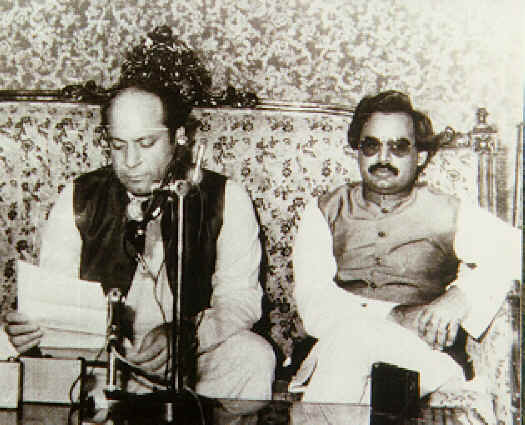


 Dr Magsi has obviously not been challenged to defend his stance rationally. It is a measure of his isolation from the federation that he was not prepared to answer certain questions effectively. He has too long been talking to people who want him to say what he says. It is also a measure of how the federation is allowing the ‘nationalists’ to become isolated in their own provinces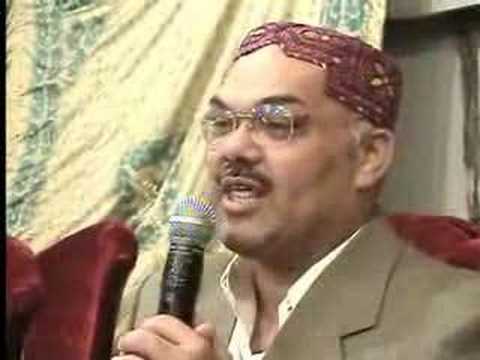


 آخر صوبہ سندھ کا مسئلہ کیا ہے؟


 سندھ زبان کا بل اور کوٹہ سسٹم کا نفاذ سندھ کے دیہی آبادی کا تو کوئی بھلا نہیں کر پایا بلکہ اس سے سندھ کی شہری آبادی میں لسانی بنیادوں پر تقسیم ہوگئی۔ اس بات نے تنگ نظر چھوٹے مقامی لیڈروں کو مہاجر، پٹھان اور پنجابی آبادیوں میں جنم دیا