We Pakistanis are strange nation who perpetually suffer from memory loss and if that is not enough we praise General Pervez Musharraf, General Jamshed Gulzar Kiani, Chief Justice Ifitkhar Muhammad Chaudhry and last but not the least Dr A Q Khan in the same breath while compeltely forgetting that all these are quite an oxymoron to each other - Lets Refresh some memory - Kargil happened (May 1999) within three months of former Indian prime minister Atal Bihari Vajpayee’s Lahore yatra, followed by the signing of the Lahore Declaration (February 1999) promising to put the bitterness of Partition behind and establish good neighbourly relations. Hijacking occurred (December 1999) as a kind of notice served on India by the newly-appointed Chief of Army Staff (COAS), General Pervez Musharraf. Another notice was served through a daring attack on the Indian Parliament (December 2001) to impress upon the Indians that despite Afghanistan, Rawalpindi was still India-centric. It was General (retd) Musharraf who had shown this insane jihad brigade in Pakistan how to play the spoiler whenever they saw the normalisation process entering a decisive phase. ISLAMABAD: Refusing to discuss Kargil out of historical perspective, former president Pervez Musharraf on Friday snubbed an Indian TV anchor, telling him 1971 war and Siachen needed to be discussed first. He rejected allegations that the Indian soldier was beheaded by Pak army with help from militants. A visibly aggressive Musharraf blamed India for deteriorating relations, saying that there has been no effort from India to maintain civilized relations. When grilled further about alleged Pakistan army’s nexus with militants, Musharraf said: “We are not mad people. Stop painting us as rogues when you yourself are not prepared to admit all the cruelty that you inflict on us. Let alone LoC, what is the logic behind kicking our singers out and sending back our hockey players?” The former President of Pakistan went on to add that India has always had an inclination to be hysterical about everything. “The politicians, media everyone in India have a tendency to be hysterical about everything,” he added. ---- 2013 The News - ISLAMABAD: Refusing to discuss Kargil out of historical perspective, former president Pervez Musharraf on Friday snubbed an Indian TV anchor, telling him 1971 war and Siachen needed to be discussed first. He rejected allegations that the Indian soldier was beheaded by Pak army with help from militants. A visibly aggressive Musharraf blamed India for deteriorating relations, saying that there has been no effort from India to maintain civilized relations.
When grilled further about alleged Pakistan army’s nexus with militants, Musharraf said: “We are not mad people. Stop painting us as rogues when you yourself are not prepared to admit all the cruelty that you inflict on us. Let alone LoC, what is the logic behind kicking our singers out and sending back our hockey players?”
The former President of Pakistan went on to add that India has always had an inclination to be hysterical about everything. “The politicians, media everyone in India have a tendency to be hysterical about everything,” he added. REFERENCES: Musharraf snubs Indian TV anchor January 19, 2013 - Updated 912 PKT http://www.thenews.com.pk/article-84427-Musharraf-snubs-Indian-TV-anchor Musharraf snubs Indian TV anchor January 19, 2013 - Updated 912 PKT http://www.geo.tv/GeoDetail.aspx?ID=84427 An ‘unpatriotic’ column By M ZiauddinPublished: January 23, 2013 http://tribune.com.pk/story/497617/an-unpatriotic-column/
September 26, 2006: WASHINGTON: President Pervez Musharraf launched his memoirs here on Monday revealing that before Kargil, India was about to attack Pakistan, Dr AQ Khan may have leaked Pakistan’s nuclear secrets to India - More disclosures include the two secret letters written by ailing nuclear scientist Dr A.Q. Khan, one to the Iranians and the other to his daughter in London asking her to reveal all Pakistani nuclear secrets through British journalists. To Iranians Dr Khan asked them not to reveal his name to the International Atomic Energy Agency and after this issue died down he would provide them with more technology.
But the most astounding statement about nuclear proliferation comes when Musharraf reveals that Dr AQ Khan’s Dubai base may have provided Pakistan’s centrifugal designs to the Indians. “There is little doubt that AQ Khan was the central figure in proliferation network but he was assisted over the years by a number of money seeking freelancers from other countries, mainly in Europe. These people, according to AQ Khan included nationals of Switzerland, Holland, Britain and Sri Lanka,” he writes.
“Ironically the network based in Dubai also employed several Indians some of whom have since vanished. There is a strong probability that the Indian Uranium enrichment programme may also have its roots in the Dubai-based network and could be a copy of the Pakistani centrifuge design,” he says. About Dr AQ Khan’s letters he said: “The letter to Iran was being carried by a business partner of AQ Khan in which Khan advised some of his friends in Iran not to mention his name under any circumstances to the IAEA. He also advised them to name dead people during investigations, just as he was naming dead people. He also promised Iran more help after this event passed. REFERENCES: ‘In the Line of Fire’ launched AQ Khan may have leaked N-designs to India: Musharraf Shaheen Sehbai Tuesday, September 26, 2006 http://www.thenews.com.pk/TodaysPrintDetail.aspx?ID=3261&Cat=13&dt=9/26/2006 ‘Dr Khan asked daughter to leak N-secrets’ By Anwar Iqbal September 26, 2006 Tuesday Ramazan 2, 1427 http://archives.dawn.com/2006/09/26/top1.htm IN THE LINE OF FIRE: AQ Khan was motivated by ego, money
Tuesday, September 26, 2006 http://www.dailytimes.com.pk/default.asp?page=2006%5C09%5C26%5Cstory_26-9-2006_pg7_9
General Pervez Musharraf wanted Civil War in Sindh (BBC 2008)
2008 AS the army chief and the country`s self-styled chief executive, General Pervez Musharraf may have lacked legitimacy, but he rarely lacked charm and aplomb when appearing before the media. Over the years, particularly as the military ruler, he was seen as handling the toughest of questions with great panache, and on many occasions, with a smile. It was perhaps because of this that here and more so abroad the media often seemed to forget that he was a military ruler. But of late his personality seems to have undergone a transformation. He has taken to snapping at journalists at news conferences and is irritable and ready to explode at the slightest perceived provocation. But, as if this were not enough, the way he asked a gathering of his supporters to teach a lesson (do, teen tika do) to this newspaper`s London correspondent because he had asked him a tough question was a bit too much. The president, it appears, has journeyed from the sublime to the ridiculous. One runs into a dead-end in explaining how one question can trigger such anger, and can only speculate about the reasons. The first and foremost appears to be the widening gulf between how the president assesses his performance in office and how others see it, particularly in terms of his handling of militancy in the country. Although his advisers may tell him he may have weathered the storm over the judiciary, he may be unsure what the next parliament`s view on the issue will be. A greater issue could be how pressure is increasing on him to hold free and fair elections, even from allies who have stood solidly behind him through thick and thin over the past several years. For one who described his uniform as his second skin, retiring as the all-powerful army chief may have left him feeling vulnerable. But, regardless of the cause, one would advise the president to keep his cool, his composure. For such outbursts do not inspire confidence in his ability to steer the country out of the troubled waters it finds itself in today. REFERENCE: An unnecessary outburst http://archives.dawn.com/archives/31755
January 26th, 2008 Whatever you might think of President Pervez Musharraf, you have to admit he's a good performer. Whenever I have seen him deliver a speech or stage a press conference, I have been struck by his self confidence and easy, jocular manner. But very occasionally, the mask slips. I have just come from the Royal United Services Institute on Whitehall, where Musharraf was speaking earlier this afternoon. For almost the entire occasion, he was his usual charming self. Then a Pakistani journalist, Mohammed Ziauddin, asked a perfectly reasonable question about how a prominent suspected terrorist, Rashid Rauf, had somehow escaped the custody of Musharraf's security forces. As soon as Ziauddin, the Islamabad editor of Dawn, a Pakistani daily, rose to ask his question, Musharraf visibly bristled.
Instantly, his demeanour changed from being relaxed and confident to tense and hostile. Musharraf promptly accused Ziauddin of "casting aspersions" and "undermining our forces and your own country". In a brief but furious tirade, he questioned Ziauddin's patriotism and professionalism. This disgraceful response to an entirely reasonable query spoke volumes about Musharraf. He will question the patriotism of any Pakistani critic betraying his essential intolerance of dissent. I wonder whether Musharraf would have responded with such rage had a British journalist asked precisely the same question? I suspect he would have answered firmly but politely. Musharraf treats his fellow Pakistanis with contempt while oozing charm for the benefit of foreigners. REFERENCE: President Pervez Musharraf's many faces
By David Blair January 26th, 2008 http://blogs.telegraph.co.uk/news/davidblair/3630811/President_Pervez_Musharrafs_many_faces/
2008: ISLAMABAD, Jan 28 Journalists of Rawalpindi and Islamabad took out a procession on Monday to protest President Pervez Musharraf`s remarks against a senior journalist at a function in London. The protesting journalists also held a march on the main road linking the Aabpara Chowk with Melody Market and raised slogans against the president for threatening senior journalist Mohammad Ziauddin. They urged the president to apologise to the journalist community. The call for the protest rally was given by the Rawalpindi-Islamabad Union of Journalists (RIUJ). Addressing the participants, RIUJ office-bearers and representatives of media organisations termed the president`s remarks an `insult` to the entire journalist community. They said that family members of Mr Ziauddin faced a serious threat after the remarks made by President Musharraf, adding that the government would be responsible for any harm caused to Mr Ziauddin or a member of his family. They also asked the British government to take necessary legal action under the British law because President Musharraf had threatened the journalist on its soil. The Pakistan Federal Union of Journalists (PFUJ) in a statement also demanded an apology from the president. “It is most unfortunate that a head of state has incited people to violence, and that too in a foreign country, against journalists,” the statement said. It said the PFUJ had been advocating tolerance in the society while the president was preaching intolerance and asking people to resort to violence. “Pakistani journalists do not need a certificate of patriotism from dictators or authoritarian rulers who have no respect for the constitution, judiciary and media,” it said. The Punjab Union of Journalists issued a statement on Monday criticising the remarks made by the president against Mr Ziauddin. REFERENCE: 2008: Dawn - Musharraf asked to apologise for threatening journalist By Our Staff Reporter http://archives.dawn.com/archives/143218 UK media baffled by President's response to Pak newsman http://www.paktribune.com/news/print.php?id=196621 Why Pervez Musharraf Can't Tolerate Questions About Rashid Rauf Monday, January 28, 2008 http://winterpatriot.blogspot.com/2008/01/why-pervez-musharraf-cant-tolerate.html
2012 ISLAMABAD, Nov 5: Gen (retd) Hameed Gul, former director-general of Inter-Services Intelligence, called on Pakistan Muslim League-N chief Mian Nawaz Sharif at the Punjab House on Monday and spent some time together. Confirming the meeting, Gen Gul told Dawn it was a long overdue courtesy call during which he inquired after the health of Mr Sharif’s ailing wife. They also discussed political issues, he added.
“As a patriotic Pakistani, I expressed concern over the worsening situation in the country,” he responded when asked if anything important had come under discussion.
After the Supreme Court judgment on Asghar Khan’s petition and Gen Gul’s assertion that he was behind the creation of the right-wing IJI against the PPP in late 80s, analysts believe the meeting was more than just a courtesy call. “Even if it was a courtesy call, a meeting between a former DG of the ISI and the head of a major political party will always attract media attention,” commented a political science teacher of the Quaid-i-Azam University, who requested not to be named. Moreover, he said, when the former ISI DG happens to be Gen Gul, who wouldn’t take notice of the meeting. In a TV interview last week Gen Gul admitted that he had played a role in the creation of the Islami Jamhoori Ittehad (IJI) during his term as ISI chief from March 1987 to June 1989. When asked about the reasons, he said: “I did this in my personal capacity.” “I had been a friend of former Jamaat-i-Islami chief Qazi Hussain Ahmad, Mian Nawaz Sharif (Mohammad Khan Junejo and General Fazl-i-Haq) and still am. I brought these politicians together for the sake of the country and I have no regrets for doing that,” Mr Gul said. About alleged distribution of funds among politicians by his successor, General Asad Durrani during 1990 general elections, he said he had no clue to that and refused to comment whether or not some politicians had received funds from the ISI. General Durrani, in an affidavit submitted in Asghar Khan case, has provided a list of politicians, including Mr Sharif, who were financed by the ISI in 1990 elections. Referring to Dr Abdul Qadeer Khan’s article, which appeared in an English daily on Monday and in which he described events leading to the then military establishment’s opposition to Benazir Bhutto, Gen Gul said: “My role in the creation of the IJI was natural which I had played for the safety of the country.” Dr Khan in his piece talked about the role of BB’s first government in capping uranium enrichment and supporting India against Sikh separatists. REFERENCE: Hameed Gul says his meeting with Nawaz was courtesy call BY Khawar Ghumman http://dawn.com/2012/11/06/hameed-gul-says-his-meeting-with-nawaz-was-courtesy-call/
2012: Fact and fiction BY Dr A Q Khan Monday, November 05, 2012 During my long and close association with Mr Ghulam Ishaq Khan, I never once found him indulging in politics and never heard him saying anything against any politician. I never met or saw any politician with his very competent military secretary, Brig Muhammed Ajaib, who efficiently and honestly served him for five years.
Concerning Gen Beg, I would like to narrate one incident here, which speaks for itself. I was in Gen Beg’s office just before the 1988 general elections when the chief election commissioner, Justice S A Nusrat, came to see him. During the talks Justice Nusrat said (probably to see what Gen Beg’s reaction would be) that Benazir Bhutto’s PPP was going to win the elections. Gen Beg’s immediate reaction was to say that if the lady wins, she will rule as per her constitutional right. Not then and not at any other time did I ever hear any adverse remarks about any politician from him. The question arises: why was it necessary to sack Benazir Bhutto’s government and prevent her from winning the next elections? My understanding is that, as soon as she came to power, widespread and reliable reports surfaced about massive corruption by Mr Asif Ali Zardari and his cronies. All the intelligence agencies were sending reports to the president and the chief of the army staff. Then one of her closest associates, a federal minister, was reported to have handed over a list of all Sikh resistance leaders (Khalistan supporters) to India, which resulted in their arrests and elimination by the Indian government. The Sikh insurgency had taken the pressure off Kashmir and the Pakistani army considered their handing over as an anti-Pakistan move. Furthermore, Benazir Bhutto had agreed to freeze the enrichment of uranium at five percent, in a move to please the Americans. In a meeting at the Presidency at which Gen Imtiaz (her military secretary) was also present, I was instructed accordingly. Nobody was happy with the decision, especially not the army and the ISI, and it was considered to be against national interests. Mr Bhutto, and later Gen Ziaul Haq, had never buckled under US and Western pressure and had kept the programme running at full speed. Later, Gen Waheed Kakar took full control of the nuclear weapons programme. Probably all these factors together led to the dismissal of her government and the efforts to stop her from winning the elections. What is intriguing here is that, during her second tenure and later on, neither she nor Nawaz Sharif nor Musharraf pursued the Asghar Khan case, while Benazir Bhutto even appointed Gen Durrani as her ambassador to Germany and Saudi Arabia. After all, Gen Durrani had played a prominent role against her government. Something doesn’t seem right. I cannot doubt the integrity, honesty and patriotism of Mr Ghulam Ishaq Khan and Gen Aslam Beg. I only knew Gen Durrani superficially, but many senior officers did not have much good to say about him. Only God knows the truth. REFERENCE: Fact and fiction BY Dr A Q Khan Monday, November 05, 2012 http://www.thenews.com.pk/Todays-News-9-141163-Fact-and-fiction
2012: A.Q. Khan alleges Benazir directed for N-tech transfer Afzal Khan / 16 September 2012 ISLAMABAD — Dr Abdul Qadeer Khan, widely acclaimed as father of Pakistan’s nuclear bomb, has alleged that he transferred nuclear technology to two countries on instructions from the slain premier Benazir Bhutto. “Ms Bhutto had summoned me to the PM House and directed me to transfer nuclear technology to two countries,” Dr A.Q. Khan said in an interview with Urdu daily Jang, adding that he acted accordingly as she was chief executive of the country. He did not name the countries believed to be North Korea and Libya. He said technology transfer was no easy task like one could put it into pocket and hand over to somebody. “At least 800 people are used to supervise the process,” he added. He said military ruler Gen. Pervez Musharraf beseeched him to publicly admit having transferred the technology saying it would save Pakistan’s nuclear programme from being eliminated by the US. Dr Khan alleged that Nawaz Sharif was reluctant to conduct nuclear tests in May 1998 in response to Indian tests for fear of US sanctions but he and some other people compelled him to do so. His delayed action, however, allowed a build-up of extreme pressure by the US and its allies. “Had he immediately decided to respond to India, there would have been no time to pressurise Pakistan whereas we had made it clear that we can conduct nuclear tests on a notice of half an hour,” he said. Dispelling impression he harboured political ambitions, Dr Khan said he had launched an outfit to preserve national unity. REFERENCE: A.Q. Khan alleges Benazir directed for N-tech transfer
Afzal Khan / 16 September 2012 http://www.khaleejtimes.com/displayarticle.asp?xfile=data%2Finternational%2F2012%2FSeptember%2Finternational_September513.xml§ion=international&col
2012: Imran still politically immature:AQ Khan September 15, 2012 ISLAMABAD: Nuclear scientist Dr. Abdul Qadeer Khan said that Nawaz Sharif was not in favor of nuclear test blast, while the nuclear technology was passed on to other countries on the directive of Benazir Bhutto. In an exclusive interview to Jang correspondent, Farooq Aqdas, Dr. AQ Kahn said that the nuclear technology transfer process was not such that some one could give it to other country by just hiding it in the pocket, as it was guarded by eight hundred persons. AQ Khan said that then prime minister Benazir Bhutto had called him, gave the name of the two countries to be helped and she had given him a clear directive in this regard. AQ Khan further said that he was not self-governing instead he was bound to abide by the orders of the PM of the country and that explains he had to do it. Regarding his state TV confession of the crime during Musharraf era, he said that by doing so the nuclear program could be saved, he was told. AQ Khan said that Chaudry Shujaat was used by Musharraf for getting a confession from him. Replying to a question, AQ Khan said that he had great expectations from Imran Khan, but he was disappointed after two/four meetings with Imran. “Imran Khan’s political thinking is still immature and those having expectations from him will soon be disappointed”, he added. REFERENCE: Imran still politically immature:AQ Khan September 15, 2012 - Updated 103 PKT http://www.thenews.com.pk/article-67783-Imran-still-politically-immature:AQ-Khan
2012: Dr Qadeer calls on JI chief : LAHORE, Nov 7: On his mission of uniting ‘patriotic’ parties on a single platform, nuclear scientist-turned-politician Dr Abdul Qadeer Khan on Wednesday called on Jamaat-i-Islami chief Munawwar Hasan here. Briefing the media after the meeting, he said he was urging patriotic political parties to unite for setting up a grand alliance “to save the country from complete destruction before it was too late.” He said he would also meet PML-N leader Nawaz Sharif and PTI chief Imran Khan for the purpose. He cautioned that the masses were already deprived of Roti, Kapra and Makan, and if the things remained unchanged, they would not even get grass to eat. He said if the country got an honest leadership, it could achieve marvellous results, regretting that the present rulers were taking guidance from Washington instead of Makkah. He said the government was blaming the Taliban for the worsening law and order situation in the country but the fact was the actual responsibility rested on the people in power. It’s high time, he said, that honest and experienced people came forward to lead the nation in the right direction. He said the masses were facing countless problems and they should be wise to elect good people in the next elections. Mr Hasan said Dr A.Q Khan should have been the head of state but he could not rise to that office because he was not Mr 10 per cent. — Staff Reporter REFERENCE: Dr Qadeer calls on JI chief http://dawn.com/2012/11/08/dr-qadeer-calls-on-ji-chief/
Some members of the Pakistani establishment and especially those agencies (nowadays this role has been taken over by the TV Anchors specifically Jang Group of Newspapers), which have assumed the role of determining what is ‘national interest of Pakistan’, and who is loyal, and who is anti Pakistan, have perhaps done more damage to Pakistan than known enemies of Pakistan. It is unfortunate that every blunder, be it at national level or in foreign affairs, is made in the name of ‘national interest of Pakistan’. People of Pakistan are perplexed as they fail to understand what is ’national interest of Pakistan. People are further bewildered when some of these leaders, perceived and declared as ‘anti Pakistan’ or ‘security risk’ are sworn in to hold some kind of office in Pakistan. There are many examples where people declared as an ‘Indian agent’ or ‘traitor’ had taken high public office; even those who had no Pakistani nationality or rescinded it, had an opportunity to become Prime Minister of Pakistan. Once these people have decided that something is in the ‘national interest of Pakistan’, they will pursue that agenda without having any system of check and balance and appraisal. If any one dares to criticize what they do in the name of ‘national interest of Pakistan’, he/she is declared as ‘anti Pakistan’. Similarly if a Pakistani person criticizes Pakistan government, or holds demonstration against the government policy, he is declared as ‘anti Pakistan’.
Malik Riaz Fiasco: On 9th June 2012, Mr Talat Hussain (PTV, ARY, AAJ TV and Dawn News) replied to the allegations on News Night with Talat - Ep 414 http://www.youtube.com/watch?v=I35jMmnRib0 of Mr. Najam Sethi (The Friday Times, Farooq Laghari Cabinet, Daily Times, Dunya TV and now GEO TV) on Mr. Talat in Aapas ki baat - 6th june 2012 part 4, had the program of Mr. Talat been only restricted to a reply to Mr. Najam's allegations then it would have been fine but Mr Talat Hussain took a giant step unnecessarily and inserted Islam in a worst possible way to defend himself and Alleged TV Channel Dawn News. I have used several episodes of Mr. Talat Hussain and Mr. Najam Sethi programs for my blog because both of these gentlemen are far better than other Jokers in Media e.g. Kamran Khan, Javed Chaudhry, Dr Shahid Masood, Anal Retentive Nadeem Malik, Official Haji "Asma Shirazi", Murderous Meher Bukhari w/o equally obnoxious Kashif Abbasi, list goes on and on.I wonder what was the need of showing personal Bank Accounts and Property Details on TV Show which Syed Talat Hussain did and making a joke of himself, one can raise a question that people don't hide "Black Money" in an open Bank Account. ---- Way back in 2009 : - If anyone needs evidence that Pakistan’s most popular TV anchors just reel off nonsense without checking facts, please watch the interview given by US Secretary of State Hillary Clinton to a group of Pakistani anchors. Talat Hussain of Aaj TV, who often speaks as if he knows everything, wanted to embarrass Hillary by “proving” that the U.S, does not give Pakistan enough. In his recent shows he has been mouthing off against the “insulting language” in the Kerry-Lugar-Berman aid bill, which triples non-military assistance to Pakistan to $ 1.5 billion per year for five years. Talat claimed that the U.S. was paying Kyrgyzstan $ 700 million as rent for a military base in that country. Hillary corrected the arrogant and self-righteous Aaj TV anchor and said the rent was not that high but was in the range of $ 50 million. Not one to ever digest facts, especially those that prove him wrong, Talat Hussain continued on to say that must be the rent “per month.” The US Secretary of State remained polite and left the Kyrgyzstan base rent figure unresolved. None of the other “famous and popular” anchors, including Moeed Pirzada, Nasim Zehra, Naveen Naqvi, Mubashir Luqman and others, knew the figure themselves to be able to step in and correct their colleague. So, what does a simple google search reveal to be the fact? The US agreed in June 2009 to triple the rent of its base in Manas, Kyrgyzstan to $ 60 million, up from $ 17 million, PER YEAR. The US also agreed to pay an additional $ 37 million to Kyrgyzstan to build new aircraft parking slots and storage areas, plus another $30 million for new navigation systems. That adds up to a grand total of $ 127 million in the first year and a recurrent payment per year of still $ 60 million only! Here’s the link to a CBS news story one of many stories on the subject available on the internet http://www.cbsnews.com/stories/2009/06/23/world/main5105784.shtml , beyond the crazy right-wing dominated Pakistani blogs. Where did Talat Hussain of Aaj get his figure of $ 700 million per year? Nobody knows. Maybe from his friends Shireen Mazari or Ahmed Quraishi—all purveyors of anti-US opinions with little regard for facts. REFERENCE: Talat Hussain makes a $640 Million Mistake Friday, October 30th, 2009 http://pakistanmediawatch.com/2009/10/30/talat-hussain-makes-a-640-million-mistake/
December 20, 2008 NEW DELHI: Senior Congress leader Kapil Sibal on Friday welcomed former Pakistani prime minister Nawaz Sharifís acknowledgement that Ajmal Kasab, the lone surviving terrorist in the Mumbai terror attacks, is a Pakistani, says Hindustan Times. “We welcome Sharif’s statement acknowledging that Ajmal is a Pakistani. We already had that knowledge like every one does,” Sibal, who is also the science and technology minister, told reporters. “All big democracies in the world agree that resources in Pakistan were used for the dastardly terrorist attack on Mumbai,” he said. Sharif told Geo News that he checked and found out that Ajmal Kasab’s native village has been cordoned off and his parents shifted out to an undisclosed location to evade the media. REFERENCE: Congress welcomes Nawaz’s remarks on Kasab News Desk Saturday, December 20, 2008 http://www.thenews.com.pk/TodaysPrintDetail.aspx?ID=19096&Cat=13&dt=12/20/2008
ISLAMABAD, Jan 7 2009 Pakistani authorities, during the course of their own investigations into the Mumbai carnage, have established that the only surviving terrorist Ajmal Kasab is a Pakistani national. After a series of conflicting statements by various officials representing different sections of the government, it was officially acknowledged that DawnNews TV`s news item about the official investigation report regarding Ajmal Kasab`s identity was correct. Earlier, a high-ranking government official had told Dawn that the preliminary finding had provided enough information to conclude that the man at present in India`s custody was from a Punjab village, and perhaps belonged to a militant group that was bent upon destabilising the region by undermining the peace process. The official, who requested anonymity, said the authorities were examining all parts of the puzzle on the basis of their own investigation, as well as the information provided by India and the Americans. However, he said there was no doubt in the minds of the investigators that the captured terrorist was a Pakistani. “Sadly, it has been established that Kasab is a Pakistani national.” But within minutes of the revelation, confusing, and somewhat conflicting, statements started emanating from different sections of the government in Islamabad. While the Indian television channel CNN-IBN quoted Pakistan`s National Security Adviser Mehmud Ali Durrani as saying that Ajmal Kasab`s identity as a Pakistani had been established, Foreign Secretary Salman Bashir told the same channel that it was premature to say anything because the investigation was continuing. In the midst of all this, American news agency APTN quoted Information Minister Sherry Rehman as confirming that Ajmal Kasab in fact was a Pakistani national. The minister later confirmed it to Dawn that “he is Pakistani” and that investigations are ongoing. Similarly, the Foreign Office which at the initial stage appeared either detached from reality or completely out of the loop, admitted by broadcasting through the state-run PTV that Ajmal Kasab was indeed a Pakistani national. During the course of Dawn`s own investigation, a number of senior officials in the interior ministry and police said that investigations were started soon after initial reports had suggested that Ajmal Kasab might be a Pakistani national. But the authorities wanted to be doubly sure about his identity because there was no record of Kasab and his family in the national database maintained by Nadra. Details of preliminary investigations submitted to the government have still not been made public. The official who confirmed to Dawn about the preliminary investigation report said Kasab was son of Amir Kasab and Mrs Noor Illahi. But the identity of other militants killed in Mumbai is yet to be established. Senior security officials, however, said that preliminary investigations had established that the militants were operating on their own and had absolutely no link with any section of the country`s security apparatus. A top ranking western diplomat also confirmed to Dawn that there was no linkage between the terrorists who carried out the Mumbai carnage and the Pakistani security agencies, particularly the ISI. “There is ample evidence to prove that most of the terrorists belonged to Pakistan,” the diplomat said. “But there is not even a shred of evidence to suggest that the ISI or any other Pakistani intelligence agency had any links with these terrorists,” the diplomat said. “And this is not based on what the Pakistanis have been telling us, as we have double checked it on our own,” the diplomat added. The remarks belie the latest claim by Indian Prime Minister Manmohan Singh who on Tuesday had tried to up the ante by directly accusing the Pakistani security apparatus of being involved in the Mumbai carnage. Pakistan has already rejected the Indian accusation in strongest terms. In a related development, a statement by Prime Minister Yousuf Gilani also said the Pakistan`s investigations into the Mumbai attacks had made progress. He said that some information of an interim nature on Indian investigations had been received. He did not elaborate. Punjab`s dusty town of Faridkot became the centre of attention soon after the deadly Mumbai attack as the Indian authorities captured Kasab and claimed that he belonged to Faridkot. The town was thronged by local and foreign media and conflicting reports came out about the identity of Kasab. At that time the government had, for obvious reasons, decided to adopt a tight-lipped policy, maintaining that only a thorough investigation, based on concrete information, could establish whether Kasab was a Pakistani national, and a resident of Faridkot. Answering a question about consular access to Kasab, a senior official said the militant had damaged Pakistan `like no other`. “We are not yet sure when to ask for consular access. We may not ask for it. He is involved in a heinous crime,” the official said. Kasab also wrote a letter to the Pakistan High Commission in New Delhi. Pakistani authorities said they were examining the letter. REFERENCE: Ajmal`s nationality confirmed By Mubashir Zaidi Dawn (Pakistani Newspaper). 8 January 2009 http://archives.dawn.com/archives/42931
Live with Talat on Mumbai Tragedy - 1 (AAJ TV 2009)
China backed ban Amir Mir Friday, December 12, 2008 LAHORE: The United Nations Security Council’s decision to ban the Jamaat-ud-Daawa (JuD) as a global terrorist organisation could only become possible after China, which had thrice blocked similar attempts, finally gave its crucial yes vote for the UN resolution. Diplomatic analysts said this change came apparently in the aftermath of the pressure created by the Mumbai terror attacks. The Al-Qaeda and Taliban Sanctions Committee of the UN Security Council approved on December 10, 2008 the addition of† four entries to its consolidated list of individuals and entities subject to the assets freeze and travel ban, including the JuD and its Ameer Hafiz Mohammad Saeed. According to well placed Foreign Office sources, three resolutions seeking a ban on the JuD, tabled before the UN Security Council since 2003, had been simply put on technical hold by Beijing, while using its veto right being one of the five permanent UNSC members. Each time the Al-Qaeda, Taliban Sanctions Committee of the Security Council tabled a resolution to include the Jamaat-ud-Daawa in the list of terrorist groups, China blocked the move, while seeking credible evidence from the United Nations indicating JuD’s terror links. Technical hold requires information demanded by any permanent member of the UNSC before processing a resolution to declare someone a terrorist organisation. The Chinese authorities reportedly used to intervene in the past on the request of the Musharraf regime. However, it had become hard for Beijing to vote against the move in the aftermath of the Mumbai terror attacks and the evidence furnished by the Indian authorities.The Al-Qaeda and Taliban Sanctions Committee has the mandate to impose economic sanctions on the individuals and entities associated with al-Qaeda, its chief Osama bin Laden or with the Taliban wherever located. The Committee, comprising 15 members, also entertains requests made by any member state on whose territory any terrorist organisation exists. The committee had previously declared the Lashkar-e-Taiba a terrorist outfit on May 2, 2005, while acting under a US request. The UN move was followed by the US State Department’s decision to brand Jamaat-ud- Daawa a terrorist organisation, saying it was a front for the Lashkar-e-Taiba.
Much before that, in December 2001, the US State Department had designated the Lashkar-e-Taiba a foreign terrorist organisation, following the attack on the Indian parliament on December 13, 2001, prompting the Musharraf regime to ban the group and freeze its assets on January 13, 2002. However, a few weeks before that, Hafiz Saeed announced his stepping down as the LeT chief besides launching of the Jamaat-ud-Daawa. Addressing a press conference in Lahore on December 24, 2001, Hafiz Saeed announced his resignation and the appointment of Maulana Abdul Wahid Kashmiri as the new LeT chief. Hafiz Sahib further announced that the Lashkar has wrapped up its organisational set-up and moved its base from Pakistan to Srinagar in Kashmir. Since then, the JuD has denied having any links with the LeT, making Hafiz Saeed to go to the extent of denying that he had ever been the Lashkar Ameer. The Pakistan government had been resisting the US pressure in the past to ban the JuD as a terrorist†outfit on the grounds that it was a charity-cum-humanitarian relief organisation, having nothing to do with the Lashkar-e-Taiba. As the US treasury department accused the Jamaatud Daawa in its Anti-Terrorist Financing Guidelines for the US-based charities on September 29, 2006 of supporting and financing terrorists under the guise of relief work for the October 2005 quake victims, the Musharraf regime decided to place the JuD on the watch list of the Pakistani interior ministry on August 20, 2006, instead of declaring it a terrorist group. A Pakistan government spokesperson subsequently stated on May 3, 2006: “The government has no intention of designating the Jamaatud Daawa and its affiliate organisations as terrorist entities as done by the US”. However, Pakistan would be legally bound to take action if they were placed on the consolidated list of United Nations Security Council Sanctions Committee. But in the aftermath of the UNSC decision to brand the JuD a terrorist group, well placed government circles in Islamabad do not rule out the possibility of Islamabad finally clamping a ban on the group. REFERENCE: China backed ban Amir Mir Friday, December 12, 2008 http://www.thenews.com.pk/TodaysPrintDetail.aspx?ID=18900&Cat=13&dt=12/12/2008
Live with Talat on Mumbai Tragedy - 2 (AAJ TV 2009)
Govt cracks down on Daawa after UN ban News Desk Friday, December 12, 2008 : LAHORE: Pakistan launched a countrywide crackdown on Thursday against Jamaat-ud-Daawa as the police in all the four provinces and Azad Kashmir raided Daawa offices, nabbed many of its activists and put its chief Hafiz Saeed under house arrest following the UNSC sanctions against the organisation and its four leaders. The UNSC committee Wednesday added four leaders of Jamaat-ud-Daawa to a list of people and groups facing sanctions for ties to al-Qaeda or the Taliban, including a freeze on assets and a travel ban. The four Jamaat leaders are Hafiz Saeed, the group’s chief; Zakiur Rehman Lakhvi, the group’s chief of operations; Haji Muhammad Ashraf, its chief of finance; and India-born Mahmoud Mohammad Ahmed Bahaziq, described as a financier for the group who served as its chief in Saudi Arabia. The same four were hit with US Treasury Department sanctions in May. The UN sanctions, covered by Security Council resolution 1267 from 1999, include the mandatory freezing of assets and travel bans. The sanctions also covered what the committee said was a new alias for Lashkar-e-Taiba, Jamaatud Dawa. An Indian government minister asked the council during a special session on terrorism to include Jamaatud Dawa on the UN blacklist. Meanwhile, Lahore Police has detained Ameer Jamaatud Daawa Hafiz Muhammad Saeed at his house in 116-E Block, Johar Town for three months and heavy contingent of police have been posted outside his residence. SSP Operation Lahore Ch Shafiq Ahmad has confirmed the house arrest of JD Ameer and said that Jamia Qadisia, the headquarters of the organization at Chowburji Chowk has also been sealed. Meanwhile, government moved to shut down Jamaatud Daawa offices throughout the country and ordered its leaders be placed under house arrest. Police began closing the Daawa offices across the country on orders issued by the central government after the UN Security Council declared the charity a terrorist group. “Instructions have been issued to seal Jamaatud Daawa offices in all the four provinces as well as Azad Kashmir,” said Interior Ministry spokesman Shahidullah Baig. Prime Minister Syed Yousuf Raza Gilani confirmed the arrest of two leaders belonging to Lashkar-e-Taiba. The two men are senior members of the banned Islamist group and have both been named by Indian media as key planners of the devastating attack on Mumbai.
Zaki-ur-Rehman Lakhvi and Zarar Shah were in detention and an investigation was underway, Yousuf Raza Gilani told the journalists. Meanwhile, the police are conducting raids and arresting the Jammatud Daawa activists besides sealing its offices throughout NWFP following the government announced to ban the Daawa. Soon after the announcement made by the federal government, the Peshawar police raided the office of the outfit located at Fawara Chowk in the cantonment area of the provincial metropolis. Two officers and a few constables went into the office of the organisation that bore the sign board of a monthly magazine, ‘The Voice of Islam’ on its front gate. Sources told The News that the activists of the organisation had already sealed the office before the police did so. The sources said that before the federal government made the formal announcement to ban JuD, its activists came to the office, shifted necessary goods and sealed it. The security forces, meanwhile, raided the office of Jamaatud Daawa situated at Parhana in Manshera district and arrested five of its activists. In another raid, the security personnel stormed the relief office of the Daawa in Ghazikot Township a day before Eidul Azha and sealed it. During the raid carried out by the personnel of the security agencies early Thursday at JuD’s relief camp-cum-office at Parhana, five of its members were taken into custody who were then shifted to an undisclosed location. The security personnel, the sources said, had also picked six activists of Daawa from the main relief camp of the organisation, located at the main Karakoram Highway near Ghazikot Township, and the raid was conducted at Parhana on the information extracted from these activists. Meanwhile, the authorities sealed the offices and establishment of Jamaatud Daawa in Hazar Division. Sources said the security forces raided office of the organisation in Abbottabad late in the night and sealed the office. The offices of the organisation were also sealed in Haripur. REFERENCE: Govt cracks down on Daawa after UN ban News Desk Friday, December 12, 2008 http://www.thenews.com.pk/TodaysPrintDetail.aspx?ID=18899&Cat=13&dt=12/12/2008
Live with Talat on Mumbai Tragedy - 3 (AAJ TV 2009)
UN ban on Daawa Friday, December 12, 2008 ISLAMABAD: Foreign Minister Shah Mehmood has said that under the UN Security Council Resolution 1267, certain individuals and entities have been designated by the Al-Qaeda and Taliban Sanctions Committee on December 10, 2008. He said in a statement issued here on Thursday that an official communication from the UN in this regard had been received by the government. He said that the government had initiated the process to comply with the listing of the Jamaat-ud-Daawa, certain other trusts and individuals by the Sanctions Committee. Following is the text of the statement; “Under the Security Council Resolution 1267, certain individuals and entities have been designated by the Al-Qaida and Taliban Sanctions Committee on 10 December 2008. An official communication from the UN in this regard has been received by the Government of Pakistan. These entities and individuals include Lashkar-e-Taiba and Jamaat ud Daawa. It is obligatory for all states to comply with international obligations arising from Security Council decisions. Accordingly, the Government of Pakistan has initiated the process to comply with the listing of Jamaat ud Daawa certain other trusts as well as individuals by the Sanetions Committee.
As regards the spate of allegations concerning the involvement of certain individuals of Pakistani origin in Mumbai terrorist attacks, the Government of Pakistan has already initiated investigations on its own. It is the firm conviction of Pakistan not to allow its territory to be used for any act of terrorism. Pakistan itself has been a victim of terrorism. However, our own investigations cannot proceed beyond a certain point without provision of credible information and evidence pertaining to Mumbai attacks. Despite our requests, no evidence or information has been shared with the Government by India so far. Any criminal investigation proceeds from the scene of crime to thecriminal. This is standard investigation procedure. Pakistan has repeatedlyunderscored the need for serious, sustained and pragmatic cooperation between Pakistan and India to combat terrorism in either country. Our proposals for the establishment of a joint commission as well as joint investigations have been made in an earnest effort to move forward in an area, which equally concerns both Pakistan and India. As far as Pakistan’s own investigations are concerned, these will bepursued in accordance with our own laws. Pakistan is committed to internationally respected concept of “due process”. It is Pakistan’s firm determination to do whatever it can to eliminate the threat of terrorism from South Asia.” REFERENCE: UN ban on Daawa Friday, December 12, 2008 http://www.thenews.com.pk/TodaysPrintDetail.aspx?ID=18908&Cat=13&dt=12/12/2008
Major Jihadi groups disappear Mazhar Tufail Saturday, December 13, 2008 ISLAMABAD: A coalition of five major Jihadi organisations, led by the once fiery militant commander Syed Salahuddin, has simply disappeared. It has temporarily dissolved itself, closed its offices, removed all signs and asked its leaders to stay quiet. The strategy follows the current Pakistan-India tension following the Mumbai blasts and the ban imposed by the UN on several such organisations in Pakistan. The United Jihad Council (UJC) is a major Kashmiri group comprising Harkat-ul-Ansar, Hizbul Mujahideen, Jamiat-ul-Mujahideen, Al-Jihad, Al-Barq, Ikhwan-ul-Mussalmin andTehrik-ul-Mujahideen. By early 1999, as many as 15 organisations were affiliated with the council, though only five of these were considered influential. “Following the Mumbai attacks and the subsequent tension between Pakistan and India, the United Jihad Council has decided to remain silent,” said a commander of one of the UJC member organisations, requesting anonymity. He said the incumbent Pakistani rulers were pursuing the same policy adopted by Pervez Musharraf and the statements on Kashmir issued so far by President Asif Zardari had made it clear that the present Pakistan government would extend no support to the Kashmiri freedom fighters. “In the current situation, the UJC is maintaining complete silence and has no contact with any Pakistani organisation or institution,” the UJC commander said. “The outfits banned in Pakistan, including the Lashkar-e-Taiba, have never worked with the UJC nor maintained with it any direct or indirect contact,” he added while claiming that that they were fighting for the liberation of occupied Jammu and Kashmir and their struggle would continue. Since the government launched a crackdown against Jamaat-ul-Dawah and started sealing its offices across Pakistan and Azad Kashmir, all the central leaders of the UJC have been maintaining a low profile and have removed signboards from temporary sub-offices of the organisations in various districts of Azad Kashmir. When The News contacted Foreign Office spokesman Muhammad Sadiq, he said there was no change in Pakistan’s Kashmir policy. He said Pakistan supported the just struggle of Kashmiris for their right to self-determination but no authority in Pakistan had any links with militant or political organisations operating in occupied Kashmir. The UJC was formed in the summer of 1994 by amalgamation of several armed resistance organisations. It is currently headed by Syed Salahuddin, the leader of Hizbul Mujahideen, the largest group operating in the occupied Jammu and Kashmir. This organisation was created to unify and focus efforts of various armed resistance groups fighting the Indian rule in Kashmir. This made distribution of resources like arms, ammunition, propaganda materials and communication more streamlined. It also made it easier to coordinate and pool resources of various Jihadi groups to collect information, plan operations and strike at targets of military importance in the Indian occupied Kashmir. REFERENCE: Major Jihadi groups disappear Mazhar Tufail Saturday, December 13, 2008 http://www.thenews.com.pk/TodaysPrintDetail.aspx?ID=18922&Cat=13&dt=12/13/2008
Live with Talat on Mumbai Tragedy - 4 (AAJ TV 2009)
Pakistan fails to act on Ajmal Kasab’s letter Amir Mir Monday, January 05, 2009 LAHORE: The Pakistan government is in a fix as to how to react to the letter written by Ajmal Kasab, the lone Mumbai attacker captured alive by the Indian security forces, wherein he had claimed to be a Pakistani belonging to a Faridkot village and a Lashkar-e-Taiba operative who killed many people on November 26 in Mumbai. The Indians had provided Kasab’s letter as well as his confessional statement to the Pakistani authorities on December 23, saying he wanted legal assistance from Islamabad before his police remand comes to an end on January 6. The Pakistani foreign office had confirmed receiving Kasab’s letter the same day, saying it was forwarded to the Pakistani High Commission in Delhi by the Indian authorities. Ten days later, however, the interior ministry and the foreign office circles say they are still examining the letter besides trying to ascertain if Kasab was actually a Pakistani national. The covering letter containing Kasab’s request to Islamabad for legal assistance said that the Mumbai Crime Branch eagerly awaits a response from the Pakistan Consulate General in Delhi before it starts looking for other legal options for Ajmal Amir Kasab. The covering memo further states, since Ajmal Kasab has already confessed to his crime in the letter dispatched to Pakistani High Commission [in New Delhi], Pakistan should inform the Indian High Commission in Islamabad as early as possible whether or not it wants to provide legal assistance to Kasab. However, interior ministry sources say the National Data Registration Authority (NADRA) does not verify Kasab’s claim of being a Pakistani national as it lacks official data to prove his assertion. But they added that the Pakistani authorities have not yet concluded their investigations into Kasab’s claim and they would respond to his request shortly.
However, the foreign ministry sources in Islamabad do not take Ajmal’s letter or his confessional statement seriously, saying the confessions of a prisoner cannot be treated as ample proof. “The Indian authorities should produce some credible evidence to establish Kasab’s identity since some Indian papers have already reported that Kasab is in fact an Indian national”, said a foreign office source while requesting anonymity. Even otherwise, he added, Kasab’s statement does not amount to admissible proof under any penal code anywhere in the world, including India or Pakistan. In his confessional statement provided to the Pakistani authorities, which has already appeared in several Indian newspapers, Kasab gave a detailed account of his training, his trainers, his role in the terror strike as well as the role of nine other LT militants in the Mumbai attacks. Kasab has further requested the Pakistani high commission to claim the body of his colleague Abu Ismail who was with him during the operation, and take it for burial to Pakistan. Although Kasab has mentioned about the death of nine other LT operatives, he has specifically written about the death of his fast friend Ismail. Citing Ajmal’s letter, the Mumbai Crime Branch has reportedly written a separate letter to the Pakistani High Commission in Delhi, asking it to claim the bodies of the nine Pakistani nationals. However, the Pakistani authorities have not yet responded to any of these letters.
In his confessional statement which Ajmal Kasab allegedly gave to the Mumbai police and which has already been published by Indian newspapers Hindu and Daily News & Analysis, he has stated: “I had been residing in Faridkot in Okara district of the Pakistani Punjab since my birth and I studied up to class IV in a government school there. In year 2000, however, I left the school and went to stay with my brother in Tohid Abad Mohalla, near Minar-e-Pakistan in Lahore. I worked as a labourer at various places till 2005, visiting my native place once in a while. In 2005, I had a quarrel with my father. I left home and went to Data Darbar in Lahore, where boys who run away from home are given shelter. The boys are sent to different places for employment”. The statement added: “One day, a person named Shafiq came there and took me with him. He was from Jehlum and had a catering business. I started working for him for Rs120 per day. Later, my salary was increased to Rs200 a day. I worked with him till 2007. While working with Shafiq, I came in contact with Muzaffar Lal Khan, 22... Since we were not getting enough money, we decided to carry out robbery to make big money. So we quit the job and went to Rawalpindi, where we rented a flat. Afzal had located a house for us to loot... We required some firearms for our mission... While we were in search of firearms, we saw some LT stalls at Raja Bazaar in Rawalpindi on the day of Eidul Azha. We then realised that even if we procured firearms, we would not be able to operate them. Therefore, we decided to join LeT for weapons training.
“We reached the LT office and told a person there we wanted to join the LT. He noted down our names and addresses and told us to come the next day. The next day, there was another person with him. He gave us Rs200 and some receipts. Then he gave us the address of a place called Markaz-e-Toiba, Muridke, and told us to go there. It was a LeT training camp. We went to the place by bus and showed the receipts at the gate of the camp. We were allowed inside... Then we were taken to the actual camp area. Initially, we were selected for a 21-day training course called Daura Aam. From the next day, our training started... After Daura Aam, we were selected for another training programme, which was also for 21 days. We were taken to Mansehra in Buttal village, where we were trained in handling weapons....
“After that, we were told that we will begin the next stage involving advanced training. We were taken to a LT camp in Shaiwai Nala near Muzaffarabad for advanced training... We were then taken to Chela Bandi Pahari area for a training programme, called Daura Khaas, of three months. It involved handling weapons, using hand grenades, rocket launchers and mortars... There were 32 trainees in the camp of whom 16 were selected for a confidential operation by one Zakiur Rehman Lakhvi alias Chacha. But three of them ran away from the camp. Chacha sent the remaining 13 with a person called Kafa to the Muridke camp again. At the Muridke camp, we were taught swimming and made familiar with the life of fishermen at sea. We were given lectures on the working of Indian security agencies. We were shown clippings highlighting atrocities on Muslims in India. After the training, we were allowed to go to our native places. I stayed with my family for seven days. I then went to the LT camp at Muzaffarabad.
“After the training Chacha selected 10 of us and formed five teams of two people each on September 15.... The date fixed for the operation was September 27. However, the operation was cancelled for some reason. We stayed in Karachi till November 23 and then left from Azizabad in Karachi, along with Zaki and Kafa. We were taken to the nearby seashore... We boarded a launch. After travelling for 22 to 25 nautical miles we boarded a bigger launch. Again, after a journey of an hour, we boarded a ship, Al-Huseini, in the deep sea. While boarding the ship, each of us was given a sack containing eight grenades, an AK-47 rifle, 200 cartridges, two magazines and a cell phone. “Then we started towards the Indian coast. When we reached Indian waters, the crew members of Al-Huseini hijacked an Indian launch. The crew of the launch was shifted to Al-Huseini. We then boarded the launch. An Indian seaman was made to accompany us at gunpoint; he was made to bring us to the Indian coast. After a journey of three days, we reached near Mumbai’s shore. While we were still some distance away from the shore, Ismail and Asadulla killed the Indian seaman in the basement of the launch. Then we boarded an inflatable dinghy and reached Badhwar Park jetty. “I then went along with Ismail to VT station by taxi. After reaching the hall of the station, we went to the toilet, took out the weapons from our sacks, loaded them, came out of the toilet and started firing indiscriminately at passengers. Suddenly, a police officer opened fire at us. We threw hand grenades towards him and also opened fire at him. Then we went inside the station threatening the commuters and randomly firing at them. We then came out of the railway station searching for a building with a roof. But we did not find one. Therefore, we entered a lane. We entered a building and went upstairs. On the third and fourth floors we searched for hostages but we found that the building was a hospital and not a residential building. We started to come down. That is when policemen started firing at us. We threw grenades at them...
“A bullet hit my hand and my AK-47 fell out of my hand. When I bent to pick it up another bullet hit me on the same hand... Ismail was injured in the firing too. The police removed us from the vehicle and took us to a hospital where I came to know that Ismail had succumbed to injuries. My statement has been read to me and explained in Hindi and it has been correctly recorded”, concludes Ajmal Kasab in his alleged confessional statement published by some Indian newspapers. A sympathizer of Lashkar-e-Taiba, however, told The News that alleged confessional statement by Ajmal Kasab was cooked up by Indian agencies to defame the LT, which is engaged in legitimate struggle. He said New Delhi attempted to kill two birds with one stone by concocting this statement. One the one hand it wanted to embarrass the Pakistani government and on the other hand it desired to harm Kashmir freedom movement. REFERENCE: Pakistan fails to act on Ajmal Kasab’s letter Amir Mir Monday, January 05, 2009
National security adviser sacked Mariana Baabar Thursday, January 08, 2009 ISLAMABAD: The government has finally admitted that Ajmal Kasab, the lone surviving gunman of the November attacks in Mumbai, is a Pakistani national. The Foreign Office spokesman, who is currently in Kabul said, “According to our preliminary investigations, Ajmal Kasab is a Pakistani national. Our investigations are continuing.” Coming on the heels of this admission, Prime Minister Yousuf Raza Gilani sacked his National Security Adviser Major General (retd) Mehmud Ali Durrani for giving a statement on Ajmal Kasab without taking him into confidence. Before the formal announcement, Prime Minister Gilani told Geo News on telephone that Durrani had given a statement to an Indian news channel regarding Ajmal Kasab without taking him into confidence.
The prime minister said that Durrani’s statement had tarnished the country’s image. “So I decided to sack him,” he told Geo News. Earlier, the Foreign Office was reluctant to confirm the report with even Foreign Secretary Salman Bashir denying Kasab’s nationality in an interview to an Indian TV channel. His ministry was only willing to do so after other senior officials and ministers from other ministries came out in the open and confirmed Kasab’s nationality when asked by the foreign news agencies. Confusion reigned supreme in Pakistan on Wednesday evening with several official voices speaking at the same time, but ensuring that they were not on the same page regarding the nationality of Ajmal Kasab. These officials proved to the world that they were strangers to ‘coordination’, and nobody knew who was in charge.
As far as Kasab’s nationality is concerned it was the Ministry of Information that had the final word in interaction with AP and Reuters where Information Minister Sherry Rehman confirmed that Ajmal Kasab was a Pakistani national. Later, state-run television carried the version of the minister. In the end the Foreign Office was left with no choice but to agree. What has emerged very clearly is that the Ministry of Foreign Affairs was very much out of the loop on Wednesday and decisions and announcements were made elsewhere with a clueless and embarrassed Foreign Office shaking its head in disbelief.
“I really do not know what is happening and this is certainly a very sad state of affairs. I myself am confused. We are trying to get through to the spokesman who is in Kabul,” one frustrated official at the Foreign Office told The News. Earlier, the Ministry of Foreign Affairs wanted to have the final say when the National Security Adviser, Maj Gen (retd) Mehmood Durrani, was quoted as saying that Ajmal Kasab was very much a Pakistani citizen while the Foreign Office rebutted this and sent out a one liner from Kabul saying, “investigations to determine the nationality of Ajamal Kasab are still in progress, it is still premature to say anything in this regard — and the information given to us by India is being ‘seriously’ examined.”
The Foreign Office spokesman, who is ambassador-designate to Afghanistan, is still in Kabul and in his absence the national security adviser, Foreign Secretary Salman Bashir and Information Minister Sherry Rehman talked to the foreign media, including India. This is something Durrani and Bashir are reluctant to do where the Pakistani media is concerned. Durrani was quoted by the Indian media as saying that the identity of Kasab had been established and he was a Pakistani while Bashir was at pains to tell the Indian media that investigations were still continuing.
This led to a media circus where reports were being updated every hour, something not seen before in the Ministry of Foreign Affairs whose statements are taken as the Gospel truth. Earlier, a few weeks ago, the spokesman had stated that they were still examining the letter written to them allegedly by Kasab and they would soon issue a statement regarding the decision that the government would take. The spokesman had issued a statement early in the afternoon and referred to different reports that had appeared, and said that the information received from India is being ‘seriously’ examined. “Pakistan remains fully determined in its investigations to uncover full facts pertaining to the Mumbai incident and is cognizant of the need for establishing legally tenable evidence.”
“Pakistan regrets the propaganda campaign unleashed by India to malign the country. Blame game and political point scoring is counterproductive and unacceptable. “Terrorism is a pernicious problem afflicting South Asia. Pragmatic and responsible approach, including cooperation between the relevant investigation departments, is the imperative need of the hour to deal with the Mumbai terrorist attacks and to prevent any such incident in India, Pakistan or elsewhere.” The morning papers had quoted ISI chief Lt Gen Ahmad Shuja Pasha as saying, “We may be crazy in Pakistan but not completely out of our minds”. The different ministries in Pakistan should rephrase this to say, “We are all crazy in Pakistan and completely out of our minds.” The Ministry of Foreign Affairs would certainly agree. REFERENCE: National security adviser sacked Mariana Baabar Thursday, January 08, 2009 http://www.thenews.com.pk/TodaysPrintDetail.aspx?ID=19476&Cat=13&dt=1/8/2009
Some members of the Pakistani establishment and especially those agencies (nowadays this role has been taken over by the Jang Group of Newspapers), which have assumed the role of determining what is ‘national interest of Pakistan’, and who is loyal, and who is anti Pakistan, have perhaps done more damage to Pakistan than known enemies of Pakistan. It is unfortunate that every blunder, be it at national level or in foreign affairs, is made in the name of ‘national interest of Pakistan’. People of Pakistan are perplexed as they fail to understand what is ’national interest of Pakistan. People are further bewildered when some of these leaders, perceived and declared as ‘anti Pakistan’ or ‘security risk’ are sworn in to hold some kind of office in Pakistan. There are many examples where people declared as an ‘Indian agent’ or ‘traitor’ had taken high public office; even those who had no Pakistani nationality or rescinded it, had an opportunity to become Prime Minister of Pakistan. Once these people have decided that something is in the ‘national interest of Pakistan’, they will pursue that agenda without having any system of check and balance and appraisal. If any one dares to criticize what they do in the name of ‘national interest of Pakistan’, he/she is declared as ‘anti Pakistan’. Similarly if a Pakistani person criticizes Pakistan government, or holds demonstration against the government policy, he is declared as ‘anti Pakistan’.
Now closely read what the Nincompoops (even the Senior Diplomatic Correspondents and Group Editors don't have slightest idea as to what they are talking about what to talk of Cubs like Ahmad Noorani) in the Jang Group of Newspapers have been filing in their Rag called The News International and also do read as to what they file in and Indian News Magazine and do use the same yardstick of Loyalty and Patriotism through which these Third Rate Pakistani Journalist judge everybody else (keeping in mind the Hyper Pakistani Nationalism)
ISLAMABAD: President Asif Ali Zardari has asked the Foreign Office in categorical terms that Raymond Davis should be given diplomatic immunity and for this purpose the Foreign Office should immediately issue a backdated letter notifying Raymond as ‘member of staff in US embassy, Islamabad’, top Foreign Office officials confirmed to The News. After taking lengthy briefings and having some decisive meetings with US officials, the Presidency has told the Foreign Ministry in categorical words that for granting diplomatic immunity to Raymond Davis, all preparations should be finalized immediately. But while the Foreign Office spokesman Abdul Basit maintained a very cool “No comment” on the subject, the Presidency stonewalled all requests for a version and the outspoken and unofficial spokesperson of President Zardari Senator Faisal Raza Abidi said he would not say anything but the Foreign Office should be asked to comment. So the ball was thrown back to the “No Comments” of the FO. Sources close to Presidency, however, rejected the report. They said detractors of President Zardari are behind this baseless allegation. They said the Presidency can never ask Foreign Office to do anything illegal. Privately senior FO officials are ready to share many details. “It was clarified to the president that as per record of the Foreign Office, Raymond Davis was a member of ‘consular staff in US Consulate in Lahore’ so in accordance with Vienna Convention on Consular Relations 1963, he did not enjoy absolute immunity especially in the case of a grave crime and that now according to article 41(1) of the same convention of 1963 only superior court could decide the issue of immunity of Raymond Davis,” a top Foreign Office source told this scribe. REFERENCE: Is Presidency pushing for backdated immunity to Raymond? By Ahmad Noorani Saturday, February 12, 2011 http://www.thenews.com.pk/TodaysPrintDetail.aspx?ID=3952&Cat=13&dt=2/12/2011
AND THE SAME NEWSPAPER
ISLAMABAD: When powerful men meet to discuss explosive issues, things can change in a big way. And that is precisely what happened after a highly secretive and immensely important meeting at the Presidency a few days back. The subject, not unexpectedly, being the fate of American killer Raymond Davis and that of Pakistan-US relations. Little did anyone know at the time that the huddle would instead end up deciding the fate of Foreign Minister Shah Mehmood Qureshi. The meeting, convened by the president was attended by Prime Minister Gilani, Babar Awan, Rehman Malik, Shah Mehmood Qureshi and the DG ISI Gen Shuja Pasha. The president was given an exhaustive overview of the entire situation but quite early in the meeting it became evident that two of the men were standing on the wrong side of the prevalent dominant wisdom and desire of somehow finding a way to retrospectively cough up diplomatic immunity for Davis and to just wish away all the four deaths and the lingering crisis. But since one of the ‘erring’ two dared not be arbitrarily fired, poor Qureshi’s fate stood sealed. Extreme pressure was exerted in the meeting on the former foreign minister to renege from his earlier stance and simply tell the court that the Foreign Office was in consonance with the American interpretation of Davis being a genuine diplomat and enjoying full immunity under Vienna Convention 1961. Facts be damned. According to highly reliable sources, interior ministry’s immense resources were also offered to cause any necessary change of documentation or any exceptional service warranted under these exceptional circumstances. An adamant Qureshi, who had strongly argued the case that Raymond did not enjoy unlimited diplomatic immunity under law, flatly refused and even said that if need be, he’d rather resign than become an accessory to multiple murder. The meeting ended on a rather unsavoury and unexpected note. It was a surprising outcome for all the others because Qureshi had always been perceived, and even pilloried by the media, as being an American lackey and was not expected to dig in his heels over an issue so vital for the US administration. REFERENCE: It’s not a rumour, Americans did get Qureshi’s scalp By Mohammad Malick Saturday, February 12, 2011 http://www.thenews.com.pk/TodaysPrintDetail.aspx?ID=3939&Cat=13&dt=2/12/2011
AND THE SAME JANG GROUP (To be precise Mariana Baabar)
ISLAMABAD: The United States made a midnight appeal to the Government of Pakistan to abide by the Vienna Convention on Diplomatic Relations of 1961 and immediately free American “diplomat” Raymond Davis. Washington regretted that the Lahore court did not consider eyewitness accounts and physical evidence when they stated that this was not a case of self-defence. Camela Conroy, Consul General, Lahore, sent this demand through the US Embassy in Islamabad, where for the first time since Raymond killed two Pakistanis, the US citizen was named as Raymond Davis. Previously, he was referred to a US citizen. “We understand that eyewitnesses at the scene said Ray acted in self-defence when confronted with two armed men on a motorcycle. We also understand that these men were found with stolen property and, ‘as the police stated today’, a loaded gun. We regret that authorities did not consider these eyewitness accounts and physical evidence when they stated that this was not a case of self-defence,” said Conroy.
“All countries, including my country and your country, freely agreed to abide by these rules. Under the rules, he should be freed immediately. Today, American diplomat Raymond Davis was remanded into judicial detention in Lahore in connection with an incident in this city on January 27.” Diplomatic sources in Washington told The News that there was now a realisation within the US government that they had failed to properly handle the Davis case from the very begining. “As a member of the Administrative and Technical staff at the US Embassy in Islamabad, Raymond Davis is entitled to full immunity from criminal prosecution by Pakistan under the Vienna Convention on Diplomatic Relations of 1961. All countries, including my country and your country, freely agreed to abide by these rules. Under the rules, he should be freed immediately,” added Conroy’s statement. Conroy says that the US respects the law and Pakistan’s sovereignty, and expects all representatives of our government to respect the laws of its host nation. “We respect the people of Pakistan and enjoy working and living in this country. Americans and Pakistanis can accomplish so much together. We need to resolve this case immediately and continue our work, including cooperation in education and health, our common fight against extremist violence, and building bridges between the people of Pakistan and America,” she added. This incident, says Conroy, was a tragedy, and we feel tremendous sorrow over the loss of life. “We extend our deep sympathy to all the family members who have been affected.” REFERENCE: Eyewitness accounts ignored, says US By Mariana Baabar Saturday, February 12, 2011 http://www.thenews.com.pk/TodaysPrintDetail.aspx?ID=3938&Cat=13&dt=2/12/2011
And the same Mariana Baabar in Urdu Version of the events
And the same Marian Baabar in 2008 on the same Shah Mehmood Qureshi
"QUOTE"
ISLAMABAD: Foreign Minister Shah Mehmood Qureshi has detached himself from the little known Balusa Group, a Track II initiative involving well known Pakistanis and Indians, funded by an American, Shirin Taherkheli. A spokesman at the Foreign Office when asked said that since Qureshi had taken charge as the Foreign Minister of Pakistan, he no longer remained connected to the Balusa Group. Another prominent Pakistani, Major General (retd) Mahmud Ali Durrani, who will take charge as the National Security Adviser, has also been part of Balusa, but it is not known whether he would still be part of this initiative after he took over as ambassador to the United States and now after his new charge in Islamabad.
Maj. Gen [R] Mahmud Ali Durrani, PK US Ties & Security Breach - Part 1
URL: http://www.youtube.com/watch?v=QjnaHmTwDk8
Maj. Gen [R] Mahmud Ali Durrani, PK US Ties & Security Breach - Part 2
Some of the others are Syed Babar Ali, General Farrakh Khan, Shaharyar Khan and Toufiq Siddiqi. On the Indian side, some of the members are General Satish Nambiar, Kuldip Nayar, Raja Mohan, Bharat Bhushan and Salman Haidar. A former RAW official is also part of this group. Toufiq Siddiqi is an environmentalist and energy expert based in Hawaii and Shirin Tahirkheli, his sister, with support from the United Nations Development Programme and the Rockefeller Foundation, brought together a group of Indian and Pakistani generals, politicians, bureaucrats and others to discuss ways to bring "sense and direction" to the India-Pakistan relationship. This loose gathering that came to be known as the Balusa Group, is named after two adjacent villages in the Pakistani Punjab.
Maj. Gen [R] Mahmud Ali Durrani, PK US Ties & Security Breach - Part 3
In a July-August 2005 interview with the Nepalese magazine Himal, Durrani was asked how he got involved in lobbying for transnational natural gas pipelines in the Central and South Asian region. He replied, "Shirin Tahirkheli (now in-charge at the State Department for the UN reform effort) is really the 'mother hen' of all this. I was still in service when I told her of wanting to retire and devote my life to promoting India-Pakistan peace. Within two years, she and her brother Toufiq (Siddiqi) had organised a group of Pakistanis and Indians to discuss energy cooperation. I attended the first meeting with the backing of the Pakistan military. There was a feeling that we needed peace. There was even an ex-RAW chief in our group."
Maj. Gen [R] Mahmud Ali Durrani, PK US Ties & Security Breach - Part 4
However, DG Institute of Strategic Studies, Dr Shirin Mazari, is skeptical about the Balusa group and says, "The Americans have increased their intrusive activities on all fronts. We have had rising Predator and missile attacks from across the international Pakistan-Afghanistan border even as US-linked/supported personnel continue to occupy positions in the corridors of power. The Balusa Group members funded through an American, Shirin Taherkheli, are a key US investment in Pakistan's power echelons that continue to pay dividends for the US, and this is only one of the many influence-generating channels."
Maj. Gen [R] Mahmud Ali Durrani, PK US Ties & Security Breach - Part 5
Dr Ayesha Siddiqua, an independent strategic and political analyst, who seldom agrees with Mazari, recently noted that "The PPP selected Washington's dream team to run foreign relations and national security. One is not sure that appointing Durrani as the National Security Adviser will do the job. The appointment (of Durrani) is in consideration of the general's close ties with the US Pentagon. Not to mention the fact that Durrani owes his intellectual growth to Shirin Tahirkheli, a Bush administration adviser and former senior official of the UN National Security Council". REFERENCE: Pakistan: FM Qureshi quits American-funded Balusa Group By Mariana Baabar Monday, 07 April 2008 16:11 http://www.khilafah.com/index.php/multimedia/books/2428-pakistan-fm-qureshi-quits-american-funded-balusa-group http://www.thenews.com.pk/daily_detail.asp?id=105094 (The News link is Dead)
"UNQUOTE"
Judiciary in all this:)
"QUOTE"
ISLAMABAD, June 5: Chief Justice Iftikhar Mohammad Chaudhry met visiting US envoy Richard Holbrooke in the Supreme Court building on Friday. “The meeting was held at the request of the visiting US envoy Mr Holbrooke who came to meet the chief justice in his chambers,” said Dr Faqir Hussain, Registrar of the Supreme Court. He said that officials of the Foreign Office were present at the meeting. “Matters relating to judicial reforms as per national judicial policy and the whole judicial structure of Pakistan were discussed,” Dr Hussain said. The meeting comes at a time when Pakistani judiciary is seized with litigations that directly involved interests of the United States. A particular case of concern to the US is that of the missing persons in which intelligence agencies have been accused of either abducting people on suspicion of terrorism or handing them over to the United States. The case of Dr Aafia Siddiqui, who was reportedly abducted from Pakistan and is now in US detention, is also pending in courts. The Supreme Court spokesman denied that the issue of missing persons came up in the meeting. When contacted, the firebrand leader of lawyers’ movement and president of the Supreme Court Bar Association, Ali Ahmed Kurd, declined to comment on the meeting.
PML-N spokesman Siddiquul Farooq who has a case pending in the apex court said: “It was a courtesy call by Mr Holbrooke and we believe in the person of Chief Justice Iftikhar Mohammad Chaudhry and we believe that no one can derail him from the judicious path.” Immediately after the meeting, the chief justice went to the presidency to attend the oath-taking ceremony of newly appointed Federal Shariat Court Chief Justice Agha Mohammad Rafique. There he had a one-to-one meeting with President Asif Zardari. It was for the first time since his restoration that the chief justice visited the presidency and met President Zardari. Justice Iftikhar, it may be mentioned, did not accept earlier invitations from President Zardari.
The last time the chief justice met Mr Zardari was at the Zardari House just before he moved to the presidency after becoming president. After becoming president, Mr Zardari publicly resisted the restoration of Justice Iftikhar Chaudhry, till the success of the long march by lawyers in March this year. One case pending before the Supreme Court and that directly affects President Zardari relates to the controversial National Reconciliation Ordinance (NRO) through which former President General Pervez Musharraf allowed the quashing of corruption charges against PPP leaders, including President Zardari. Under the new judicial policy reforms spearheaded by the chief justice, judges of the superior court are required to strictly follow the judicial code of conduct which, among other things, require them to stay away from public functions and not to assume executive offices to temporarily fill vacancies created by the president and governors going abroad. After his first restoration on July 20, 2007, Justice Chaudhry had stopped meeting the president or the prime minister and attending functions hosted by them. REFERENCE: CJ receives Holbrooke, calls on Zardari By Matiullah Jan Saturday, 06 Jun, 2009 http://www.dawn.com/wps/wcm/connect/dawn-content-library/dawn/the-newspaper/front-page/cj-receives-holbrooke,-calls-on-zardari-669 Shame on CJ and Shame on Ansar Abbasi Published June 9, 2009 http://fkpolitics.wordpress.com/2009/06/09/shame-on-cj-and-shame-on-ansar-abbasi/
"UNQUOTE"
Now where is the Hyper Nationalism and Islamic Rhetoric of Jang Group Correspondent, Ms. Maraian Baabar
"QUOTE"
A rally in Quetta protesting the deteriorating law and order situation
Pakistan: Hindus
No Country For Kafirs?
Insecurity envelops Balochi Hindus after a series of abductions. Many are emigrating.
In the inhospitable terrain of Balochistan, perennially outside Islamabad’s shrinking circle of control, marauding gangs have made it a habit of targeting people even on days of celebration. It was so with Maharaj Lakhmi Chand Garji, the 82-year-old head priest of the ancient Kali Mata Mandir in the town of Kalat. On December 17 last year, he and four of his companions were driving down the RCD (Regional Cooperation for Development) highway, on their way to attend a wedding in Khuzdar. A vehicle began tailing them. Finally, 100 km away from Surab, it shot past them on the deserted stretch of the highway, only to menacingly manoeuvre so as to bring Garji’s vehicle to a screeching halt.
Garji, the abducted Hindu spiritual leade
Armed men poured out of the vehicle to accost the group of Hindus. Blindfolded, their hands tied, they were driven into wilderness. Three of them—Sajan Das, Ram Chand and Babu Lal—were subsequently set free; Garji and Vinod Kumar, a prosperous trader’s son, were whisked away. Babu Lal later told the media, “Because we were blindfolded, it is impossible for us to know where we were taken.” Nor does the provincial government have any clue about Garji and Vinod’s whereabouts, more than a month after the abduction. It’s said the kidnappers have demanded a ransom of Rs 3 crore to free Garji, whom the Hindus of Balochistan revere as their spiritual leader. His exalted status is precisely why his kidnapping has continued to hog headlines, stoked the simmering anger among the Hindus, and prompted some to file applications in the Indian High Commission in Islamabad seeking asylum. The federal minister for human rights Saeed Ahmad Khan confirmed, “As many as 27 Hindu families from Balochistan have applied for asylum to India.” This symbolises the minority community’s lack of faith in the Pakistan nation-state and is testimony to its faltering ideals. Hence the media’s dogged focus on the plight of Balochistan’s Hindus.
It’s also true that the Hindus, despite their minuscule numbers, haven’t allowed the kidnapping of Garji to sputter into oblivion. As news of his abduction broke out, the community organised protests in the towns of Kalat, Khuzdar, Naushki and also blocked the national and RCD highways. Outside the Khuzdar Press Club, leaders of the community blamed the government for its inability to protect the life and property of the people, particularly those of minority groups. In Balochistan’s capital, Quetta, the Hindu Panchayat organised a spectacular march that wended its way through the streets of the city, a form of protest minorities rarely resort to. Santosh Kumar Bugti, a member of the Pakistan Muslim League (N), told Outlook, “We are very scared and desperate and need protection. We will do anything to release our Maharaj.”
“We are very scared and desperate and need protection. We will do anything to release our Maharaj.”Santosh Kumar Bugti, Pakistan Muslim League (M)
What, though, has embarrassed the government and aroused sympathy is the repeated assertion of Hindu leaders that migration to India is a definite option for them. Simultaneously, they have also harped upon the exemplary Baloch tradition of religious tolerance, a subtle reminder about Balochistan’s alienation from its own moorings. For instance, earlier this month, Radhay Shyam openly justified the migration option, “The kidnapping of Hindus has increased. The kidnappers didn’t even spare our 82-year-old spiritual leader. This has deeply shaken our community. For centuries, we have been living with Baloch nawabs and sardars; assaulting the weaker Hindu community is against Baloch tribal traditions.” This combination of threats and placatory appeals has mounted moral pressure on the government and opposition, prompting them into issuing statements in support of the Hindus of Balochistan. Chief minister Mohammad Aslam Raisani said, “The Hindus are an integral part of Balochistan and the government will provide them with complete protection.” This week saw Pakistan Muslim League (Q) leader and National Assembly member Marvi Memon visit the Arya Samaj Mandir in Quetta, a commendable step in the prevailing atmosphere of religious intolerance. Memon told a gathering of Hindus, “We have condemned the kidnapping on the floor of the National Assembly. The government should ensure the security of all citizens, including minorities. It’s also the responsibility of tribal chiefs and sardars to ensure the security of the Hindu community.”
Perhaps never before has a minority group as small as the Hindus of Balochistan so effectively reminded the nation about its ideals, its hallowed traditions. Look at their population—the 1998 census reported a little over 30,000 Hindus; the locals, though, say their number is as high as 1,50,000. Unlike their religious brethren in Sindh, the Hindus of Balochistan are prosperous, an important factor underlying their visible campaign against the abduction of Garji. As Prof Mansoor Akbar Kundi of Quetta University wrote in Balochistan: A Socio-cultural and Political Analysis, “They belong to the business class.... Some of them are wealthy merchants owning jewellery and general stores, but the majority are of middle and lower middle class businessmen with their shops/stores in the bazaars of various towns.” But the Hindus here are not a monolith community. A 2003 report of the Minority Rights Commission, prepared by Akram Mirani, notes that Baloch and Brahui tribes in some areas hire lower-caste Hindus to perform tasks that Muslims consider below their dignity.
It’s the Hindu businessmen who are often the target of kidnappers. Their wealth, not religion, is the reason why they are targeted, many told Outlook. Before Pakistan was sucked into the vortex of violence, the Hindus were a distinctive strand in the social tapestry of the province—they were treated as members of the tribe holding sway over the area where they lived. Balochistan’s minister for minority affairs and human rights, Engineer Basant Lal Gulshan, told Outlook, “Baloch Hindus have lived here before the Muslims came and have always been protected by tribal leaders. Why, Nawab Akbar Bugti (killed during the Musharraf era) would say that Hindus are like the hair on your chest and very dear. Of course, the new generation of tribals are different.”
Perhaps circumstances have transformed the younger generation. The social fabric of the province was torn asunder as the secessionist movement gathered momentum and the state adopted repressive measures to crush the rebels; the rise of Islamists and the growing culture of violence undermined the moral authority of traditional leaders. Islamabad’s neglect of the province has led to the breakdown of the law and order machinery, enabling criminal gangs to operate with impunity. Says Kamaluddin Ahmad, a businessman who has shifted from Quetta to Karachi, “These kidnappings are not religiously motivated, the Hindus have been caught in the crossfire. They are easy prey as they readily pay ransom after being kidnapped.”
PML(Q) leader Marvi Memon meets Lal Gulshan and members of the Hindu community.
Gulshan concurs on this: “Balochistan is reeling under the terror that has gripped the entire country. Hindus are easy targets as they readily pay the ransom. The community has lived in peace, you will never find a Hindu traitor. It’s only when life becomes difficult that they migrate to other parts of Pakistan or abroad.” Gulshan cites the example of Gardari Lal Bhatia, a politician-businessman whose family had to mortgage their property to pay the ransom to kidnappers. Financially ruined, Bhatia migrated to India.
Causes for kidnapping apart, there’s no denying that the Hindus in Balochistan have a perilous existence. The Balochistan Home Department says 291 people were abducted for tribal or political rivalries; another eight were kidnapped for ransom—most of them Hindus. In the provincial assembly debate on January 25, though, former minister Jay Prakash quoted a higher figure of 20 Hindus who were abducted last year. Eight or 20, both figures seem an insignificant number for a strife-torn province but is large enough to undermine the confidence of a community as small as the Hindus. A Hindu businessman told Outlook, “I have no choice but to leave the country. I’m in touch with relatives abroad, some in India, to help my family. It’s not easy to migrate either but it’s better than the fear that we live with every day.”
There’s no official statistics available, but locals confirm that Hindus are gradually trickling out of Balochistan—to destinations as far as Canada but mostly to India next door. Some claim that at least 400-500 families have moved out over the last decade. This is indeed alarming for the small community. For Pakistan, it’s a gauge to measure the depths to which it has fallen. No Country For Kafirs? Magazine, Feb 07, 2011http://www.outlookindia.com/article.aspx?270204
"UNQUOTE"
Read as to how Ms. Mariana Baabar supported Hamid Mir in Khalid Khawaja Fiasco in an Indian Magazine.
"QUOTE"
TV host Hamid Mir
pakistan: hamid mir
Anchor Cast Adrift
What’s behind the tapes of TV host Hamid Mir’s chat with a Taliban man?
Excerpt from the transcript of the tapped telecon between Hamid Mir and an unidentified man (UM). India, Kashmir, A.B. Vajpayee figure in this chat.
Unidentified man ( UM): So, are they men of the government or ISI?
Hamid Mir ( HM): Who?
UM: Khawaja and Colonel Imam.
HM: Khalid Khawaja, according to my opinion, is not an ISI man, rather he is a CIA agent, an American CIA agent, and he has links with the Taliban leadership.
UM: Yes, he met with Hakimullah (Mehsud) and others when he came here last time.
HM: I personally know Khawaja has links not only with CIA but he is also a front man of Mansoor Ijaz who belongs to a very big international network of Qadianis. Once he came to me along with Mansoor... Khalid saab told me Mansoor is a key representative of the US government, so arrange his meeting with Syed Salahuddin, and he along with him would resolve the Kashmir issue.
UM: All right.
HM: I asked him what charm or magic lamp does he possess for the resolution of the Kashmir dispute.
He said he had links with the Indian government and (Atal Bihari) Vajpayee ji, which surprised me. I didnt arrange the meeting, but I asked Mr Salahuddin who said Khawaja is sending messages that you should directly talk to India and the US and exclude Pakistan.
***
Lollywood film directors searching for a script to produce a thriller are best advised to read Let Us Build Pakistan (LUBP) on the website criticalppp.org, which is advertised as a project of critical supporters of the Pakistan People’s Party. The website has all the ingredients for a racy film—the transcript of a conversation between renowned TV anchor Hamid Mir and his Taliban interlocutor, the murder of a former ISI official known for his links with militant Islamic groups, spies from foreign intelligence agencies and their dirty games, and the blackmail tactics of those in power. As the hits on the website register a sharp spurt, the plot has enlarged to include Pakistan president Asif Ali Zardari, his interior minister Rehman Malik and Punjab governor Salman Taseer, father of Indian writer Atish Taseer. Underlying it is the war the government has declared on the media. There are no punches pulled, friends are betrayed, new villains are discovered.
The film could have as its opening shots former ISI officials Sqn Ldr (Retd) Khalid Khawaja and Col Sultan Amir Tarar (popularly known as Col Imam) accompanying Pakistani-origin British journalist Asad Qureshi to the North Waziristan badlands, ostensibly to shoot a documentary. But their real mission is to convince the Tehreek-e-Taliban Pakistan (TTP) leaders to declare a ceasefire in their ongoing battle against the Pakistani state. The two are ideal for this sensitive task, boasting as they do formidable contacts in the Taliban. The mission, however, soon goes into a tailspin—the three are kidnapped by militant group Asian Tigers (supposedly a group working under the TTP umbrella), who raise several demands for their release. Negotiations are tortuous and protracted. Weeks later, on April 30, the body of Khawaja is discovered: he has been killed in captivity. The group demands $10 million for the release of the British journalist and Col Imam. The story, as always, disappears from the front pages of newspapers.
Mir denies the voice is his, saying Pak agencies have technology that can make one’s voice sound like another’s.
Cut to May 12: the LUBP site features the transcript [Also on Youtube in two parts:Part Iand Part II] of what it says is a phone conversation between the popular host of Geo TV’s Capital Talk, Hamid Mir, and an unidentified man (UM) belonging to, or known to, the Asian Tigers. UM asks Mir about Khawaja’s background, and whether or not he’s an ISI spy. Mir allegedly answers, “I personally know that Khalid Khawaja has links not only with the CIA, but he is also a frontman for Mansoor Ijaz, who belongs to a very big international network of Qadiyanis.” The transcript has Mir telling UM that Ijaz is a key representative of the United States and had requested him to fix a meeting with Hizbul Mujahideen leader Syed Salahuddin for resolving the Kashmir issue. “I didn’t arrange the meeting,” Mir goes on to add, “but I asked Mr Salahuddin who said Khawaja is sending messages that you should directly talk to India and the US—and exclude Pakistan.” Mir asks UM to interrogate Khawaja on his role in the July ’07 Lal Masjid siege, which ultimately saw a bloody military operation.
Khalid Khawaja, who was killed (AFP (From Outlook, May 31))
The transcript was sensational, providing as it did a motive for the militant group to kill Khawaja. The excerpted conversation mentions a cast of characters whom Pakistani militants detest—the CIA, the US, Kashmir, and the Qadiyanis, a sect considered non-Islamic by the community. The LUBP’s disclosure prompted Khawaja’s son, Osama Khalid, to declare, “This audiotape is enough proof of Mir’s role in my father’s murder.”
Despite the LUBP’s sensational disclosure, no newspaper reported the issue until the Daily Times, owned by Punjab governor Taseer, published the transcript on its front page. Its editorial made a scathing comment, “If it is indeed a genuine transcript, Mir’s credentials should come under the scanner. If these charges are proved against Mir, he could attract the mischief of the Army Act and Pakistan Penal Code for aiding and abetting terrorists who have declared war on the state of Pakistan and against whom our forces are fighting and dying.”
It was legitimate now to follow the story—and everyone did. Mir, after all, is among the more high-profile TV anchors, winning acclaim for interviewing Osama bin Laden. His alleged entanglement with militants, if true, demonstrates their sway over Pakistani society. For Mir belongs to a family known for its progressive ways and for opposing dictators—his father Waris was an intellectual who took on Gen Zia-ul-Haq; his grandfather Abdul Aziz was a leading Punjabi and Persian poet.
As the story grabbed headlines, denials from principal players poured in. The Asian Tigers issued a denial, saying they had had no such conversation with Mir. To Outlook as well as others, the celebrated TV anchor denied outright the conversation and the transcript. He said this was a ploy to defame him and the Jang Group, owners of Geo TV, which has been relentlessly exposing corruption in the Zardari government and its poor governance record.
But isn’t the voice on the tape his? Columnist and defence analyst Ayesha Siddiqa is convinced that it is. This is what she wrote in her blog: “The man in the tape is Hamid Mir beyond doubt. The voice and style of conversation is his. I have had conversations with him on several occasions and he breaks stories in this very style. The conversation should not surprise people, as Hamid Mir has old links with the Islamists and the intelligence agencies.”
But Mir claims that Pakistan’s intelligence agencies have procured a special gadget capable of taking someone’s voice and changing it to resemble that of another. “Through this special gadget they made the voice on the tape sound like mine.... The ultimate goal is to silence the voice of the Pakistani media on certain issues. Khalid Khawaja was assassinated at least two weeks ago, but no tape about his murder surfaced anywhere then.”
And then he drops the bombshell considered credulous here. In early 2009, he reveals, Zardari invited him to Lahore’s Governor House. “It was basically to shake hands with Salman Taseer,” says Mir, “who as Pervez Musharraf’s governor, had been very harsh with the media, even abusing us. As a journalist, I did not have any problems, and shook Taseer’s hand. Then both of them asked me to leave Geo so that they could take on Geo and the Jang group. I was offered Rs 2.5 crore a month as a bribe.” Mir, no doubt, has very good connections among the powerful. For instance, he reveals that Opposition leader Nawaz Sharif had requisitioned his service to convey to the authorities about the threat to his life emanating from Karachi. The recipient of that message was Zardari, whom Mir met then. In doing so, he forgot he was overstepping journalistic lines, inadvertently becoming a player in politics.
AFP (From Outlook, May 31)
Zardari offered Mir Rs 2.5 crore a month to leave Geo; the tape was leaked the day Rehman Malik told Mir he had a copy.
Apart from the meeting with Zardari, Mir says he was summoned to interior minister Rehman Malik’s chamber in Parliament House as late as May 12. Malik said he had been given a copy of the tape of Mir’s conversation with UM, and the journalist should consider it as a warning to him. “On the evening of May 12, the alleged telephone conversation appeared on the website.” Mir rubbishes the accusation that he is close to the Taliban, saying he often receives threatening faxes, calls and e-mails for taking a stance against them on his TV shows. And when Swat was a no-go area for journalists during the military operation there in February 2009, he did a report accusing the Taliban of indulging in gang rapes. Sounding pugnacious, Mir told Outlook, “I have hired Asadullah Jaral, a lawyer with experience in international cyber crime, and I have issued a legal notice to the Daily Times.”
What then is the truth about the tapes? About Mir’s denials, The Dawn pointed to some discrepancies: “Mir has now moved a step further—from describing the taped conversation as doctored or concocted to completely denying that it is his voice.” Supposing it is Mir’s voice, Siddiqa raises fresh questions: “In the world of the armed forces, information is difficult to access. The only matter of concern really is that how and why was the audio recording made available on the internet? The real story is the disclosure rather than the conversation.”
So who leaked the tape? For one, only the ISI, IB and the Military Intelligence have the expertise to tap telephone conversations. It’s anyway their favourite pastime to tap phones of journalists and politicians for blackmailing them. No wonder, Siddiqa argues, “one explanation is that one of the army-run agencies leaked it, wanting to deflect attention from itself to Hamid Mir”. She further says that the Mir-UM conversation illustrates the presence of “multiple groups within the intelligence agencies”. Why else would a militant group ask for information on a man whose contacts in the shadowy world of jehadists is formidable? According to this theory, a group in the intelligence agency could have conveyed to the Asian Tigers about Khawaja’s past, and Mir’s interlocutor wanted to verify the information. There’s a more simple, third possibility—the ISI blames Mir for the murder of its former official and made public the tape to sully his reputation. The appearance of the transcript on the criticalppp.org website does prove that Mir is no favourite of Asif Zardari and his friends. Perhaps all theories about the tape happen to be partially correct, indicating the coalescing of interests to hound Mir, irrespective of whether or not he talked to UM. Magazine, May 31, 2010 http://www.outlookindia.com/article.aspx?265494


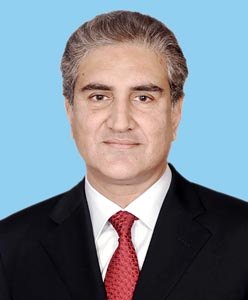

![[mariana+babar.jpg]](https://blogger.googleusercontent.com/img/b/R29vZ2xl/AVvXsEibhHLFT5WKHhhbjeGgtKBnNdKuh0DVvRKUSQz0bXQPDO0If4Sn5aa5cH2jw2Ec-HNTvhbCPcjQhTuIV1LgaoipOkM6MO2McpTjkio-dgem2pfmqU2PeZu7lgYW59xeJw1Ctt_tdhmBfS8/s1600/mariana+babar.jpg)


