Showing posts with label Rajasthan. Show all posts

Monday, August 27, 2012

A K Hangal, Bal Thackeray & Syed Talat Hussain.

Jingoism: Jingoism is extreme patriotism in the form of aggressive foreign policy.[1] In practice, it is a country's advocation of the use of threats or actual force against other countries in order to safeguard what it perceives as its national interests. Colloquially, it refers to excessive bias in judging one's own country as superior to others – an extreme type of nationalism. The term originated in Britain, expressing a pugnacious attitude towards Russia in the 1870s. "Jingoism" did not enter the American vernacular until near the end of the 19th century. This nationalistic belligerence was intensified by the sinking of the battleship USS Maine in Havana harbour that led to the Spanish-American War of 1898. Wikipedia http://en.wikipedia.org/wiki/Jingoism


Fascism: is a radical authoritarian nationalist political ideology. Fascists seek elevation of their nation based on commitment to an organic national community where its individuals are united together as one people in national identity. They are united by suprapersonal connections of ancestry and culture through a totalitarian state that seeks the mass mobilization of a nation through discipline, indoctrination, physical training, and eugenics. Fascism seeks to eradicate perceived foreign influences that are deemed to be causing degeneration of the nation or of not fitting into the national culture. Fascism was founded during World War I by Italian national syndicalists who combined left-wing and right-wing political views. Fascists have commonly opposed having a firm association with any section of the left-right spectrum, considering it inadequate to describe their beliefs, though fascism's goal to promote the rule of people deemed innately superior while seeking to purge society of people deemed innately inferior is identified as a prominent far-right theme. Wikipedia http://en.wikipedia.org/wiki/Fascism


Artists, Intellectuals, Scholars, Authors are universal, they have no boundaries, they are watched, read, quoted, and consulted respectively without any passport and immigration but Talat Hussain (a property of Hameed Haroon and Amber Saigol and Dawn News) think otherwise recently when Giant Pakistani Artist Mehdi Hasan passed away people of India expressed deep sorrow and grief without bothering about Partition, his nationality, colour, religion, passport, or any other divide and duly honoured Great Mehdi Hasan with Respect and Good words, Talat Hussain, Hameed Haroon and Amber Saigol's Alleged Honour was sleeping somewhere when Indians were praising Mehdi Hasan but suddenly "The Sick Patriotism" comes alive in Talat Hussain, Hameed Haroon, Amber Saigol and Dawn News when Pakistanis reciprocated the same honour to a recently departed Indian Artist Rajesh Khanna. Talat Hussain and Dawn News vomited venom in an already venomous atmosphere without bothering about the fact that Mehdi Hasan was born on that side of Border which is now India (in Rajasthan) and Rajesh Khanna had his roots in Burewala, Punjab, Pakistan A K Hangal born in Sialkot (Punjab) and now both sides are two different countries courtesy alleged Founding Fathers and Alleged Freedom Fighters of now Both sides. By the way A K Hangal lived early part of his life in Sialkot, Peshawar, and Karachi. Now Talat Hussain and no good Hameed Haroon and Dawn News should start Tabbarra on Sialkot, Peshawar, and Karachi. Tribute to Rajesh Khanna (1942 to 2012) Part - 1 http://amughal.blogspot.com/2012/08/tribute-to-rajesh-khanna-1942-to-2012.html Tribute to Rajesh Khanna (1942 to 2012) Part - 2 http://amughal.blogspot.com/2012/08/tribute-to-rajesh-khanna-1942-to-2012_15.html Tribute to Ghazal Maestro Mehdi Hasan by Alauddin Khanzada & Asif Noorani. http://chagataikhan.blogspot.com/2010/12/tribute-to-ghazal-maestro-mehdi-hasan.html Tribute to Ghazal Maestro Mehdi Hasan by Alauddin Khanzada & Asif Noorani http://amughal.blogspot.com/2010/12/tribute-to-ghazal-maestro-mehdi-hasan.html


Down Memory Lane With A K Hangal

http://www.youtube.com/watch?v=a9nNwjdGbsg


A K Hangal with Comrade Sobho Gianchandani Honouring Sajjad Zaheer: NEW DELHI: India’s distinguished movie actor and communist ideologue A.K. Hangal died in a Mumbai hospital on Sunday following a brief illness, Press Trust of India said. It said his son Vijay Hangal, a retired still cameraman in Bollywood, appealed for help after failing to meet Hangal’s medical expenses. Several Bollywood celebrities like the Bachchans, producer-director Vipul Shah, and actors Mithun Chakraborty, Aamir Khan and Salman Khan came forward to help him. The 95-year-old character actor and veteran of the fabled progressive cultural troupe, the Indian Peoples’ Theatre Association (IPTA), passed away at 9am at the Asha Parekh Hospital in suburban Santacruz in Mumbai, where he was admitted on Aug 16 after fracturing his thigh bone. Best known for his one-liner from blockbuster Sholay — Itna sannaata kyun hai bhai (why so much silence is there), Hangal entered Bombay cinema when he was in his 40s and went on to act in over 200 films. He endeared himself to the audience by playing the role of the lovable old man in films like Sholay, Shaukeen and Namak Haram, “This is really a sad thing…now I am left all alone. I have no words to describe his loss,” Vijay Hangal told PTI. “He was a strong man…he has been a great support to me,” he said. Avtaar Veenit Kishan Hangal was born in a Kashmiri Pandit family in Sialkot and came to the city of dreams — then known as Bombay — at the age of 21. PT said he made an impressive mark as the old man who gets up and joins the troupe in the song Ghanan Ghanan, where he sang one line Kale Megha Kale Megha Pani To Barsao in Aamir Khan-starrer Lagaan. The actor was honoured with the Padma Bhushan for his contribution to Hindi cinema in 2006, was in the news last year for living a life in penury. Recently, he returned to face the studio lights after several years for TV series Madhubala, PTI said. REFERENCE: Legendary Indian actor Hangal dies in penury http://dawn.com/2012/08/27/legendary-indian-actor-hangal-dies-in-penury/ Veteran Indian actor A.K. Hangal dies at 95 http://dawn.com/2012/08/26/veteran-indian-actor-a-k-hangal-dies-at-95/

A K Hangal left alone

http://www.youtube.com/watch?v=JvWje5jR0o8


AK Hangal dies at 97, bigwigs skip funeral : Not a single big name from the film industry turned up for the cremation of veteran character actor A K Hangal on Sunday. The 97-year-old, a veteran of over 225 films, passed away early in the morning at Asha Parekh hospital in Vile Parle following a brief illness aggravated by a fracture of his thigh bone. Only character actors like Rakesh Bedi and Raza Murad and friends like Ila Arun were present for the last rites. But that didn't really matter to a man who had dedicated his life to theatre, cinema and social issues. Some theatre enthusiasts posted comments on social networking sites. One of these said that another acting academy had shut down. Hangal was one of the most endearing old men of the film industry with roles in Sholay, Namak Haram and Shaukeen. His one-liner from Sholay, 'Itna sannata kyon hain bhai', achieved cult status.

Sholay's Rahim Chacha had to depend on Bollywood for aid to fight illness. But the actor, who swore by leftist philosophy, believed that the state needs to accept the responsibilities of senior citizens. His son Vijay said, "My father was highly spirited and fought till the end. He survived even after life support was taken off." He added, "He even shot a small scene for the TV serial Madhubala despite his poor health. The moment the camera was switched on, his energy came back.'' Fashion designer Riyaz Gangji, who would visit the actor almost every day, said, "When I asked him if he wanted life support back, he said no.'' Hangal had walked the ramp for the designer last year. Murad said, "The actors would've come if a political party summoned them. But they didn't have an hour to spare to pay their last respects to the man who gave 50 years to the industry and worked with all top stars.'' Hangal started his film career rather late. The actor, who participated in the freedom movement, started off as a tailor. He got associated with actors like Balraj Sahni, Sardar Jafri and Kaifi Azmi, who persuaded him to act. He entered the film industry at the age of 50 with Basu Bhattacharya's Teesri Kasam.

Though new to the industry, he was not afraid to express his anger over Raj Kapoor walking onto the set late. Hangal was very vocal about his political views. He had faced a ban on his film career after the Shiv Sena objected to his attending a function organized by the Pakistan consulate in Mumbai in the 1990s. A Communist Party of India member, Hangal continued to renew his membership every year. Hangal acted in over 225 films in his film career spanning over four decades. He played the roles of a father, uncle or housekeeper to many a big star, including Jaya Bachchan, Sanjeev Kumar, Rajesh Khanna and Amitabh Bachchan. He had cut down on acting for 10 years, but did small roles in Aamir Khan's Lagaan and Shah Rukh Khan's Paheli. The actor's financial condition became an issue with his health falling and his son Vijay having to stop work to look after his father. After reports about Hangal's poor financial condition, the information and broadcasting ministry announced a plan for health insurance of retired actors which has not yet materialized. Vijay said, "The industry's aid did help us pull through all his medical needs. Though film industry bigwigs were not there, his friends from IPTA and character actors attended the cremation. We are planning a condolence meeting at Prithvi Theatre at 4pm on Monday.'' AK Hangal dies at 97, bigwigs skip funeral TNN | Aug 27, 2012, 05.53AM IST http://timesofindia.indiatimes.com/entertainment/bollywood/news-interviews/AK-Hangal-dies-at-97-bigwigs-skip-funeral/articleshow/15795100.cms

Bollywood Comes finally for A K Hangal


http://www.youtube.com/watch?v=w93vy1Vf9_A


AK Hangal: Bal Thackeray once called him a traitor  Hangal was drawn to Indian People's Theatre Association (IPTA) in India. He started working with Balraj Sahni and Kaifi Azmi in IPTA. In his late 40s, Hangal was offered the part of Raj Kapoor's brother in 1966 film "Teesri Kasam" by director Basu Bhattacharya but his scenes were removed from the film. There was no looking back for him after that. He starred in over 200 films. His mostly played roles of father, uncle, grandfather or that of a meek and harassed old man, an image he could never get rid off. The veteran actor suffered a political backlash in 1993 when he applied for visa to visit his birthplace in Pakistan. He was invited and attended the Pakistan day celebrations by the consulate in Mumbai thereby incurring the wrath of the Shiv Sena. Shiv Sena Supremo Bal Thackeray took offence and called him a traitor. A call to boycott his films was made, his effigies were burnt and his scenes were deleted from films. He bounced back after two years with character roles in Amitabh Bachchan's home production "Tere Mere Sapne" and Aamir Khan's "Lagaan". He last shot for Shah Rukh Khan starrer "Paheli" in 2005.

He was awarded Padma Bhushan for his contribution to Hindi cinema in 2006.

The actor was in news last year for living a life in penury. His son Vijay, a retired still cameraman in Bollywood, appealed for help after failing to meet Hangal's medical expenses. Several Bollywood celebrities like the Bachchans, producer-director Vipul Shah, and actors Mithun Chakraborty, Aamir Khan and Salman Khan came forward to help him. He returned to face the studio lights again recently after a gap of seven years for TV show 'Madhubala'. Having reached the sets on wheelchair, Hangal was not sure if he would be able to handle it physically. But he came in his elements once the cameras started rolling. He has a 74-year-old son Vijay with late wife Manorama. REFERENCE: AK Hangal: Bal Thackeray once called him a traitor PTI Aug 26, 2012, 11.05AM IST http://articles.timesofindia.indiatimes.com/2012-08-26/news-interviews/33402013_1_bal-thackeray-tv-show-madhubala-mithun-chakraborty

Monday, April 25, 2011

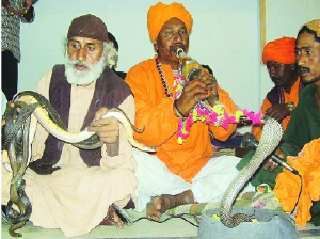
Snake Charmers of Sindh (Late. Iqbal Jogi & Misri Jogi).

http://img3.photographersdirect.com/img/26650/wm/pd2223371.jpgHistorically, the earliest evidence of snake charming can be traced to the Egyptians. Till the early 1990s, it was quite normal to see snake charmers wandering in the streets with their colourful bulging bag hanging on their shoulder. Their serpents were in baskets or pots hanging from a bamboo pole slung over the shoulder. These charmers usually wore very colourful attire, comprising a turban and long kurta and had mostly long and curly hair. Necklaces of shells or large beads and earrings would make their personality even more mysterious. They usually attracted people's attention by playing a special flute-like instrument made from gourd, known as 'been'. Once a sizable crowd had gathered, the snake charmer would play the flute and a snake eventually emerged from the cane or straw basket. It is commonly believed that the snake actually dances to the tune of the flute but in reality, the snake can't hear anything. It actually moves with the motion of the flute that the charmer moves while playing it. Baba Kamesha, a 60-year-old snake charmer, has been in this profession for the past 20 years. It is his family profession and even the children in his family are involved in it.

Misri Jogi & Companion with Murli (Snake Charmers of Sindh)

URL: http://youtu.be/34OWd4k3Igs

Kamesha learnt all about snakes, which he calls saanpon ka ilm, from his master Log Bengali. He disclosed that a snake charmer keeps wandering — visiting villages, towns and cities and also spends years in desserts and jungles to search for serpents. Kamesha got his snake from Balochistan's desert. "An inexplicable relationship exists between a snake and its charmer, the jogi," Kamesha confesses. According to him, a snake never hurts its master; and the master, for his own part, is not scared of being bitten by the snake, even poisonous ones. And in case of a snake bite, the jogi uses traditional remedies to treat himself and keeps a white mysterious powder in his pocket which he applies instantly on the bitten area. These days, snake charming has almost vanished because no one is really interested in watching a poor man's art and his serpent's performance. REFERENCE: Feature: Fading with time By Wajiha Jawaid | InpaperMagzine March 5, 2011 http://www.dawn.com/2011/03/05/feature-fading-with-time.html

Late. Iqbal Jogi on Murli
URL:


http://i66.photobucket.com/albums/h241/adilnajam/snakecharmers.jpgHYDERABAD, Jan 20: Snake charmers called Jogis in Sindhi warned on Saturday that many rare species of snakes were fast becoming extinct in Sindh and demanded that the government should set up an institution to preserve and conduct research on the reptile. A group of Jogis said while addressing a press conference at the Hyderabad press club that the government should also establish an educational institution for them. Arjun, an expert on snakes, said that the snakes feed on meat, mud and milk and advised the government to set up an institution to preserve the snakes which were fast becoming extinct. He said that the snakes' venom and meat could cure many diseases such as tuberculosis and jaundice and disclosed that Jogis administered a soup prepared from snake meat to their children and believed the diet would help them tell one kind of snake from the other. He claimed that there were 900,000 snakes and 100 scorpions in the province. He said that the most famous specie of snakes were Umel Karo, Pandam, Karar and Lundi and among them Lundi was the most dangerous, which was found only in Sindh. Mohammad Urs Behrani, Syed Mureed Ali Shah and Aslam Channa also addressed the conference. Jogis had brought with them some snakes, which were put on display in glass containers. REFERENCE: HYDERABAD: Snake charmers call for research Bureau Report January 21, 2007 Sunday Muharram 01, 1428 http://archives.dawn.com/2007/01/21/local28.htm

Thursday, July 29, 2010

Sindhi Rano performed by Rajasthani Folk Artists.


The singer above has sung Rano just like Late. Fauir Abdul Ghafoor, that audio was on esnips but no more. Nobody has sung like Faquir Abdul Ghafoor. There was a hint of "PEREN PAWANDI SA CHAWANDI SA RAHI" in between the Kalam. It is a Folk Dance of Rajhastan, India. The singers are "Manganhar of Rajasthan" and singing in Kutchi dialect of Sindhi. Sindhi Folk Dance is quite different.


'Sindhi folktales of Thar', a book written by Dr Kishni Phulwani of Rajasthan, India, and translated from Hindi to Sindhi by Noor Ahmed Jinjhi, is a combination of the colours of the Thar desert, which stretches across the border in both, Pakistan and India. The book has been published by Thardeep Rural Development Programme (TRDP), a non-governmental organisation working for the wellbeing of the desert community, and promoting and preserving the old culture of the politically-neglected region. The book revolves around Manganhars -- the real folktale narrators of the region. The theme was chosen by the author for her PhD from Jodhpur University, India. The Manganhars are common to Sindh and Indian Rajasthan. They narrate folktales to the tune of traditional drums and attract wideaudiences. Dr Phulwani has also touched upon history, geography, languages being spoken in the region, culture, socio-economical conditions and the role of artisan communities. Portraying the scenario, the author almost quoted poetic folktales of several Sindhi poets, especially Sur Marvi by Shah Abdul Latif Bhittai.


Marvi, a symbol of the traditions of the region, was kidnapped by King Omar when she had gone to a well to fetch water. She was brought to a palace, and offered every luxury possible to make her agree to stay there. Marvi, however, spurned all offers by the king and demanded that she be allowed to go back to her parents' makeshift homes. Dr Phulwani recalls the memorable days of her childhood, when her family migrated to India in 1966 from Sindh. Being closely attached with Sufism, her father used to listen to Sufi songs and Bhujans (Hindu religious songs) till late in the night, and would tell stories to his children before sleeping under the starry skies -- on the rooftop of their house. Dr Phulwani obtained her PhD in Sindhi Classical Literature and was very inspired by folk stories. She discusses the similarities among them in her book. Komal Kothari, who has done a lot of work studying the role of the Manganhar community in preserving folktales, has written foreword of the book.

Even after migration to India, Sindhi Hindus continue to organise annual Melas of Sufi saints, whose shrines originally exist in Sindh, Dr Phulwani sayd. She visits these Melas regularly to pay homage to the shrines and to Sufi thought, which inspired her to write her valuable book. The author obtained her Masters degree from Jodhpur University, India, and chose folklore literature as a minor subject. During her study, she went through the contemporary literature of the world. When she showed her desire to continue to work on Rajasthani literature in India and Pakistan, she was advised to meet Komal Kothari, who has done a lot of work to promote Rajasthani music, art and folklore literature and frequently visits both sides (India and Pakistan) to collect information. The author focused on the Dhat region and reviewed literature produced in Dhatki, Marwari, Gujrati, Sindhi and Rajasthani languages. According to her, the area now in India was part of Sindh before the Partition of the subcontinent on August 14, 1947, and the people of these areas from both sides of the border have a very close relationship. The author has raised a question for future researchers regarding the originality of indigenous Sindhi folktales. For instance, the stories of Umar-Marvi, Moomal-Ranoo, Noori-Jam Tamachi, Sassui-Punhoon, Laila-Majnoo, Leela-Chanesar, Sorath-Rai Khanghar, Heer-Ranjho, Sohni-Mehar and Jisman-Oden were sung by poets of the past in similar tones. This question raised by the author may inspire other researchers to clarify the originality of these folktales for future generations. REFERENCE: Music in the dunes of Thar By Jan Khaskheli http://www.jang.com.pk/thenews/aug2009-weekly/nos-23-08-2009/kol.htm#3

سُر مومل راڻو

داستان پهريون
1


ڪالَھه گَڏِيوسُون ڪاپَڙي، بابُو بيکاري؛
سامِئَ سيلو سِرَ تي، مالا موچارِي؛
ڏيئِي ڏيکارِي، ڦَٽي دِلِ فَقِيرُ وِيو.
2
ڪالَھه گَڏِيوسُون ڪاپَڙِي، جَهِڙو ماهُ مُنِيرُ؛
فَيضُ، فِراقُ فَقِيرُ، جوڳِي جاڳائي وِيو.
3


ڪالَھه گَڏِيوسُون ڪاپَڙِي، پَهَرَ سِجَ کان پوءِ؛
پَسو سُونهَن ساميءَ جي، رَتَ وَرنو روءِ؛
جو مُنهِن مُومَلَ جي پوءِ، موٽَڻُ تَنهِن مَسَ ٿِئي.
4


ڪالَھه گَڏِيوسُون ڪاپَڙِي، بابُو بانَ بَرِي؛
سائِي سالَ ڪُلَهنِ ۾، سامِي سونَ سَرِي؛
خَبَرَ ڏي کرِي، ڪا مُومَلَ جي مَجازَ جي.
5


بيکارِيءَ کي بَرَ ۾، وِيو ڪَيفُ چَڙهِي؛
ڳالِهيُون ڪَندي ڪاڪِ جُون، ڳوڙها پِيَسِ ڳَڙِي؛
ڪا جا اَنگُ اَڙِي، جِئَن ڇُٽا ڦَٽَ ڇُڙِي پِيا.
6


سِجُّ سُڀاڻي جا ڪَري، سامِيءَ سائِي رُوءِ؛
اَچي ٿِي عَطُرَ جي، مَنجھان مُگَٽ‎َ بُوءِ؛
سا ڏيکارِيَهُون جُوءِ، جِئان لاهُوتِي لَعلُ ٿيو.
7


جوڳِيءَ تي جَڙاءُ، نِسوروئِي نِينهَن جو؛
پَتَنگَ جِئَن پيدا ٿِيو، سامِي سِجَّ وَڙاءُ؛
آيو ڪاڪِ تَڙاءُ، ڪُنوارِنِ ڪَڪورِيو.

داستان ٻيو
1


آءُ لانگوٽِيا لالَ! ڪَنهِن پَرِ ڏِٺِيُءِ گُجَرِيُون؛
آبُ اَرتو اکِيين، لُڙڪَ وَهائِيين لال؛
ڏِٺَءِ جي جَمالَ، سامِي! ڪُہُ نه سَلائِيين؟
2
گُجَرِ کي گَجميلَ جُون، تارَنِ ۾ تَبَرُون؛
هڻي حاڪِمِيَنِ کي، زورَ ڀَريُون زَبَرُون؛
ڪاڪِ ڪَنڌِيءَ قَبَرُون، پسو پَرَڏيهِيُنِ جُون.
3


گُجَرِ گاروڙِيُنِ، اَچيو اَڏِي اُڀِيي؛
مَٿان پيئِي تِنِ، ٻَڌا ٻاڻَ هَڻَنِ جي.
4


مُومَلَ ماري مِيرَ، آهيڙِيُنِ کي آڪَري؛
سوڍِيءَ گھڻا سَڪائِيا، پَڙهِيا پَڻِتَ پِيرَ؛
هَڻي تِنِ کي تِيرَ، مَڻِيو جن مَٿَنِ ۾.
5


جوڳِيءَ جاڳائي، ماري وِڌو مامِري؛
لَنؤ لُڊُوڻي ڪَنڌِيـين، اَمَيو آهي؛
وَڃو جي ڪاهي، ته نِڪُون پَسو نِينهَن جُون.
6


هَلو، هَلو! ڪاڪِ تَڙين، جتي نِينهَن اُڇَلَ؛
نه ڪا جَھلَ نه پَلَ، سَڀُڪو پَسي پِرِينءَ کي.
7


هَلو، هَلو! ڪاڪِ تَڙين، جتي گَھڙِجي نِينهُن؛
نه ڪا راتِ نه ڏِينهُن، سڀڪو پَسي پِرِينءَ کي.
8


هَلو، هَلو! ڪاڪِ تَڙين، چَرُو جِتِ چَڙَهنِ؛
ڪوڙين رَنگَ رَچَنِ، پانوڙِيءَ پِڪَ سين.
9


آکُون، ڊاکُون، سِرَکَنڊَ شاخُون، جِتِ چَوکا چَندَنَ ڪَؤنرَ؛
مَيي سيئِي ماڻِيا، جِتِ نه ڀِرَنِ ڀَؤنرَ؛
ڪُنوارِيُون ۽ ڪَؤنرَ، ڪاهِ ته پَسُون ڪاڪِ جا.
10


چَڙهِيا چارَئِي يارَ، سُوڌا شِڪارِي؛
فِڪِرَ ساڻُ ڦِٽِي ڪِي، سوڍي سوپارِي؛
وِيا ڪاهِيندا ڪاڪِ ڏي، جِتِ مُومَلِ موچارِي؛
موٽِيا نه مارِي، ڪَؤنرَ لَتاڙي ڪاڪِ جا.

داستان ٽيون
1


جَهِڙا گُلَ گُلابَ جا، تَهِڙا مَٿِنِ ويسَ؛
چوٽا تيلَ چَنبيلِيا، هاها! هُو! هَميشَ؛
پَسيو سُونهَن سَيَّدُ چئي، نِينهَن اچَنِ نيشَ؛
لالَنَ جي لِبيسَ، آتَڻِ اَکَرُ نه اُڄَهي.
2


جَهِڙا پانَنِ پَنَّ، تَهِڙِيون سالُون مَٿِنِ سائِيون؛
عَطُرَ ۽ عَبِيرَ سين، تازا ڪَيائُون تَنَّ؛
مَڙهيا گَھڻو مُشڪَ سين، چوٽا ساڻُ چَندَنَّ؛
سُنهَنِ رُپي سونَ سين، سَندا ڪامَڻِ ڪَنَّ؛
ڪَيائِين لال لَطِيفُ چئي، وڏا ويسَ وَرَنَّ؛
مَنجِھ مَرڪِيَسِ مَنَّ: ”سوڍي سين سَڱُ ٿِيو.“
3


سونَ وَرنِيُون سوڍِيُون، رُپي رانديُون ڪَنِّ؛
اَگَـرَ اوطاقُنِ ۾، کَٿُوريون کَٽُنِّ؛
اوتِيائُون عَبِيرَ جا، مٿي طاقَ تَڙَنِّ؛
ٻاٽَنِ ٻيلون ٻَڌِيون، پَسِيو سُونهَن سَڙَنِّ؛
ٿِيا لاهُوتي لَطِيفُ چئي، پَسَڻَ لَءِ پِريَنِّ؛
اِجهي ٿا اچَنِّ، ڪاڪِ ڪَڪوريِا ڪاپَڙِي.
4


گُجَرِ گَھڻا گھائِيا، پاڻا لَڳُسِ گھاءُ؛
مينڌَري مُلاءُ، لڳَسِ ڪانُ ڪَپارَ ۾.
5


رُوءِ راڻي جي ناهِ ڪو، سوڍو سَڀِنِ سُونهَن؛
لاٿَائِين لَطِيفُ چئي، مٿان دِلِيُنِ دُونهَن؛
ڪانهي ٻِي وِرُونهَن، ٿِيو مِڙوئِي مينڌِرو.
6


ڪاڪِ نه جَهـلِيا ڪاپَڙِي، موهِيا نه مَحلَنِّ؛
ٻايُنِ ۽ ٻانِهِيُنِ جي، ٻَنڌَڻِ ڪِينَ ٻَجَھنِّ؛
لکين لاهُوتِينِ، اَهِڙِيُون اورِيان ڇَڏِيُون.
7


ڪاڪِ نه جَھـلِيا ڪاپَڙِي، موهِيا ڪَنهِن نه مالَ؛
سوڍِيُون سِجھائي وِيا، هَهِڙا جَنِين حالَ؛
جي ڇورِيُنِ ڏِنا ڇالَ، تَپِ لاهُوتِي لَنگھي وِيا.

داستان چوٿون
1


شَمَعَ ٻاريندي شَبَّ، پِرِهَ باکُون ڪَڍِيُون؛
موٽُ، مَران ٿِي مينڌِرا! راڻا! ڪارڻِ رَبَّ؛
تُنهِنجِيءَ تاتِ طَلَبَّ، ڪانگَ اُڏايَمِ ڪاڪِ جا.
2


اُڀي اُڀارِيامِ، نَکَٽَ سَڀِ نَـئِي وِيا؛
هِڪُ مَيو، ٻِيو مينڌِرو، سَڄِي راتِ سارِيامِ؛
ڳوڙها ڳَلِ ڳاڙِيامِ، سُورَجَ شاخُون ڪَڍِيُون.
3


ڪَتنِ ڪَرَ موڙِيا، ٽيڙُو اُڀا ٽيئِي؛
راڻو راتِ نه آئِيو، ويلَ ٽَري ويئِي؛
کوءِ سا کاڻِي راتِڙِي! پِريُن ري پيئِي؛
مُون کي ڏَنءُ ڏيئِي، وڃِي ڍولو ڍَٽِ قَرارِيو.
4


راڻو ڪا راتِ ويو، ڳُجِھي ڳالھه ڪَري؛
سوڍي رِءَ، سَرتيُون! هَڏ نه ساهَ سَري؛
وَڃِي، مانَ وَري! آسائِتِي آهِيان.
5


سوڍي سُتي لوءِ، ڪا جا مون سين ڳالھ ڪَئِي؛
سا جي پَڌَرِ پوءِ، ته سَرتِيوُن ڪانه سُمِهي.
6


راڻا! تُنهِنجي راهَ تي، ڏيهاڻِي ڏيکان؛
راڻي جِيءَ رِهاڻِ جُون، رُوحَ اندَرِ ريکان؛
مُحَبَتَ جُون ميکان، تو سين، لالَ! لَپيٽِـيُون.
7


آءُ، راڻا راحَتَ! ڌاڃَ ڌَرتِيءَ جا ڌَڻِي!
سِڪَنِ ٿِيُون سُهاڳِڻـيُون، سوڍا تُنهِنجي سَٿَ؛
مون تان لاهِ مَ هَٿَ، ڪامِلَ ڌڻِي ڪاڪِ جا!

داستان پنجون
1


سَڱُ ڪري سين سِينهَنِ، ڪَنڌُ مَ ڦيرِجِ ڪيڏَهِين؛
رَمِج راڻي پُٺِ ۾، نِرتُون مَنجھان نِينهَن؛
اِنءَ مَ وَسجِ عامَ تي، جِئَن مُومَلَ! وَسَنِ مِينهَن؛
سندي حَشَرَ ڏينهَن، سوڍو سارِيندِينءَ گَھڻو.
2


جا ڀُون پـيرين مُون، سا ڀُون مٿي سَڄڻين؛
ڌِڱَ لَٽِبا ڌُوڙِ ۾، اُڀي ڏِٺا سُون؛
ڏِينهَن مَڙيئِي ڏُون، اُٿي لوچِ لَطِيفُ چئي.
3


راڻو ڀانيو راندِ، ڪِئَن وِڙُ رائِيـين؟
وَرُ وِڏُوڻو اِيَهِين، جِئَن پَرُ پُڄِتوءِ پاندِ؛
هَيءِ! ڀَڳِيَءِ هيڪاندِ، سوڍو سارِيندِينءَ گَھڻو.
4


ڪاڪِ ڪَڙهِي وَڻَ وِيا، جلِي مُنهِنجِي جانِ؛
رَکِي ڪامَ ڪِڻِڪِيو، مارِيَس تَنهِن گُمانَ؛
هَڏِ نه جِيان هاڻ! سِگھو موٽِجِ سُپِرِين!
5


ڪاڪِ ڪَڙِهي وَڻَ وِيا، ٻَرِيا رَنگَ رَتولَ؛
تو پُڄاڻا سُپِرِين! هِنئَڙي اَچَنِ هولَ؛
جي مون سين ڪَيَءِ قولَ، سي سِگھا پارِجِ، سُپِرِين!
6


حال قُربانُ، مالُ قُربانُ، گھورِيان لُڊاڻو؛
فِدا ٿِئَ فَقيرِ جو، شَلَ رُسي مَ راڻو!
مُيَنِ سين ماڻُو، مُناسِبُ نه، مينڌِرا!

داستان ڇهون
1


نه وارِثُ نه وَلَھو، نه سَڱُ، نه سِياڪو؛
تو پُڄاڻا، سُپِرِين! آيُمِ اولاڪو؛
پانڌِيا! پاراپو، ڏِجانءِ ڍاٽِيءَ ڍولَ کي.
2


ڪَرَهو ڪَمِيڻيءَ تي، سوڍا! وارِ، سُڄاڻَ!
ڪُہُ ڪَرِيان ڪاڪِ کي؟ تَنَ توهِين ڏي تاڻَ؛
لاهي غيرَ گُماڻَ، اَڱَڻِ آءُ اُڪَنڍِيـين.
3


اَڱَڻِ آءُ اُڪَنڍِيـين، پرچِي پِيارا!
پَلَڪَ پَراهُون نه سَهَنءِ، جِيءَ جا جِيارا!
نِينهان نيزارا، سَڃِ، ته مانَ سُورُ لَهي.
4


پَسُ توشَڪُون، تَڪِيا، سيئِي وِهاڻا؛
پَسِيو هَنڌَ، پَچي هِنئون، جي حَبِيبَنِ هاڻا؛
هِڪُ ڏُنگا ڏاڏاڻا، ٻِيو موٽِيو تان نه مينڌِرو.
5


سوڍا! سُورَ سُڪائِـيُون، اَکِـيُون آبُ نه ڪَنِّ؛
راڻي جِيءَ رِهاڻِ کي، وِرُوڻِـيُون وَڃَنِّ؛
سي ڪِئَن، مينڌِرا! مَچَنِّ؟ جي تو سُورِيءَ چاڙِهيُون.
6


مُون گَھرِ اچِي جي ٿِئي، مينڌِرو مِهماڻُ؛
آڻي جھوڪِيان آڳِ ۾، ڄيري وِجھان ڄاڻُ؛
تاڻي تَـنُورَنِ ۾، ڀيري هَڻان ڀاڻُ؛
پيڪَنِ سُوڌو پاڻُ، گَھرُ تَڙُ گھورِيان پِرَ تان.
7


کوڙَ قناتوُن ڪاڪِ ۾، راڻا ويہُ رَهِي؛
ماڙهُو جي مَحلاتِ جا، سوڍا ڪَجِ سَهِي؛
وِيندِيَءِ ڳالِھ وَهِي، وِڪَرِ پَوَندين وَلھا.

داستان ستون
1

ڍَٽِ مَ وَڃِجِ ڍولَ! ڪاڻِياري ڪاڪِ ڪَري؛
آءٌ اَڳَهين آهيان، ٻَڌِي تُنهِنجي ٻولَ؛
توکي ساري، سُپِرِين! رُنُمِ مَنجِھ رَتولَ؛
ٽِڪاڻا ۽ ٽولَ، وِسَہُ مُون وِهُ ٿِيا.
2


سوڍي سِرُ نِيو، هِتِ ڪَرَنگَھرُ سَکڻو؛
راڻي جي رِهاڻِ کي، سِڪي ساهُ پِيو؛
پَسان ڪِينَ ٻِيو، تو رِءِ اَکَڙِيُنِ سين.
3


راڻي رِڻُ ڪَيو، جيڏِيُون! مُنهِجي جِيءَ سين؛
مَنُ مينڌِري وَڍِيو، ڌُٻِي ڌَڙُ پِيو؛
ٻُجھان، ٻَهَرِ وِيو، هِنئون هَنڌِ نه هيڪِڙي.
4


رُئان ٿي، راڻا! هَنڌَ نِهاريو حُجِرا؛
پيئِي کِہَ کَٽُنِ تي، ٿِيا پَلَنگَ پُراڻا؛
ڌَرِيائِي ڌُوڙا ٿِيا، وَرَ رِءَ وِهاڻا؛
جايُون، گُلَ، جَباتَ، وَڻَ، تو رِءَ ڪُوماڻا؛
مينڌِرا! ماڻا، تو رِءَ ڪَندِيَسِ ڪِنِ سين.
5


جِئَن ايندي ئِي موٽِئين، مينڌِرا! وَڏِي جاڙَ ڪِياءِ؛
وَرُ نه هُئين؟ وَلَھا! هُوندَ جٽِي مون جاڳاءِ؛
ته سُتي جي ساڃاءِ، سوڍا! سِگِھيائي ٿِيَءِ.
6
جڳ جِئَن تِي چوءِ، سوڍو تِئَن نه سِکِيو؛
راڻو تِئَن نه رُوءِ، ڳوڙهو جِئَن ڳَلِ ڳَڙي.
7


تِنِ باغَنِئُون بَسِّ، جي ڪَنڌِيءَ ڪاڪِ ڪَڪورِيا؛
سوڍي رِءَ سَرِتيُون! ڪاڪِ نه اچي ڪَسِّ؛
راڻي پائي رَسِّ، تَنُ ٻيڙِيءَ جِئَن تاڻِيو.

داستان اٺون
1


ڪِينَ ساڱاهِيُمِ، سُپِرِين! جاڙُون ڪَيُمِ جالَ؛
سوڍا! مون کي ڪالَ، موٽِي مُنهَن ۾ آئِيُون.
2
خاموشِي خَبَرَ جِي، مُومَلِ ٿِي مَتِّ؛
صَبرُ ٿِيو سُپَتِّ، مُنهِنجي حَقِّ، مينڌِرا!
3


ڍولي ڍَڪِي آهِيان، هُيَسِ اُگھاڙِي؛
ڏيئِي لِکَ لاڙِي، ڪَڪَرُ ڪَيائِينمِ ڪاڪِ جو.
4


سوڍا! صَبرُ تُنهنجو، مَرَڪُ لَڄايُنِّ؛
چُپ سين جي چَوَنِّ، اَدَبُ ڪجي اُنِ جو.
5


سوڍا! صَبرُ تُنهنجو، سيکاري سَهَسَ؛
پُڄِي تِئان پَهَسَ، مون کي نَصِيبَ نيئِي جَھليو.
6


سوڍا! صَبرُ تُنهنجو، بي عَقُلَ آڻي بازِ؛
سندي صَبُرَ سازِ، توبَہَ ڪارِيَمِ تَڪڙِي.
7

جنين سندي مُنهَن ۾، نِهائِيُون نَڪَنِّ؛
تِئان وَڍِيو هيڪِڙو، ته ڪَهڙو ٿورو تَنِّ؟
سي مَرُ سُڃا ئِي سُونهَنِّ، جن ڀـلِي ڀِينگَ ڀَرَمَ جِي.

داستان نائون
1


راڻي جي رِهاڻِ مان، ڪو آديسِي آيو؛
چوڏِهِينءَ ماهَ چَنڊَ جِئَن، ڪَيو سامِيءَ سَهائو؛
لَٿو اُونداهو، جوڳِيءَ سَندِيءَ جوتِ سان.
2


راڻي جي رِهاڻِ مان، ڪو آيو آديسِي؛
کَٿُورِيءَ خوشِبُوءِ سين، وِلاتَ سَڀِ واسي؛
سُوڌو سَناسِي، اُتانهِين ٿي آيو.
3


نَئون نِياپو آيو، راڻي مُلان راتِ؛
لَڌِيسُون لَطِيفُ چئي، ڪَنان ڏاتَرَ ڏاتِ؛
ڪَهڙِي پُڇين ذاتِ؟ جي آيا، سي اَگِھيا.
4


ڪيڏانهُن ڪاهِيان ڪَرَهو؟ چَؤڏِسِ چِٽاڻو؛
مَنجِھين ڪاڪِ ڪَڪورِي، مَنجِھين لُڊاڻو؛
راڻو ۽ راڻو، رِءَ راڻي ٻيو ناهِ ڪو.


5

ڪيڏانهن ڪاهِيان ڪَرَهو؟ چِٽاڻو چؤڌارَ؛
مَنجِھين ڪاڪِ ڪڪوري، مَنجِھين باغَ بَهارَ؛
ڪانهي ٻي تَنوارَ، ٿِيو مِڙوئي مينڌِرو.

Courtesy: عبدالماجد ڀرڳڙي [Mr. Abdul Majid Bhurguri] شاه سائين جو رسالو
ڪلياڻ آڏواڻي جي مرتب ڪيل رسالي ۾ بيتن تي شامل پهرين اليڪٽرانڪ انٽرنيٽ ايڊيشن
http://www.bhurgri.com/bhurgri/sd_shah.php


Mumal and Rano-XXI

I

1

With love, all unalloyed, is dight
Yogi entirely-
Like image at rising sun
he flutters, he Kak, where with delight
virgins enlivened him.

2

The yogi looks like sun so fair,
when scaling morning-skies
Such sweet entrancing fragrance pours
from out his silken hair;
Show us the land, where fragrance rare
O yogi you obtained!

3

O loin-clothed, one, let us know,
the way you virgins met
Why from your eyes continuously
the tears of blood do flow?
O Sami! on us light bestow
of beauty that you found!

4

"Go, go, to waters of Kak go
where love is made, they say;
Where there is neither night nor day
all shall Beloved see!

5

Resplendent diamondss gleam within
Magnetic Mumal's eyes...
Common or uncommon, who tries
to see these eyes, is slain.

6

O camel, for such enterprise
master bred you with care;
With vigilance cross over now
to where Ludhana lies;
Mumal we have to face this eve,
or when the sun doth rise;
With her consent on Kak's supplies
of blossoms you may browse.-

7

Beautiful like the roses sweet
are robes of damsels fair...
In Jasmin-fragrant coiffuers they
have piled their long, fine hair.
From Beauty so entrancing, love
is kindled everywhere;
Wondrous show, damsels spinning there
on-lookers dumb-struck gaze.

8

Like fresh pan-leaves are shawls they wear
of shimmering emerald silk-
Their bodies all refreshed with atter
and ambergris rare;
From fullsome platis sandle and musk
perfume all round the air;
And delicate ears, dainty ware
of glistening gold do hold-
Today Mumal's in glorious from
rejoicing, free from care;
Because Rano without compare,
her fiansee hath become!...

9

Mumal had wounded many, lo
she's wounded now instead-
A pointed arrow struck her head
from knightly Rano's bow.-

II

10

Although Rano not destined is
Mumal to be with thee-
This will be clear from Rano's love...
still not resentful be,
Weep not, but bear it patiently,
Be true to kinship new.

11

Kak could not hold those wanderers
Castles not tempt their mind...
No maid or mistresses their hearts
with magic strings could bind
For e'er Lahutis left behind
myraids of maids as these.-

12

Kak could not hold those wanderers
for wealth they did not care,-
It was by men of such a mould
royal virgins wounded were-
Lahutis they could not ensnare
with all their coquetry.

13

They passed Kak at the corner, long
that corner turned have they...
To those who are now far away
what shall some 'Natir' do?

III

14

Ludhana is a hell mere
without Beloved mine;
Friends, Rano took offence last night
and left me torture here...
And Kak to me is poison sheer
the moment he is gone.

15

O Rano, hardly had you come,
you turned and went away
But were you not my spouse? why not
to wake me did you stay?
Then soon you would have known who lay
beside me on the bed.

16

Whole night my lamp did burn, but see
the dawn is breaking now;
Rano without thee I shall die-
In God's name come to me
Oh-all the crows of Kak to thee
as messenger I sent.-

17

I trimmed the wick, again, again,
oil is consumed at last
Stranger-beloved, do return
riding a camel fast;
Weeping for Rano, night is past,
the whole of night I wept.

18

Orion stands above my head;
pleiades have declined...
The time is past...he did not come
Rano, for whom I pined-
Fie on cursed night, without my love
it passed, and left me woe-confined-
To give me hell, he did not mind
now rests he in his dhat.-

19

Rano, I weep when I behold
the empty places here
Dust settled on beds and divans
so drab looks all and cold;
Unused by master pillows lie,
and nought but dust they hold-
Without you, trees and flowers fade
and never more unfold...
Who would bear my freaks mainfold
but my Mendharo dear?

20

Continuously I watch your way,
mine eyes are at the door-
May you come back to me Rano,
I heaven do implore;
You hold my life, else many more
of Rano's world contains.

21

I did not realize my sweet,
the faults I did commit;
They now recoil on me, and hit
me justly in the face.

22

't was by your patience, I became
a human being dear-
't was through a whim of mine, my name,
myself, you came to know.

23

If Mendharo to my own house
would come as guest, to stay with me-
To flames I'd give self-consciousness
my knowledge and my ancestry;
Pride egoism I would throw
Into the stove, most certainly
My sacrifice for loved-one be
the home, parents, myself.

24

Who with a lion doth ally
herself, must steady be-
Affectionate and vigilant
In Rano's wake do lie-
O Mumal, not like rain do pour
On all that you come by...
When resurrection day is nigh
you will of Rano think.

25

Go straight ahead, and look not back
nor turn this side or that,
Or else, a temple-turning smack
unwar'ly you receive.

IV

26

A messenger! in haste he is
By he is sent;
With promise: "one you love will reach
Ludhana for your bliss;
The speedy camel will not miss
to enter Kak at Dawn."

27

A message great and new arrived
from Mendharo last night;
We have received a gift divine,
from Giver of all light-
"Ask not for caste-all we invite
all are accepted here."

28

Where need I drive the camel? when
Glory all round is beaming?
Kak in my being doth radiate,
In me's Ludhano gleaming;
Of Rano sweet my soul is dreaming
there is none else but 'He'.-

29

Where need one drive the camel? when
great radiance reigns all round?
In my being is Kak...in me
gardens and springs abound;
There is no other voice or sound
But all is 'Mendharo'.

REFERENCES: Mumal and Rano-XXI by Late. Elsa Qazi http://www.oocities.com/thebhittai/lateef21.html Mumal and Rano-XXI Chapter-I [Shah Jo Risalo by Late. Shah Abdul Latif Bhitai Translated by Late. Elsa Kazi http://www.maktabah.org/attachments/055_Shah-Elsa%20Kazi.pdf

I am extremely thankful to Mr Xafar Sindhi who helped me in this post.

Friday, October 16, 2009

Folk Artists of Sindh & Rajasthan playing Jew's Harp - Changu - Morchang - (چنگُ)

In Sindhi the Jaw harp (or Jews' harp) is called Changu (چنگُ). In Sindhi music, it can be an accompaniment or the main instrument. One of the most famous players is Amir Bux Ruunjho. Sindhi Changu by Amir Bux Ruunjho.


Sindhi Changu by Amir Bux Ruunjho.

Courtesy: 2009fayaz/MAKA MUSIC CHANNEL

URL: http://www.youtube.com/watch?v=Kki4J7gX2O8


Rajasthani Folk Artist playing Morchang (Jews's Harp)


Darbar Morchang Party: Rajasthan Desert Festival Evora 2007


Courtesy: joaopedroleitao

URL: http://www.youtube.com/watch?v=OVvmaJy4KZs

Rajasthan Desert Festival Evora 2007


Courtesy: joaopedroleitao

URL: http://www.youtube.com/watch?v=9hXWqAzmh-0&feature=related

Morchang (Folk Instrument of Rajasthan - India)


Courtesy: rajfolkseries

URL: http://www.youtube.com/watch?v=SbhF7b2u3nA&feature=related


HISTORY OF THE JEW'S HARP - compiled by Bill & Janet Gohring Corrections added by Dr. Fredrick Crane

The Jew's Harp is a small musical instrument which is held against the teeth or lips, and plucked with the fingers. Its appearance in many cultures of the world, and ancient roots, attest to the magical essence of this simple instrument.

History of the name "Jew's Harp"

Very little early history is available.

The Jew's harp is known world-wide by many different names, depending on the country of origin.

Some examples are:

England - Gewgaw

Germany - Maultrommel (which means mouth drum)

Japan - Koukin

Russia - Vargan

Siberia - Khomus

Philippines - Kumbing and kubing

Italy - Scacciapensieri

Norway - munnharpa or munnharpe

France - guimbarde

Bali - genggong

Musicologist Phons Bakx of the Netherlands has compiled the nomenclature of over thousand names for the Jew's harp from all over the world.

See: http://www.antropodium.nl/DuizendNamenMhp.htm

A Dictionary of Contemporary American Usage (New York 1957), p.259, reports a recent trend:

Jew's Harp (Jews' Harp); juice harp. For over 400 years the instrument ... has been connected in English with the Jew's ... Whether any derogation was originally intended is not known but it is apparently believed that some might now be felt, for the instrument is invariably referred to in radio and television programs as a juice harp. Considering the drooling that often accompanies amateur performances on the thing, this is a fairly ingenious emendation, and considering the fact that it is only on radio and television programs that children hear of the instrument at all any more, the new name is probably better established among the young than the old name, and one more word has undergone one more preposterous change.

Frederick Crane (in VIM #1) says, "To summarize, six words have been discussed as the original form from which the Jew's of Jew's Harp was corrupted: jaw's, jeu, jeugd, gewgaw, giga, gawe. The frequency and dogmatism with which the various etymons have been asserted vary from very great to very little."

For a full story on the etymology of the name Jew's harp, see VIM #1 (Frederick Crane, Editor, address below) for a blow-by-blow account written by Dr. Crane himself.

Gordon Frazier, editor of PLUCK (a newsletter for Jew's harpist -- address below) says in PLUCK #3:
"In brief: The earliest known written citation of Jew's harp in 1595, in England. Prior to that it was called Jew's trump (earliest spelling: jewes trump). Before that it was known as trump in Scotland and northern England; the origin of the "jewes" preceder is obscure. However, there is no indication that the origin was connected with Judaism or the Jewish people. It probably came from some other word -- one possibility is the Old English word gewgaw - and was then, many years later, "fixed," resulting in the current form.

Jaw harp is a 20th century creation. It was first suggested as an origin of Jew's harp as pure conjecture - there is no evidence of that name ever being used in common parlance before then. From that point, several different music historians indulged in sloppier and sloppier research, until jawharp as an origin progressed from baseless conjecture to absolute "truth".

Jaw harp, then, is not an invented term intended to be politically correct, but is rather a misnomer brought to life by bad scholarship. In its favor, jawharp is a misnomer of a misnomer - a quirky name for a somewhat quirky instrument.

An informal survey of Jewish friends over the years has yielded mixed reactions to the "Jew's harp". Almost all found it inoffensive, or were puzzled that the question had even been raised; however, the few who did find it offensive objected to it rather strongly.

One said he thought it sounded like a slur invented by Christians, Big Christian harp, little Jew's harp. This is an imaginative yet unfounded theory, but given the abuse that Jews have suffered throughout history, it is an understandable one.

An important fact to consider is that the name Jew's harp in not considered a slur only because of the historic persecution of Jew's. It is also because of the negative image the instrument has endured in the United States. (If, say, French toast were used only for hog feed here, the French might well be insulted by the term).

And even though aficionados of the Jew's harp are aware that in most of the world - perhaps even most especially in Europe -- the instrument has been revered, not reviled, the fact remains that perceptions can be as important as fact. A perceived slur can hurt as much as an intended one.

English is a fluid, flexible, and capricious language. Whether Jew's harp, trump, jawharp, or something else enters popular usage cannot really be dictated. Even if it could, changing language in the name of "correctness" seems a bit Orwellian.

PLUCK will continue to use Jew's harp, as it is still the most common term in use, but when referring to a player of the instrument will use "jawharpist." We will also use whatever name the maker of a particular instrument uses, and use a player's choice in name as well.

The way to combat the perception of the name "Jew's harp" as a slur is not to try to change the language, but to improve the image of the instrument.

We can do that by treating the Jew's harp as a legitimate musical instrument and encouraging others to do the same." Frederick Crane suggests (in VIM #4) changing the name to TRUMP. He says, "If I fancied that I could influence the English vocabulary, I would propose that we return to the Middle Ages, and make a fresh start by calling the instrument trump once more. The word has much to recommend it. It is the oldest known name of the instrument in English, and has an unbroken tradition to the 20th century in Scotland, at least. It is a cousin of the oldest terms in the languages of Europe, such as French trompe, German Trumpel, and Slavic drumla. It isn't likely to be confused with the names of any other instruments, though it does resemble trumpet. And it has a nice, folksy quality to it, quite perfect for the instrument." (See VIM #4 for a complete discussion on this.)

Some interesting historical data

Throughout Europe, Asia and the Pacific, except Australia, no pre-Columbian traces have been discovered in the Americas. Until introduced as a trade item by Europeans, none were found on the African continent. It is found everywhere in Russia. Bamboo and wooden lamellate types are found in the Pacific, SE Asia and in China except in Northern China (where the classical form of the Jew's Harp was an iron idioglot lamellate type). Through European colonization, the bow-shaped metal Jew's Harp was introduced into the Americas, Africa and Australia mainly by the Dutch and English for North America. In Siberia and Mongolia, the Jew's Harp was used to both induce trance and to heal the sick. Dr. Franz Anton Mesmer is said to have used the Jew's Harp therapeutically in psychotherapy.

900 Iron Koukins - Found in Japan in 1990 (1000 years old) In those times it has been determined that iron=power (not toys)

before 1399 - Old frames found in Germany. These instruments are often mentioned as the oldest known from Europe, but there are large numbers excavated from earlier dates, some Anglo-Saxon and some Carolingian. Several are claimed to come from the Roman era, but there are those who dispute this.

1500 Jew's harps were a common peddler's goods during the 16th century (as well as earlier and later).

1511 Since 1511, and up till today, the issue of if the Jew's Harp is a chromatic or percussion instrument, still has not been settled. Most recently, Fredrick Crane and Ole Kai Ledang have classified the Jew's Harp as an aerophone. Arguing that full functioning of the instrument occurs only when a stream of air moves past its tongue.

1593 Documents show that on May 8, 1593, a Spanish exploratory party was involved in a transaction of 500 Jew's Harps with the natives of NE South America. ?? In a letter to Richard Bentley, Horace Walpole writes, "This very morning I found that part of the purchase of Maryland from the savage proprietors (for we do not massacre, we are such good Christians as only to cheat) was a quantity of vermillion and a parcel of Jew's Harps!" 1650 "Jew's Harps in the New World throughout the colonial period" The iron works at Saugus, Massachusetts (which is near Boston) were producing Jew's Harps as early as about 1650. The June 24, 1660 Parliament lists them among the products requiring an import rate in the colonies. At the turn of the century, 10 gross of Jew's Harps are found in the inventory of three Dutch New York merchants alone. These instruments are also listed in Virginia newspaper advertisements during the middle of the 18th century (the Virginia Gazette is one example).

1677 One land deed of 1677 lists 100 Jew's Harps among the items given as payment for a tract of Indian land. In fact, the use of Jew's Harps as a barter item with the Indians continued till as late as 1815 and 1820.

About 1745 JEW'S HARP HOUSE was Lond farmhouse converted to a Resort/tavern with tea gardens, a pond and tropball, tennis, skittles. In 1811 it moved location and still operated as a tavern until at least 1827 This building was destroyed in World War II.

1765 During the period from approximately 1765, Austrian composer and organist and one of Beethoven's music teachers, Johann George Alberchtsberger, wrote a number of concerti for the Jew's Harp.

17th and 18th Century Archaeological research uncovers Jew's Harps from Maine to Florida throughout the 17th and 18th centuries. More than 120 have been recovered from one site in Michigan alone. Conclusive evidence of the use of the Jew's Harp is by no means abundant, except for the fact that practically all of the Jew's Harps which have been archaeological finds have been in dis-repair, which means the tongues were broken and missing. Which says, if they were not playing them and were using them only for barter, then the tongues would not have been broken. Breakage means usage.

The majority of the Jew's Harps are found in rubbish heaps and down wells, obviously discarded as useless. Jew's Harps were not only present in the North American colonies, they were being used, and broken, in substantial numbers. 1850 Up until the 1850's, the Jew's Harp attained a remarkable prominence in the musical life of Western Europe.

1890 One great virtuoso Jew's Harpist, was Karl Eulenstein (1802-1890), he died at 88 years old. At 8 years old, he started violin lessons (using his father's violin, who died when Karl was 5). He was very musically gifted and practiced daily. When he reached the age for apprenticeship, he went from a bookbinder, to a merchant, and graduated as a baker ... but his first love was always music.

While working for the merchant, he bought his first Jew's Harp.. He fell in love with the Jew's Harp and practiced in his spare time. During this time, he heard the Jew's Harp virtuoso, Franz Koch (1761-1831), in concert. Franz had a powerful affect on him and he decided he also wanted to be a Jew's Harp virtuoso. A few years later, he heard Kunert, another Jew's Harp virtuoso, and was also greatly influenced by him. Soon, he began to compose his own variations to different songs. He tried to set up his own private concerts, but lacking finances, contacts and public playing experience, he was not successful.

In 1824, he played his first successful concert in Stuttgart, Germany. Soon he became more successful, but always lived near poverty much of the time. He also taught himself to play guitar and was soon becoming well- known throughout Europe for his Jew's Harp mastery. He became recognized as one of the finest players in London ... and played for royalty (such as the Dukes of York, the Duchess of Kent [mother of Queen Victoria], and the King of England). He lost one of his front teeth and with a false tooth, he could not play the Jew's Harp for awhile. He turned to giving guitar lessons for income and was very successful at this for many years. He started playing Jew's Harp again, making a good income. But eventually he lost most of his teeth and had to stop playing Jew's Harp altogether. He married and had three children, living in his native home of Heilbronn until his death. He was truly a great Jew's Harp player and for that reason alone he should never be forgotten. Quote from the HAWK'S EYE (Burlington, Iowa ... June 6, 1844): "Woman is said to be like a Jew's Harp because she is nothing without a tongue and must be pressed to the lips." (added later by the Quarterly Visitor of Washington, Iowa:) "Then she is music for the soul."

ADDRESSES AND CONTACTS:

Publications

VIM
Frederick Crane, Editor
601 N. White Street
Mt. Pleasant, IA 52641 USA

PLUCK
Gordon Frazier, Editor
P.O. Box 14466
Seattle, WA 98114 USA

For a list of Jew's harp sources and instructional books/tapes, write to:
The Jew's Harp Guild
69954 Hidden Valley Lane
Cove, OR 97824 USA

COURTESY: HISTORY OF THE JEW'S HARP

URL: http://www.jewsharpguild.org/history.html