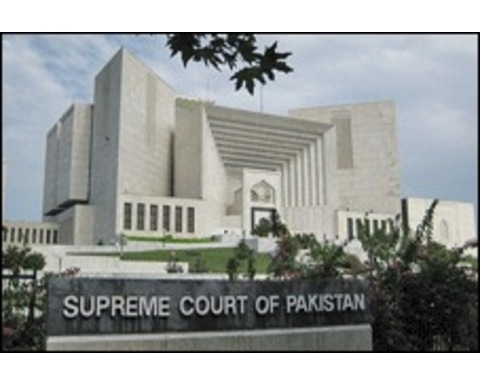
ISLAMABAD: Pakistan Bar Council (PBC) Vice chairman (VC) Latif Afridi has backed Asma Jahangir’s stance regarding court’s judgement in the controversial memo scandal, saying that the superior judiciary cannot play the role of an investigator in any matter. Talking to Daily Times, the PBC vice chairman endorsed Asma Jahangir’s stance that the Supreme Court has wrongly assumed its jurisdiction in the memo scandal. Regarding the memo probe commission, consisting of three high courts chief justices, Afridi said that ordinary litigants would face difficulties in this situation. “The nation is already divided politically, ethnically and economically... it cannot be allowed to further divide on judicial consideration,” he added. The VC hoped the judiciary would not become a source of conflict and things would proceed in accordance with the constitutional division of powers. “Pakistan needs coherence, unification and support of all the federation units and democratic forces, minus those who make hay while the sun shines,” Afirdi said. He urged the SC not to adopt dual standards, and take notice of Mansoor Ijaz’s other statement regarding the ISI director general’s visits to the Arab countries for the removal of President Asif Ali Zardari. The PBC VC urged the court to adopt the policy of judicial restraint, and refrain from entertaining political cases, as the move could make the SC prone to allegations of favouritism. On the other hand, he urged the chief justice of Pakistan to take up the Asghar Khan case. Concerning Pervaiz Musharraf’s return, he said the lawyers would agitate against the former dictator upon his arrival. hasnaat malik. REFERENCE: PBC backs Asma’s stance on memogate Tuesday, January 03, 2012
http://www.dailytimes.com.pk/default.asp?page=2012%5C01%5C03%5Cstory_3-1-2012_pg1_6
MNA Farahnaz Ispahani appeal for justice (CNN 2011)
http://www.youtube.com/watch?v=ffWk0_0tDFs
Selected Justice In Pakistan - Eye Opener 2011
http://www.youtube.com/watch?v=1o1ddo5I3ss
Chief Justice Iftikhar Muhammad Chaudhry ILLEGALLY Favours Nawaz Sharif
Nawaz Shareef didn't Walk through Security Gates in Supreme Court
http://www.youtube.com/watch?v=izVozwXvEaw

ISLAMABAD: Former Director-General of the Federal Investigation Agency (FIA) Tariq Khosa has refused to head a one-man commission to investigate the memo scandal, DawnNews reported on Saturday. The commission was set up by the Supreme Court. Khosa, who has also served as inspector general of Balochistan police, is a brother of Justice Asif Saeed Khosa and Punjab Chief Secretary Nasir Khosa. Earlier, former law minister Babar Awan had questioned Khosa’s nomination at a press conference by saying that he was a brother of the Punjab chief secretary and a judge of the Supreme Court. But those who worked with Khosa called him an ‘upright’ man and a ‘clean’ government officer. The scandal erupted when US citizen of Pakistani origin, Mansoor Ijaz, accused Pakistan’s former ambassador to the United States, Husain Haqqani, of masterminding an alleged memo sent to a senior US military official asking for help to rein in the Pakistani military after the American raid that killed Osama bin Laden in Abbottabad in May. Haqqani denied the allegation and resigned from his position of ambassador in the wake of the controversy. REFERENCES: Tariq Khosa refuses to head commission on memogate December 3, 2011
http://www.dawn.com/2011/12/03/tariq-khosa-refuses-to-head-commission-on-memogate.html •One-man commission named •PPP’s angry reaction •President, COAS, ISI chief to explain position: SC orders memogate inquiry, tells Haqqani not to go abroad December 2, 2011
http://www.dawn.com/2011/12/02/one-man-commission-named-ppps-angry-reaction-president-coas-isi-chief-to-explain-position-sc-orders-memogate-inquiry-tells-haqqani-not-to-go-abroad.html 
ISLAMABAD: Renowned lawyer Asma Jahangir on Sunday refused to continue acting as former Ambassador to the US Hussain Haqqani’s counsel in the memogate case, DawnNews reported. Asma Jahangir said that she did not trust the commission formed by the Supreme Court to investigate the memo-scandal, alleging that the Supreme Court judges were under the establishment’s influence. Asma also told DawnNews in an exclusive interview that Hussain Haqqani feared the powerful spy agencies may force him into giving a statement. This fear was the reason behind the former ambassador’s stay at the prime minister’s house, she said. Moreover, she said that the Supreme Court’s decision on the memogate petition was a victory for the country’s establishment. The law was being used to transform the country into a ‘security state’, she said. REFERENCE: Asma refuses to continue as Haqqani’s lawyer
http://www.dawn.com/2012/01/01/isi-fear-forced-haqqani-to-reside-at-pm-house-asma.html
Asma Jahangir discusses memogate investigation
http://www.youtube.com/watch?v=yhNfFFn9_Kc

Noted lawyer and human rights activist Asma Jahangir has refused to appear before the judicial commission investigating the memo case as counsel for Mr Husain Haqqani. Ms Jahangir’s decision is a serious expression of no confidence in justice being delivered from either the court or the judicial commission. This has raised some serious questions regarding the superior judiciary. From the very beginning of the memo case, it was obvious that more credence was being given by the court to the military top brass as against the civilians. Ms Jahangir expressed her disappointment with the judgement of the nine-member bench of the Supreme Court (SC) headed by Chief Justice Iftikhar Chaudhry. She termed the judgement as a win for the military establishment, which undermined civilian supremacy: “If nine judges of the SC can be [under the establishment’s influence], then I am sorry to say I cannot have any expectations from the high court judges [heading the judicial commission].” That the court is focused on national security instead of upholding fundamental rights and civilian authority has turned the public’s expectations from the ‘independent’ judiciary into disillusionment. Those who have criticised Ms Jahangir for ‘running away’ from the fight or ‘defeatism’ must remember how hostile the bench was towards the defence counsel. In fact, it seemed like a repetition of Zulfikar Ali Bhutto’s case, where some quarters lamented that Mr Yahya Bakhtiar did not plead Mr Bhutto’s case well, which led to his hanging. This was despite the fact that the judiciary in those days was completely under the army’s thumb and highly biased towards Mr Bhutto. A similar scenario is in the making today in the memo case. Independent courts all over the world do not hear political cases but in Pakistan’s case, as the Human Rights Watch (HRW) has pointed out, “a tendency for the courts to find themselves embroiled in matters that they would not otherwise be an appropriate forum for”. HRW also expressed “concern about the fear of judicial overreach and unwarranted intrusion into the affairs of the legislature and the executive”. Courts should be a forum of justice where citizens go expecting their rights will be protected. Ms Jahangir was not able to get justice for her client despite making a strong legal case about the maintainability of the memo petitions. Now the judiciary’s ability to provide justice hangs in the balance. It would be interesting to see if the findings of the judicial commission are different from that of the parliamentary committee’s investigation. In such an event, whose findings would be considered ‘supreme’ would determine where the real power lies. In principle, parliament is supreme but by hearing the petition on an unsigned memo, and that too when parliament is siezed of the matter, the court has in effect given an impression of ignoring the possible pitfalls ahead. With the success of the lawyers’ movement, it was expected that the judiciary would become truly independent but now the perception is growing that not much has changed. If this trend continues, the issue of civil-military imbalance may not be addressed and democracy remain in the dock. * REFERENCE: EDITORIAL: Whither an independent judiciary? Tuesday, January 03, 2012
http://www.dailytimes.com.pk/default.asp?page=2012\01\03\story_3-1-2012_pg3_1
Memo Gate [Asma Jahangir Exclusive Interview] 1st Jan 2012 Part - 1
http://www.youtube.com/watch?v=HVcm74Hw75o

The memo case is a classic example of not only how basic principles of the independence of the judiciary have been violated, but also, how the international guarantees of human rights have been torn apart - The apex court’s short judgement in the memo case last Friday left many stunned and shocked. The petitioners could neither prove any violation of fundamental rights under Article 184(3), as their petition claimed, nor could they prove former ambassador Husain Haqqani’s alleged role in the memo. Nonetheless, they were given what they wanted: an inquiry commission without due process of law, and putting Mr Haqqani on notice not to leave the country without the court’s permission. Judicial independence remains one of the most misused and mythical terms in Pakistan. Civil society’s saving the employment of a few judges taken away by a dictator could hardly translate into a much-fantasised ‘judicial independence’. When a lower middle class woman from a minority community is left to languish in jail just because a fair decision would mean a popular uproar or maybe life threats to judges, when a judge has to flee the country after sentencing the murderer of former Governor Punjab Salmaan Taseer because the fanatic religious elements thought he was a blasphemer, when hundreds of Ahmedis are killed with impunity, and the judiciary along with the state’s law-enforcing mechanism miserably fails to provide them justice or even access to justice, the independence of the judiciary seems to be a cruel joke. The ‘freedom of judiciary’ frenzy that engulfed us in 2007 totally blinded us to the real elements of judicial independence. We started the movement and took the first milestone as a destination. The symbolism of not accepting dictation and still surviving in the office was taken as the freedom of judiciary, while it was just the first step. Little did we realise that the basic ingredients of a free judiciary, institutional independence, individual independence, separation of powers and impartiality of judges have to be watched and ensured as part of a continuous process. While we see how touchy the lordships have been on institutional and their individual independence, little attention has been paid to the most important aspects of impartiality and separation of powers. Before the kicking in date of the freedom of the judiciary (in 2009), judicial bias was imminent when it came to the political leadership versus the security establishment. Post-2009, we thought we got a free judiciary. Unfortunately, the judiciary after this kicking in date still seems to be under the establishment’s influence. If it is the NRO or NICL case, judicial activity is exemplary. When it is the Hudaibiya Paper Mills case, Mehran Bank case or missing persons’ cases, the freedom of judiciary puts on a burqa and goes into hiding. When Asghar Khan’s petition comes up, judicial independence takes its own ‘independent’ decision to remain quiet. One laments over this judicial ‘freedom’ when one is refused even the copy of public petition no HRC 19/96 — the petition by Asghar Khan that incriminates the security establishment. In pre-2009 days, the judiciary used to be biased against civilian governments and under the strong influence (in some cases, under control) of the security establishment. Looking at the short order on the memo case, one wonders, what exactly has changed? The judiciary still fears standing up to the imperiousness of the military establishment against the civilian dispensation. Judgements are still given looking at the names of the petitioners. How could a bench even attempt to be impartial under moral obligation of obliging the petitioners who had won the lordships their jobs just a couple of years ago? How could the bench claim individual liberty when the all powerful spy agencies who possess dark secrets of the bench and bar are a party to the case? As an observer of most of the proceedings on the memo case, one cannot help but see the visible partiality against the defence lawyer who was grilled by relevant and irrelevant questions while leaving aside the petitioners who chose to beat about the bush most of the time, as if knowing quite well that they cannot lose the case anyway! When media noise and populist sloganeering of political parties sway the courts, how could they be free or independent? Most amusing was the frequent pronouncements by the bench of ‘sipah salaar’ instead of a constitutional term ‘Chief of Army Staff’ (COAS), as if it will change the reality of their surrender of independence to the old traditional power centre. Among the 20 basic principles of the independence of the judiciary adopted by the Seventh UN Congress on the Prevention of Crime and the Treatment of Offenders and endorsed by the General Assembly resolutions 40/32 and 40/146 of 1985, principle number 6 reads: “The principle of the independence of the judiciary entitles and requires the judiciary to ensure that judicial proceedings are conducted fairly and that the rights of the parties are respected.” Moreover, the Universal Declaration of Human Rights enshrines the principles of equality before law as well as the presumption of innocence before proven otherwise. The memo case is a classic example of not only how basic principles of the independence of the judiciary have been violated, but also, how the international guarantees of human rights have been torn apart. The petitioners in this case were not insisting and in fact pronounced during the proceedings time and again that they are not implicating anyone, including Mr Haqqani. But the apex court went on curbing Mr Haqqani’s fundamental right of mobility by restricting his freedom of movement just because the affidavits of their ‘sipah salaar’ and spy chief included Mr Haqqani’s name. Ironically, even the spy chief does not seem to have any evidence against Mr Haqqani, as even he ‘requested’ the court to order a probe and get forensic evidence necessary to incriminate Haqqani. Some glaring blunders in how the bench approached this case and anomalies that would come out resultantly after the short (sighted) judgement, however, cannot be ignored. The only link between the memo and Mr Haqqani is an alleged phone conversation wherein Ijaz (who boasts of his links with two dozen intelligence agencies) claims the contents of the memo were dictated to him. One wonders, how will the forensics help decide whose account of the conversation is right? It also seems deliberate by a section of the media that Asma Jahangir argued for no inquiry, implying that Mr Haqqani might be fearing an investigation. It was clearly said time and again that the government and Mr Haqqani both demand an impartial inquiry, but under the due process of law. Should we laugh or cry when even the apex court decides to make a mockery of the due process of law? Why an inquiry commission by parliament or by the government could not be made under the Commission of Inquiry Act 1956? With three high court chief justices on the inquiry, what happens if the inquiry leads to a criminal case? Will three high courts be disqualified from hearing appeals in that criminal case? If General Pasha’s demand is a forensic inquiry, why did his and General Kayani’s statement incriminate Husain Haqqani creating a pre-disposition against him without an inquiry? And why the apex court upheld these anomalies? Where is judicial freedom, my lords? Postscript: Human Rights Watch, an international rights organisation that pointed towards the violation of basic rights through this judgement, is being attacked by sections of the media. Hail judicial independence! REFERENCE: BAAGHI: Where is judicial independence, my lords? —Marvi Sirmed Monday, January 02, 2012
http://www.dailytimes.com.pk/default.asp?page=2012%5C01%5C02%5Cstory_2-1-2012_pg3_4
Memo Gate [Asma Jahangir Exclusive Interview] 1st Jan 2012 Part - 2
http://www.youtube.com/watch?v=omW9Lu3-3e4

“Historic”, we are being told — and told without end — is what the judgment of their Supreme Court lordships is. General (r) Pervez Musharraf’s Nov 3, 2007, action has been declared “unconstitutional” and “civil society” is ecstatic, some of our wilder drumbeaters assuring us that the doors on military interventionism have been closed forever. Ah, if wishes were horses. The Supreme Court judgment not so much revises history as cuts it up, wrapping it in neat packages. For it declares only one action of Musharraf’s unconstitutional — his Nov 3 Emergency, which came at the fag end of his rule. The inescapable conclusion we are left with is that everything else the man did fell within the ambit of the Constitution. Now what was Musharraf’s original sin from which flowed everything else? Why, his coup d’état of Oct 12, 1999, when his generals overthrew an elected government, disbanded the National Assembly, put the Constitution into cold storage and imprisoned not only the then prime minister but his closest colleagues and even members of his family. Just as Adam ate the apple he wasn’t supposed to touch and as a consequences was expelled from Paradise, the apple which Musharraf plucked and put into his mouth was on the fateful evening of Oct 12, all those years ago, when he was in the air on a flight from Sri Lanka, while his generals — chief among them Usmani, Aziz and Mahmood — went about the removal of the elected government. That was the mother of all sins. So how strange and dripping with irony this omission: about that seminal event, which set in train all the sorrows the nation was to reap thereafter, their lordships in their “historic” judgment have nothing to say. For this of course we must understand the problems of the past. For in 2000, a few months after the mother of all sins, when this matter came before the then Supreme Court headed by Chief Justice Irshad Hasan Khan, the nation witnessed another of those electrifying performances which have made “the doctrine of necessity” so famous in our land, the Supreme Court validating Musharraf’s coup and, what’s more, allowing him a grace period of three years to hold elections. In its generosity, it also gave Musharraf the authority to amend the Constitution for purposes of holding elections. So just as the Anwarul Haq Supreme Court gave a clean chit to General Ziaul Haq’s coup of 1977, another Supreme Court signed a papal bull conferring legitimacy on another illegitimate offspring of our political adventures. Now for an inconvenient fact. On the bench headed by Chief Justice Irshad Hasan Khan there sat an up-and-coming jurist, stern of eye and distinguished of look, by the name of Iftikhar Muhammad Chaudhry. Yes, he was among the illustrious upholders of the law and the Constitution who bathed Musharraf and his generals in holy water. Before that baptismal ceremony, Musharraf, following the example of military saviours before him, had issued another Provisional Constitutional Order (PCO) requiring judges of the high courts and the Supreme Court to take a fresh oath pledging obedience to the new order. A few difficult judges — among them Chief Justice Saeeduzzaman Siddiqui, Justices Wajeehuddin, Nasir Aslam Zahid, Mamoon Qazi, Khalilur Rehman, Kamal Mansoor Alam — spurned Musharraf’s PCO and promptly found themselves out in the cold. But a majority, preferring discretion over valour, thought it wiser to go along with the new order of things. Among this lot — the original lot, that is — was Justice Iftikhar Muhammad Chaudhry. And it was from this PCO crowd, which saw no evil in wearing the robes of the judiciary under a usurping general, that the Supreme Court bench was composed which in double-quick time conferred absolution on Musharraf and his triumphant generals. Chief Justice Irshad Hasan Khan wrote the judgment and the other judges on the bench, including Justice Chaudhry, without adding a word of their own (which was slightly unusual) concurred with his sweeping validation. As PCO judges they were expected to toe the line dictated by the country’s martial law masters and, to no one’s surprise, they went along faithfully, Chief Justice Irshad in front and they in his train. In the museum dedicated to the doctrine of necessity this was another trophy. So it is not a little surprising to see the present Supreme Court coming down so hard on the Nov 3, 2007, PCO judges when they themselves (most of them, if memory serves) felt few qualms in being PCO judges in January 2000. Let him cast the first stone who hath not sinned, said Christ. Their lordships of the “historic” judgment are no doubt made of sterner stuff, preferring to interpret the past as a closed and shut transaction while bringing down the executioner’s axe on those who could well plead in their defence that they were doing no more than following the example, set in times past, by their betters. What about the nation which faces a serious test? For it is being asked to believe, if we go along with all the implications of the “historic” verdict, that Musharraf’s rule was legitimate until Nov 3, 2007, and it was only his proclamation of emergency that evening which put him outside the pale of the Constitution. This is a very selective rendering with which most Pakistanis are not likely to agree. . According to this interpretation Musharraf did nothing unconstitutional from Oct 12, 1999, to Nov 3, 2007, and it was only the period of emergency — from Nov 3 to Dec 15 — which is worthy of judicial censure. In other words, according to the Supreme Court, he was a usurper not for eight and a half years — which most people in Pakistan believe — but for a mere 40-45 days. As sins of this sort go in Pakistan, this doesn’t amount to much of a transgression. But even if it is considered serious (and there are people who will), its severity is mitigated by the fact that the malefactor (Musharraf) first took off his uniform on Nov 28, 2007 (thus doing the nation a favour it had long demanded) and lifted emergency on Dec 15, 2007, thus returning the country to constitutional rule (as per the implication of the Supreme Court verdict). Not only that but he went on to hold elections. This makes him look not a demonic but rather quite a benign figure. His original sin, it can be argued, was no longer a sin in the eyes of the law because the PCO of 2000 and the oaths of the judges were validated later by parliament. Very true, but this is hair-splitting. Musharraf was a usurper as were Zia and Yahya and Ayub before him. The others too were validated by various judicial and constitutional instruments. But all these actions remain blots on our history and in the eyes of the people, and in the eyes of history, they are all usurpers who — although this is quite another story — brought great harm to the nation. Musharraf deserves punishment, as did all military saviours before him. But if Article Six is to be invoked it should be for Oct 12, ‘99, rather than the secondary and much smaller sin of Nov 3, 2007. In that case it is not he alone who should be brought into the dock but all his collaborators — the generals who ordered troop movements on Oct 12, the judges who were effectively his collaborators later and all those who chose to serve under him in various capacities. Flogging Musharraf is easy because he is a dead horse. But if we are serious about retribution our canvas has to be broader. But since it is not going to be broad, and bringing Musharraf to justice is likely to remain no more than a talking point — because who wants to stir this hornet’s nest? — the more seemly thing is to move on and confront the future and inculcate some humility in ourselves by remembering that in the sins of the Musharraf many now counted among the good and the great, and even the historic, were also complicit. From such humility — or what the Chinese call self-criticism — will come the strength to face the future, and even fix it in our favour. REFERENCE: Writing of history or triumph of amnesia? Ayaz Amir Friday, August 07, 2009
http://www.thenews.com.pk/TodaysPrintDetail.aspx?ID=191800&Cat=9&dt=8/6/2009
Memo Gate [Asma Jahangir Exclusive Interview] 1st Jan 2012 Part - 3
http://www.youtube.com/watch?v=qkgr3Icj3IY

We have a developed talent, honed over the years, for counting the trees and missing the larger picture. We see things in one dimension and forget that there may be other sides to reality. This leads to false conclusions and the begetting of great tragedies. Let us for argument's sake accept that Asif Ali Zardari, the luckless president of a luckless country, is the author of a thousand villainies, the darkest thing to have happened to the Islamic Republic. But let us at least weigh his real or presumed infamy in the scales of history before coming to a judgment about what he deserves. Has Zardari done anything which comes close to the unbeatable folly of the 1965 war? If anything undid us it was that foolish call to arms. We had set out to conquer Kashmir. At Tashkent we ended up lowering the casket of the Kashmir cause into the ground. Do Zardari's alleged crimes measure up to the folly of General Yahya Khan who presided over the break-up of Pakistan? If ever the larger picture escaped anyone it was that latter-day Muhammad Shah Rangila, caught up in circumstances beyond his control or comprehension. We couldn't stand the notion of meeting East Pakistani aspirations half-way, just as we are having a hard time now understanding Baloch aspirations. The frenzied crowds which poured out in 1977 to protest the alleged rigging of the elections by Zulfikar Ali Bhutto called for the establishment of Nizam-e-Mustafa (the dispensation of the Holy Prophet). Like the supposed reformers of today who think they are battling corruption, the enthusiasts of 1977 were convinced the promised kingdom was just a step away if only that incarnation of evil, Bhutto, was taken care of. Bhutto was taken care of and eventually hanged but the frothing crowds were no nearer Nizam-e-Mustafa or anything like it. Instead, for their pains, they got General Ziaul Haq and the long night of his dark tyranny. Zia first proclaimed his aim as Islamization. Then it was accountability. These were pretexts for suppressing democracy and perpetuating his rule. Zia was perhaps the greatest disaster to befall Pakistan. We are still living with the consequences. Nothing in our history has been more dangerous than the simplicity and innocence of our good intentions. Riding on their back we have stood before not the pearly gates promising everlasting bliss but the gates of hell. It is scarcely an accident that many of the voices now earnestly urging the Supreme Court to embrace an ever-widening agenda of reform were early supporters of Musharraf's military rule. Such contradictions bestride our history. Khan Roedad Khan hailed Musharraf as a messiah come to rid the country of its woes. Khan Imran Khan, to his lasting chagrin, was also part of the Musharraf-welcome crowd. At least Imran has the decency to say he was wrong. Others are not so coy. There was indeed a time when prominent media pundits, now in ultra-reformist mode, conducted themselves virtually as Musharraf spokesmen. Humein yaad hai zara zara, tumhein yaad ho keh na yaad ho. Zardari may deserve all the pejorative adjectives in the dictionary but has he committed any crime which comes close to the enormity of the disaster that was Kargil? That adventure was meant to seize advantage in Kashmir once again. It ended up exposing Pakistan to fierce international criticism and giving birth to the term cross-border terrorism, the stick with which Pakistan has been regularly beaten ever since. Are we calling for a national commission to investigate Kargil, as we should? No, we are into other things. Talking of Musharraf's military rule, what was the role of our present lordships when Triple One Brigade, our highest constitutional authority, reinterpreted the Constitution once again on the long afternoon of Oct 12, 1999? A few judges -- Chief Justice Saiduzzaman Siddiqui comes to mind -- did not take oath under the Provisional Constitution Order (PCO) issued two months later. But if imperfect memory serves, all of their present lordships, at one time or the other, took oath under the PCO. Not only that, some of them were on the bench which validated Musharraf's takeover. A few, including My Lord the Chief Justice, were on the bench which validated Musharraf's takeover for the second time in the Zafar Ali Shah case (2005). Of course, we must let bygones be bygones and deal with the present. But then this principle should be for everyone. We should not be raising monuments to selective memory or selective condemnation. If the PCO of 2007 was such a bad idea, in what category should we place the PCO of 2000? And if in this Turkish bath all are like the emperor without his clothes, the least this should inculcate is a sense of humility. And if we accept the logic that there can be a transformation in the nature of things, that people who did questionable things once-upon-a-time can undergo a conversion on the road to Damascus (or anywhere else) and become knights in shining armour, dispensing light and so on, should not some of the same indulgence, the same benefit of doubt, be extended to others? Zardari cut deals and earned commissions and for his talent in this field earned the sobriquet Mr Ten Percent. You reap what you sow. So if Zardari is haunted by the ghosts of his past, and if his past keeps popping up in conversation and national discourse, he has only himself to blame. But now, whether we like it or not, he is something more than a mere replica of his past. He is the constitutionally elected President of the Republic. For his failings in government, for his mistakes as President, for incompetence or inadequacy -- if these are the charges brought against him -- he can be pilloried and even ridiculed. This is part of democracy, part of the political process. But when hidden forces with their hidden agendas go about manipulating things, pulling strings from behind, and if elements in the media or other distinguished places become witting or unwitting partners in this game, then it is not democracy being served or strengthened but intrigue and conspiracy. The Supreme Court judgment on the vires of the 2007 PCO came on the 31st of July, 2009. But the knives were out for Zardari much before that. Zardari of course heads a team with no shortage of incompetents on board. In a land even otherwise dedicated to mediocrity they seemingly outshine all competitors. (Keen for a doctorate myself, I am still trying to discover the location of that celebrated seat of learning, Montecello University.) President Zardari can also be his own worst enemy. Who told him to deliver the speech he did at Naudero on BB's second death anniversary? There were things in it which were best left unsaid. Those whom the gods would destroy they first push into such speech-making. But it is also true that Zardari has been driven into a corner. The mandate he got -- constitutionally it bears remembering -- is being nullified by other means. Their lordships are all men of honour and rectitude who stood up to Musharraf's dictatorship and gave hope to the country. But their lordships are just one part of the national spectrum. If they are men of honour it doesn't automatically follow that everyone else in the equation is also playing by the same rules. There is thus a need for caution, a need to draw a line between past and present. Let us study our past and draw the correct conclusions. But let us not, wittingly or unwittingly, destabilise democracy. Cleansing the national stables is a laudable aim and makes for a heady slogan. But as our history demonstrates, good intentions, unsupported by a sense of reality or a sense of proportion, lead to unforeseen consequences. The temple of democracy is a cohesive whole. There is no such thing as smashing one pillar and hoping the rest of the structure will survive. It won't. And when the slabs come crashing down, we will be the losers while those who have always operated in the shadows will have the last laugh. So Happy New Year. Our curse is to live forever in interesting times. May the new year be a bit less exciting than the one which has just gone by. REFERENCE: The road to hell -- and similar destinations Ayaz Amir Friday, January 01, 2010
http://www.thenews.com.pk/TodaysPrintDetail.aspx?ID=216323&Cat=9&dt=1/1/2010
Memo Gate [Asma Jahangir Exclusive Interview] 1st Jan 2012 Part - 4
http://www.youtube.com/watch?v=yS0zDD695WI

Like Zia’s Eighth Amendment, Musharraf’s Seventeenth Amendment, passed by a rubber-stamp parliament in December 2003, enshrined all executive orders and changes made under military rule.21 The Seventeenth Amendment gave the president, the titular head of state, the power to dismiss elected governments and parliament and also transferred from the prime minister, the head of government, key appointment powers to the president including appointments of governors, the three service chiefs and the chief justice of the Supreme Court. Musharraf’s constitutional distortions weakened civilian institutions. By sidelining secular democratic forces, the military government also enabled right-wing religious parties to fill the vacuum. In dismissing legal challenges to Seventeenth Amendment, the Supreme Court shirked its responsibility to protect constitutional rule. Some courageous judges, such as Supreme Court Justices Dorab Patel and Fakhruddin G. Ibrahim,15 have refused to sanctify authoritarian interventions, and preferred to resign rather than undermine constitutionalism and the rule of law. By legitimising military rule and intervention, most have, however, abdicated their duty to uphold the law. Following Musharraf’s coup, the Supreme Court was purged of judges who might have opposed the military’s unconstitutional assumption of power. Judges were required to take an oath to Musharraf’s Provisional Constitutional Order (PCO), 1999, superseding the oath they had sworn at their induction to the 1973 constitution.16 On 26 January 2000, thirteen judges, including Chief Justice Saiduzzaman Siddiqui and four other Supreme Court justices, were removed for refusing to do so. The reconstituted Supreme Court was composed of judges who willingly accepted the military’s directions. They included Iftikhar Muhammad Chaudhry, who was elevated to the Court in January 2000 and appointed chief justice by Musharraf in 2005. The judges took their oath of office under the PCO 1999, which omits the reference to their duty to “protect, uphold and defend” the 1973 constitution. On 21 May 2000, this bench upheld the legality of Musharraf’s coup under the doctrine of state necessity. The Supreme Court also authorised the army chief to amend the constitution, albeit within the bounds of its federal, democratic and parliamentary character. The Court also concluded that those judges who had been sacked following the PCO oath had lost any right to challenge their removal due to the passage of time. By placing personal survival over the rule of law and constitutionalism, these judges allowed another dicta tor to implement sweeping changes that expanded the military’s political powers and hold over the state. Pakistan’s higher judiciary has repeatedly validated military interventions and sanctioned constitutional amendments that have fundamentally altered the legal and political system. Attempting to explain its failure to protect the constitution through the “doctrine of state necessity”, the judiciary has relied on the dubious argument that the army’s intervention could be justified because of the pressing need for political stability. This doctrine was first developed in three cases in 1955 in the Federal Court, as the Supreme Court was then known, to justify the extra-constitutional dismissal of the legislature by a titular head of state.11 Drawing on the precedent of those decisions, the Supreme Court validated General Mohammed Ayub Khan’s 1958 declaration of martial law, General Mohammad Ziaul Haq’s 1977 coup and General Pervez Musharraf’s 1999 coup. While these Supreme Court judgments gave military regimes the trappings of legality, repeated military interventions have hampered the growth of civilian institutions and moderate political parties and forces. The centralisation of power in a Punjabi-dominated army has also strained centre-province relations in a multi-ethnic, multi-regional state, even as the military’s use of religion to justify political control has undermined the security of Pakistani citizens, particularly women and religious and sectarian minorities. REFERENCE: Reforming the Judiciary in Pakistan Asia Report N°160 16 October 2008
http://www.crisisgroup.org/en/regions/asia/south-asia/pakistan/160-reforming-the-judiciary-in-pakistan.aspx
Memo Gate [Asma Jahangir Exclusive Interview] 1st Jan 2012 Part - 5
http://www.youtube.com/watch?v=4QJL2acNTYc
Lets go back to History and not a very Distant Past
![[Musharraf-Iftikhar.jpg]](https://blogger.googleusercontent.com/img/b/R29vZ2xl/AVvXsEgFqgXi5LAEx1qJzkzn2jJQZRS_HIU8p3NsCqLVdm_NC0TKy1MVv-YA2J5QnWkZ8fF2Ohjg5C7JEUFazs6gw0XLgYYSmiV1BYn_xlprKcmwFWh1ShLcoOz9jqAd4ofoxfr6rTBdocmwi-Vw/s400/Musharraf-Iftikhar.jpg)
Chaudhry Iftikhar named new CJ [Daily Dawn 2005] By Our Staff Reporter ISLAMABAD, May 7: President Pervez Musharraf on Saturday appointed Justice Iftikhar Mohammad Chaudhry, the senior most judge of the Supreme Court, as the next chief justice. He will assume the office on June 30 after retirement of the incumbent Chief Justice, Justice Nazim Hussain Siddiqui, on June 29. “The notification has ended speculations of appointment of a junior judge as chief justice in violation of the seniority principle settled under the 1996 Judges case,” commented a senior Supreme Court lawyer on condition of anonymity. Justice Chaudhry will reach the superannuation age of 65 years in 2012, which will make him one of the longest serving chief justices in the judicial history of Pakistan. He will serve as chief justice for over seven years. Earlier Justice A. R. Cornelius and Justice Mohammad Haleem served as chief justice for eight years from 1960 to 68 and 1981 to 89, respectively. Justice Chaudhry was elevated as a judge of the apex court on February 4, 2000. He has performed as acting chief justice from January 17 to 29, 2005. He holds the degree of LLB and started practice as an advocate in 1974. Later he was enrolled as an advocate of high court in 1976 and as an advocate of Supreme Court in 1985. In 1989, Justice Chaudhry was appointed as advocate-general of Balochistan and elevated to the post of additional judge in the Balochistan High Court in 1990. He also served as banking judge, judge of Special Court for Speedy Trials and Customs Appellate Courts as well as company judge. He served as the chief justice of the Balochistan High Court from April 22, 1999 to February 4, 2000. He was elected the president of the High Court Bar Association, Quetta, and twice a member of the Bar Council. He was appointed as the chairman of the Balochistan Local Council Election Authority in 1992 and for a second term in 1998. Justice Chaudhry also worked as the chairman of the Provincial Review Board for Balochistan and was appointed twice as the chairman of the Pakistan Red Crescent Society, Balochistan. Presently he is functioning as the chairman of the Enrolment Committee of the Pakistan Bar Council and Supreme Court Buildings Committee. Reference: Caudhry Iftikhar named new CJ By Our Staff Reporter May 8, 2005 Sunday Rabi-ul-Awwal 28, 1426
http://www.dawn.com/2005/05/08/top4.htm

ISLAMABAD, Feb 2: The government elevated five judges to the Supreme Court on Wednesday. According to a notification, the president has appointed Justice Rashid Aziz, Chief Justice, Lahore High Court; Justice Nazim Hussain Siddiqui, Chief Justice Sindh High Court; Justice Iftikhar Mohammad Chaudhry, Chief Justice, Balochistan High Court; Qazi Farooq, former chief justice of Peshawar High Court; and Justice Rana Bhagwan Das, judge, Sindh High Court, judges of the Supreme Court. After the elevation of Justice Rashid Aziz Khan to the SC, Justice Mohammad Allah Nawaz has been appointed Chief Justice of Lahore High Court. Justice Deedar Hussain Shah has been appointed Chief Justice of Sindh High Court and Justice Javed Iqbal Chief Justice of Balochistan High Court. After these appointments, the number of SC judges has risen to 12, leaving five posts vacant. REFERENCE: Five judges elevated to SC Bureau Report DAWN WIRE SERVICE Week Ending : 5 February 2000 Issue : 06/05
http://www.lib.virginia.edu/area-studies/SouthAsia/SAserials/Dawn/2000/05feb00.html#five
ISLAMABAD, April 25: President Mohammad Rafiq Tarar on Tuesday appointed five judges to the Supreme Court of Pakistan. With the appointment of these judges, the strength of the Supreme Court judges, i.e. 17, stands completed. The newly-appointed judges include Justice Mian Mohammad Ajmal, Chief Justice, Peshawar High Court; Justice Deedar Hussain Shah, Chief Justice, High Court of Sindh; Justice Javed Iqbal, Chief Justice, High Court of Balochistan; Justice Hamid Ali Mirza, judge, High Court of Sindh and Justice Abdul Hameed Dogar, judge, High Court of Sindh. These judges have been appointed to the SC from the date they respectively take upon themselves the execution of their offices as such judges. Following are the names of the judges of the Supreme Court according to their seniority:
1. Justice Irshad Hassan Khan, Chief Justice of Pakistan,
2. Justice Mohammad Bashir Jehangiri,
3. Justice Sheikh Ijaz Nisar,
4. Justice Sheikh Riaz Ahmed,
5. Justice Ch. Mohammad Arif,
6. Justice Munir A. Sheikh,
7. Justice Abdul Rehman Khan
8. Justice Rashid Aziz Khan,
9. Justice Nazim Hussain Siddiqi,
10. Justice Iftikhar Mohammad Chaudhry,
11. Justice Qazi Mohammad Farooq,
12. Justice Rana Bhagwan Das,
13. Justice Mian Mohammad Ajmal,
14. Justice Deedar Hussain Shah,
15. Justice Javed Iqbal,
16. Justice Hamid Ali Mirza,
17. Justice Abdul Hameed Dogar.-APP

LAHORE, June 27: The Lahore High Court summarily dismissed three writ petitions challenging the assumption of the President's office by Chief Executive Pervez Musharraf. The petitions were filed by Advocates MD Tahir, Amir Sohail and Hanif Tahir. The first-mentioned two argued at some length while the last-mentioned told Justice Khalilur Rahman Ramday, who heard the petitions, that he had reservations about him on account of his pro-government sympathies but would, instead of seeking transfer, leave the matter to his conscience. Advocate MD Tahir said frequent military interventions, prompted by politicians and invariably condoned and validated by the judiciary, have greatly damaged Pakistan in all spheres of life. Advocate Amir Sohail submitted that the Supreme Court recognized Gen Pervez Musharraf as chief executive for three years and his elevation to the office of President was repugnant to the SC judgment in Zafar Ali Shah's case. Under the judgment and the provisional constitution order validated by it the country is to be governed as nearly as possible in accordance with the provisions of the 1973 Constitution. Mr Rafiq Tarar could not have been removed except by impeachment. Justice Ramday observed that the 1973 Constitution was in existence by virtue of the PCO as amended from time to time and dismissed the three petitions. REFERENCE: LHC rejects pleas against Musharraf's presidency Staff Reporter DAWN WIRE SERVICE Week Ending : 30 June 2001 Issue : 07/26
http://www.lib.virginia.edu/area-studies/SouthAsia/SAserials/Dawn/2001/jun3001.html#lhcr

ISLAMABAD, Oct 30: The Supreme Court on Wednesday said it took oath under the PCO to preserve the judicial system, and due to its judgment in which it validated the military takeover the army was going back to barracks by restoring democracy. The apex court, responding to the statement of the Supreme Court Bar Association that arguing a case before the present judiciary was a futile exercise “as it had ceased to be independent,” observed that it reserved its right to take action against the president of SCBA, Hamid Khan, for his “disparaging remarks” about the independence of the judiciary. The SCBA had asked the SC bench on Monday to return its review petition as the bar was of the view that the judiciary, after taking oath under the PCO and by upholding various orders and acts of the present military regime, had ceased to be independent and no substantial question of constitutional importance should be argued before this court in its present composition.” The SC bench called the president of the SCBA, “Hamid Khan, contemner,” and said the SCBA statement was “motivated by malice, extraneous considerations and for political reasons.” In its five-page order, authored by Chief Justice Riaz Ahmad, the SC held that the contents of the application constituted gross contempt of court as it used disparaging remarks about the judiciary through the language which could not have been expected from the pen of the SCBA president. The SC asserted that democracy was being revived in the country and the regime would go back to barracks because of the SC judgment in Zafar Ali Shah case and the oath taken by judges of the SC (under PCO). “It is because of the judgment in Zafar Ali Shah case and oath taken by the judges of the Supreme Court that a time schedule was given and the regime had to hold elections and to go back to barracks after restoration of democratic institutions.”
The court said that in compliance with its judgments, elections were held in the country on Oct 10, 2002, and the process of transfer (of power) was in progress. The SC said that taking oath under the PCO by judges of the superior judiciary was welcomed by the senior lawyers like Khalid Anwar and SM Zafar. It said that those judges who had refused to take oath under the PCO did so according to their conscience and “heavy responsibility lay upon the judges who took oath (under PCO) for dispensation of justice.” The SC stated that its judgment, validating the military takeover, was universally acclaimed and had been described as a landmark judgment.
The court said it could proceed to take action against Hamid Khan, president of SCBA, but it was always appropriate to exercise restraint. “However, we reserve the right to take the proper action at an appropriate stage.” The SC said: “Unfortunately, some members of the Bar, motivated by malice, extraneous considerations and for political reasons or ill-will, make irresponsible statements to tarnish the image of the judiciary which is not at all in the supreme national interest.” The SC said it “strongly deprecate and condemn this attitude on the part of Hamid Khan and considering the contents of this application scandalous, malicious and irrelevant, we order that paragraph (I) and (II) therefore be struck off.” The SC said it had highest respect for those members of the bar, who have shown respect to the judiciary. By making such attempts the members of the bar were abusing the sacred elected office, it said. The court further observed that by taking oath under the PCO the judiciary had “saved the independence of (the) judiciary as well as the system of administration by preserving the Bar as well.” “Failing which the bar would have been replaced by all together a new system unknown to a civilised society.” It said that judges took oath under the PCO “in the highest national interest, and therefore we have deliberately not chosen to proceed against Hamid Khan in view of the interest of the institution, “but we reiterate that we reserved our right to proceed against Hamid Khan, contemner.”
The court observed that Hamid Khan knew that all the points which had been raised in the review petition had already been dealt with in the judgment, and the court would not allow re-hearing of the matter. The court said that knowing full well the consequences of the review petition, the counsel deliberately declined to argue the case “motivated by malice, ill-will and extraneous considerations.” The court said that review petition was fixed for hearing on Oct 28 when a request for adjournment was moved on behalf of Hamid Khan, expressing his inability to appear before the court on the said date due his unavoidable personal obligation and prior commitments. The bench assembled in the court to consider the aforesaid request for adjournment when, surprisingly, the court noticed the presence of Hamid Khan in the courtroom who came at the rostrum and submitted an application under the caption “Statement at the Bar”. The court said that it was high time that counsel like Hamid Khan and the members of the bar realised their responsibility towards the courts and the society. “If this state of affairs continues then God be with us and nothing more could be said about it. As a consequence of the above, this review petition has no merits and the same stands dismissed accordingly”, the court concluded. REFERENCE: Supreme Court says its verdict has helped revive democracy By Rafaqat Ali October 31, 2002 Thursday Sha’aban 24,1423
http://66.219.30.210/2002/10/31/top9.htm
ISLAMABAD, March 1: The Chief Justice of Pakistan, Irshad Hasan Khan, on Wednesday observed that when the politicians are in power, they try to become dictators but when they are out of power, they become champions of the rule of law. Presiding over a 12-member bench seized of the seven petitions challenging the military takeover, the chief justice directed the attorney general to provide details of the expenditure on holding elections, including the expenses made by the candidates on their election campaigns. The Supreme Court announced that it would decide the issue of maintainability and merits of the case simultaneously. The chief justice said the court had entertained the petitions. The bench started regular hearing of the petitions on Wednesday. The court first took up the petition of Syed Zafar Ali Shah, suspended MNA of PML from Islamabad. The representative petition of PML would be taken next and Khalid Anwer would argue the case on behalf of the party.
Other petitions before the court are of Syed Imtiaz Hussain Bukhari, Challenging the PCO; Fazal Ellahi Siddiqui, challenging the PCO; Shahid Orakzai, seeking restoration of Senate, office of speakers and provincial assemblies; Al-Jehad Trust, seeking restoration of Constitution to the extent of judiciary; and Syed Iqbal Haider of MWM, seeking validation of PCO. The bench consisted of Justice Irshad Hasan Khan, Justice Mohammad Bashir Jehangiri, Justice Sheikh Ijaz Nisar, Justice Abdur Rehman Khan, Justice Sheikh Riaz Ahmad, Justice Chaudhry Mohammad Arif, Justice Munir A. Sheikh, Justice Rashid Aziz Khan, Justice Nazim Hussain Siddiqui, Justice Iftikhar Mohammad Chaudhry, Justice Qazi Mohammad Farooq and Justice Rana Bhagwandas. The chief justice made it clear at the outset that the counsels should try to be relevant and unnecessary repetition of arguments should be avoided. He said the whole work of the court was suspended due to the present case.
Chaudhry Farooq, the counsel of Mr Shah, said that on the last hearing the petitioner had apprehended that the judges of the court would be asked to take fresh oath under the PCO and his apprehensions proved to be true. He said the PCO (1) of 1999 and subsequent orders were unconstitutional, having no force of law. The chief justice asked the parties to avoid mud-slinging, and added that: "we will perform our function without intimidation." He observed that the bar and the bench were integral part of the chariot of justice. He said his effort was to save the system and referred to the decisions of the Chief Justices Committee. The counsel said: "Pakistan was a gift of our forefathers, but unfortunately the rule of law had been interrupted at regular intervals. In its total life, Pakistan had suffered military rule for 30 long years".
He said the government in its reply to the petitions had said that the elections of Feb 3, 1997, were farce. The elections in which PML obtained heavy mandate were monitored by the observers across the globe, he said, and added the armed forces were employed to supervize the elections. On the court's query, Barrister Khalid Anwar stated that 36 per cent of voters used their right of franchise in the 1997 elections. Chaudhry Farooq said if the government of Khawaja Nazimuddin would not have been dismissed, the fate of Pakistan would have been different. He said Pakistan was created with the force of vote and not through any military operation. "Both citizens and soldiers are subject to Constitution alike."
Referring to Article 6 of the Constitution, he said abrogating the Constitution was treachery with the country. When he stated that the respondents had not replied to the Politicians in power try to be dictators: CJ challenge he raised in the petition, the chief justice observed that the counsel was trying to be hyper technical. The CJ made it clear to the counsel that notice of the case to the chief of the army staff was there. The counsel said he was firm believer that the Kafir (infidel) could not be a friend of Muslim and Hindus being Kafir could not be trusted. When the counsel referred to a judgment from the Indian jurisdiction, the court asked him not to cite Indian judgments in the present case. When the counsel started reading an old judgment from Pakistani jurisdiction, the chief justice asked the counsel to first read the speech of the chief executive in which he had spelt out the reasons which forced him to come into power. The counsel was still reading the speech of Gen Musharraf when the court rose to assemble again on Thursday (March 2). Politicians in power try to be dictators, says CJ Bureau Report DAWN WIRE SERVICE Week Ending : 4 March 2000 Issue : 06/10
http://www.lib.virginia.edu/area-studies/SouthAsia/SAserials/Dawn/2000/mar04.html#poli
Memo Gate [Asma Jahangir Exclusive Interview] 1st Jan 2012 Part - 6
http://www.youtube.com/watch?v=UtRhyJ94EwY

It is hardly a secret that the government and the military are engaged in both a legal and political confrontation over the so-called "Memogate" affair. HRW finds it reassuring that both the Supreme Court Chief Justice and Army chief General Kiyani have ruled out military intervention. Indeed all arms of the state must act within the constitutionally determined ambit and in aid of legitimate civilian rule. In this context, justice must both be done and be seen to be done. Pakistan desperately needs a full democratic cycle and a peaceful transfer of power from one civilian administration to another. Should this process be derailed, the constitutional safeguards and legal rights protections created since 2008 may suffer irreparable damage. No. We do not. This is a political matter over which some parties have seen fit to approach the Supreme Court. So long as the matter is resolved within the ambit of the law and without prejudice, there should be no problem. However, stakeholders need to consider whether courts are the most appropriate forum to settle political disputes or if that is counter-productive. Second, whatever mechanism for investigation is decided, it must proceed with strict neutrality and due process ensuring that no claim of bias can withstand scrutiny. Finally, all parties to the so-called 'Memogate' affair must understand that a legal dispute cannot be made the vehicle for truncating parliamentary or presidential terms through the backdoor or as a mechanism for subverting civilian rule. Human Rights Watch has long been a supporter of an independent judiciary in Pakistan and advocated for the restoration of the judiciary ousted by Musharraf in Pakistan and abroad. But we have also expressed our concern about the fear of judicial over-reach and unwarranted intrusion into the affairs of the legislature and the executive. HRW has noticed a tendency for the courts to find themselves embroiled in matters that they would not otherwise be an appropriate forum for, and we hope the courts will reflect on this perception. In a sense "Memogate" is a litmus test for all actors - particularly the judiciary and the army. It remains to be seen whether the rule of law or the law of the jungle prevails in Pakistan. REFERENCE: Pakistan: "Greater rights' abuses will ensue unless Pakistan's elected institutions assert themselves" by Raza Rumi Published in: The Friday Times DECEMBER 30, 2011
http://www.hrw.org/news/2011/12/30/pakistan-greater-rights-abuses-will-ensue-unless-pakistans-elected-institutions-asse


27.jpg)
185.jpg)

266.jpg)
267.jpg)
268.jpg)
269.jpg)


![[Musharraf-Iftikhar.jpg]](https://blogger.googleusercontent.com/img/b/R29vZ2xl/AVvXsEgFqgXi5LAEx1qJzkzn2jJQZRS_HIU8p3NsCqLVdm_NC0TKy1MVv-YA2J5QnWkZ8fF2Ohjg5C7JEUFazs6gw0XLgYYSmiV1BYn_xlprKcmwFWh1ShLcoOz9jqAd4ofoxfr6rTBdocmwi-Vw/s1600/Musharraf-Iftikhar.jpg)