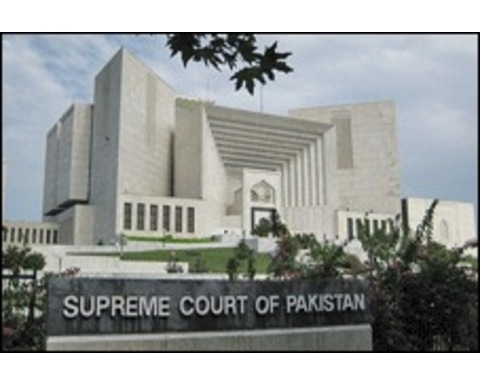
Zahid Bukhari, counsel of Malik Riaz, was earlier barred from Lahore Bar Association. PHOTO: AGENCIES/ FILE - KARACHI: Advocate Zahid Bukhari and Barrister Aitzaz Ahsan have been banned from entering all law bar associations in Sindh, Express News reported on Saturday. The decision to bar the entries of Bukhari – the counsel for Malik Riaz – and Aitzaz was taken during a meeting of Sindh lawyers, organised by the Karachi Bar Association. The Karachi Bar Association president, while announcing the decision, said that the step was taken to express support for the Supreme Court. Earlier, Bukhari’s was also barred to enter the Lahore Bar Association. The Lahore bar had also adopted a resolution assuring its support to the Supreme Court and announced a two day boycott from the courts. REFERENCE: Zahid Bukhari, Aitzaz Ahsan barred from Sindh law bars By Web Desk Published: June 16, 2012 http://tribune.com.pk/story/394639/zahid-bukhari-aitzaz-ahsan-barred-from-sindh-law-bars/
Mumtaz Qadri, murderer of Salman Taseer, showered with rose petals by Lawyers.
Malik Mumtaz Hussain Qadri, the bodyguard arrested for the killing of Punjab Governor Salman Taseer, shouts religious slogans while being taken away by police after he was presented at a court in Islamabad. -Reuters Photo -- LAHORE: Lawyers showered the suspected killer of a prominent Pakistani governor with rose petals when he arrived at court Wednesday and an influential Muslim scholars group praised the assassination of the outspoken opponent of laws that order death for those who insult Islam. Mumtaz Qadri made his first appearance in an Islamabad court, where a judge remanded him in custody a day after he allegedly sprayed automatic gunfire at the back of Punjab province Gov. Salman Taseer while he was supposed to be protecting him as a bodyguard. A rowdy crowd slapped him on the back and kissed his cheek as he was escorted inside. The lawyers who tossed handfuls of rose petals over him were not involved in the case. As he left the court, a crowd of about 200 sympathizers chanted ”death is acceptable for Muhammad’s slave.” The suspect stood at the back door of an armored police van with a flower necklace given to him by an admirer and repeatedly yelled ”God is great.” More than 500 clerics and scholars from the group Jamat Ahle Sunnat said no one should pray or express regret for the killing of the governor. The group representing Pakistan’s majority Barelvi sect, which follows a brand of Islam considered moderate, also issued a veiled threat to other opponents of the blasphemy laws. ”The supporter is as equally guilty as one who committed blasphemy,” the group warned in a statement, adding politicians, the media and others should learn ”a lesson from the exemplary death.” Jamat leader Maulana Shah Turabul Haq Qadri paid ”glorious tribute to the murderer … for his courage, bravery and religious honor and integrity.” Mumtaz Qadri told interrogators Tuesday that he shot the liberal Taseer multiple times because of the politician’s vocal opposition to the harsh blasphemy laws. REFERENCE: Lawyers shower roses for governor's killer AP | 5th January, 2011 http://dawn.com/2011/01/05/lawyers-shower-roses-for-governors-killer/
The UN special rapporteur urged the government to apply jurisdiction of highest courts enshrined in the Constitution to the whole of Pakistan since many could be deprived of their constitutional rights. She avoided elaborating her observation when asked, but said she believed that “a uniform legal system enshrined in the Constitution is necessary in order to avoid ambiguities and discrepancies in the administration of justice”. In the preliminary report, Ms Knaul said that the recognition of another superior higher court, the Federal Shariat Court, in the Constitution has created an ambiguity. “The existence of two superior courts in the Constitution is problematic and leaves space for interpretations which might be contradicting,” she believed. The UN special rapporteur expressed concern over cases brought under blasphemy law for which she used the term ‘so-called’ and explained that judges had been coerced to decide against the accused even without supporting; as for the lawyers, in addition to their reluctance to take up such cases, they were targeted and forced not to represent their clients properly. In addition, judges, prosecutors and lawyers working on cases related to terrorist acts and organised crime were also often the target of serious threats and attacks from various actors, including non-state actors, she said. As part of her mission, the UN special rapporteur paid attention to the integration of a gender perspective and women’s rights in the justice system, and expressed concern that there were currently no women sitting on the Supreme Court and only two women in the high courts. Ms Knaul said that she was further struck by reports of existing laws, such as the blasphemy law, being misused to target women and strip them off of their fundamental rights. Many stages of the justice system, starting with filing a case with the police, to accessing lawyers and appearing and testifying before courts, were gender-biased, and therefore impeded the full functioning of justice for women, she said. She expressed deep concern over the poor quality of investigations carried out by police service. REFERENCE: UN rapporteur calls for clear criteria for suo motu action http://dawn.com/2012/05/30/un-rapporteur-calls-for-clear-criteria-for-suo-motu-action/
LAHORE: Former chief justice Lahore High Court Khawaja Sharif will defend Mumtaz Qadri, the accused killer of former governor Punjab Salman Taseer, DawnNews reported on Monday. The hearing of the appeal against the death sentence of Qadri will be heard by a two-member bench led by Chief Justice of Islamabad High Court Iqbal Hameed-ur-Rehman. The panel of Qadri’s lawyers including Khawaja Sharif, Malik Jawad, Malik Rafiq and Shuja-ur-Rehman, will be appearing before the court. Qadri signed his appeal papers today in Adiala Jail. Qadri confessed to shooting Taseer dead outside an upmarket coffee shop close to his residence in the leafy capital Islamabad on January 4. He said he objected to the politician’s calls to amend the blasphemy law. REFERENCE: Former CJ LHC to fight Mumtaz Qadri’s case DAWN.COM | 10th October, 2011 http://dawn.com/2011/10/10/former-cj-lhc-to-fight-mumtaz-qadris-case/http://dawn.com/2011/10/06/mumtaz-qadri-files-appeal-against-death-penalty/
Former CJ LHC Khawaja Sharif defends Mumtaz Qadri in High Court
ISLAMABAD: A reported statement by Lahore High Court Chief Justice (CJ) Khawaja Muhammad Sharif that the Hindu community was funding terrorism in Pakistan, irked members of the National Assembly, as many of whom joined minority members and walked out in protest. The lawmakers also demanded Chief Justice of Pakistan Iftikhar Muhammad Chaudhry take suo motu notice of the CJ’s remarks. Ramesh Lal, a minority lawmaker from the Pakistan People’s Party, raised the issue on a point of order and censured the CJ’s remarks, saying the Hindu community in Pakistan was as patriotic as the rest of the country and the remarks were highly uncalled for. Lal announced a token walkout and was joined by a few other members belonging to different parties, including the Awami National Party. He said the remarks hurt the over three million Hindus in Pakistan, adding the statement was against national unity. Labour and Manpower Minister Khursheed Shah tried to defend the CJ, saying he could not have made such a statement and might have referred to India and not the Hindu community. staff report REFERENCE: LHC CJ’s remarks irk NA members Wednesday, March 17, 2010 http://dailytimes.com.pk/default.asp?page=2010%5C03%5C17%5Cstory_17-3-2010_pg7_6
BARELY days after the Punjab chief minister was caught playing to the Taliban gallery, another high official from the province is in the spotlight for all the wrong reasons. This time, Lahore High Court Chief Justice Khawaja Mohammad Sharif has sparked outrage for reportedly saying that Hindus were responsible for financing acts of terrorism in Pakistan. The remarks came while the judge was hearing two identical petitions against the possible extradition of Afghan Taliban suspects. It may well have been a slip of the tongue by Mr Sharif, who might have mistakenly said `Hindu` instead of `India` — nevertheless it was a tasteless remark to say the least. Although such remarks warrant criticism what makes them worse is the position of the person who makes them. These sort of comments are the last thing one expects to hear from a judge, that too the chief justice of a provincial high court. What sort of message are we sending to our minorities, as well as to the world, when the holder of such a respected public office makes comments that come across as thoughtless? The Hindu members of the National Assembly walked out of the house on Tuesday to protest the remarks. The members said the comments had hurt the feelings of Pakistani Hindus — and there is no doubt that they had. As it is, Pakistan scores quite poorly when it comes to treating minorities fairly. Remarks such as these put our already marginalised minorities in an even tougher spot, as the patriotic credentials of non-Muslims living in this country are put into question. Though foreign elements may be involved in terrorist activities within Pakistan, maligning a whole community based on its faith is totally unacceptable. Before making such tactless remarks, our public figures should consider how much they dislike it when others equate Muslims with terrorism. A member of the National Assembly quite correctly advised our judges to concentrate on the dispensation of justice in Tuesday`s session. In the meantime, one hopes that Justice Sharif explains his comments. REFERENCE:Tactless remarks Dawn Editorial Thursday, 18 Mar, 2010 http://archives.dawn.com/archives/32510
ISLAMABAD, March 16: It was a rare, judge’s turn to be judged in the National Assembly on Tuesday as Hindu members staged a walkout to protest at reported remarks by the Lahore High Court (LHC) chief justice alleging Hindu financing of terror attacks in the country. Some members of the Awami National Party too joined the first walkout against the judiciary in Pakistan’s parliament before the protesters were brought back to hear words of sympathy for the injured sentiments and some advice for judges to focus on delivering justice rather than publicity despite a government minister’s statement that the remark by Justice Khawaja Mohammad Sharif while hearing a case in Lahore on Thursday seemed to be “a slip of the tongue”. The protest was the second raised in the house over press reports in as many days after sharp criticism of Punjab Chief Minister Shahbaz Sharif over his appeal to Taliban in a speech to a seminar in Lahore on Sunday to spare his province terror attacks because of some shared views with his PML-N party. PPP’s Hindu member Romesh Lal, who raised the issue, said sentiments of an estimated four million Pakistani Hindus had been injured by the LHC chief justice’s remarks, as reported in a section of the press, that while terrorist bomb blasts were being carried out by Muslims, “money used for this came from Hindus”. The member said if a country was suspected of sponsoring such attacks it should be named, but blame should not be put on just Hindus who, he said, were as good patriots as other Pakistanis. While drawing attention of President Asif Ali Zardari and Prime Minister Yousuf Raza Gilani to what he called worry caused to Hindus, he appealed to Supreme Court Chief Justice Iftikhar Mohammad Chaudhry to take suo motu notice of Justice Sharif’s remarks. As Inter-Provincial Coordination Minister Pir Aftab Shah Jilani and some other members of the ruling PPP went out of the chamber to persuade the protesters to return, party chief whip and Labour and Manpower Minister Khurshid Ahmed Shah told the house the judge seemed to be blaming India for financing the Taliban rather Hindus, adding he was sure a clarification would come “by tomorrow”. PML-N’s Rashid Akbar Niwani said judges should devote to dispensation of justice instead of seeking publicity as he also advised the media to exercise “restraint”, particularly blasting unspecified television anchorpersons who, he said, should also be held accountable for their earnings together with “heads of (government) institutions” as often-maligned elected politicians. REFERENCE: A judge is judged in NA, with walkout By Raja Asghar Wednesday, 17 Mar, 2010 http://archives.dawn.com/archives/44079
Policy Matter Imran Khan on Asia Bibi Case Blasphemy Laws (November 27, 2010)
Lawyer slaps civil judge in Faisalabad FAISALABAD A lawyer slapped a civil judge across the face on Monday when an observation made by the latter in a case relating to a rent dispute angered him. Advocate Liaqat Javed had appeared before civil judge Tariq Mehmood and complained to the judge that a court bailiff had taken into custody his client Shehzad Mehmood, the accused in the case, although he had deposited the amount of default. The judge reportedly told the lawyer that he had not yet received the receipt of the payment. The remark angered the lawyer who allegedly started abusing the judge and the staff of the court. When other civil judges of district courts heard about the incident, they suspended work and demanded a stern action, including registration of a case against the lawyer. The district bar has convened a meeting to discuss the matter and suspended the membership of the lawyer. A delegation of the district bar association met the judge and informed him that the membership of the lawyer had been suspended and his case would be forwarded to the Punjab Bar Council for cancellation of his licence. Faisalabad bar president S.M. Iqbal, who met the district and sessions judge on Monday night, denied reports that some judges had resigned in protest against the incident. Talking to Dawn, he said the district and sessions judge and other judges were satisfied with the bar`s decision to suspend the Mr Javed`s membership and recommend to the PBC to cancel his licence. He said the judges would resume work on Wednesday. REFERENCE: Lawyer slaps civil judge in Faisalabad By Muhammad Saleem http://archives.dawn.com/archives/43878
Lawyer slaps civil judge in Faisalabad courtroom - FAISALABAD/LAHORE: A lawyer slapped a civil judge in a court in Faisalabad, a private TV channel reported on Monday. Liaqat Javaid advocate slapped Civil Judge Tariq Mehmood, the channel reported. The judge was hearing a loan default case. Javaid, lawyer for the accused, asked the judge to release the accused as the amount had already been deposited. The judge after thoroughly reading the record of the case said the contention of the defendant’s lawyer could not be entertained as no such receipt of payment had been recorded. This flared the lawyer up and he started abusing the judge. He rushed to the dais and allegedly slapped the judge repeatedly. Court officials and lawyers succeeded in rescuing the judge, who went into his retiring room, APP reported. Reacting to the incident, the Faisalabad sessions judge ordered all judges to stop working immediately and demanded suspension of the lawyer’s licence. District bar office-bearers also held an emergency meeting and decided that the judges would continue to boycott the courts until the suspension of Javaid’s licence, the channel reported. The civil judges of Jaranwala, Samundri and Tandlianwala tehsils boycotted the courts. They condemned the incident and called it a shameful act. Forty-five civil judges submitted their resignations to the senior civil judge and said they would not resume their duties the next working day (Wednesday) if a case was not registered against the lawyer for disgracing, misbehaving, manhandling, abusing, threatening and attempting to kill the judge. They said Javaid had committed contempt of the court. District and Sessions Judge Sohail Nasir also held a meeting with the civil judges and assured that their grace and dignity would be protected at all costs. app/daily times monitor. REFERENCE: Lawyer slaps civil judge in Faisalabad courtroom Tuesday, March 23, 2010 http://www.dailytimes.com.pk/default.asp?page=2010\03\23\story_23-3-2010_pg7_11
Lawyer slaps judge in Faisalabad - FAISALABAD/LAHORE: A lawyer at the Faisalabad Sessions Court on Monday slapped a civil judge for rejecting a bail plea of a man accused of robbery. According to witnesses, Advocate Mohsin Nabeer appeared in the court of Civil Judge Azhar Ali Jaffari to seek bail for the accused. The civil judge rejected the bail, which provoked Nabeer to attack the judge. The lawyer slapped the judge, dragged him out of the court, and passed abusive remarks against him. Staff in the court caught the lawyer and handed him over to police, but some other lawyers freed him from the police custody. The lawyers also attacked some other judges, using abusive language against them. All judges left work in protest and gathered in the court of Civil Judge Azhar Ali Jaffari. Taking action against the lawyer, Punjab Bar Council (PBC) suspended his practice licence. The PBC Executive Committee chairman issued the order. The lawyer was also directed to appear before the disciplinary committee on March 22. agencies/staff report . REFERENCE: Lawyer slaps judge in Faisalabad Tuesday, March 20, 2012 http://www.dailytimes.com.pk/default.asp?page=2012\03\20\story_20-3-2012_pg7_4
Judge stays away from court FAISALABAD, Feb 11: The Banking Court No 2 judge stayed away from court on Friday after some lawyers hurled threats at him for he had issued a contempt of court notice to one of their colleagues on Wednesday. Sources said when judge Mahmood Ahmad Shakir issued a contempt notice to him, lawyer Sohail Anjum called his colleagues to besiege the court. They asked the judge to withdraw the notice or face consequences.The police manned the court to avoid any mishap on Friday as the lower staff of the court was on duty. District Bar Association Secretary Haris Amin said the issue had been taken up with District and Sessions Court Judge Abdul Razzaq Bhatti and shortly it would be resolved. He said the judge got annoyed when the lawyer`s client shouted in the court. Judges and lawyers often have rows. Earlier on March 22, 2010, lawyer Liaquat Javed slapped civil judge Tariq Mahmood Kahot in Faisalabad which triggered a judges` strike in the district. On June 20, 2009, hundred of lawyers shoved judge Aslam. REFERENCE: Judge stays away from court By Our Staff Correspondent 12th February, 2011 http://dawn.com/2011/02/12/judge-stays-away-from-court/
Lahore High Court Terrorist Lawyers beating Police Officer outside a court
Civil judges in Punjab rally against lawyer LAHORE, March 26 Judicial officers took to the streets on Friday in protest against slapping of a civil judge by a lawyer in Faisalabad earlier this week, highlighting tensions between the bench and the bar. The civil judges wearing black armbands marched from civil courts to the district and sessions courts after performing judicial duties in their chambers instead of courts. In Arifwala tehsil of Pakpattan district, four civil judges resigned to protest against the incident. In Faisalabad, where the ugly incident took place on Monday, 45 sessions and civil judges from all over the district are on a strike. On Friday, they went on leave saying they would not resume work until the accused advocate, Liaquat Javed, was appropriately penalised for insulting Civil Judge Tariq Mahmood Kahut. The Lahore High Court on Thursday issued arrest warrants for Mr Javed and directed police to produce him handcuffed on March 30. The LHC move annoyed the Faisalabad bar, which put its weight behind the accused and went on an indefinite strike, saying only the Punjab Bar Council was authorised to penalise a lawyer. As if this were not enough, the entire judiciary in Kasur district, comprising 30 sessions and civil judges, went on a two-day strike on Friday to protest against “the blackmail and pressure tactics being employed by the bar”. They also submitted to the LHC applications for month-long leave with a request to transfer them from Kasur. REFERENCE: Civil judges in Punjab rally against lawyer Dawn Report http://archives.dawn.com/archives/41810
PML N Lawyers Terrorising Police in Front of Lahore High Court
Lawyers torture police officer in front of judge IN yet another episode of hooliganism, a group of lawyers on Thursday brutally tortured a sub-inspector, injured him with a pistol butt, in front of an additional district and sessions judge in the courtroom after he refused to investigate a theft case as per their desire. The incident took place in the courtroom of Additional District and Sessions Judge Khawja Zafar Iqbal where Sub-Inspector Imtiaz Wahla was appearing regarding proceedings of a theft case (number 79/2012) registered with Quaid-e-Azam Real Estate Police Station by former Lahore Bar Association Model Town Seat President Qamar Shahid Mayo SI Imtiaz was the Investigation Officer of the theft case in which it was alleged that one Atif had stolen jewelry from a wedding hall located on the PECO Road.
The complainant had stated in FIR that the accused had stolen jewelry of her sister. On Thursday, the IO had to submit a report in the court and while submitting his report, he stated that police had no concrete evidence against Atif and his arrest was not possible. He said further investigation was under process. The statement of the IO flared up Qamar Shahid and his associates, including Sajid Aiwan, Tauseef Ulfat and 35 others. The lawyers while keeping aside prestige of the courtroom attacked SI Imtiaz and started thrashing him brutally. One of the lawyers even took out his pistol and hit the SI’s head with its butt, causing a severe injury. The lawyers also slapped the SI and took him to the committee room while taking him hostage. When the judge saw the whole episode, he left his seat and took shelter in his retiring room to save himself. However, a senior police official reached the court and rescued the SI.
It has been learnt that SI Imtiaz Wahla has registered a case against Qamar Shahid, Sajid Aiwan, Tauseef Ulfat and 35 other lawyers under the PPC sections 353, 506, 365, 342, 449, 448 and 186 with the Islampura Police Station. Later, the aforesaid lawyers also secured their pre-arrest bails from a court on submission of surety bonds of Rs50,000 each. Sub-inspector Imtiaz Wahla, talking to The News, said the lawyers had pressurised him to maneuver the investigation report and declare accused Atif guilty but he refused to accept their heinous demand. He alleged that Qamar Shahid advocate along with his henchmen was working as mafia and used to register fake cases against innocent people with different police stations. He said a case of the same nature was also registered with Kot Lakhputt Police Station, accusing the lawyer of registering cases and blackmailing people by using his law practice. It is pertinent to mention that it was the second consecutive day when lawyers subjected police officials to severe torture. A group of lawyers on Wednesday had tortured ASI Zohaib of Green Town Police Station in the Sessions Court. Meanwhile, the IG Punjab while addressing a press conference said that no one would be spared whether lawyers, journalists, politicians even police officials who would try to violate the law. REFERENCE: Lawyers torture police officer in front of judge Numan Wahab Friday, May 11, 2012 http://www.thenews.com.pk/Todays-News-5-107572-Lawyers-torture-police-officer-in-front-of-judge
I am saddened but not surprised that a Pakistani judicial inquiry commission has accused me of being disloyal while serving as my country’s ambassador to the United States. I resigned last November after an American businessman of Pakistani origin — now residing in Monaco — claimed that I had asked him to deliver a secret memo to Adm. Michael Mullen, then chairman of the Joint Chiefs of Staff, seeking U.S. help in thwarting a military coup right after the U.S. operation that killed bin Laden. The affair was dubbed “Memogate” by the Pakistani media. Our Supreme Court, pursuing a populist ideological agenda without regard to legal or constitutional niceties, intervened directly. Without any trial, it barred me from leaving Pakistan and created a Commission of Inquiry. This week the commission presented its findings. It alleged that I had acted against Pakistan’s interests and had authorized the controversial memo. The report’s release has been timed to distract attention from serious allegations by a Pakistani businessman that he paid millions to the son of Pakistan’s chief justice as part of efforts to buy favors. The one-sided “evidence” has failed to prove my connection to the memo. I have not been charged or tried — though the report could lead to charges, and a treason conviction carries the death penalty. No, I was simply labeled guilty by a “fact-finding” commission that bent over backward to accommodate my discredited accuser. The commission’s bias was clear in its refusal to hear from me via videoconference — a request I made in light of security threats — and its disinterest in seeking the testimony of U.S. officials who received the controversial memo, Mullen and Gen. Jim Jones. Notably, Jones said in a sworn affidavit that I had nothing to do with the document that had been transmitted to him and that the memo reflected the ideas of its author, the American businessman Mansoor Ijaz. The commission’s findings are motivated by politics, not law. I served Pakistan sincerely. REFERENCE: My real ‘crime’: Standing up for U.S.-Pakistan relations By Husain Haqqani, Updated: Wednesday, June 13, 5:11 PM http://www.washingtonpost.com/opinions/a-former-ambassadors-real-treason-standing-up-for-us-pakistan-relations/2012/06/13/gJQAon0dZV_story.html Ex-envoy Husain Haqqani was behind memo seeking U.S. help, Pakistani probe finds By Shaiq Hussain, Published: June 12 http://www.washingtonpost.com/world/asia_pacific/pakistani-probe-finds-former-ambassador-husain-haqqani-was-behind-memo-seeking-us-help/2012/06/12/gJQAtaSpWV_story.html
Hussain Haqqani Discussing US-Pakistan Relations with Wolf Blitzer in CNN
ISLAMABAD: The memo commission’s report submitted in the Supreme Court stated that Pakistan’s former ambassador to the US, Husain Haqqani, was not loyal to the country and that the memo seeking US support was indeed real and authored by Haqqani, DawnNews reported. A nine-member larger bench of the Supreme Court was on Tuesday hearing constitutional petitions about the controversial memo delivered to former US military chief Admiral Mike Mullen reportedly by Haqqani. The bench, headed by the chief justice, comprised Justices Mian Shakirullah Jan, Jawwad S. Khawaja, Khilji Arif Hussain, Tariq Parvez, Asif Saeed Khan Khosa, Amir Hani Muslim, Ijaz Ahmed Chaudhry and Azmat Saeed. During the hearing, Haqqani’s counsel Asma Jahangir said that a hearing without issuance of a notice was unusual. The court reissued notices to all those party in the case and ruled that Haqqani should appear at the next hearing. It court also directed that the memo commission’s report be made public. During the hearing, Chief Justice Iftikhar said that the court would analyse the report and determine what facts have been stated in it. Reissuing notices to those party in the case, the court adjourned the case’s hearing for two weeks. Earlier on Monday, the three-member memo commission, headed by Justice Qazi Faez Isa, had submitted its report to the apex court. It stated that the memo was indeed real and authored by the former ambassador. The commission’s report said that Haqqani had forgotten that he was Pakistan’s ambassador to the US. The report moreover said that Haqqani violated the country’s constitution, adding that while Haqqani was earning a salary paid by the government, his loyalties were not with Pakistan. The former ambassador chose not to stay in Pakistan, the report said, adding that neither did Haqqani have any property in the country, nor did he have any bank balance. The commission moreover said that the purpose of writing the memo was to convince American authorities that Pakistan’s civilian government was US-friendly and that it was only the civilian setup that could control the expansion of Pakistan’s nuclear work. The report also stated that through the memo, Haqqani wanted to convince the US over the formation of a new security team and that he wanted to head the team himself. REFERENCE: Commission’s report says Haqqani behind controversial memo http://dawn.com/2012/06/12/sc-takes-up-memo-case/
In 2008, Pakistan Chief Justice Iftikhar Muhammad Chaudhry became the symbol of the lawyers’ movement which toppled an unelected president and brought democracy back to the country. Harvard Law School even presented Mr. Chaudhry with its Medal of Freedom. A new report by the International Commission of Jurists, a Geneva-based nongovernment organization of judges and lawyers, suggests his legacy might be more complicated. The report, released this month and based on a field trip to Pakistan last fall, paints a picture of a judiciary under Mr. Chaudhry that is exercising unusually wide-ranging powers. Pakistan’s judiciary has, during Mr. Chaudhry’s tenure as chief justice, stepped into areas normally reserved for a nation’s government, raising concerns over the balance of power, the report said. It noted that judges in Pakistan are increasingly initiating court proceedings on issues – as opposed to hearing cases brought by plaintiffs. The courts often launch these so-called “suo moto” cases in instances where the government has failed to take action. The report said in some cases this helps to protect the rule of law. It cited an example last year when paramilitary forces were caught on video shooting dead a teenager who was pleading for his life. The Supreme Court ordered senior paramilitary officers removed from their posts within three days and told a state prosecutor to launch an investigation. But in other cases Mr. Chaudhry appears to arbitrarily initiate “suo moto” proceedings based on articles in Pakistani newspapers, the report said. “This introduces a certain element of chance to the practice which is hardly compatible with the rule of law.” REFERENCE: Report Dings Pakistan’s Lawyers and Chief Justice April 20, 2012, 1:38 PM IST http://ht.ly/1iVQn7
LAHORE: Asma Jahangir, counsel for former ambassador Husain Haqqani, has expressed reservations over a report presented by the memo commission to the Supreme Court and accused the panel of being biased. Talking to reporters at the Lahore High Court here on Tuesday, she questioned the commission’s jurisdiction in relation to its several findings and said “under what law the commission can declare anybody a traitor”? She said the commission acted in two capacities — complainant and adjudicator. The inquiry report should have been shown to the counsel of the parties before it was presented to the Supreme Court, she added. Ms Jahangir said the commission declared that Mr Haqqani had forced Mansoor Ijaz to write the memo, but failed to establish any evidence to the effect. She alleged that the commission was totally prejudiced and the report had exposed it. It did nothing but fought the case of Mr Ijaz, she said. The lawyer said the SC had taken up the case of Mr Haqqani without intimating the counsel and it was not mentioned in the “cause list” issued on Monday. “I came to know about the hearing of the Haqqani case through news aired by television channels which is highly regrettable,” she added. Ms Jahangir said it was shocking that the court intimated Mr Haqqani who was outside Pakistan, but failed to inform her. She said: “I will follow Supreme Court rules and will not appear before court without proper intimation.” She said if she were the attorney general she would never appear before the court on a notice received late at night. She strongly objected to the fixing in haste of the Haqqani case for hearing. Whether the purpose of doing so was to divert the attention of the media, she asked. Asked if Mr Haqqani would return to the country following SC’s directions, Ms Jahangir said she had not seen the commission’s report because she had not received it. She said the commission recorded Mr Ijaz’s evidence through video conference but denied the same facility to Mr Haqqani. “This politics should be stopped now. It will not boost judiciary’s sanctity,” she added. The lawyer pointed out that ANP leader Khan Abdul Wali Khan and poet Faiz Ahmad Faiz were declared traitors and said there was a possibility that she would also be declared the same. She said the judiciary should mend its ways and make good history. “Disgracing people is not justice,” she concluded. REFERENCE: Asma Jahangir rejects memo inquiry report http://dawn.com/2012/06/13/commission-accused-of-being-biased-asma-jahangir-rejects-memo-inquiry-report/
LAHORE: Asma Jahangir has reacted strongly towards a news item appearing in a section of the press quoting the memo commission warning that she could be made ineligible for practice on her comment to the press regarding the recording of evidence of Husain Haqqani. In a press release, she said that courts must not threat lawyers for valid opinions that they hold. She added her law practice was not granted to her in a lottery which could be grabbed from her through any “daafa yarkan”. The lawyer said there was no law that allowed a commission to suspend her licence and her grouse had precisely been that judges must speak through their judgements and within the parameter of the law. She said, “Which law grants judges the power to suspend people's livelihoods because of their legitimate comments on the procedure of a commission?” She also challenged Advocate Bhutta to advise his clients to file contempt proceedings against her rather than making pleas before the commission without filing any such petition. She said she was prepared to defend herself but would not be admonished into losing her right of free expression. REFERENCE: Asma Jahangir slams ‘warning’ of memo commission Staff Report Sunday, April 15, 2012 http://www.dailytimes.com.pk/default.asp?page=2012%5C04%5C15%5Cstory_15-4-2012_pg7_13
As per 1973 Constitution of Islamic Republic of Pakistan
PART I
6. (1) Any person who abrogates or attempts or conspires to abrogate, subverts or attempts or conspires to subvert the Constitution by use of force or show of force or by other unconstitutional means shall be guilty of high treason.
(2) Any person aiding or abetting the acts mentioned in clause (1) shall likewise be guilty of high treason.
(3) [Majlis-e-Shoora (Parliament)] shall by law provide for the punishment of persons found guilty of high treason.
An accomplice is a person who actively participates in the commission of a crime, even though they take no part in the actual criminal offense.
Lets go back to History and not a very Distant Past
Chaudhry Iftikhar named new CJ [Daily Dawn 2005] By Our Staff Reporter ISLAMABAD, May 7: President Pervez Musharraf on Saturday appointed Justice Iftikhar Mohammad Chaudhry, the senior most judge of the Supreme Court, as the next chief justice. He will assume the office on June 30 after retirement of the incumbent Chief Justice, Justice Nazim Hussain Siddiqui, on June 29. “The notification has ended speculations of appointment of a junior judge as chief justice in violation of the seniority principle settled under the 1996 Judges case,” commented a senior Supreme Court lawyer on condition of anonymity. Justice Chaudhry will reach the superannuation age of 65 years in 2012, which will make him one of the longest serving chief justices in the judicial history of Pakistan. He will serve as chief justice for over seven years. Earlier Justice A. R. Cornelius and Justice Mohammad Haleem served as chief justice for eight years from 1960 to 68 and 1981 to 89, respectively. Justice Chaudhry was elevated as a judge of the apex court on February 4, 2000. He has performed as acting chief justice from January 17 to 29, 2005. He holds the degree of LLB and started practice as an advocate in 1974. Later he was enrolled as an advocate of high court in 1976 and as an advocate of Supreme Court in 1985. In 1989, Justice Chaudhry was appointed as advocate-general of Balochistan and elevated to the post of additional judge in the Balochistan High Court in 1990. He also served as banking judge, judge of Special Court for Speedy Trials and Customs Appellate Courts as well as company judge. He served as the chief justice of the Balochistan High Court from April 22, 1999 to February 4, 2000. He was elected the president of the High Court Bar Association, Quetta, and twice a member of the Bar Council. He was appointed as the chairman of the Balochistan Local Council Election Authority in 1992 and for a second term in 1998. Justice Chaudhry also worked as the chairman of the Provincial Review Board for Balochistan and was appointed twice as the chairman of the Pakistan Red Crescent Society, Balochistan. Presently he is functioning as the chairman of the Enrolment Committee of the Pakistan Bar Council and Supreme Court Buildings Committee. Reference: Caudhry Iftikhar named new CJ By Our Staff Reporter May 8, 2005 Sunday Rabi-ul-Awwal 28, 1426 http://archives.dawn.com/2005/05/08/top4.htm
ISLAMABAD, Feb 2: The government elevated five judges to the Supreme Court on Wednesday. According to a notification, the president has appointed Justice Rashid Aziz, Chief Justice, Lahore High Court; Justice Nazim Hussain Siddiqui, Chief Justice Sindh High Court; Justice Iftikhar Mohammad Chaudhry, Chief Justice, Balochistan High Court; Qazi Farooq, former chief justice of Peshawar High Court; and Justice Rana Bhagwan Das, judge, Sindh High Court, judges of the Supreme Court. After the elevation of Justice Rashid Aziz Khan to the SC, Justice Mohammad Allah Nawaz has been appointed Chief Justice of Lahore High Court. Justice Deedar Hussain Shah has been appointed Chief Justice of Sindh High Court and Justice Javed Iqbal Chief Justice of Balochistan High Court. After these appointments, the number of SC judges has risen to 12, leaving five posts vacant. REFERENCE: Five judges elevated to SC Bureau Report DAWN WIRE SERVICE Week Ending : 5 February 2000 Issue : 06/05 http://www.lib.virginia.edu/area-studies/SouthAsia/SAserials/Dawn/2000/05feb00.html#five
ISLAMABAD, April 25: President Mohammad Rafiq Tarar on Tuesday appointed five judges to the Supreme Court of Pakistan. With the appointment of these judges, the strength of the Supreme Court judges, i.e. 17, stands completed. The newly-appointed judges include Justice Mian Mohammad Ajmal, Chief Justice, Peshawar High Court; Justice Deedar Hussain Shah, Chief Justice, High Court of Sindh; Justice Javed Iqbal, Chief Justice, High Court of Balochistan; Justice Hamid Ali Mirza, judge, High Court of Sindh and Justice Abdul Hameed Dogar, judge, High Court of Sindh. These judges have been appointed to the SC from the date they respectively take upon themselves the execution of their offices as such judges. Following are the names of the judges of the Supreme Court according to their seniority:
1. Justice Irshad Hassan Khan, Chief Justice of Pakistan,
LAHORE, June 27: The Lahore High Court summarily dismissed three writ petitions challenging the assumption of the President's office by Chief Executive Pervez Musharraf. The petitions were filed by Advocates MD Tahir, Amir Sohail and Hanif Tahir. The first-mentioned two argued at some length while the last-mentioned told Justice Khalilur Rahman Ramday, who heard the petitions, that he had reservations about him on account of his pro-government sympathies but would, instead of seeking transfer, leave the matter to his conscience. Advocate MD Tahir said frequent military interventions, prompted by politicians and invariably condoned and validated by the judiciary, have greatly damaged Pakistan in all spheres of life. Advocate Amir Sohail submitted that the Supreme Court recognized Gen Pervez Musharraf as chief executive for three years and his elevation to the office of President was repugnant to the SC judgment in Zafar Ali Shah's case. Under the judgment and the provisional constitution order validated by it the country is to be governed as nearly as possible in accordance with the provisions of the 1973 Constitution. Mr Rafiq Tarar could not have been removed except by impeachment. Justice Ramday observed that the 1973 Constitution was in existence by virtue of the PCO as amended from time to time and dismissed the three petitions. REFERENCE: LHC rejects pleas against Musharraf's presidency Staff Reporter DAWN WIRE SERVICE Week Ending : 30 June 2001 Issue : 07/26 http://www.lib.virginia.edu/area-studies/SouthAsia/SAserials/Dawn/2001/jun3001.html#lhcr
ISLAMABAD, Oct 30: The Supreme Court on Wednesday said it took oath under the PCO to preserve the judicial system, and due to its judgment in which it validated the military takeover the army was going back to barracks by restoring democracy. The apex court, responding to the statement of the Supreme Court Bar Association that arguing a case before the present judiciary was a futile exercise “as it had ceased to be independent,” observed that it reserved its right to take action against the president of SCBA, Hamid Khan, for his “disparaging remarks” about the independence of the judiciary. The SCBA had asked the SC bench on Monday to return its review petition as the bar was of the view that the judiciary, after taking oath under the PCO and by upholding various orders and acts of the present military regime, had ceased to be independent and no substantial question of constitutional importance should be argued before this court in its present composition.” The SC bench called the president of the SCBA, “Hamid Khan, contemner,” and said the SCBA statement was “motivated by malice, extraneous considerations and for political reasons.” In its five-page order, authored by Chief Justice Riaz Ahmad, the SC held that the contents of the application constituted gross contempt of court as it used disparaging remarks about the judiciary through the language which could not have been expected from the pen of the SCBA president. The SC asserted that democracy was being revived in the country and the regime would go back to barracks because of the SC judgment in Zafar Ali Shah case and the oath taken by judges of the SC (under PCO). “It is because of the judgment in Zafar Ali Shah case and oath taken by the judges of the Supreme Court that a time schedule was given and the regime had to hold elections and to go back to barracks after restoration of democratic institutions.”
The court said that in compliance with its judgments, elections were held in the country on Oct 10, 2002, and the process of transfer (of power) was in progress. The SC said that taking oath under the PCO by judges of the superior judiciary was welcomed by the senior lawyers like Khalid Anwar and SM Zafar. It said that those judges who had refused to take oath under the PCO did so according to their conscience and “heavy responsibility lay upon the judges who took oath (under PCO) for dispensation of justice.” The SC stated that its judgment, validating the military takeover, was universally acclaimed and had been described as a landmark judgment.
The court said it could proceed to take action against Hamid Khan, president of SCBA, but it was always appropriate to exercise restraint. “However, we reserve the right to take the proper action at an appropriate stage.” The SC said: “Unfortunately, some members of the Bar, motivated by malice, extraneous considerations and for political reasons or ill-will, make irresponsible statements to tarnish the image of the judiciary which is not at all in the supreme national interest.” The SC said it “strongly deprecate and condemn this attitude on the part of Hamid Khan and considering the contents of this application scandalous, malicious and irrelevant, we order that paragraph (I) and (II) therefore be struck off.” The SC said it had highest respect for those members of the bar, who have shown respect to the judiciary. By making such attempts the members of the bar were abusing the sacred elected office, it said. The court further observed that by taking oath under the PCO the judiciary had “saved the independence of (the) judiciary as well as the system of administration by preserving the Bar as well.” “Failing which the bar would have been replaced by all together a new system unknown to a civilised society.” It said that judges took oath under the PCO “in the highest national interest, and therefore we have deliberately not chosen to proceed against Hamid Khan in view of the interest of the institution, “but we reiterate that we reserved our right to proceed against Hamid Khan, contemner.”
The court observed that Hamid Khan knew that all the points which had been raised in the review petition had already been dealt with in the judgment, and the court would not allow re-hearing of the matter. The court said that knowing full well the consequences of the review petition, the counsel deliberately declined to argue the case “motivated by malice, ill-will and extraneous considerations.” The court said that review petition was fixed for hearing on Oct 28 when a request for adjournment was moved on behalf of Hamid Khan, expressing his inability to appear before the court on the said date due his unavoidable personal obligation and prior commitments. The bench assembled in the court to consider the aforesaid request for adjournment when, surprisingly, the court noticed the presence of Hamid Khan in the courtroom who came at the rostrum and submitted an application under the caption “Statement at the Bar”. The court said that it was high time that counsel like Hamid Khan and the members of the bar realised their responsibility towards the courts and the society. “If this state of affairs continues then God be with us and nothing more could be said about it. As a consequence of the above, this review petition has no merits and the same stands dismissed accordingly”, the court concluded. REFERENCE: Supreme Court says its verdict has helped revive democracy By Rafaqat Ali October 31, 2002 Thursday Sha’aban 24,1423 http://archives.dawn.com/2002/10/31/top9.htm
ISLAMABAD, March 1: The Chief Justice of Pakistan, Irshad Hasan Khan, on Wednesday observed that when the politicians are in power, they try to become dictators but when they are out of power, they become champions of the rule of law. Presiding over a 12-member bench seized of the seven petitions challenging the military takeover, the chief justice directed the attorney general to provide details of the expenditure on holding elections, including the expenses made by the candidates on their election campaigns. The Supreme Court announced that it would decide the issue of maintainability and merits of the case simultaneously. The chief justice said the court had entertained the petitions. The bench started regular hearing of the petitions on Wednesday. The court first took up the petition of Syed Zafar Ali Shah, suspended MNA of PML from Islamabad. The representative petition of PML would be taken next and Khalid Anwer would argue the case on behalf of the party.
Other petitions before the court are of Syed Imtiaz Hussain Bukhari, Challenging the PCO; Fazal Ellahi Siddiqui, challenging the PCO; Shahid Orakzai, seeking restoration of Senate, office of speakers and provincial assemblies; Al-Jehad Trust, seeking restoration of Constitution to the extent of judiciary; and Syed Iqbal Haider of MWM, seeking validation of PCO. The bench consisted of Justice Irshad Hasan Khan, Justice Mohammad Bashir Jehangiri, Justice Sheikh Ijaz Nisar, Justice Abdur Rehman Khan, Justice Sheikh Riaz Ahmad, Justice Chaudhry Mohammad Arif, Justice Munir A. Sheikh, Justice Rashid Aziz Khan, Justice Nazim Hussain Siddiqui, Justice Iftikhar Mohammad Chaudhry, Justice Qazi Mohammad Farooq and Justice Rana Bhagwandas. The chief justice made it clear at the outset that the counsels should try to be relevant and unnecessary repetition of arguments should be avoided. He said the whole work of the court was suspended due to the present case.
Chaudhry Farooq, the counsel of Mr Shah, said that on the last hearing the petitioner had apprehended that the judges of the court would be asked to take fresh oath under the PCO and his apprehensions proved to be true. He said the PCO (1) of 1999 and subsequent orders were unconstitutional, having no force of law. The chief justice asked the parties to avoid mud-slinging, and added that: "we will perform our function without intimidation." He observed that the bar and the bench were integral part of the chariot of justice. He said his effort was to save the system and referred to the decisions of the Chief Justices Committee. The counsel said: "Pakistan was a gift of our forefathers, but unfortunately the rule of law had been interrupted at regular intervals. In its total life, Pakistan had suffered military rule for 30 long years".
He said the government in its reply to the petitions had said that the elections of Feb 3, 1997, were farce. The elections in which PML obtained heavy mandate were monitored by the observers across the globe, he said, and added the armed forces were employed to supervize the elections. On the court's query, Barrister Khalid Anwar stated that 36 per cent of voters used their right of franchise in the 1997 elections. Chaudhry Farooq said if the government of Khawaja Nazimuddin would not have been dismissed, the fate of Pakistan would have been different. He said Pakistan was created with the force of vote and not through any military operation. "Both citizens and soldiers are subject to Constitution alike."
Referring to Article 6 of the Constitution, he said abrogating the Constitution was treachery with the country. When he stated that the respondents had not replied to the Politicians in power try to be dictators: CJ challenge he raised in the petition, the chief justice observed that the counsel was trying to be hyper technical. The CJ made it clear to the counsel that notice of the case to the chief of the army staff was there. The counsel said he was firm believer that the Kafir (infidel) could not be a friend of Muslim and Hindus being Kafir could not be trusted. When the counsel referred to a judgment from the Indian jurisdiction, the court asked him not to cite Indian judgments in the present case. When the counsel started reading an old judgment from Pakistani jurisdiction, the chief justice asked the counsel to first read the speech of the chief executive in which he had spelt out the reasons which forced him to come into power. The counsel was still reading the speech of Gen Musharraf when the court rose to assemble again on Thursday (March 2). Politicians in power try to be dictators, says CJ Bureau Report DAWN WIRE SERVICE Week Ending : 4 March 2000 Issue : 06/10 http://www.lib.virginia.edu/area-studies/SouthAsia/SAserials/Dawn/2000/mar04.html#poli
Chaudhry Aitzaz Ahsan is a Barrister-at-Law by profession, Senior Advocate Supreme Court and President of the Supreme Court Bar Association. He is also a writer,human rights activist, politician, former Federal Minister for Law and Justice, Interior, Narcotics Control (1988-1990) and Education. Elected to the Senate of Pakistan in 1994, he eventually succeeded as the leader of the House and the leader of the Opposition between the years 1996 and 1999. Currently he is president of the Pakistani Supreme Court Bar Association. Aitzaz Ahsan has been under arrest periodically in 2007 for his involvement in the effort to restore Iftikhar Muhammad Chaudhry as the Chief Justice of the Supreme Court of Pakistan after President of Pakistan General Pervez Musharraf suspended the constitution and subsequently removed Chief Justice Chaudhry from the bench. REFERENCE: Guests: Aitzaz Ahsan http://www.charlierose.com/guest/view/6390
While everyone in Pakistan keeps going on and on about American intervention in our affairs, those who protest the loudest are the very ones who seek it at the first opportunity. The lawyers’ campaign for the restoration of the judges is something that will succeed or fail in Pakistan, not in the US Washington has been on code orange for the last few days as temperatures soar into the upper 90s, the kind of weather that used to be considered ideal for mad dogs and Englishmen. There are not many Englishmen in this town and all mad dogs have been long sent to doggie heaven. However, despite the heat, quite a few things are going on. Thousands of Pakistani-American doctors are in town for their annual conference, a kind of “Mela Mowaishiyaan” of the well-heeled in white coats who form the upper crust of the Pakistani diaspora and keep on good terms with all governments back home, which may be a sensible thing to do since those governments neither come to power nor go out of power at the doctors’ advice. The doctors meet in a different American city every year, so this time it is the capital which the Supreme Court has just declared free of handgun control, despite this being the murder capital of the United States. Aitzaz Ahsan came to Washington, spoke to a fawning audience at Amnesty, made several calls on the Hill and sought without success a meeting with Richard Boucher, who is to be found at Foggy Bottom when he is not in Pakistan. Unfortunately for Aitzaz, Boucher is headed for Pakistan right now and if Aitzaz is lucky, he will be able to catch him in Islamabad. Aitzaz also spoke to the Pakistani doctors’ annual jamboree. When his visit to Washington on a lobbying mission was first reported by this correspondent in Daily Times, Aitzaz issued a quick denial saying, “I am planning to fly to Washington on the invitation of the Allama Iqbal Medical College Alumni Association of North America. I am neither seeking any intervention of any congressman nor ... going to solicit American support for the reinstatement of judges.” He reminded us that his friends in the US included congressmen and senators and he might meet them, adding the reprimand, “But such meetings cannot and must not be misconstrued.” His companion Munir Malik could not make it because his passport was stuck at the British High Commission. Apparently, Malik had no problem in getting a US visa but also wanted to make the obligatory stop in London on his way to or from Washington, which caused him to miss the trip. While Aitzaz may not be without his friends in the US, “including congressmen and senators,” he did not run in and out of more than one congressional office on a muggy Friday to discuss the Washington weather. The fact is that he did lobby for the judges with the US lawmakers. His argument ran as follows: The US-led war on terror can only be fought effectively with popular backing, something only possible if the judges are independent. American legislators are lobbied 24/7 and are pretty blasé about such lofty assertions. As for the linkage between the war on terror and a free judiciary, they hear that sort of thing all the time and it is in through one ear and out the other. The fact is that it is the administration which is calling the shots and not Congress. Perhaps Aitzaz should have sought a meeting with one of Dick Cheney’s sidekicks since it is the Veep who runs the Pakistan show in liaison with the Pentagon. It seems that when it comes to choosing powerful friends, Aitzaz errs as much in picking them in Washington as he does in Islamabad. Even his speeches (and there were several at the doctors’ conference) were all about the Pakistani community in the US helping the lawyers’ movement back home. Since the community can support only by giving money (which Aitzaz and his movement do not seem to need) or by lobbying American influentials, quite clearly, Aitzaz was engaged in lobbying. While everyone in Pakistan keeps going on and on about American intervention in our affairs, those who protest the loudest are the very ones who seek it at the first opportunity. The lawyers’ campaign for the restoration of the judges is something that will succeed or fail in Pakistan, not in the US. The fact is that appointments had been sought on Aitzaz’s behalf with several members of Congress before he came, among them: Sen. Russ Feingold, who serves on the Judiciary, Foreign Relations, Intelligence and Budget committees; Congresswoman Nita Lowey of the House Appropriations committee and chair of the subcommittee on State and Foreign Operations and member, Homeland Security subcommittee; Congressman Steve Israel of the Appropriations committee and the State and Foreign Operations subcommittee; Gary Ackerman of the Foreign Affairs committee and chair of the subcommittee on the Middle East and South Asia; and Congressman Keith Ellison of the Financial Services and Judiciary committees. Meetings were also sought with Sen. Jo Biden and Sen. Richard Lugar, chair and ranking member of the Foreign Relations Committee. How many of them actually took place, I do not know. What I do know is that if this is not lobbying, then the earth is flat. At Amnesty International, Aitzaz arrived more than an hour late. If he said sorry, I did not hear it. He beamed as some in the hall cheered. He may also have hit upon the long-sought remedy for a jetlag, because he said he no longer had one, thanks to the applause. He did not cover himself with glory when soon after he told the audience — who did not really know what he was talking about — that he was going to suggest to Husain Haqqani, the ambassador, that in order to monitor his, namely Aitzaz’s, movements in Washington “24/7”, Haqqani should have him tailed. Then he said, “And he should nominate Khalid Hasan for the task.” This line was not delivered with humour but undisguised ill will. After the meeting, I reminded Aitzaz that Daily Times had printed his “denial” of my report the next day, so why this. His reply came in Gujrati Punjabi, “Magar tussi chapair tay maar ditti na!” (But you had delivered the slap already). This tasteless behaviour not only showed that truth hurts, but also that all our public figures wish to hear is praise “24/7”. Aitzaz spent over an hour going over events since March 2007, which was a waste of time since everyone in that room knew exactly what had happened. At one point, and with a straight face, he called Iftikhar Muhammad Chaudhry “a shining prince on a white charger”. What people expected to really know, he either skirted past or glossed over. He saw no contradiction between his being in the PPP, which has no wish to see Justice Chaudhry back or President Musharraf removed, and leading the lawyers’ movement. He called it an area of disagreement with his party. Some area that! Moral of the story: it is possible to run with the hare and hunt with the hounds. The question is, how long? REFERENCE: POSTCARD USA: Aitzaz’ Washington merry-go-round —Khalid Hasan Monday, June 30, 2008 http://www.dailytimes.com.pk/default.asp?page=2008%5c06%5c30%5cstory_30-6-2008_pg3_3 COMMENT: Memogate and surrogates —Dr Mohammad Taqi Thursday, December 22, 2011 http://www.dailytimes.com.pk/default.asp?page=2011%5c12%5c22%5cstory_22-12-2011_pg3_2
ISLAMABAD, June 5 Chief Justice Iftikhar Mohammad Chaudhry met visiting US envoy Richard Holbrooke in the Supreme Court building on Friday. “The meeting was held at the request of the visiting US envoy Mr Holbrooke who came to meet the chief justice in his chambers,” said Dr Faqir Hussain, Registrar of the Supreme Court. He said that officials of the Foreign Office were present at the meeting. “Matters relating to judicial reforms as per national judicial policy and the whole judicial structure of Pakistan were discussed,” Dr Hussain said. The meeting comes at a time when Pakistani judiciary is seized with litigations that directly involved interests of the United States. A particular case of concern to the US is that of the missing persons in which intelligence agencies have been accused of either abducting people on suspicion of terrorism or handing them over to the United States. The case of Dr Aafia Siddiqui, who was reportedly abducted from Pakistan and is now in US detention, is also pending in courts. The Supreme Court spokesman denied that the issue of missing persons came up in the meeting. When contacted, the firebrand leader of lawyers` movement and president of the Supreme Court Bar Association, Ali Ahmed Kurd, declined to comment on the meeting. PML-N spokesman Siddiquul Farooq who has a case pending in the apex court said “It was a courtesy call by Mr Holbrooke and we believe in the person of Chief Justice Iftikhar Mohammad Chaudhry and we believe that no one can derail him from the judicious path.” Immediately after the meeting, the chief justice went to the presidency to attend the oath-taking ceremony of newly appointed Federal Shariat Court Chief Justice Agha Mohammad Rafique. There he had a one-to-one meeting with President Asif Zardari. It was for the first time since his restoration that the chief justice visited the presidency and met President Zardari. Justice Iftikhar, it may be mentioned, did not accept earlier invitations from President Zardari. The last time the chief justice met Mr Zardari was at the Zardari House just before he moved to the presidency after becoming president. After becoming president, Mr Zardari publicly resisted the restoration of Justice Iftikhar Chaudhry, till the success of the long march by lawyers in March this year. One case pending before the Supreme Court and that directly affects President Zardari relates to the controversial National Reconciliation Ordinance (NRO) through which former President General Pervez Musharraf allowed the quashing of corruption charges against PPP leaders, including President Zardari. Under the new judicial policy reforms spearheaded by the chief justice, judges of the superior court are required to strictly follow the judicial code of conduct which, among other things, require them to stay away from public functions and not to assume executive offices to temporarily fill vacancies created by the president and governors going abroad. After his first restoration on July 20, 2007, Justice Chaudhry had stopped meeting the president or the prime minister and attending functions hosted by them. REFERENCE: CJ receives Holbrooke, calls on Zardari By Matiullah Jan June 6, 2009 archives.dawn.com/archives/41794
KARACHI: The story of Pakistani-American businessman Saifullah Paracha’s disappearance, arrest, transfer to the notorious Guantanamo Bay prison, possible release and continued detention remains a mystery. Paracha, 64, who the US claims was involved in terrorist activities, disappeared in 2003 while travelling from Pakistan. He was arrested from Bangkok on July 8 that year through FBI efforts and was transferred to Guantanamo on September 19, 2004. Paracha was to be released in 2006 following a visit to Guantanamo by a Pakistan government official, according to a confidential American diplomatic cable obtained by Dawn through WikiLeaks. But for reasons that remain unexplained, he is still under detention there and has been declared “high risk”. According to the cable, the director of operations of the National Crisis Management Cell of the interior ministry, Lt-Col Imran Yaqoob (Wrongly named Imran Farooq in the cable), met American officials at the US embassy in Islamabad to discuss his visit to Guantanamo. Yaqoob is reported to have said that the Pakistani delegation left with the impression that most of the Pakistani detainees were individuals who were “in the wrong place at the wrong time”, not extremists who posed a serious threat. He added that the delegation discussed the repatriation of these detainees with intelligence agencies at Guantanamo and the force commander at the prison, leaving with the impression that there were no major obstacles to repatriating six of them. This group included Paracha, provided that the government of Pakistan would keep him in detention. According to Yaqoob, Guantanamo officials told the delegation that if the Pakistani government submitted a formal request for repatriation it would be received favourably. Upon his return to Islamabad, the official prepared a report for the foreign affairs ministry in support of such a request. Yaqoob did tell American officials in Islamabad, however, that for the government to keep Paracha in custody, it would need information from the US to justify his continued detention, noting that Paracha’s family had a petition against his detention pending in the Supreme Court. The US official in a note said that “Post will pursue the question of the GOP’s ability to hold detainees in custody with the MFA and other interlocutors.” Yaqoob concluded by requesting that the embassy find out from colleagues in Washington about the views of relevant agencies on the prompt repatriation of the Pakistani detainees. The American officer agreed to do so, but warned that it would be difficult to share these views frankly “when the government continues to leak stories proclaiming the detainees’ imminent release to the local press”. In his comment the US official said he appreciated word that the US government was moving forward with the repatriation and that “Post requests guidance from Department on next steps, including interagency coordination and coordination with the GOP of any press statements preceding or following the repatriation.” But nothing seems to have come of these discussions between US and Pakistani officials, as Paracha is still detained at Guantanamo. An official assessment of the detainees, which includes a December 2008 dossier on Paracha and was also released by WikiLeaks, shows that he was determined to be “high-risk, as he is likely to pose a threat to the US, its interests and allies”. He is also recommended for continued detention. A similar recommendation had also been made on Oct 24, 2007. The assessment is based on what the US Department of Defence document calls the detainee’s own account and has been included without “consideration of veracity, accuracy or reliability”. It still apparently forms the basis of his continued detention. “If released without rehabilitation, close supervision, and means to successfully reintegrate into his society as a law-abiding citizen (Paracha) would probably seek out prior associates and reengage in extremist activities at home and abroad,” the assessment says. One of his sons, Uzair Paracha, had been arrested in the US and charged with providing material assistance to Al Qaeda. He was convicted by an American court in 2006. The American document termed Saifullah Paracha a “significant member” of Al Qaeda. In what the file describes as “custodial interviews” rather than interrogations, Paracha is said to have confessed to meeting Osama bin Laden twice, the first time in December 1999 or January 2000 and then again in the autumn of 2000, offering the Al Qaeda leader use of his television station to promote his message to the world. Paracha is also alleged to have had close links with Khalid Sheikh Mohammed, who confessed to masterminding the 9/11 attacks, and his nephew Ammar al Baluchi, another senior Al Qaeda operative. But he told his captors that his interaction with Al Qaeda “was just business”. One year after the Pakistani delegation’s visit to Guantanamo, when it became clear that Paracha was not going to be sent home, Amnesty International in October 2007 called for his release unless he was charged and given a fair trial in a non-military court. According to media reports, an American lawyer representing Paracha said in June 2008 that his client did not deny meeting Al Qaeda figures but did not know their real identities or that they were connected to terrorism. Hina Shamsi, director of the national security project at the American Civil Liberties Union, has told the media that the assessments “are rife with uncorroborated evidence, information obtained through torture, speculation, errors and allegations that have been proven false”. REFERENCES: Saifullah Paracha’s continued detention at Gitmo a mystery June 23, 2011 http://www.dawn.com/2011/06/23/secret-us-cables-accessed-by-dawn-through-wikileaks-saifullah-parachas-continued-detention-at-gitmo-a-mystery.html 2006: Saifullah Paracha’s Guantanamo detention’s continuing mystery July 2, 2011 http://www.dawn.com/2011/07/02/2006-saifullah-paracha%E2%80%99s-guantanamo-detention%E2%80%99s-continuing-mystery.htmlhttp://www.dawn.com/wp-content/uploads/2011/07/paracha.pdf
Chief Justice Iftikhar Muhammad Chaudhry Meeting with Richard Holbrooke
The Secretary General of Pakistan Tehreek-e-Insaf has issued a statement that the people of Pakistan, do not appreciate the meeting of the Chief Justice of Pakistan with Mr Richard Holbrooke in his chambers on Friday. We struggled long and hard for his restoration and Pakistan Tehreek-e-Insaf does respect the Supreme Court, but for matters of dignity and norms the Chief Justice should not have met a political official of the US Government, which is responsible for kidnappings and 'externments' from Pakistan to say the least. A large number of cases were heard by the Chief Justice himself before and are still pending in which the US government has clearly been accused and implicated. Even the issue of encroachment of Pakistan's sovereignty, and drone attacks in violation of the same and of our basic rights, can come up for hearing at the Supreme Court. The statement made out by the Registrar is a clumsy effort to cover up the issue when he said that 'Matters relating to judicial reforms as per national judicial policy and the whole judicial structure of Pakistan were discussed'. Mr Holbrooke is deeply involved in the politics of the regions as per the requirements of his position and has nothing to do with the judiciary and judicial reforms. He is not a lawyer and has never held any position in the judicial branch of the US Government. In fact his entire career has been with the foreign service. The Pakistan Tehreek-e-Insaf believes that the citizens should continue to keep an eye on such indiscretions, which have serious implications regarding the dignity and impartiality of our Judiciary. While politicians and government officials including the President with scant regard for protocol can make a beeline to meet or host such officials, the Chief Justice should honor his office which has been bestowed upon him through a long, even bloody struggle of the people of Pakistan. REFERENCE: We do not appreciate meeting of Chief Justice with Richard Holbrooke: Dr. Arif Alvi By Ahsan Mansoor Saturday, June 06, 2009 http://www.insaf.pk/News/tabid/60/articleType/ArticleView/articleId/2358/We-do-not-appreciate-meeting-of-Chief-Justice-with-Richard-Holbrooke-Dr-Arif-Alvi.aspx
Anti-American Takes a Hike whenever Imran Khan Desires:)
ISLAMABAD: It was an extremely insecure Imran Khan, Chairman of Pakistan Tehreek-e-Insaf (PTI), who met the American Ambassador to Pakistan Cameron Munter and former ambassador Robin Raphel at the PTI central secretariat in Islamabad on Thursday, on his own, with not a single senior member of his party present. Raphael is a senior adviser to Mark Grossman, Special Representative of US President on Pakistan-Afghanistan, and she came with Munter and two other senior US officials. What was it that Khan did not want to share with his party seniors? In almost a dictatorial fashion, Khan was reluctant to include anyone from the PTI in the meeting just like the past leaders, specially Pervez Musharraf, where there is no record anywhere about his various meetings with the world leaders as he kept everyone out, including the note taker. When Information Secretary Shafqat Mehmood was asked by The News, he replied that he was in Lahore and was unaware as to who was in the meeting and it was possible that Imran Khan, who returned late to Islamabad on Wednesday night, did not have enough time to gather a team around him. But central vice president on foreign policy and security issues, Dr Shireen Mazari when asked that since this was her area and why she did not accompany Khan, said, “I did approach the chairman if I was expected to attend, but he clearly said that only he would represent the PTI.” Spokesman at the US Embassy Mark E Stroh told The News that Robin Raphel was meeting Khan in her new capacity as special adviser and “It was a regular diplomatic engagement.” Maybe Khan can take a lesson from Nawaz Sharif who can be seen with a strong team whenever foreign dignitaries call on him, especially western leaders and officials. Ambassador Tariq Fatimi is always present to take notes on the occasion. Khan emerged in politics after 15 years with no known face around him, till of late when those who were already well known in their own fields, joined him and some form of recognition has come to the PTI. So will Pakistanis now have to rely on WikiLeaks to know what transpired at the PTI central secretariat on Thursday? “Mr Khan does not believe in saying one thing in public and another in private. This has been the practice of many others as the recent disclosures in WikiLeaks showed. All the meetings of Mr Imran Khan and whatever he says are and will always remain the public domain,” Shafqat said in a statement. He said that Khan reiterated his long stated stance that the problem of terrorism Pakistan faces today is because of its partnership in the American war in Afghanistan. He said that while Pakistan Tehreek-e-Insaaf believes in having good relations with all countries, including the United States, it strongly believes that this partnership cannot be at the cost of Pakistan’s national interests. If the US wants friendship with the people of Pakistan, it should stop violating its sovereignty through drone attacks and other incursions inside its territory. Mr Imran Khan also strongly condemned the unprovoked attack on the Sallala outposts in which 24 Pakistani soldiers embraced Shahadat. Other matters of ‘mutual interest’ in the region were also discussed. What matters of ‘mutual interest’? Wait for the WikiLeaks! REFERENCE: Imran meets Munter, Raphel at PTI secretariat Mariana Baabar Friday, December 16, 2011 http://www.thenews.com.pk/TodaysPrintDetail.aspx?ID=82620&Cat=2
Mansoor Ijaz: Bangladesh Model for Pakistan & General Pervez Musharraf. (CT - 20-11-11)
Twin terrorist attacks earlier this week in Rawalpindi and Islamabad underscored the troubles confronting Gen. Pervez Musharraf as he struggles to stabilize Pakistan and hang on to whatever is left of his power there. He faces unprecedented challenges to his rule from two former prime ministers, and is attempting to co-opt one while keep the other out of power. He has picked unnecessary fights with the judiciary and is now facing the wrath of a chief justice whose power he can no longer undermine. He tries to cut deals with Islamists when others won’t talk to him. When they do, he gets into even deeper trouble with his western allies. Ever the tactician and rarely the strategist, Musharraf’s end game this time seems to have no good outcome for the people of Pakistan. The state, it seems, is inching closer to failure on his watch. Former prime minister Nawaz Sharif, now of the ritzy Belgravia neighborhood in London, is set to return to Pakistan on Monday after a Supreme Court ruling allowed him to come home from exile. He is hardly fit to lead Pakistan — he has support neither in Washington nor within the Pakistani army. Muslim states, most importantly Saudi Arabia, have dubbed him an unwelcome visitor for abrogating agreements to stay out of Pakistani politics until 2010. The on-again, off-again power-sharing romance with Benazir Bhutto — which now seems off again — would only bring back venal, corrupt governance to civil institutions — hardly a fix for anything. A return to a politics of greed and power is no solution to what ails this nuclear-armed state; it would serve no end but the self-perpetuation of Pakistani robber-barons. A national unity government is needed, and its leaders need to be independently minded and well-respected men and women who are prepared to serve Pakistan in the same way Muhammad Ali Jinnah, its founder, did. If the general, who so desperately seeks to cobble together patchwork solutions for hanging onto power, legitimately believes he should be president, he should appoint a caretaker administration and step down as both army chief and president. He should run for office like all other candidates on the merits of whatever record he has compiled while in office. Musharraf’s first act should be to appoint Gen. Ehsan ul Haq as the new army chief for a fixed one-year term before he retires officially on October 7. Gen. Haq, the current chairman of the Joint Chiefs of Staff, is the senior most active military officer in the army, distancing others in seniority by nearly a decade. He is a moderate who believes in making peace with India over disputed Kashmir and has much firsthand experience with the outside world on matters of counterterrorism and security. He is a apolitical military officer who would firmly march the army back into the barracks and out of civilian affairs. As former director of both military intelligence and the Inter-Services Intelligence agency, his working knowledge of how these organizations can rebuild Pakistani security, rather than harming it with ill-advised adventures (such as backing Taliban forces in Afghanistan), would be a welcome change in Pakistani foreign policy and security strategy. The general’s second act should be to appoint a caretaker government before his term ends on November 15, one that has leading members of each of the main political factions so groundwork can be prepared for free and fair elections by June 2008. He should then resign the presidency and become a candidate, and he should not block any other politician or Islamist from becoming a candidate either. He should run on his record and let others run on theirs, and then trust the Pakistani people to make a choice that is in the best interests of their country. The caretaker government should be headed by Jehangir Karamat, former army chief and ex–ambassador to the United States, who has a reputation and knack for telling his bosses where to get off when they are wrong. Karamat would fuse together the support of Pakistan’s only two functional institutions — the judiciary and the army — and would carry the support of important ally countries, including the United States. Most important, he is genuinely committed to improving the lot of Pakistanis on the street. He has their trust, and he can rebuild confidence in civil institutions. He could be joined on the roster by the current prime minister, Shaukat Aziz, to maintain continuity and stability of the financial markets and economy (GDP has grown at a 7-percent annual rate and national debt has been cut from 100 percent to 60 percent of GDP during Mr Aziz’s tenure). So to should senior advisers of Ms. Bhutto’s Pakistan People’s Party join; Aitzaz Ashan would be an ideal candidate, being a close adviser and confidante of Ms. Bhutto, and having fought for and won the reinstatement of Chief Justice Iftikar Chaudhry late last month. The ruling faction of Mr. Sharif’s Pakistan Muslim League could offer former foreign and finance minister Sartaj Aziz and former Musharraf ally Chaudhary Shujaat Hussein. Mukhtar Mai, the woman who became a national hero by standing up to her rapists and tormentors — and whom Mr. Musharraf vilified for embodying all that was wrong with Pakistan — could become the representative of the disaffected and poor to ensure their voices were brought to bear on the country’s future. Pakistan’s political institutions are decimated by years of neglect and army rule. They are not yet ready for a prime time appearance that would be required by a Bhutto-Musharraf power-sharing arrangement, or by the reemergence of Nawaz Sharif. These leaders have tried, and failed, to govern the country. They seek power its own sake, and voters are only important to them on Election Day. The day after, they go back to plundering the country once more. Musharraf, an Indian-born migrant to Pakistan, has spent a lifetime trying to convince Pakistanis that he has their best interests in mind. Perhaps he does, and if so, then he should selflessly execute a game plan that could make him the odds-on favorite to recapture his leadership position, but this time with the real support of Pakistanis, not via a manufactured and artificial government that has no credibility to lead Pakistan’s industrious people away from the brink of failure. REFERENCE: Stepping Down General Musharraf needs to abdicate the throne he seized. MANSOOR IJAZ SEPTEMBER 8, 2007 12:00 http://www.nationalreview.com/articles/222068/stepping-down/mansoor-ijaz


![[Musharraf-Iftikhar.jpg]](https://blogger.googleusercontent.com/img/b/R29vZ2xl/AVvXsEgFqgXi5LAEx1qJzkzn2jJQZRS_HIU8p3NsCqLVdm_NC0TKy1MVv-YA2J5QnWkZ8fF2Ohjg5C7JEUFazs6gw0XLgYYSmiV1BYn_xlprKcmwFWh1ShLcoOz9jqAd4ofoxfr6rTBdocmwi-Vw/s1600/Musharraf-Iftikhar.jpg)