Showing posts with label Ataullah Khan Mengal. Show all posts

Monday, December 19, 2011

Bold and Excellent Step of Mr. Nawaz Sharif on Balochistan.

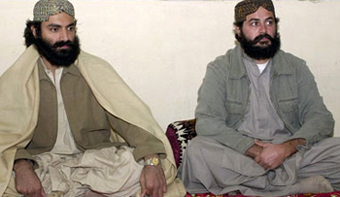
KARACHI: PML-N president Nawaz Sharif held a meeting with BNP head Ataullah Khan Mengal, Geo News reported. Speaking to the media after the meeting Mengal said they had suffered the consequences of their past mistakes and those dying in Balochistan were also human beings. “The existing conditions have led to Balochistan reaching the point of no return,” Mengal said adding that the situation was not in his control anymore and talks would need to be held with the youth present on the mountains of the province. The BNP head criticised the atrocities which were taking place in Balochistan and questioned why there was no action by the Army. Nawaz Sharif said Mengal’s concerns were legitimate and atrocities were being committed in Balochistan. “My party will fight the case for Balochistan. We love Balochistan and it is an important part of Pakistan,” Sharif said. REFERENCE: Balochistan at point of no return: Ataullah Khan Mengal http://www.thenews.com.pk/NewsDetail.aspx?ID=28946

Monday, December 19, 2011, Moharram-ul-Haram 23, 1433 A.H. Updated at: 1740
http://jang.com.pk/jang/dec2011-daily/19-12-2011/u90632.htm


Geo Report- Nawaz Meets Ataullah Mengal - 19 Dec 2011

http://www.youtube.com/watch?v=91FDVweRlJs
http://www.youtube.com/watch?v=V3Bk3Q1FgVE

Tuesday, December 20, 2011, Moharram-ul-Haram 24, 1433 A.H.
http://jang.com.pk/jang/dec2011-daily/20-12-2011/main3.htm


ISLAMABAD: The British government has refused to process warrants against former president Pervez Musharraf in the Benazir Bhutto assassination case, issued by an anti-terrorism court of Pakistan, DawnNews reported. The British Foreign Office informed the Pakistani government that the arrest warrants cannot be processed because there is no official agreement signed between the two countries on prisoner exchange. However, the British Prime Minister David Cameron during his visit to Pakistan had assured Pakistan’s request would be processed. REFERENCES: UK refuses to handover Pervez Musharraf DAWN.COM April 19, 2011 http://www.dawn.com/2011/04/19/uk-refuses-to-handover-pervez-musharraf.html  Warrants issued for Musharraf By Mudassir Raja | From the Newspaper February 13, 2011 http://www.dawn.com/2011/02/13/warrants-issued-for-musharraf.html 


NEW YORK: President All Pakistan Muslim League (APML) and former president Pervez Musharraf, criticizing PML-N’s Nawaz Shaif said, he made a blunder as he messed with four ex-army chiefs, two presidents and the chief justice during his government, Geo News reported Sunday. Musharraf was addressing APML’s mass gathering here on Sunday. Former President, responding to threats of filing a lawsuit incessantly posed to him by Nawaz Sharif, said, “As Nawaz knows that neither will he regain power nor will he be able to try me in a court of law therefore he takes resort to blow this trumpet time and again.” He said he doesn’t regret killing of Nawab Akbar Bugti and attack on Lal Mosque and neither will he seek apology over those actions, adding that he was ready to replicate all what he did during his tenure in the face of similar situation. Musharraf said, on one hand Nawaz Sharif chant slogan of ‘Jaag Punjabi Jaag’ to accumulate votes in Punjab and on the other hand, he has worn criminal silence over killings of Punjabis in Balochistan. Also, Musharraf alleged Nawaz Sharif of handing refuge to Talal Bugti in Lahore whom (Bugti) he termed ‘lawbreaker’. The supporters of PML-N and APML were also present on the occasion and were chanting slogans against chiefs of both parties. REFERENCE: Don’t regret Bugti’s murder: Musharraf Updated at: 1150 PST, Sunday, November 07, 2010 http://www.thenews.com.pk/latest-news/4448.htm  Don’t regret Bugti’s murder: Musharraf Updated at: 1217 PST, Sunday, November 07, 2010 http://www.geo.tv/11-7-2010/74006.htm 

Former Chief of the Army Staff General (R) Pervez Musharraf Justifies the "Murder" of Sardar Akbar Bugti

COURTESY: AYANTVUS URL: http://www.youtube.com/watch?v=yQK3N4dLz8w

The 132-page report documents dozens of enforced disappearances, in which the authorities take people into custody and then deny all responsibility or knowledge of their fate or whereabouts. The report details 45 alleged cases of enforced disappearances, the majority in 2009 and 2010. While hundreds of people have been forcibly disappeared in Balochistan since 2005, dozens of new enforced disappearances have occurred since Pakistan returned to civilian rule in 2008. REFERENCE: “We Can Torture, Kill, or Keep You for Years” Enforced Disappearances by Pakistan Security Forces in Balochistan July 28, 2011 http://www.hrw.org/sites/default/files/reports/pakistan0711WebInside.pdf
http://www.hrw.org/reports/2011/07/28/we-can-torture-kill-or-keep-you-years 

“People in the periphery think they have been neglected, humiliated and culturally looked down upon by the Centre.” – Photos by author Mark Twain once said “travel is fatal to prejudice, bigotry and narrow-mindedness.” Pakistan’s former high commissioner to United Kingdom and the current Ibn Khaldun Chair at the Washington DC-based American University, Professor Akbar S. Ahmed, truly fits in the category of people who believe in seeing and experiencing things to challenge the prejudices of the ignorant. Described by the BBC as “world’s leading authority on contemporary Islam”, Dr Ahmed today travels across the globe to promote inter-faith dialogue and mutual understanding. As a civil servant, career diplomat and one of the world’s foremost anthropologists, he regularly discovers and interacts with many known and often unknown communities of the world. Ahmed has not forgotten home, Pakistan, all these years. He worries for Pakistan but the separatist groundswell in Balochistan, where he served in 1980s consecutively as the commissioner of Quetta, Sibi and Mekran divisions, makes him anxious. As a civil officer, he had an opportunity to closely interact with and learn from some of the most prominent Baloch nationalist and tribal leaders such as Mir Jaffar Khan Jamali (father of Dr Ahmed’s batch-mate Sikandar Jamali and the uncle of the former prime minister Mir Zafarullah Khan Jamali), Nawab Akbar Bugti, former governor Mir Ghaus Baksh Bizenjo and ex-chief minister Jam Ghulam Qadir. He attributes the current turmoil in Balochistan to policymakers’ lack of understanding of the local society and culture. The first rule of good governance, he says, is to know and respect the people of the area where a civil or military officer serves. Former president and army chief General Pervez Musharraf ignored this basic principle of governance while dealing with Balochistan which caused confrontation with Baloch tribes and eventually led to the killing of the powerful tribal chief Nawab Bugti. REFERENCE: We don’t have much time left: Dr Akbar Ahmed Malik Siraj Akbar December 17, 2011 http://www.dawn.com/2011/12/17/we-don%E2%80%99t-have-much-time-left-dr-akbar-ahmed.html

Dr Shahid Masood Exposed in Dr Shazia Khalid Rape Case (Bolta Pakistan 13th July 2011)

http://www.youtube.com/watch?v=E6axNArYBB8


“Bugti’s killing was a tragedy for Pakistan,” he tells Dawn.com, “it was humiliating how President Musharraf threatened to “hit him” like a common criminal. Bugti was a man who is a part of our history and you don’t treat a man of history like this.” In mid 1980s, Dr Ahmed was posted in Balochistan. Soon after his appointment as the commissioner of Mekran Division, he was caught in the midst of an attempt by some non-local religious fanatics who wanted to harm the followers of minority Zikri community. In order to prevent a possible bloodbath, the young administrator boldly reached out to Baloch opposition leader Bizenjo for assistance. For Ahmed, contacts with Bizenjo, a left-wing opposition leader, amounted to alienating President General Zia-ul-Haq while meeting such a senior government official would garner criticism for Bizenjo from his comrades. “He had a wonderful sense of humour,” Ahmed recalls. They had a one-to-one dinner at the commissioner’s house, which they later joked, would get both men in trouble. “It was Bizenjo who helped me behind the scene to calm down the people of Mekran and enabled me to take swift measures to protect the Zikris.” Bizenjo did not forget Ahmed’s good service and praised him openly during an anti-Zia political rally in Sibi where he told the local people how lucky they were to have a committed commissioner like Ahmed. As expected, intelligence officials approached Ahmed and asked why an anti-Zia nationalist leader had publicly praised him. REFERENCE: We don’t have much time left: Dr Akbar Ahmed Malik Siraj Akbar December 17, 2011 http://www.dawn.com/2011/12/17/we-don%E2%80%99t-have-much-time-left-dr-akbar-ahmed.html

Sardar Akbar Bugti on GEO TV - 1

http://www.youtube.com/watch?v=po57cDOJSCQ


Ahmed hurriedly sent a message to the Baloch demagogue urging him not to be so generous in public praise. Holding a Master’s degree from Cambridge University and a PhD from London University, Ahmed was impressed by what he recalls as the “charisma and wisdom” of Baloch tribal leaders as he newly arrived in Balochistan. “These leaders had many critics but they were men of honour,” he said. “There was a rhythm of life in Balochistan at that time and the Baloch leaders were the jewels of that remarkable society,” he remembers. He met Nawab Akbar Bugti as the Commissioner of Sibi Division of which Bugti’s stronghold Sui was still an administrative unit. The Nawab invited him for dinner at his traditional home. “The Nawab had so much charisma and authority that even his son, Saleem, who was a minister himself did not eat with us and instead served dinner to me as their honoured guest,” he recalls. However, what inspired Ahmed about Bugti was his knowledge of history and different cultures. They spoke about politics, history, tribes and traditions late into the night. “We talked about Ibn Khaldun and I asked myself which Pakistani politician would know about Ibn Khaldun and here was a Baloch tribal chief discussing Ibn Khaldun and his sophisticated theories on society with me in Balochistan’s tribal region.” In Ahmed’s view, it is critical that the federal government should understand how to deal with the Baloch. As an officer in the area, he used to tell his junior officers that it did not matter if they had been educated at Oxford or Cambridge universities. What mattered was the respect they showed to the locals. REFERENCE: We don’t have much time left: Dr Akbar Ahmed Malik Siraj Akbar December 17, 2011 http://www.dawn.com/2011/12/17/we-don%E2%80%99t-have-much-time-left-dr-akbar-ahmed.html

Sardar Akbar Bugti on GEO TV - 2

http://www.youtube.com/watch?v=gf1WbjDkq4g


“I’d tell my officers that you have come to their (Baloch), we are privileged to serve them. Don’t take their material poverty as spiritual poverty.” However, he regrets that several officials mistreated the locals. The veteran scholar, who is also the first Distinguished Chair of Middle East and Islamic Studies at the US Naval Academy, says that news of kidnappings, torture and murders by security forces in Balochistan shock him. Contemplating the repercussion of mistreating different ethnic groups, Ahmed warns that a country like Pakistan, which experienced dismemberment in 1971 must pay attention to the demands of people living in the periphery. “Right now we are in a state of civil war in Pakistan,” he says, “People in the periphery think they have been neglected, humiliated and culturally looked down upon by the Centre. This is absolutely the same thing we did with the Bengalis. Pakistan is in a very fragile condition. Both civil and military leadership must urgently show wisdom and vision to come out of this situation.” Increasing tensions in Balochistan between civilians and the security forces is another area which Ambassador Ahmed thinks urgently needs policy review. He describes assaults by security forces and cases of torture as ‘sadism’ and ‘foolishness.’ REFERENCE: We don’t have much time left: Dr Akbar Ahmed Malik Siraj Akbar December 17, 2011 http://www.dawn.com/2011/12/17/we-don%E2%80%99t-have-much-time-left-dr-akbar-ahmed.html

Sardar Akbar Bugti on GEO TV - 3

http://www.youtube.com/watch?v=1IiyNbAF3Zc


Ahmed blames Musharraf’s “rash actions” for subverting the very foundations of an already shaky structure in Pakistan. The ordinary Pakistani soldier is frustrated and struggling to survive in that chaotic system. He says Pakistan cannot survive without Balochistan. “We can’t afford to make the Baloch feel like second class citizens. Their demands are valid and some of these demands have been overlooked for several. Islamabad should make urgent accommodation with the Baloch. You can’t fool around with them. One day you offer them talks and the next day you kill their leaders. They should be treated as equal partners in the federation.” While talking about the distance between the Center and the largest province, he appeals to the powers that be “to stop the torture and the killing because we don’t have much time left.” REFERENCE: We don’t have much time left: Dr Akbar Ahmed Malik Siraj Akbar December 17, 2011 http://www.dawn.com/2011/12/17/we-don%E2%80%99t-have-much-time-left-dr-akbar-ahmed.html

Saturday, May 28, 2011

Wiki Leaks Memo on Baloch Tribal Chiefs & Taliban in Balochistan.


ISLAMABAD: The killing of Habib Jalib Baloch on July 15 has sent a wave of concern across Balochistan and Islamabad that the insurgency in the province has entered a dangerous new phase. Mr Jalib was the secretary general of the Balochistan National Party led by Akhtar Mengal, a moderate party considered to be secular, middle class and at a remove from the oppressive sardari system that dominates politics in the province. While publicly Mr Jalib’s death has been blamed by Baloch leaders on the intelligence agencies, there is growing concern in the ranks of parties such as the BNP(M) and the National Party that hard-line Baloch separatists may be eliminating those willing to work inside the Pakistani federation. “We are in a very difficult position,” Senator Hasil Bizenjo of the NP said. “The message to us is that people talking about nationalist politics, about staying within the federation, will not be spared.” According to Mr Bizenjo, the BNP(M) and NP are viewed as collaborators by the separatist forces. “They (the hardliners) say, ‘We are being killed by the ISI and you people are working for them.’” The killings — Mr Jalib was the third former BSO chairman and one of a dozen Baloch leaders killed in the last three years — raise a more fundamental question: why is the cycle of violence still continuing in Balochistan? While the violence is down from the 2005-2008 peak period, the Pakistani state and parts of the Baloch population are undeniably still locked in conflict. In a series of conversations with Dawn, senior government and army officials and Baloch representatives attempted to explain why, in their view, a conflict that has claimed between 500 to 1,500 lives since 2001 continues today. Foremost is the issue of missing persons. Estimates vary wildly: the Baloch claim thousands of fellow citizens are missing; rights groups like the HRCP suggest a figure in the low hundreds; the army acknowledges no more than a few dozen missing. Yet, it isn’t necessarily the detentions per se but the lack of information about the detainees that makes the missing-persons issue so incendiary. “We asked them (the army) to do two things. One, produce all the missing person in court and file charges against them. Two, allow the families to meet them,” according to Hasil Bizenjo. A senior federal minister involved in discussions concerning Balochistan concurred: “We weren’t even asking to set them free. But they (the army) weren’t willing to listen because they considered them (the missing persons) to be treasonous. We said, they may have done things they need to be punished for, but they are still Pakistanis and we have to treat them as such.” Army officers deny the charge. A high-ranking officer claimed that comprehensive internal investigations have been conducted: “We’ve looked and we haven’t found anything. It’s a myth, one of those unfortunate consequences of this situation.” REFERENCE: Dawn: The Baloch insurgency, Part I July 23rd, 2010 by Cyril Almeida http://www.cyrilalmeida.com/2010/07/23/dawn-the-baloch-insurgency-part-i/


Brahamdagh Bugti Interview AAJ TV Part 1


URL: http://www.youtube.com/watch?v=v3DlZR1BlUw

Brahamdagh Bugti Interview AAJ TV Part 2


URL: http://www.youtube.com/watch?v=VG4EJpXQQsQ

Brahamdagh Bugti Interview AAJ TV Part 3


Brahamdagh Bugti Interview AAJ TV Part 4


URL: http://www.youtube.com/watch?v=Af4vZdduOE8


The army does admit nearly 30 suspects are in the custody of agencies such as the ISI, MI and Corps Intelligence and are being investigated by Joint Investigation Teams. In addition, senior offers admit some of the missing have been killed in encounters. Beyond that, high-ranking officers claim they are ready to investigate any and every case of alleged disappearances brought to their attention. That does not cut ice with rights groups. According to Ali Dayan Hasan of the Human Rights Watch “it’s the state’s responsibility to protect its people. If the families are claiming people are missing, then the MI should prove that they aren’t. Find these people and show us where they are.” Part of the problem, according to Hasil Bizenjo, is that the army does not understand the impact of missing persons. “Balochistan is a backward society. If you pick up a boy from a village, you make an enemy of the entire village.” The depth of anger over the missing persons can be gauged from the fact that it has dislodged as the central complaint the decades-old grievance of the Baloch: that the province’s gas and mineral riches have been exploited by the Pakistani state. No one, not even army officers, denies that reality. Referring to the disparity in the gas price offered to Balochistan and the other provinces, Petroleum and Natural Resources Minister Naveed Qamar explained: “There was definitely an anomaly in pricing. Sui was discovered in the mid ’50s and the subsequent increases in the price were made using the original price as a benchmark. Qadirpur (in Sindh) was priced using the benchmark of international oil prices. That doesn’t justify it, though. It was wrong.” However, Mr Qamar disputes the notion the centre is still exploiting Balochistan’s resources: “Over the last 18 months, significant change has come about. We’ve fixed the gas-price anomaly to a large extent. Rikodiq (where large reserves of gold and copper are reported to exist) has been handed over to the provincial government and Saindak will be soon.” REFERENCE: Dawn: The Baloch insurgency, Part I July 23rd, 2010 by Cyril Almeida http://www.cyrilalmeida.com/2010/07/23/dawn-the-baloch-insurgency-part-i/


Even so, perceptions about the intentions of the army and ‘centrist’ bureaucrats in Islamabad linger. “It’s about greed. They want Balochistan’s resources to create prosperity in the other provinces,” claimed Syeda Abida Hussain, co-founder with her husband, Fakhar Imam, of the Friends of Baloch and Balochistan. “It’s no longer about the resource-sharing at present. It’s about the potential,” Naveed Qamar suggested. “Balochistan contributes 17 or 18 per cent of gas today to Pakistan’s needs, but the vast resources that are still untapped because of the security situation, that is the real prize.” The Baloch look no further for modern-day proof of the Pakistani state’s intention to ‘colonise’ Balochistan than the port at Gwadar. “There are these beautiful, paved boulevards in the port area. And right outside the poverty of the Baloch is shocking,” said Sanaullah Baloch, a former BNP(M) senator. “Gwadar has nothing to do with concern for the Baloch.” If the Baloch, army and government do agree on one thing, it is that a great deal of the blame for the violence continuing must be shouldered by the Balochistan government. The February 2008 provincial elections were boycotted by the moderate Baloch parties such as the BNP(M) and NP, an “unintended consequence that we didn’t understand at the time,” according to a senior army official, and which “the province is paying for.” The provincial government is widely perceived to be epically corrupt and monumentally inefficient. That has real consequences. For one, it allows the army to deflect attention from the heavy-handedness of the Frontier Corps, which is still tasked with law and order duties. Practically speaking, it becomes difficult to debate the withdrawal of the FC, a major demand of the Baloch, when the police are incapable of establishing even a modicum of law and order. The provincial government’s incompetence also impacts on the possibility of winning over disaffected Baloch. “They’ve got all this extra money,” Naveed Qamar said referring to the Rs12bn of new resources-related payments to the province, “but will it make its way to the people? That’s a big question mark.” Another commonality among the Baloch, government officials and army officers spoken to: none were optimistic the violence will abate soon. In fact, many suggested the two extremes appear to be digging in their heels. On the Baloch side, the armed radicals are bent on intimidating, perhaps even eliminating, moderate voices, making the possibility of a compromise with the state that much more distant. On the army’s side, while it fiercely denies it has a ‘colonial’ approach towards Balochistan, there is a steely resolve to prevent any ‘mischief’ by outside powers in the province — an approach which severely diminishes the possibility of concessions towards the Baloch extremists. “If the federation is to survive, the moderates need to be heard,” according to Raza Rabbani. The trouble is, no one seems to believe that is an imminent possibility. REFERENCE: Dawn: The Baloch insurgency, Part I July 23rd, 2010 by Cyril Almeida http://www.cyrilalmeida.com/2010/07/23/dawn-the-baloch-insurgency-part-i/

"QUOTE"

2006: Who’s who in BalochistanFrom the Newspaper (7 hours ago) Today

ID:76491
8/29/2006 10:53
06ISLAMABAD16994
Embassy Islamabad
CONFIDENTIAL//NOFORN
ISLAMABAD 016994
SIPDIS
E.O. 12958: DECL: 10/19/2015
TAGS: PK, PREL, PGOV, PTER, PINR
SUBJECT: BALOCHISTAN (4): WHO’S WHO – THE BALOCH TRIBES
REF: A. ISLAMABAD 14349
B. ISLAMABAD 16269
C. ISLAMABAD 16944
D. ISLAMABAD 16962
E. ISLAMABAD 16987
ISLAMABAD 00016994 001.2 OF 003
Classified By: Charge d’Affaires Peter W. Bodde,
Reasons 1.4 (b) and (d)


1. (C) Summary and Introduction: The Baloch people give their name to Balochistan Province in Pakistan, where roughly two thirds of them live, as well as Sistan-va-Baluchestan Province in Iran. The Baloch are further spread across the southern reaches of Afghanistan. Baloch society is tribal, with power traditionally concentrated in the hands of autocratic princes, known as “”sardars,”" who have near totalitarian control over the lives of their tribes. Baloch nationalist and tribal leaders share a fundamental belief that the federal government has not given the province its fair share of the region’s mineral wealth, but many non-sardari nationalists disapprove of the violent tactics employed by some tribal leaders to wring concessions out of the federal government. There seems little support in the province, beyond the Bugti tribe, for the current insurgency. Nationalist leaders admit that calls for Baloch independence are nothing more than political rhetoric, and that they really want a voice in the province’s development and a greater percentage of the revenues generated by the province’s natural resources. This cable is the fourth in a series of cables on Balochistan. (Note: This cable was drafted prior to the reported death of Nawab Akbar Khan Bugti on August 26 (Ref C). End note.) End summary.

Sub-Provincial Cleavages

————————

2. (C) The concerns and demands of the people of the Makran Coast, where the seaport of Gwadar is located, differ from those of the tribes of eastern Balochistan, home of the province,s natural gas and coal fields. The coastal region is not dominated by tribal sardars as is the eastern quarter. It is less tribal, better educated, more middle class and politically aware than the rest of province.

3. (C/NF) The eastern portion of Balochistan has been dominated by three sardars (Nawab Akbar Khan Bugti, Nawab Khair Bux Marri, and Sardar Attaullah Mengal. These three sardars, out of more than 60 in the province, have each been alternately in and out of government and in and out of jail; the common denominator between them is their militant opposition to the federal government in Islamabad.
….

The Big Three

————-

5. (C/NF) Nawab Akbar Khan Bugti, who was 79 when killed in an August 26, 2006 GOP attack on his mountain hiding place (Ref C), had led his tribe since 1946. He has served as provincial governor, provincial chief minister and as a member of the National Assembly as late as 1999. He also led intermittent armed rebellions against the federal government since the 1970s. Favoring expansive provincial autonomy and open to independence, Bugti could also be motivated by cash and is rumored to have been bought off by the government at various points in his career. Nawab Bugti was widely believed to have pocketed the vast majority of royalties from the Sui gas fields on his tribe’s territory, rather than spreading the wealth amongst the tribe or investing in development projects in his tribal territory. … His militia had an estimated 5,000 fighters in 2004, but has been decimated by Pakistani security forces during recent months of fighting.

6. (C/NF) Nawab Khair Bux Marri, an octogenarian, lives in Karachi and has the reputation of being a leftist and an uncompromising hardliner. Although he publicly demands complete independence for Balochistan, he may also negotiate with the government to avoid being left out on development funds and royalties. … Like Bugti, he has fought the government intermittently over the decades. His tribal territory includes the mountainous stretches of Kohlu and Loralai districts, an area thought to have oil reserves, but in which Marri has blocked exploration. … His militia is also estimated at roughly 5,000 men, and is usually considered the have the best-trained and most hardcore fighters. Many believe that the elusive Balochistan Liberation Army (BLA) is actually an avatar of Marri’s militia.

7. (C/NF) Sardar Attaullah Mengal, age mid 70s, is the most politically active and astute of the three rebel sardars, leading the militarily weaker but more numerous Mengal tribe. He served as Balochistan’s Chief Minister in 1971-73. Unlike Nawabs Bugti and Marri, Mengal has sought to broaden his nationalist appeal beyond his tribe. He controls the areas of Khuzdar, Kharan, and parts of Bolan and Sibi. He has provided political support to the current uprising; some evidence indicates that his tribe has supplied guns and funds to Bugti and Marri. His roughly 4,000-strong militia has not joined in the 2005-06 insurgency. He leads the Balochistan National Party-Mengal (BNP-M), which has two seats in the provincial assembly, one in the National Assembly, and one in the federal Senate. His son Akhtar Mengal was Balochistan’s chief minister in 1997.
….
Comment

——-

10. (C/NF) Currently, there is little unity among the Baloch nationalists or among the sardars. In the provincial assembly the nationalist and sardar parties hold just ten of 65 seats; the Pakistan Muslim League, which President Musharraf relies on to run the country, has 23 seats in the assembly, and rules in tandem with the religious coalition Muttahida Majlis-i-Amal, which has 17 seats. In the national assembly the nationalist and sardari parties hold a handful of the 342 seats. Fractured by tribal affiliation, geography, political orientation, and personal rivalry, Baloch are unlikely to make common cause against the Government–which explains the Army’s emerging strategy of taking on the sardars one by one, while concurrently promising to address the overall grievances of the Baloch tribes.

End comment.

BODDE

2006: Who’s who in BalochistanFrom the Newspaper (7 hours ago) Today

"UNQUOTE"

ISLAMABAD: A week ago, a war of words between the National Party and BNP-M on the one side and insurgent groups demanding independence for Balochistan on the other erupted out in the open. According to the Baloch Hal, an online newspaper, on Sunday, July 19 newspapers in Balochistan carried a statement by the National Party’s central spokesperson suggesting the Balochistan Liberation Front was to blame for the recent killing of an NP leader, Maula Baksh Dashti. The same day, newspapers in the province also carried a defiant statement by Akhtar Mengal, chief of the BNP-M, rebuffing a call by the Anjuman-i-Ittehad-i-Marri, a group linked to Khair Baksh Marri, leader of the Marri tribe, to reject parliamentary politics in the wake of Habib Jalib’s murder. The public outbursts were extraordinary: even mapping the groups involved in the violence in Balochistan is fraught with danger. “Please be very careful. These are merciless people,” a senior Quetta-based journalist who requested anonymity to talk about the radical groups urged. “It’s very difficult for us to work here.” Reliable information on the insurgent groups is difficult to come by and even harder to corroborate. Nevertheless, the contours of the groups involved in the violence can be established to some extent. A handful of groups dominate the insurgency, of which the Balochistan Liberation Army is perhaps the most well-known. The BLA appeared in its present incarnation soon after the arrest of Khair Baksh Marri in January 2000. The powerful Marri chief was accused of having a hand in the murder of a Balochistan High Court judge. Originally a rural phenomenon and limiting its operations to Dera Bugti and Kohlu, the BLA is believed to have expanded its attacks into the cities following the breakdown of a unilateral ceasefire declared in September 2008. An affiliate of the BLA is the Balochistan Liberation United Front, a smaller organisation thought to be ‘more sophisticated’ and considerably more hard-line. REFERENCE: Dawn: The Baloch insurgency, Part II By Cyril Almeida July 25th, 2010 http://www.cyrilalmeida.com/2010/07/25/dawn-the-baloch-insurgency-part-ii-by-cyril-almeida/

The other high-profile radical group is the Baloch Republican Army, the militant wing of the Balochistan Republican Party, a rechristened arm of Akbar Bugti’s Jamhoori Watan Party. The BRA came into existence after Bugti’s death in August 2006 and is believed to be controlled by his grandson, Brahmdagh. Its area of operations appears to be in relatively remote areas such as Dera Bugti, Jaffrabad and Naseerabad. A third major group is the Balochistan Liberation Front, another name resurrected from the last insurgency in the 1970s. The present-day version operates mostly in the Makran area and is also linked to Khair Baksh Marri. Beyond that, drilling down into the specifics invariably throws up a confusing set of claims and counter-claims. Take the killing of Habib Jalib, the BNP-M secretary general. Senior army officers point a finger at the BLUF, the affiliate of the BLA, for the killing. “BNP-M is in real trouble. Khair Baksh (Marri) has them in his sights,” a high-ranking officer claimed. However, some among the Baloch have focused on the alleged claim of responsibility made by the Baloch Armed Defence Organisation (Baloch Musalha Defai Tanzeem). It is a relatively new ‘anti-Baloch-nationalist’ group about which little is known, though the Baloch claim it is a front for the intelligence agencies. That is denied by the army and some moderate Baloch leaders wonder whether the Tanzeem is also sponsored by the radicals. Asma Jahangir, former chairperson of the HRCP, however, is not convinced: “The cleansing of the Baloch intelligentsia can only be the work of the agencies.” Other things are easier to speculate about, though. Why the alphabet soup of insurgent groups, when the majority are linked to Khair Baksh Marri? REFERENCE: Dawn: The Baloch insurgency, Part II By Cyril Almeida July 25th, 2010 http://www.cyrilalmeida.com/2010/07/25/dawn-the-baloch-insurgency-part-ii-by-cyril-almeida/


Nawabzada Hyrbyair Marri Interview in Live with Talat Hussain AAJ TV - Part - 1


URL: http://www.youtube.com/watch?v=nVBcm26T6YU

Nawabzada Hyrbyair Marri Interview in Live with Talat Hussain AAJ TV - Part - 2


URL: http://www.youtube.com/watch?v=zjgIb6ShpFg&feature=channel_video_title

Nawabzada Hyrbyair Marri Interview in Live with Talat Hussain AAJ TV - Part - 3


Nawabzada Hyrbyair Marri Interview in Live with Talat Hussain AAJ TV - Part - 4


“Perhaps they don’t want to put all their eggs in one basket,” according to Malik Siraj Akbar, editor of the Baloch Hal. “If one group is dismantled, at least the others will still exist.” Akbar also suggested unfamiliarity with the terrain in sprawling Balochistan leads to the recruitment of locals. Saleem Shahid, Dawn’s Quetta editor, ventured that the reason could be rooted in the tribal system: “Tribal society does not accept outside leadership, so they create their own groups.” More than the proliferation of radical groups, however, what worries observers is the widening scope of targets. Attacks on security forces, state installations and government offices are all standard fare in Baloch insurgencies. In addition, killings of ‘settlers’ (groups considered non-Baloch because they trace their ancestry to outside the province, even though in many instances they have been residing in Balochistan for generations) have occurred in the past. This time, however, it is the breadth and intensity of such killings that is alarming. The senior journalist in Quetta claimed: “The target killings started in 2003, but they were sectarian in nature. The radical groups started their killing post-Bugti, initially in Quetta. Now, though, it has spread. Noshki, Khuzdar, Mastung, Gwadar, Turbat, Kech, the target killings are happening everywhere.” According to the Balochistan government’s most recent figures, more than 125 people have been killed and nearly 200 injured in the last 18 months alone in ‘settler’-related violence. One particular murder in Quetta last April sent shockwaves through conservative Balochistan: the killing of Nazima Talib, a female assistant professor at the University of Balochistan. The targeting of women was previously considered a taboo, but the BLA, which claimed responsibility for the killing, was defiant and claimed the murder was revenge for the alleged killing and harassment of Baloch women by the security forces. REFERENCE: Dawn: The Baloch insurgency, Part II By Cyril Almeida July 25th, 2010 http://www.cyrilalmeida.com/2010/07/25/dawn-the-baloch-insurgency-part-ii-by-cyril-almeida/

Another worrying trend this year: the killing of fellow Baloch by the insurgent groups. The victims have been accused of spying and working as agents of the Pakistani state. A senior journalist said, “Even Pathans have been killed, and businessmen too. The impact is enormous. There is an exodus of teachers, doctors, businessmen.” The killings by Baloch radicals are of course not occurring in a vacuum. Entrenched attitudes in the army towards Balochistan and the Baloch may be sustaining the cycle of violence. “The army thinks of the Baloch as lazy, that they don’t want to work,” according to Zahid Husain, a respected analyst. “They believe all Baloch are suspect, that they are against Pakistan,” said Senator Hasil Bizenjo. The senator recalled an incident where an entire area was sealed off by security forces in order to pull down a BSO flag hoisted atop a school. A senior army officer admitted that sometimes the security forces need to show restraint. “They see this (the Baloch flags) as an affront to Pakistan, but I tell them not to react to small provocations.” In present times, however, what may be impacting most directly on the army’s tough line against the insurgent groups is the foreign connection — the insistently whispered claims that Balochistan has become a stamping ground for foreign intelligence agencies. India features heavily in such claims. From Brahmdagh Bugti’s ‘Indian passport’ to Baloch insurgents being handed suitcases of cash in Dubai to RAW agents in the Indian consulate in Kandahar, senior army officers are adamant Indian ‘mischief’ is at work. Strikingly, even senior government officials agree that the Indian connection exists. It goes beyond India, though. “Every agency in the world, from the Americans to the Iranians to the Afghans to the Europeans to the Arabs, has some kind of footprint in the area. For some reason the British have an extraordinary interest in the area,” according to a senior army officer. Some, though, suggest common sense needs to prevail. “There are 100,000 security men in the province if you count the army, the FC, the police, everything. At most there will be a few thousand among the Baloch population capable of causing trouble. They will never be able to create big mischief. We need to recognise that,” according a high-ranking officer. Unfortunately, long-time observers of the Pakistan Army believe the officer’s opinion is squarely among the minority in the army. REFERENCE: Dawn: The Baloch insurgency, Part II By Cyril Almeida July 25th, 2010 http://www.cyrilalmeida.com/2010/07/25/dawn-the-baloch-insurgency-part-ii-by-cyril-almeida/

"QUOTE"

Saturday, May 28, 2011, Jamadi-us-Sani 24, 1432 A.H
http://www.jang.com.pk/jang/may2011-daily/28-05-2011/u71910.htm


2009: Friction between Taliban and Baloch


ID:187784 

1/20/2009 4:30 

Consulate Karachi 

CONFIDENTIAL 
KARACHI 000018
SIPDIS 
E.O. 12958: DECL: 01/20/2019 
TAGS: PGOV, PREL, PTER, PK 
SUBJECT: TALIBAN INFLUENCE IN BALOCHISTAN


REF: A. A: 08 KARACHI 472

B. B: 08 KARACHI 339

C. C: 08 ISLAMABAD 3533


Classified By: CLASSIFIED BY CONSUL GENERAL STEVE FAKAN FOR REASONS 1.4 (b) and (d).


Summary:


——-


1.  (C) An often overlooked element about the presence of the Taliban shura in Quetta, Balochistan, is the ongoing friction between an expanding of Afghan refugees presumed to be Taliban and the fiercely nationalistic Balochis. The current Pakistan People’s Party government is trying to mend fences with the Balochis after years of Musharraf-era military operations against a long-simmering separatist movement (ref C ).  However, many Baloch leaders claim the GOP continues military operations in tandem with support for a growing Taliban presence in Balochistan. Baloch leaders have a clear political agenda in making these claims, and, so far, provincial leaders insist the Taliban do not possess sufficient influence to threaten provincial authority. However, Balochistan’s poverty, illiteracy, and poor health care make it ripe for exploitation by extremists.  As the U.S. examines ways to increase economic and development assistance in Pakistan, Post firmly believes we must expand development programs in Balochistan.

Nawabzada Hyrbyair Marri in Dunya TV - Najam Sethi Special - 04-07-2009 - 1.


URL: http://www.youtube.com/watch?v=QvUBq8DQSpo


Taliban in Balochistan
———————-
2.  (C) XXXXXXXXXXXX told Post on January 7 that Balochistan’s northern districts and the provincial capital Quetta are safe havens for pro-Taliban elements.  XXXXXXXXXXXX agreed with a January 4 public warning by former Senator Sana Baloch about growing Taliban influence in Quetta, adding his theory that Pakistan’s Inter-Services Intelligence (ISI) provides key support to the religious extremists.  XXXXXXXXXXXX pointed out that Quetta is the reputed hiding place of Taliban Leader Mullah Omar.  (Note:  A number of leading Taliban have been found in Balochistan, including former Taliban Defense Minister Obaidullah Akhund, and Taliban commander Abdullah Mehsud.  End comment.)
….
Baloch Nationalists Accuse GOP of Supporting Taliban
———————————
4.  (C) Nationalist leaders in the province tend to see an underlying GOP hand supporting the growth of religious fundamentalism in Balochistan. Senator Abdul Malik Baloch (National Party) claimed that a large Taliban presence in the province is beginning to infiltrate Baloch dominated areas and affecting the city of Quetta. The Senator believed the GOP supports the religious fundamentalists as a counterbalance to the more secular Baloch nationalists, some of whom have called for independence from Pakistan.
….

Nawabzada Hyrbyair Marri in Dunya TV - Najam Sethi Special - 04-07-2009 - 2.


URL: http://www.youtube.com/watch?v=FCGOKKwcOpo


Some Officials Confident About Maintaining Control

——————————

6.  (C) Provincial Minister of Public Health Maulana Abdul Bari (JUI-F) opined that although there are Taliban in Quetta, mainstream religious leaders would keep them in check. This sentiment was echoed by Balochistan Minister for Public Affairs Maulana Abdul Bari Aga, who believed that there might be support for the Taliban in Balochistan, but insisted the group would not be able to undermine law and order in the province.

Religious Parties Reject Notion of Taliban Infiltration

———————————-

7.  (C) However, conservative religious leaders downplayed claims of a Taliban presence in Quetta. Maulana Noor Mohammed, a former National Assembly member and leader of the religious party Jamiat Ulama-e-Islam-F (JUI-F), rejected claims of a Taliban presence in the city.  Maulana Noor Mohammed, a cleric reputedly sympathetic to the Taliban position, denied Taliban presence in Quetta, claiming that the accusation was promulgated by nationalist groups to alarm the public.


Nawabzada Hyrbyair Marri in Dunya TV - Najam Sethi Special - 04-07-2009 - 3.


URL: http://www.youtube.com/watch?v=pBxWdy6FlaY


8.  (C) Comment: Given its proximity to the Afghan border and the long history of conflict and religious fundamentalism in the area, there is almost certainly a Taliban presence in both northern Balochistan and in its capital city, Quetta. Nonetheless, ethnic bias could exaggerate some accusations and raise the potential for more violent conflict (ref A). The native Baloch have felt increasingly threatened by the growing Pashtun population, many of whom are refugees from Afghanistan or northern Pakistan.  Tribal leaders in the tightly knit Baloch society have vigorously resisted any usurpation of their authority by outsiders, especially Pashtuns.  This could make it particularly difficult for relatively new groups, like the Taliban, to consolidate any control in the province.

9.  (C) Secular Baloch-nationalists have repeatedly accused the GOP of supporting Pashtun religious extremists to counter their often violent struggle for autonomy and control over natural resources (ref B).  Ultimately, countering their influence among Balochistan’s impoverished and largely illiterate population will require significant improvements in health care, education and economic opportunities.  

End Comment.

FAKAN

2009: Friction between Taliban and Baloch


"UNQUOTE"


Nawabzada Hyrbyair Marri in Dunya TV - Najam Sethi Special - 04-07-2009 - 4.


URL: http://www.youtube.com/watch?v=KTB3fdyHmS4


ISLAMABAD: Most Baloch believe that had the Bugti-Musharraf meeting come about in 2005, Balochistan could have been different in 2010, according to a report released by the Center for Research and Security Studies (CRSS). The report, titled Pakistan’s Security Challenges, quotes officials saying that a meeting had been arranged between then president General (retd) Pervez Musharraf and revered Baloch leader Nawab Akbar Khan Bugti, who was eventually assassinated in August 2006 in an army operation. Officials said a private aircraft had been sent to fetch Bugti from Sui. Bugti, who lived in Dera Bugti, travelled to Sui to leave for Islamabad but some hawkish elements within the military establishment apparently scuttled the entire scheme by delaying the aircraft on the pretext of a technical failure, according to the report. Bugti waited for two hours at the Sui airport and then returned to Dera Bugti, after he understood the scheme. “Interestingly, the plane took off minutes after Bugti left, suggesting that some elements within the army opposed Musharraf’s rapproachement,” says the report, in its chapter titled Balochistan — Pakistan’s Festering Wound. REFERENCE: CRSS report: Hawks prevented a planned Bugti-Musharraf rendezvous By Umer Nangiana Published: May 28, 2011 http://tribune.com.pk/story/177515/crss-report-hawks-prevented-a-planned-bugti-musharraf-rendezvous/


Nawab Khair Bakhsh Marri Innterview with Samaa TV part 1


URL: http://www.youtube.com/watch?v=SzChutNSNH0

Nawab Khair Bakhsh Marri Innterview with Samaa TV part 2


URL: http://www.youtube.com/watch?v=gxw1xnJIGEE


Later in 2005, Musharraf declared in a press conference at the President House that “only three sardars – Akbar Bugti, Khair Bux Marri and Ataullah Mengal – were the problem in Balochistan” boasting, “it is a different age, they wouldn’t know what hit them”, the report says. Bugti’s killing coupled with existing “highhanded approach by security forces, economic backwardness, extremely poor governance and political patronage of criminal gangs” accentuated a situation which Baloch nationalist forces fully exploited and continue to do so. They tend to project almost every action by security forces (police, levies, Frontier Corps (FC)) as an “act of oppression against Baloch nationalists”. Narrating an incident of a terrorist attack on December 1 last year, the report says, “an unidentified armed group attacked a FC checkpost in Turbat around 7:30am resulting in the death of one person. Chased by FC personnel, the group took refuge in the house of Ayub Gichki, an uncle of former chief minister Akhtar Mengal, in the Overseas Residential Colony. When asked to surrender, those holed up inside responded with at least 15 grenade attacks. The episode ended with FC raiding the house and killing five people, including two sons of Gichki”. The incident sparked protests and strikes in several parts of Balochistan with almost all political parties blaming the government for killing “innocent Baloch” youth, the report adds. REFERENCE: CRSS report: Hawks prevented a planned Bugti-Musharraf rendezvous By Umer Nangiana Published: May 28, 2011 http://tribune.com.pk/story/177515/crss-report-hawks-prevented-a-planned-bugti-musharraf-rendezvous/


Nawab Khair Bakhsh Marri Innterview with Samaa TV part 3


URL: http://www.youtube.com/watch?v=Sfw-IAZTf0Q

Nawab Khair Bakhsh Marri Innterview with Samaa TV part 4


URL: http://www.youtube.com/watch?v=ZswMrzd2ejs

Nawab Khair Bakhsh Marri Innterview with Samaa TV part 5


URL: http://www.youtube.com/watch?v=vEK8S711yRc


Political patronage of criminal gangs involved in abductions for ransom, extortion and car theft is a major factor in the breakdown of law and order in the province, claims the report quoting informal consultations of CRSS researchers with Baloch and Pashtun individuals. Citing the Balochistan Home Department, the report claims that 300 people were killed and 800 injured in 658 cases of sabotage and terrorism in Balochistan from January 1 to November 26, 2010, while between 2008 and 2009, 652 people died in such incidents. “Official statistics reveal that as many as 316 people lost their lives in over 400 incidents of target and sectarian killing during 2010. Target killings were basically directed against Punjabi and Urdu-speaking settlers, including about 30 academics,” the report says. More than 200 teachers have been transferred out of Balochistan for fear of being killed and another 200 were currently in the process. In the spiralling violence, as many as eight prominent Baloch political leaders were killed in incidents of target killing and kidnappings. Hundreds of people including student leaders have gone missing, the report said. Quoting a Brussels-based Baloch activist Mehran Baloch, the report said in the last four months of 2010, around 50 bullet-riddled bodies of Baloch missing persons were found in different areas of Balochistan. Published in The Express Tribune, May 28th, 2011. REFERENCE: CRSS report: Hawks prevented a planned Bugti-Musharraf rendezvous By Umer Nangiana Published: May 28, 2011 http://tribune.com.pk/story/177515/crss-report-hawks-prevented-a-planned-bugti-musharraf-rendezvous/

Thursday, May 19, 2011

Peace for the Baloch (Courtesy: I.A Rehman/Dawn)

QUETTA: Chief of Army Staff General Ashfaq Parvez Kayani announced on Monday that the drawdown of troops from insurgency-hit Balochistan would be completed in two months when the last army battalion deployed in the province’s restive district of Sui will return to the barracks. “In future, no [military] operation will be conducted in the province without the permission of the provincial government,” General Kayani said at the inauguration of the Government Institute of Technology in Gwadar. The army chief also announced that 5,000 Baloch youth would be inducted in the army later this month when the national census, currently under way in parts of the country, is completed. The latest recruitment drive will bring the number of conscripts in recent months to 9,000, some 4,000 of whom were inducted earlier – as revealed by the army chief. General Kayani was blunt in his assessment of the problems facing Balochistan, citing in particular the lack of technical education as a major reason for the backwardness and underdevelopment of the province. Recognising the needs of the people, Gen Kayani said that the military is taking steps to resolve the problems of Baloch youth so that they could also use their talents and become involved in the prosperity of their country. REFERENCE: Appeasing Balochistan: Back to barracks in two months, promises Kayani Published: April 19, 2011 http://tribune.com.pk/story/151932/back-to-barracks-in-two-months-promises-kayani/ Kayani announces army’s withdrawal from Sui Dawn Report | From the Newspaper April 19, 2011 (5 weeks ago) http://www.dawn.com/2011/04/19/kayani-announces-armys-withdrawal-from-sui.html

Balochistan Package - Live with Talat - 1 (AAJ TV 2009)


http://www.youtube.com/watch?v=ihTM7OsOOgo

Balochistan Package - Live with Talat - 2 (AAJ TV 2009)


http://www.youtube.com/watch?v=Ya6z6YaGVXQ

Balochistan Package - Live with Talat - 3 (AAJ TV 2009)


http://www.youtube.com/watch?v=yqDSzuDg1Dg


The Pakistani government must investigate the torture and killings of more than 40 Baloch leaders and political activists over the past four months, Amnesty International said today. Activists, politicians and student leaders are among those who have been targeted in enforced disappearances, abductions, arbitrary arrests and cases of torture and other ill-treatment. The violence takes place against a backdrop of increasing political unrest and Pakistan army operations in Balochistan, south western Pakistan. “The Pakistani government must act immediately to provide justice for the growing list of atrocities in Balochistan,” said Sam Zarifi, Amnesty International’s Asia-Pacific Director. “Baloch political leaders and activists are clearly being targeted and the government must do much more to end this alarming trend.” Among the latest victims of the ongoing violence are Faqir Mohammad Baloch and Zahoor Baloch, whose bodies were discovered in the district of Mastung on 21 October 2010. Faqir Mohammad Baloch, a poet and member of the Voice of Missing Baloch Missing Persons, was abducted on 23 September. Zahoor Baloch, a member of the Baloch Student Organization-Azad was abducted on 23 August. According to media reports, both received a single bullet wound to the head at point blank range and showed signs of being tortured. REFERENCE: PAKISTAN URGED TO INVESTIGATE MURDER AND TORTURE OF BALOCH ACTIVISTS 25 October 2010 http://www.amnesty.org/en/news-and-updates/pakistan-urged-investigate-murder-and-torture-baloch-activists-2010-10-26 


A REGIONAL consultation on intra-state conflicts in South Asia, caused by some minority communities’ assertion of their right to autonomy, offered Pakistan’s policymakers and students of politics a great deal of food for thought, especially in view of a lack of serious discourse on the subject in this country. The consultation organised by the South Asian Forum for Human Rights discussed conflicts arising at the time of state formation on the inclusion of certain territories in new states and their demand for self-determination, dissatisfaction with the existing social contract and the growth of democracy deficit in highly centralised states, and the rise of minority demands for ethnic homelands. The focus was on an audit of peace accords negotiated for the resolution of some of the conflicts in South Asia, such as the agreements with the Nagas, the Mizos and the Bodos in India and with the tribal population of the Chittagong Hill Tracts in Bangladesh. Also discussed were the autonomy movement in Madhes, Nepal, that has received a boost during the country’s search for a new constitution and the nationalist upsurge in Balochistan. REFERENCE: Peace for the BalochI.A Rehman (9 hours ago) Today http://www.dawn.com/2011/05/19/peace-for-the-baloch.html


Gazain Marri with Dawn News - 1 (April 2011)


http://www.youtube.com/watch?v=Xf6Jsa-flHc

Gazain Marri with Dawn News - 2 (April 2011)


http://www.youtube.com/watch?v=ylx7eDHVLSY

Gazain Marri with Dawn News - 3 (April 2011)


http://www.youtube.com/watch?v=ZdaUGgm6cf4


Violence continues unabated in Pakistan’s strategically important and resource-rich province of Balochistan, where the military government is fighting Baloch militants demanding political and economic autonomy. President Pervez Musharraf’s government insists the insurgency is an attempt to seize power by a handful of tribal chiefs bent on resisting economic development. Baloch nationalists maintain it is fuelled by the military’s attempts to subdue dissent by force and the alienation caused by the absence of real democracy. Whether or not free and fair national and provincial elections are held later this year or in early 2008 will determine whether the conflict worsens. Instead of redressing Baloch political and economic grievances, the military is determined to impose state control through force. The killing of the Baloch leader Nawab Akbar Khan Bugti by the army in August 2006 was followed by the incarceration of another, Sardar Akhtar Jan Mengal, who has been held on terrorism-related charges without due process since December. Law enforcement agencies have detained thousands of Baloch nationalists or those believed to be sympathetic to the cause; many have simply disappeared. With the nationalist parties under siege, many young activists are losing faith in the political process and now see armed resistance as the only viable way to secure their rights. REFERENCE: Pakistan: The Forgotten Conflict in Balochistan 22 Oct 2007 http://www.crisisgroup.org/en/regions/asia/south-asia/pakistan/B069-pakistan-the-forgotten-conflict-in-balochistan.aspx 

The discussion on Balochistan was based on a fresh study that argued that peace in Balochistan is meaningful, even possible, only if an end to violence is accompanied by justice in terms of a change in the status quo by establishing fair power relationships between the civil and military authorities, the centre and the province, and the elite and ordinary people. The immediate measures suggested for giving the peace process a promising start include: cessation of military operations and human rights abuse, withdrawal of the army and the FC, recovery of the ‘missing persons’, an end to the state’s plans to rule the province through its co-opted elite, and facilitating productive economic activity. While these suggestions are generally in harmony with the domestic democratic opinion on Balochistan a disturbing finding was that although the unrest in that province has been on the national agenda for more than six decades there has been no peace accord between the Baloch and the state. This point was not one of the main issues on the agenda of the recent consultation but it needs to be addressed by all those who wish to secure peace and justice in Balochistan. History supports the view that each Baloch uprising has been suppressed by the state through force and without any peace settlement. The first uprising (1948) was suppressed through a quick military operation and its leaders punished. The second uprising (Ayub regime) was crushed through a mixture of force and chicanery, and a festering sore was created when the state reneged on its pledge of amnesty given to Sardar Nauroz Khan. The armed struggle of the 1970s was ended by Ziaul Haq’s offering palliatives to its political leaders but without any settlement on the issues that had caused the conflict.REFERENCE: Peace for the BalochI.A Rehman (9 hours ago) Today http://www.dawn.com/2011/05/19/peace-for-the-baloch.html


Gen Musharraf not only ignored Baloch national aspirations but also looked down upon them and threatened them in the language of an insolent bully. He believed, more or less like Ayub Khan, that development projects could persuade any people to forego their autonomy demands. The present government has added political and economic concessions to Balochistan (the 18th Amendment, the reform package and the NFC award) to the policy of settling issues through force. That this strategy can’t deliver is manifest for the simple reason that no package has been given shape in consultation with the people. While the state has never considered the Baloch dissidents worthy of negotiations across the table, it has also largely been indifferent to non-state initiatives to establish peace and tranquillity in Balochistan. The Bhutto-Bizenjo accord of 1972 was wrecked by Bizenjo’s rivals in his own party and Mr Bhutto himself. The memorandum of understanding signed by the MRD parties in the 1980s was never taken seriously by the signatories except for the Baloch. During the Musharraf regime, the Senate committee made some sensible proposals but lacked the will to attach to the matter the priority it deserved. Thus, the Baloch believe that besides being oppressed by the state they have also been abandoned by the country’s political parties and the people in general. The harmful consequences of not having a peace accord with the Baloch people are fairly evident. The state’s lack of interest in negotiating a settlement with the nationalists, including those that are labelled as insurgents, amounts to a denial of their status as citizens who are entitled to be party to any social contract on which the state must be based. This leads to the Baloch people’s alienation from the state. Besides, in the absence of a peace accord the parties to the conflict are without any legitimate framework or context for their demands and assurances. Focus on specific issues becomes difficult. The people outside Balochistan have no measure with which to judge the legitimacy or otherwise of the Baloch nationalists’ demands or the state’s policy of denial. REFERENCE: Peace for the BalochI.A Rehman (9 hours ago) Today http://www.dawn.com/2011/05/19/peace-for-the-baloch.html


Sardar Akbar Bugti on GEO TV - 1


http://www.youtube.com/watch?v=po57cDOJSCQ


Relying also on divide-and-rule policies, the military still supports Pashtun Islamist parties such as Maulana Fazlur Rehman’s Deobandi Jamiat Ulema-e-Islam (JUI-F) in a bid to counter secular Baloch and moderate Pashtun forces. The JUI-F is the dominant member of the six-party Islamist alliance, the Muttahida Majlis-e-Amal (MMA), Musharraf’s coalition partner in the provincial government since October 2002. It is also a key patron of the Afghan Taliban. Using Balochistan as a base of operation and sanctuary and recruiting from JUI-F’s extensive madrasa network, the Taliban and its Pakistani allies are undermining the state-building effort in Afghanistan. At the same time, U.S. and other Western support for Musharraf is alienating the Baloch, who otherwise could be natural partners in countering extremism in Pakistan. Although the military has retained control through force, it is fast losing the campaign to win hearts and minds. The insurgency now crosses regional, ethnic, tribal and class lines. Musharraf appears oblivious to the need to change course if the insurgency is to be contained and political stability restored. Islamabad has yet to implement any of the recommendations on Balochistan’s political and economic autonomy made by a Senate (upper house) committee in November 2005. The federal government has also disregarded the Balochistan provincial assembly’s unanimous resolutions against unpopular federal development plans. The government’s inadequate response to the cyclone and floods that devastated the area in June and July 2007 has further worsened alienation. Although the crisis in Balochistan is assuming threatening dimensions, it is not irremediable provided the national and provincial elections are free and fair. The restoration of participatory representative institutions would reduce tensions between the centre and the province, empower moderate forces and marginalise extremists. In the absence of a transition to meaningful democracy, however, the military’s strong-arm tactics are bound to further fuel the insurgency, at great cost to the Baloch people and Pakistan’s enfeebled federal framework. REFERENCE: Pakistan: The Forgotten Conflict in Balochistan 22 Oct 2007 http://www.crisisgroup.org/en/regions/asia/south-asia/pakistan/B069-pakistan-the-forgotten-conflict-in-balochistan.aspx 

Sardar Akbar Bugti on GEO TV - 2


http://www.youtube.com/watch?v=gf1WbjDkq4g

Sardar Akbar Bugti on GEO TV - 3


URL: http://www.youtube.com/watch?v=1IiyNbAF3Zc


President Pervez Musharraf and the military are responsible for the worsening of the conflict in Balochistan. Tensions between the government and its Baloch opposition have grown because of Islamabad’s heavy-handed armed response to Baloch militancy and its refusal to negotiate demands for political and economic autonomy. The killing of Baloch leader Nawab Akbar Khan Bugti in August 2006 sparked riots and will likely lead to more confrontation. The conflict could escalate if the government insists on seeking a military solution to what is a political problem and the international community, especially the U.S., fails to recognise the price that is involved for security in neighbouring Afghanistan. Tensions with the central government are not new to Balochistan, given the uneven distribution of power, which favors the federation at the cost of the federal units. The Baloch have long demanded a restructured relationship that would transfer powers from what is seen as an exploitative central government to the provinces. But Musharraf’s authoritarian rule has deprived them of participatory, representative avenues to articulate demands and to voice grievances. Politically and economically marginalised, many Baloch see the insurgency as a defensive response to the perceived colonisation of their province by the Punjabi-dominated military. REFERENCE: EXECUTIVE SUMMARY AND RECOMMENDATIONS Pakistan: The Worsening Conflict in Balochistan 14 Sep 2006 http://www.crisisgroup.org/en/regions/asia/south-asia/pakistan/119-pakistan-the-worsening-conflict-in-balochistan.aspx 


If it is possible for the powers that be to realise that a peace accord with the Baloch nationalists is necessary, the next step is identification of elements with whom a compact would be meaningful. There certainly are elements in Balochistan who believe that the time for a settlement within a federal framework has passed and if they are so numerous as to make the rest politically irrelevant, then too an accord with them will be necessary, only its terms will be different from those of an intra-federation settlement. The trouble is that the state is not talking even to elements that are prepared for accommodation within the federation provided that their rights as an autonomous unit are fully secured. The present Balochistan Assembly does not have the requisite credentials. For one thing, the 2008 polls were boycotted by the nationalist parties and for another the present provincial government enjoys little real authority. Unless the state can find a way of bringing all the diverse elements in Balochistan to the peace table, an early election to determine the people’s genuine representatives will become unavoidable. The essential fact to be realised is that peace cannot be established in Balochistan without an accord on democratic self-government. One should not be unmindful of the obstacles on the road to a peace accord in Balochistan. The custodians of the security state would go to any length to deny the Baloch nationalists their right to speak for themselves. The bureaucrats would be loath to give up the powers they have enjoyed for ages. The consequences of recognising ‘outlaws and criminals’ would be presented in lurid detail. But a surrender to the vested interest would only mean adding to the agony of the Baloch people and undermining the state’s capacity to deal with the crisis in future. The risks in allowing the present drift to continue are far greater and more serious than those in seeking peace by accommodating the angry, dispossessed and the deeply hurt Baloch. REFERENCE: Peace for the BalochI.A Rehman (9 hours ago) Today http://www.dawn.com/2011/05/19/peace-for-the-baloch.html