ISLAMABAD, June 5 Chief Justice Iftikhar Mohammad Chaudhry met visiting US envoy Richard Holbrooke in the Supreme Court building on Friday. “The meeting was held at the request of the visiting US envoy Mr Holbrooke who came to meet the chief justice in his chambers,” said Dr Faqir Hussain, Registrar of the Supreme Court. He said that officials of the Foreign Office were present at the meeting. “Matters relating to judicial reforms as per national judicial policy and the whole judicial structure of Pakistan were discussed,” Dr Hussain said. The meeting comes at a time when Pakistani judiciary is seized with litigations that directly involved interests of the United States. A particular case of concern to the US is that of the missing persons in which intelligence agencies have been accused of either abducting people on suspicion of terrorism or handing them over to the United States. The case of Dr Aafia Siddiqui, who was reportedly abducted from Pakistan and is now in US detention, is also pending in courts. The Supreme Court spokesman denied that the issue of missing persons came up in the meeting. When contacted, the firebrand leader of lawyers` movement and president of the Supreme Court Bar Association, Ali Ahmed Kurd, declined to comment on the meeting.
PML-N spokesman Siddiquul Farooq who has a case pending in the apex court said “It was a courtesy call by Mr Holbrooke and we believe in the person of Chief Justice Iftikhar Mohammad Chaudhry and we believe that no one can derail him from the judicious path.” Immediately after the meeting, the chief justice went to the presidency to attend the oath-taking ceremony of newly appointed Federal Shariat Court Chief Justice Agha Mohammad Rafique. There he had a one-to-one meeting with President Asif Zardari. It was for the first time since his restoration that the chief justice visited the presidency and met President Zardari. Justice Iftikhar, it may be mentioned, did not accept earlier invitations from President Zardari.
The last time the chief justice met Mr Zardari was at the Zardari House just before he moved to the presidency after becoming president. After becoming president, Mr Zardari publicly resisted the restoration of Justice Iftikhar Chaudhry, till the success of the long march by lawyers in March this year. One case pending before the Supreme Court and that directly affects President Zardari relates to the controversial National Reconciliation Ordinance (NRO) through which former President General Pervez Musharraf allowed the quashing of corruption charges against PPP leaders, including President Zardari. Under the new judicial policy reforms spearheaded by the chief justice, judges of the superior court are required to strictly follow the judicial code of conduct which, among other things, require them to stay away from public functions and not to assume executive offices to temporarily fill vacancies created by the president and governors going abroad. After his first restoration on July 20, 2007, Justice Chaudhry had stopped meeting the president or the prime minister and attending functions hosted by them. REFERENCE: CJ receives Holbrooke, calls on Zardari By Matiullah Jan http://archives.dawn.com/archives/41794
2005: Akram Durrani to visit US Thursday, June 16, 2005 Akram Durrani to visit US: WASHINGTON: NWFP chief minister Akram Durrani is due to spend two weeks in the United States in July, according to a reliable US source.
The embassy of Pakistan is unaware of any such visit. The MMA leader is planning to travel with his family for what looks like a vacation plus an opportunity to soften the MMA’s image in Washington, where he plans to spend a week, from July 10 to July 17. khalid hasan REFERENCE: Akram Durrani to visit US Thursday, June 16, 2005 http://www.dailytimes.com.pk/default.asp?page=story_16-6-2005_pg7_42
2005: Durrani meets US senator Bureau Report July 16, 2005 PESHAWAR, July 15: NWFP Chief Minister Akram Khan Durrani, who is visiting USA, met US Senator Mr Bidden in Washington on Tuesday. He also met senior policy advisor on South Asia Jonah Blank and Senator Sanatorium at Capital Hill. Earlier, Mr Durrani met Principal Deputy Assistant Secretary of Defence Peter Floury at Pentagon where he visited various sections. During his meetings with US authorities, Mr Durrani explained policies of the MMA government, said an official handout. Apart from his meetings, Mr Durrani attended several functions at various places. It may be recalled here that Dr Zia Mahmud of Global Engagement Centre of USA had, on behalf of his organisation, invited Mr Durrani to USA. Addressing members of Brooking Institution, he said that a government of the people was in place in the NWFP. He said that common man had easy access to MMA government and minorities and women were being given special care. REFERENCE: Durrani meets US senator Bureau Report July 16, 2005 Saturday Jumadi-us-Sani 8, 1426 http://archives.dawn.com/2005/07/16/nat38.htm
2005: Top MMA Leader Tries to Convince Pentagon, NSC on Hardline Islamic Law WASHINGTON DC, July 19, 2005 WASHINGTON, July 19: As the guest of a Christian organization which calls itself “a Think Tank with Legs”, the Chief Minister of Pakistan’s North-western Province, NWFP, Akram Khan Durrani, has used the legs of the think tank to reach the Pentagon and Washington’s thinking elite. And the Opposition religious coalition, Muttahida Majlis Amal (MMA), leader has been preaching the US decision-makers a word or two about the controversial Hasba Act, the recently passed law which, critics say, means Talibanization of Pakistan. It is being introduced by the Provincial Government to appeal to its conservative constituency in the backward province before the Local Government elections later this month. It is the Law against which the Federal Government of General Pervez Musharraf has petitioned the Supreme Court of Pakistan claiming it was against the Constitution and should be declared null and void. The MMA says it will contest forcibly in the SC. “Yes I visited the Pentagon and gave them a copy of the Hasba Act,” Durrani (above) told the South Asia Tribune on Saturday night, explaining that it was not at all odd that he was trying to convince Washington that the Act was not meant to Talibanize the Pakistani society.
Durrani has been in Washington from July 9-19 as guest of Institute for Global Engagement (IGE) which, according to its web site, was “created to develop sustainable environments for religious freedom worldwide, and to inspire and equip emerging leaders with faith-based methodologies of engagement.” Founded by Robert A. Seiple, the first-ever US Ambassador-at-Large for International Religious Freedom, “IGE uniquely combines strategic analysis with an operational component that seeks solutions to complex political and religious problems in difficult parts of the world.” “In this age of widespread religious conflict, pluralism, and change, finding such solutions requires a deep understanding of geopolitical realities as well as an approach that is "shrewd as snakes and innocent as doves," the web site of IGE says.
To meet this challenge, IGE partners with governments, religious organizations, scholars, practitioners, and international advocacy groups to take on innovative projects that strike at the root of religious intolerance and educate emerging leaders to take religion seriously in their consideration of international affairs.
“We're a "think tank with legs," or if you're feeling less poetic, a "think-and-do-tank." What does that mean? We recognize that thinking is simply our initial step. We're also committed to praying and acting on the basis of our thought and research,” the IGE web site explains. Chief Minister Durrani has been in Washington with his three sons, one Principal Officer and an Interpreter, all hosted by IGE for 11 days in the US capital and New York. “I had a wonderful trip, my children also saw America and we had good meetings with National Security Council and Pentagon officials. I gave every one a copy of the Hasba Act,” Durrani told the South Asia Tribune. The religious leader from the radically Islamized province has been trying in all his meetings to convince the Americans that his party was not as radical as perceived and they could do business with the Americans on the same terms as any one else.
But as a slip of his tongue in one of the TV interviews, Durrani claimed that after he explained the provisions of the Hasba Act to Pentagon officials, they almost approved it and gave a green light to go ahead. But he quickly stopped making the remark to other media channels and when he was specifically asked by South Asia Tribune whether he was able to convince the Pentagon, he was non-committal and said it was for Pentagon to give their opinion. He was asked whether the Hasba Act, now in the Supreme Court of Pakistan after it was challenged by the Federal Government as violative of the Constitution, would still be pursued if the Court ruled against the MMA, and whether MMA would accept the Court decision, Durrani was a little uncomfortable answering the question saying “Let us think positively as our legal brains have studied the Act in detail and they can successfully argue that it does not come into conflict with the Constitution.” Durrani was, however, almost sure after his round of meetings with think tanks and NSC/Pentagon officials in Washington that his Government in NWFP would not be dismissed by General Musharraf because of the Hasba Act. “I did say that we will wreak havoc if Governor’s Rule was imposed, but I am sure that stage would never be reached as we have worked with the Center on many sensitive issues in the past and reached a mutually acceptable solution,” he said.
But Durrani could not convincingly respond to the question that by bringing up the Hasba issue at this stage, the Opposition MMA had actually played into the hands of the Musharraf Government and diverted the focus of national politics from the up-coming unity talks and a possible alliance between the MMA, PPP and PML-N on the more basic issue of getting rid of a military dictator. “We are talking to the Opposition parties for a joint struggle at the Federal level but provinces can legislate and opposition to local laws does not mean we would stop talking to each other at all levels,” he said. Yet the fact is that MMA has hijacked the national agenda by introducing and passing the Hasba Act in a hurry which prompted other major parties including PPP to sharply attack the MMA and condemn it. No one would have been happier than General Musharraf with this political move. And MMA itself is almost in a win-win situation because if the Hasba Act is enforced, they will have a new Islamic Police at their command which can ultimately be used politically against the Center and other political opponents. On the other hand, if the Act is not allowed by the Supreme Court or if the NWFP Assembly is dismissed, MMA would emerge as “martyrs of Islam” and would be able to recruit more supporters for its hardline policies. REFERENCE: Top MMA Leader Tries to Convince Pentagon, NSC on Hardline Islamic Law WASHINGTON DC, July 19, 2005 | ISSN: 1684-2057 | www.satribune.com http://antisystemic.org/satribune/www.satribune.com/archives/200507/P1_durr.htm
I am saddened but not surprised that a Pakistani judicial inquiry commission has accused me of being disloyal while serving as my country’s ambassador to the United States. I resigned last November after an American businessman of Pakistani origin — now residing in Monaco — claimed that I had asked him to deliver a secret memo to Adm. Michael Mullen, then chairman of the Joint Chiefs of Staff, seeking U.S. help in thwarting a military coup right after the U.S. operation that killed bin Laden. The affair was dubbed “Memogate” by the Pakistani media. Our Supreme Court, pursuing a populist ideological agenda without regard to legal or constitutional niceties, intervened directly. Without any trial, it barred me from leaving Pakistan and created a Commission of Inquiry. This week the commission presented its findings. It alleged that I had acted against Pakistan’s interests and had authorized the controversial memo. The report’s release has been timed to distract attention from serious allegations by a Pakistani businessman that he paid millions to the son of Pakistan’s chief justice as part of efforts to buy favors. The one-sided “evidence” has failed to prove my connection to the memo. I have not been charged or tried — though the report could lead to charges, and a treason conviction carries the death penalty. No, I was simply labeled guilty by a “fact-finding” commission that bent over backward to accommodate my discredited accuser. The commission’s bias was clear in its refusal to hear from me via videoconference — a request I made in light of security threats — and its disinterest in seeking the testimony of U.S. officials who received the controversial memo, Mullen and Gen. Jim Jones. Notably, Jones said in a sworn affidavit that I had nothing to do with the document that had been transmitted to him and that the memo reflected the ideas of its author, the American businessman Mansoor Ijaz. The commission’s findings are motivated by politics, not law. I served Pakistan sincerely. REFERENCE: My real ‘crime’: Standing up for U.S.-Pakistan relations By Husain Haqqani, Updated: Wednesday, June 13, 5:11 PM http://www.washingtonpost.com/opinions/a-former-ambassadors-real-treason-standing-up-for-us-pakistan-relations/2012/06/13/gJQAon0dZV_story.html Ex-envoy Husain Haqqani was behind memo seeking U.S. help, Pakistani probe finds By Shaiq Hussain, Published: June 12 http://www.washingtonpost.com/world/asia_pacific/pakistani-probe-finds-former-ambassador-husain-haqqani-was-behind-memo-seeking-us-help/2012/06/12/gJQAtaSpWV_story.html
Hussain Haqqani Discussing US-Pakistan Relations with Wolf Blitzer in CNN
ISLAMABAD: The memo commission’s report submitted in the Supreme Court stated that Pakistan’s former ambassador to the US, Husain Haqqani, was not loyal to the country and that the memo seeking US support was indeed real and authored by Haqqani, DawnNews reported. A nine-member larger bench of the Supreme Court was on Tuesday hearing constitutional petitions about the controversial memo delivered to former US military chief Admiral Mike Mullen reportedly by Haqqani. The bench, headed by the chief justice, comprised Justices Mian Shakirullah Jan, Jawwad S. Khawaja, Khilji Arif Hussain, Tariq Parvez, Asif Saeed Khan Khosa, Amir Hani Muslim, Ijaz Ahmed Chaudhry and Azmat Saeed. During the hearing, Haqqani’s counsel Asma Jahangir said that a hearing without issuance of a notice was unusual. The court reissued notices to all those party in the case and ruled that Haqqani should appear at the next hearing. It court also directed that the memo commission’s report be made public. During the hearing, Chief Justice Iftikhar said that the court would analyse the report and determine what facts have been stated in it. Reissuing notices to those party in the case, the court adjourned the case’s hearing for two weeks. Earlier on Monday, the three-member memo commission, headed by Justice Qazi Faez Isa, had submitted its report to the apex court. It stated that the memo was indeed real and authored by the former ambassador. The commission’s report said that Haqqani had forgotten that he was Pakistan’s ambassador to the US. The report moreover said that Haqqani violated the country’s constitution, adding that while Haqqani was earning a salary paid by the government, his loyalties were not with Pakistan. The former ambassador chose not to stay in Pakistan, the report said, adding that neither did Haqqani have any property in the country, nor did he have any bank balance. The commission moreover said that the purpose of writing the memo was to convince American authorities that Pakistan’s civilian government was US-friendly and that it was only the civilian setup that could control the expansion of Pakistan’s nuclear work. The report also stated that through the memo, Haqqani wanted to convince the US over the formation of a new security team and that he wanted to head the team himself. REFERENCE: Commission’s report says Haqqani behind controversial memo http://dawn.com/2012/06/12/sc-takes-up-memo-case/
In 2008, Pakistan Chief Justice Iftikhar Muhammad Chaudhry became the symbol of the lawyers’ movement which toppled an unelected president and brought democracy back to the country. Harvard Law School even presented Mr. Chaudhry with its Medal of Freedom. A new report by the International Commission of Jurists, a Geneva-based nongovernment organization of judges and lawyers, suggests his legacy might be more complicated. The report, released this month and based on a field trip to Pakistan last fall, paints a picture of a judiciary under Mr. Chaudhry that is exercising unusually wide-ranging powers. Pakistan’s judiciary has, during Mr. Chaudhry’s tenure as chief justice, stepped into areas normally reserved for a nation’s government, raising concerns over the balance of power, the report said. It noted that judges in Pakistan are increasingly initiating court proceedings on issues – as opposed to hearing cases brought by plaintiffs. The courts often launch these so-called “suo moto” cases in instances where the government has failed to take action. The report said in some cases this helps to protect the rule of law. It cited an example last year when paramilitary forces were caught on video shooting dead a teenager who was pleading for his life. The Supreme Court ordered senior paramilitary officers removed from their posts within three days and told a state prosecutor to launch an investigation. But in other cases Mr. Chaudhry appears to arbitrarily initiate “suo moto” proceedings based on articles in Pakistani newspapers, the report said. “This introduces a certain element of chance to the practice which is hardly compatible with the rule of law.” REFERENCE: Report Dings Pakistan’s Lawyers and Chief Justice April 20, 2012, 1:38 PM IST http://ht.ly/1iVQn7
LAHORE: Asma Jahangir, counsel for former ambassador Husain Haqqani, has expressed reservations over a report presented by the memo commission to the Supreme Court and accused the panel of being biased. Talking to reporters at the Lahore High Court here on Tuesday, she questioned the commission’s jurisdiction in relation to its several findings and said “under what law the commission can declare anybody a traitor”? She said the commission acted in two capacities — complainant and adjudicator. The inquiry report should have been shown to the counsel of the parties before it was presented to the Supreme Court, she added. Ms Jahangir said the commission declared that Mr Haqqani had forced Mansoor Ijaz to write the memo, but failed to establish any evidence to the effect. She alleged that the commission was totally prejudiced and the report had exposed it. It did nothing but fought the case of Mr Ijaz, she said. The lawyer said the SC had taken up the case of Mr Haqqani without intimating the counsel and it was not mentioned in the “cause list” issued on Monday. “I came to know about the hearing of the Haqqani case through news aired by television channels which is highly regrettable,” she added. Ms Jahangir said it was shocking that the court intimated Mr Haqqani who was outside Pakistan, but failed to inform her. She said: “I will follow Supreme Court rules and will not appear before court without proper intimation.” She said if she were the attorney general she would never appear before the court on a notice received late at night. She strongly objected to the fixing in haste of the Haqqani case for hearing. Whether the purpose of doing so was to divert the attention of the media, she asked. Asked if Mr Haqqani would return to the country following SC’s directions, Ms Jahangir said she had not seen the commission’s report because she had not received it. She said the commission recorded Mr Ijaz’s evidence through video conference but denied the same facility to Mr Haqqani. “This politics should be stopped now. It will not boost judiciary’s sanctity,” she added. The lawyer pointed out that ANP leader Khan Abdul Wali Khan and poet Faiz Ahmad Faiz were declared traitors and said there was a possibility that she would also be declared the same. She said the judiciary should mend its ways and make good history. “Disgracing people is not justice,” she concluded. REFERENCE: Asma Jahangir rejects memo inquiry report http://dawn.com/2012/06/13/commission-accused-of-being-biased-asma-jahangir-rejects-memo-inquiry-report/
LAHORE: Asma Jahangir has reacted strongly towards a news item appearing in a section of the press quoting the memo commission warning that she could be made ineligible for practice on her comment to the press regarding the recording of evidence of Husain Haqqani. In a press release, she said that courts must not threat lawyers for valid opinions that they hold. She added her law practice was not granted to her in a lottery which could be grabbed from her through any “daafa yarkan”. The lawyer said there was no law that allowed a commission to suspend her licence and her grouse had precisely been that judges must speak through their judgements and within the parameter of the law. She said, “Which law grants judges the power to suspend people's livelihoods because of their legitimate comments on the procedure of a commission?” She also challenged Advocate Bhutta to advise his clients to file contempt proceedings against her rather than making pleas before the commission without filing any such petition. She said she was prepared to defend herself but would not be admonished into losing her right of free expression. REFERENCE: Asma Jahangir slams ‘warning’ of memo commission Staff Report Sunday, April 15, 2012 http://www.dailytimes.com.pk/default.asp?page=2012%5C04%5C15%5Cstory_15-4-2012_pg7_13
As per 1973 Constitution of Islamic Republic of Pakistan
PART I
6. (1) Any person who abrogates or attempts or conspires to abrogate, subverts or attempts or conspires to subvert the Constitution by use of force or show of force or by other unconstitutional means shall be guilty of high treason.
(2) Any person aiding or abetting the acts mentioned in clause (1) shall likewise be guilty of high treason.
(3) [Majlis-e-Shoora (Parliament)] shall by law provide for the punishment of persons found guilty of high treason.
An accomplice is a person who actively participates in the commission of a crime, even though they take no part in the actual criminal offense.
Lets go back to History and not a very Distant Past
Chaudhry Iftikhar named new CJ [Daily Dawn 2005] By Our Staff Reporter ISLAMABAD, May 7: President Pervez Musharraf on Saturday appointed Justice Iftikhar Mohammad Chaudhry, the senior most judge of the Supreme Court, as the next chief justice. He will assume the office on June 30 after retirement of the incumbent Chief Justice, Justice Nazim Hussain Siddiqui, on June 29. “The notification has ended speculations of appointment of a junior judge as chief justice in violation of the seniority principle settled under the 1996 Judges case,” commented a senior Supreme Court lawyer on condition of anonymity. Justice Chaudhry will reach the superannuation age of 65 years in 2012, which will make him one of the longest serving chief justices in the judicial history of Pakistan. He will serve as chief justice for over seven years. Earlier Justice A. R. Cornelius and Justice Mohammad Haleem served as chief justice for eight years from 1960 to 68 and 1981 to 89, respectively. Justice Chaudhry was elevated as a judge of the apex court on February 4, 2000. He has performed as acting chief justice from January 17 to 29, 2005. He holds the degree of LLB and started practice as an advocate in 1974. Later he was enrolled as an advocate of high court in 1976 and as an advocate of Supreme Court in 1985. In 1989, Justice Chaudhry was appointed as advocate-general of Balochistan and elevated to the post of additional judge in the Balochistan High Court in 1990. He also served as banking judge, judge of Special Court for Speedy Trials and Customs Appellate Courts as well as company judge. He served as the chief justice of the Balochistan High Court from April 22, 1999 to February 4, 2000. He was elected the president of the High Court Bar Association, Quetta, and twice a member of the Bar Council. He was appointed as the chairman of the Balochistan Local Council Election Authority in 1992 and for a second term in 1998. Justice Chaudhry also worked as the chairman of the Provincial Review Board for Balochistan and was appointed twice as the chairman of the Pakistan Red Crescent Society, Balochistan. Presently he is functioning as the chairman of the Enrolment Committee of the Pakistan Bar Council and Supreme Court Buildings Committee. Reference: Caudhry Iftikhar named new CJ By Our Staff Reporter May 8, 2005 Sunday Rabi-ul-Awwal 28, 1426 http://archives.dawn.com/2005/05/08/top4.htm
ISLAMABAD, Feb 2: The government elevated five judges to the Supreme Court on Wednesday. According to a notification, the president has appointed Justice Rashid Aziz, Chief Justice, Lahore High Court; Justice Nazim Hussain Siddiqui, Chief Justice Sindh High Court; Justice Iftikhar Mohammad Chaudhry, Chief Justice, Balochistan High Court; Qazi Farooq, former chief justice of Peshawar High Court; and Justice Rana Bhagwan Das, judge, Sindh High Court, judges of the Supreme Court. After the elevation of Justice Rashid Aziz Khan to the SC, Justice Mohammad Allah Nawaz has been appointed Chief Justice of Lahore High Court. Justice Deedar Hussain Shah has been appointed Chief Justice of Sindh High Court and Justice Javed Iqbal Chief Justice of Balochistan High Court. After these appointments, the number of SC judges has risen to 12, leaving five posts vacant. REFERENCE: Five judges elevated to SC Bureau Report DAWN WIRE SERVICE Week Ending : 5 February 2000 Issue : 06/05 http://www.lib.virginia.edu/area-studies/SouthAsia/SAserials/Dawn/2000/05feb00.html#five
ISLAMABAD, April 25: President Mohammad Rafiq Tarar on Tuesday appointed five judges to the Supreme Court of Pakistan. With the appointment of these judges, the strength of the Supreme Court judges, i.e. 17, stands completed. The newly-appointed judges include Justice Mian Mohammad Ajmal, Chief Justice, Peshawar High Court; Justice Deedar Hussain Shah, Chief Justice, High Court of Sindh; Justice Javed Iqbal, Chief Justice, High Court of Balochistan; Justice Hamid Ali Mirza, judge, High Court of Sindh and Justice Abdul Hameed Dogar, judge, High Court of Sindh. These judges have been appointed to the SC from the date they respectively take upon themselves the execution of their offices as such judges. Following are the names of the judges of the Supreme Court according to their seniority:
1. Justice Irshad Hassan Khan, Chief Justice of Pakistan,
LAHORE, June 27: The Lahore High Court summarily dismissed three writ petitions challenging the assumption of the President's office by Chief Executive Pervez Musharraf. The petitions were filed by Advocates MD Tahir, Amir Sohail and Hanif Tahir. The first-mentioned two argued at some length while the last-mentioned told Justice Khalilur Rahman Ramday, who heard the petitions, that he had reservations about him on account of his pro-government sympathies but would, instead of seeking transfer, leave the matter to his conscience. Advocate MD Tahir said frequent military interventions, prompted by politicians and invariably condoned and validated by the judiciary, have greatly damaged Pakistan in all spheres of life. Advocate Amir Sohail submitted that the Supreme Court recognized Gen Pervez Musharraf as chief executive for three years and his elevation to the office of President was repugnant to the SC judgment in Zafar Ali Shah's case. Under the judgment and the provisional constitution order validated by it the country is to be governed as nearly as possible in accordance with the provisions of the 1973 Constitution. Mr Rafiq Tarar could not have been removed except by impeachment. Justice Ramday observed that the 1973 Constitution was in existence by virtue of the PCO as amended from time to time and dismissed the three petitions. REFERENCE: LHC rejects pleas against Musharraf's presidency Staff Reporter DAWN WIRE SERVICE Week Ending : 30 June 2001 Issue : 07/26 http://www.lib.virginia.edu/area-studies/SouthAsia/SAserials/Dawn/2001/jun3001.html#lhcr
ISLAMABAD, Oct 30: The Supreme Court on Wednesday said it took oath under the PCO to preserve the judicial system, and due to its judgment in which it validated the military takeover the army was going back to barracks by restoring democracy. The apex court, responding to the statement of the Supreme Court Bar Association that arguing a case before the present judiciary was a futile exercise “as it had ceased to be independent,” observed that it reserved its right to take action against the president of SCBA, Hamid Khan, for his “disparaging remarks” about the independence of the judiciary. The SCBA had asked the SC bench on Monday to return its review petition as the bar was of the view that the judiciary, after taking oath under the PCO and by upholding various orders and acts of the present military regime, had ceased to be independent and no substantial question of constitutional importance should be argued before this court in its present composition.” The SC bench called the president of the SCBA, “Hamid Khan, contemner,” and said the SCBA statement was “motivated by malice, extraneous considerations and for political reasons.” In its five-page order, authored by Chief Justice Riaz Ahmad, the SC held that the contents of the application constituted gross contempt of court as it used disparaging remarks about the judiciary through the language which could not have been expected from the pen of the SCBA president. The SC asserted that democracy was being revived in the country and the regime would go back to barracks because of the SC judgment in Zafar Ali Shah case and the oath taken by judges of the SC (under PCO). “It is because of the judgment in Zafar Ali Shah case and oath taken by the judges of the Supreme Court that a time schedule was given and the regime had to hold elections and to go back to barracks after restoration of democratic institutions.”
The court said that in compliance with its judgments, elections were held in the country on Oct 10, 2002, and the process of transfer (of power) was in progress. The SC said that taking oath under the PCO by judges of the superior judiciary was welcomed by the senior lawyers like Khalid Anwar and SM Zafar. It said that those judges who had refused to take oath under the PCO did so according to their conscience and “heavy responsibility lay upon the judges who took oath (under PCO) for dispensation of justice.” The SC stated that its judgment, validating the military takeover, was universally acclaimed and had been described as a landmark judgment.
The court said it could proceed to take action against Hamid Khan, president of SCBA, but it was always appropriate to exercise restraint. “However, we reserve the right to take the proper action at an appropriate stage.” The SC said: “Unfortunately, some members of the Bar, motivated by malice, extraneous considerations and for political reasons or ill-will, make irresponsible statements to tarnish the image of the judiciary which is not at all in the supreme national interest.” The SC said it “strongly deprecate and condemn this attitude on the part of Hamid Khan and considering the contents of this application scandalous, malicious and irrelevant, we order that paragraph (I) and (II) therefore be struck off.” The SC said it had highest respect for those members of the bar, who have shown respect to the judiciary. By making such attempts the members of the bar were abusing the sacred elected office, it said. The court further observed that by taking oath under the PCO the judiciary had “saved the independence of (the) judiciary as well as the system of administration by preserving the Bar as well.” “Failing which the bar would have been replaced by all together a new system unknown to a civilised society.” It said that judges took oath under the PCO “in the highest national interest, and therefore we have deliberately not chosen to proceed against Hamid Khan in view of the interest of the institution, “but we reiterate that we reserved our right to proceed against Hamid Khan, contemner.”
The court observed that Hamid Khan knew that all the points which had been raised in the review petition had already been dealt with in the judgment, and the court would not allow re-hearing of the matter. The court said that knowing full well the consequences of the review petition, the counsel deliberately declined to argue the case “motivated by malice, ill-will and extraneous considerations.” The court said that review petition was fixed for hearing on Oct 28 when a request for adjournment was moved on behalf of Hamid Khan, expressing his inability to appear before the court on the said date due his unavoidable personal obligation and prior commitments. The bench assembled in the court to consider the aforesaid request for adjournment when, surprisingly, the court noticed the presence of Hamid Khan in the courtroom who came at the rostrum and submitted an application under the caption “Statement at the Bar”. The court said that it was high time that counsel like Hamid Khan and the members of the bar realised their responsibility towards the courts and the society. “If this state of affairs continues then God be with us and nothing more could be said about it. As a consequence of the above, this review petition has no merits and the same stands dismissed accordingly”, the court concluded. REFERENCE: Supreme Court says its verdict has helped revive democracy By Rafaqat Ali October 31, 2002 Thursday Sha’aban 24,1423 http://archives.dawn.com/2002/10/31/top9.htm
ISLAMABAD, March 1: The Chief Justice of Pakistan, Irshad Hasan Khan, on Wednesday observed that when the politicians are in power, they try to become dictators but when they are out of power, they become champions of the rule of law. Presiding over a 12-member bench seized of the seven petitions challenging the military takeover, the chief justice directed the attorney general to provide details of the expenditure on holding elections, including the expenses made by the candidates on their election campaigns. The Supreme Court announced that it would decide the issue of maintainability and merits of the case simultaneously. The chief justice said the court had entertained the petitions. The bench started regular hearing of the petitions on Wednesday. The court first took up the petition of Syed Zafar Ali Shah, suspended MNA of PML from Islamabad. The representative petition of PML would be taken next and Khalid Anwer would argue the case on behalf of the party.
Other petitions before the court are of Syed Imtiaz Hussain Bukhari, Challenging the PCO; Fazal Ellahi Siddiqui, challenging the PCO; Shahid Orakzai, seeking restoration of Senate, office of speakers and provincial assemblies; Al-Jehad Trust, seeking restoration of Constitution to the extent of judiciary; and Syed Iqbal Haider of MWM, seeking validation of PCO. The bench consisted of Justice Irshad Hasan Khan, Justice Mohammad Bashir Jehangiri, Justice Sheikh Ijaz Nisar, Justice Abdur Rehman Khan, Justice Sheikh Riaz Ahmad, Justice Chaudhry Mohammad Arif, Justice Munir A. Sheikh, Justice Rashid Aziz Khan, Justice Nazim Hussain Siddiqui, Justice Iftikhar Mohammad Chaudhry, Justice Qazi Mohammad Farooq and Justice Rana Bhagwandas. The chief justice made it clear at the outset that the counsels should try to be relevant and unnecessary repetition of arguments should be avoided. He said the whole work of the court was suspended due to the present case.
Chaudhry Farooq, the counsel of Mr Shah, said that on the last hearing the petitioner had apprehended that the judges of the court would be asked to take fresh oath under the PCO and his apprehensions proved to be true. He said the PCO (1) of 1999 and subsequent orders were unconstitutional, having no force of law. The chief justice asked the parties to avoid mud-slinging, and added that: "we will perform our function without intimidation." He observed that the bar and the bench were integral part of the chariot of justice. He said his effort was to save the system and referred to the decisions of the Chief Justices Committee. The counsel said: "Pakistan was a gift of our forefathers, but unfortunately the rule of law had been interrupted at regular intervals. In its total life, Pakistan had suffered military rule for 30 long years".
He said the government in its reply to the petitions had said that the elections of Feb 3, 1997, were farce. The elections in which PML obtained heavy mandate were monitored by the observers across the globe, he said, and added the armed forces were employed to supervize the elections. On the court's query, Barrister Khalid Anwar stated that 36 per cent of voters used their right of franchise in the 1997 elections. Chaudhry Farooq said if the government of Khawaja Nazimuddin would not have been dismissed, the fate of Pakistan would have been different. He said Pakistan was created with the force of vote and not through any military operation. "Both citizens and soldiers are subject to Constitution alike."
Referring to Article 6 of the Constitution, he said abrogating the Constitution was treachery with the country. When he stated that the respondents had not replied to the Politicians in power try to be dictators: CJ challenge he raised in the petition, the chief justice observed that the counsel was trying to be hyper technical. The CJ made it clear to the counsel that notice of the case to the chief of the army staff was there. The counsel said he was firm believer that the Kafir (infidel) could not be a friend of Muslim and Hindus being Kafir could not be trusted. When the counsel referred to a judgment from the Indian jurisdiction, the court asked him not to cite Indian judgments in the present case. When the counsel started reading an old judgment from Pakistani jurisdiction, the chief justice asked the counsel to first read the speech of the chief executive in which he had spelt out the reasons which forced him to come into power. The counsel was still reading the speech of Gen Musharraf when the court rose to assemble again on Thursday (March 2). Politicians in power try to be dictators, says CJ Bureau Report DAWN WIRE SERVICE Week Ending : 4 March 2000 Issue : 06/10 http://www.lib.virginia.edu/area-studies/SouthAsia/SAserials/Dawn/2000/mar04.html#poli
Chaudhry Aitzaz Ahsan is a Barrister-at-Law by profession, Senior Advocate Supreme Court and President of the Supreme Court Bar Association. He is also a writer,human rights activist, politician, former Federal Minister for Law and Justice, Interior, Narcotics Control (1988-1990) and Education. Elected to the Senate of Pakistan in 1994, he eventually succeeded as the leader of the House and the leader of the Opposition between the years 1996 and 1999. Currently he is president of the Pakistani Supreme Court Bar Association. Aitzaz Ahsan has been under arrest periodically in 2007 for his involvement in the effort to restore Iftikhar Muhammad Chaudhry as the Chief Justice of the Supreme Court of Pakistan after President of Pakistan General Pervez Musharraf suspended the constitution and subsequently removed Chief Justice Chaudhry from the bench. REFERENCE: Guests: Aitzaz Ahsan http://www.charlierose.com/guest/view/6390
While everyone in Pakistan keeps going on and on about American intervention in our affairs, those who protest the loudest are the very ones who seek it at the first opportunity. The lawyers’ campaign for the restoration of the judges is something that will succeed or fail in Pakistan, not in the US Washington has been on code orange for the last few days as temperatures soar into the upper 90s, the kind of weather that used to be considered ideal for mad dogs and Englishmen. There are not many Englishmen in this town and all mad dogs have been long sent to doggie heaven. However, despite the heat, quite a few things are going on. Thousands of Pakistani-American doctors are in town for their annual conference, a kind of “Mela Mowaishiyaan” of the well-heeled in white coats who form the upper crust of the Pakistani diaspora and keep on good terms with all governments back home, which may be a sensible thing to do since those governments neither come to power nor go out of power at the doctors’ advice. The doctors meet in a different American city every year, so this time it is the capital which the Supreme Court has just declared free of handgun control, despite this being the murder capital of the United States. Aitzaz Ahsan came to Washington, spoke to a fawning audience at Amnesty, made several calls on the Hill and sought without success a meeting with Richard Boucher, who is to be found at Foggy Bottom when he is not in Pakistan. Unfortunately for Aitzaz, Boucher is headed for Pakistan right now and if Aitzaz is lucky, he will be able to catch him in Islamabad. Aitzaz also spoke to the Pakistani doctors’ annual jamboree. When his visit to Washington on a lobbying mission was first reported by this correspondent in Daily Times, Aitzaz issued a quick denial saying, “I am planning to fly to Washington on the invitation of the Allama Iqbal Medical College Alumni Association of North America. I am neither seeking any intervention of any congressman nor ... going to solicit American support for the reinstatement of judges.” He reminded us that his friends in the US included congressmen and senators and he might meet them, adding the reprimand, “But such meetings cannot and must not be misconstrued.” His companion Munir Malik could not make it because his passport was stuck at the British High Commission. Apparently, Malik had no problem in getting a US visa but also wanted to make the obligatory stop in London on his way to or from Washington, which caused him to miss the trip. While Aitzaz may not be without his friends in the US, “including congressmen and senators,” he did not run in and out of more than one congressional office on a muggy Friday to discuss the Washington weather. The fact is that he did lobby for the judges with the US lawmakers. His argument ran as follows: The US-led war on terror can only be fought effectively with popular backing, something only possible if the judges are independent. American legislators are lobbied 24/7 and are pretty blasé about such lofty assertions. As for the linkage between the war on terror and a free judiciary, they hear that sort of thing all the time and it is in through one ear and out the other. The fact is that it is the administration which is calling the shots and not Congress. Perhaps Aitzaz should have sought a meeting with one of Dick Cheney’s sidekicks since it is the Veep who runs the Pakistan show in liaison with the Pentagon. It seems that when it comes to choosing powerful friends, Aitzaz errs as much in picking them in Washington as he does in Islamabad. Even his speeches (and there were several at the doctors’ conference) were all about the Pakistani community in the US helping the lawyers’ movement back home. Since the community can support only by giving money (which Aitzaz and his movement do not seem to need) or by lobbying American influentials, quite clearly, Aitzaz was engaged in lobbying. While everyone in Pakistan keeps going on and on about American intervention in our affairs, those who protest the loudest are the very ones who seek it at the first opportunity. The lawyers’ campaign for the restoration of the judges is something that will succeed or fail in Pakistan, not in the US. The fact is that appointments had been sought on Aitzaz’s behalf with several members of Congress before he came, among them: Sen. Russ Feingold, who serves on the Judiciary, Foreign Relations, Intelligence and Budget committees; Congresswoman Nita Lowey of the House Appropriations committee and chair of the subcommittee on State and Foreign Operations and member, Homeland Security subcommittee; Congressman Steve Israel of the Appropriations committee and the State and Foreign Operations subcommittee; Gary Ackerman of the Foreign Affairs committee and chair of the subcommittee on the Middle East and South Asia; and Congressman Keith Ellison of the Financial Services and Judiciary committees. Meetings were also sought with Sen. Jo Biden and Sen. Richard Lugar, chair and ranking member of the Foreign Relations Committee. How many of them actually took place, I do not know. What I do know is that if this is not lobbying, then the earth is flat. At Amnesty International, Aitzaz arrived more than an hour late. If he said sorry, I did not hear it. He beamed as some in the hall cheered. He may also have hit upon the long-sought remedy for a jetlag, because he said he no longer had one, thanks to the applause. He did not cover himself with glory when soon after he told the audience — who did not really know what he was talking about — that he was going to suggest to Husain Haqqani, the ambassador, that in order to monitor his, namely Aitzaz’s, movements in Washington “24/7”, Haqqani should have him tailed. Then he said, “And he should nominate Khalid Hasan for the task.” This line was not delivered with humour but undisguised ill will. After the meeting, I reminded Aitzaz that Daily Times had printed his “denial” of my report the next day, so why this. His reply came in Gujrati Punjabi, “Magar tussi chapair tay maar ditti na!” (But you had delivered the slap already). This tasteless behaviour not only showed that truth hurts, but also that all our public figures wish to hear is praise “24/7”. Aitzaz spent over an hour going over events since March 2007, which was a waste of time since everyone in that room knew exactly what had happened. At one point, and with a straight face, he called Iftikhar Muhammad Chaudhry “a shining prince on a white charger”. What people expected to really know, he either skirted past or glossed over. He saw no contradiction between his being in the PPP, which has no wish to see Justice Chaudhry back or President Musharraf removed, and leading the lawyers’ movement. He called it an area of disagreement with his party. Some area that! Moral of the story: it is possible to run with the hare and hunt with the hounds. The question is, how long? REFERENCE: POSTCARD USA: Aitzaz’ Washington merry-go-round —Khalid Hasan Monday, June 30, 2008 http://www.dailytimes.com.pk/default.asp?page=2008%5c06%5c30%5cstory_30-6-2008_pg3_3 COMMENT: Memogate and surrogates —Dr Mohammad Taqi Thursday, December 22, 2011 http://www.dailytimes.com.pk/default.asp?page=2011%5c12%5c22%5cstory_22-12-2011_pg3_2
ISLAMABAD, June 5 Chief Justice Iftikhar Mohammad Chaudhry met visiting US envoy Richard Holbrooke in the Supreme Court building on Friday. “The meeting was held at the request of the visiting US envoy Mr Holbrooke who came to meet the chief justice in his chambers,” said Dr Faqir Hussain, Registrar of the Supreme Court. He said that officials of the Foreign Office were present at the meeting. “Matters relating to judicial reforms as per national judicial policy and the whole judicial structure of Pakistan were discussed,” Dr Hussain said. The meeting comes at a time when Pakistani judiciary is seized with litigations that directly involved interests of the United States. A particular case of concern to the US is that of the missing persons in which intelligence agencies have been accused of either abducting people on suspicion of terrorism or handing them over to the United States. The case of Dr Aafia Siddiqui, who was reportedly abducted from Pakistan and is now in US detention, is also pending in courts. The Supreme Court spokesman denied that the issue of missing persons came up in the meeting. When contacted, the firebrand leader of lawyers` movement and president of the Supreme Court Bar Association, Ali Ahmed Kurd, declined to comment on the meeting. PML-N spokesman Siddiquul Farooq who has a case pending in the apex court said “It was a courtesy call by Mr Holbrooke and we believe in the person of Chief Justice Iftikhar Mohammad Chaudhry and we believe that no one can derail him from the judicious path.” Immediately after the meeting, the chief justice went to the presidency to attend the oath-taking ceremony of newly appointed Federal Shariat Court Chief Justice Agha Mohammad Rafique. There he had a one-to-one meeting with President Asif Zardari. It was for the first time since his restoration that the chief justice visited the presidency and met President Zardari. Justice Iftikhar, it may be mentioned, did not accept earlier invitations from President Zardari. The last time the chief justice met Mr Zardari was at the Zardari House just before he moved to the presidency after becoming president. After becoming president, Mr Zardari publicly resisted the restoration of Justice Iftikhar Chaudhry, till the success of the long march by lawyers in March this year. One case pending before the Supreme Court and that directly affects President Zardari relates to the controversial National Reconciliation Ordinance (NRO) through which former President General Pervez Musharraf allowed the quashing of corruption charges against PPP leaders, including President Zardari. Under the new judicial policy reforms spearheaded by the chief justice, judges of the superior court are required to strictly follow the judicial code of conduct which, among other things, require them to stay away from public functions and not to assume executive offices to temporarily fill vacancies created by the president and governors going abroad. After his first restoration on July 20, 2007, Justice Chaudhry had stopped meeting the president or the prime minister and attending functions hosted by them. REFERENCE: CJ receives Holbrooke, calls on Zardari By Matiullah Jan June 6, 2009 archives.dawn.com/archives/41794
KARACHI: The story of Pakistani-American businessman Saifullah Paracha’s disappearance, arrest, transfer to the notorious Guantanamo Bay prison, possible release and continued detention remains a mystery. Paracha, 64, who the US claims was involved in terrorist activities, disappeared in 2003 while travelling from Pakistan. He was arrested from Bangkok on July 8 that year through FBI efforts and was transferred to Guantanamo on September 19, 2004. Paracha was to be released in 2006 following a visit to Guantanamo by a Pakistan government official, according to a confidential American diplomatic cable obtained by Dawn through WikiLeaks. But for reasons that remain unexplained, he is still under detention there and has been declared “high risk”. According to the cable, the director of operations of the National Crisis Management Cell of the interior ministry, Lt-Col Imran Yaqoob (Wrongly named Imran Farooq in the cable), met American officials at the US embassy in Islamabad to discuss his visit to Guantanamo. Yaqoob is reported to have said that the Pakistani delegation left with the impression that most of the Pakistani detainees were individuals who were “in the wrong place at the wrong time”, not extremists who posed a serious threat. He added that the delegation discussed the repatriation of these detainees with intelligence agencies at Guantanamo and the force commander at the prison, leaving with the impression that there were no major obstacles to repatriating six of them. This group included Paracha, provided that the government of Pakistan would keep him in detention. According to Yaqoob, Guantanamo officials told the delegation that if the Pakistani government submitted a formal request for repatriation it would be received favourably. Upon his return to Islamabad, the official prepared a report for the foreign affairs ministry in support of such a request. Yaqoob did tell American officials in Islamabad, however, that for the government to keep Paracha in custody, it would need information from the US to justify his continued detention, noting that Paracha’s family had a petition against his detention pending in the Supreme Court. The US official in a note said that “Post will pursue the question of the GOP’s ability to hold detainees in custody with the MFA and other interlocutors.” Yaqoob concluded by requesting that the embassy find out from colleagues in Washington about the views of relevant agencies on the prompt repatriation of the Pakistani detainees. The American officer agreed to do so, but warned that it would be difficult to share these views frankly “when the government continues to leak stories proclaiming the detainees’ imminent release to the local press”. In his comment the US official said he appreciated word that the US government was moving forward with the repatriation and that “Post requests guidance from Department on next steps, including interagency coordination and coordination with the GOP of any press statements preceding or following the repatriation.” But nothing seems to have come of these discussions between US and Pakistani officials, as Paracha is still detained at Guantanamo. An official assessment of the detainees, which includes a December 2008 dossier on Paracha and was also released by WikiLeaks, shows that he was determined to be “high-risk, as he is likely to pose a threat to the US, its interests and allies”. He is also recommended for continued detention. A similar recommendation had also been made on Oct 24, 2007. The assessment is based on what the US Department of Defence document calls the detainee’s own account and has been included without “consideration of veracity, accuracy or reliability”. It still apparently forms the basis of his continued detention. “If released without rehabilitation, close supervision, and means to successfully reintegrate into his society as a law-abiding citizen (Paracha) would probably seek out prior associates and reengage in extremist activities at home and abroad,” the assessment says. One of his sons, Uzair Paracha, had been arrested in the US and charged with providing material assistance to Al Qaeda. He was convicted by an American court in 2006. The American document termed Saifullah Paracha a “significant member” of Al Qaeda. In what the file describes as “custodial interviews” rather than interrogations, Paracha is said to have confessed to meeting Osama bin Laden twice, the first time in December 1999 or January 2000 and then again in the autumn of 2000, offering the Al Qaeda leader use of his television station to promote his message to the world. Paracha is also alleged to have had close links with Khalid Sheikh Mohammed, who confessed to masterminding the 9/11 attacks, and his nephew Ammar al Baluchi, another senior Al Qaeda operative. But he told his captors that his interaction with Al Qaeda “was just business”. One year after the Pakistani delegation’s visit to Guantanamo, when it became clear that Paracha was not going to be sent home, Amnesty International in October 2007 called for his release unless he was charged and given a fair trial in a non-military court. According to media reports, an American lawyer representing Paracha said in June 2008 that his client did not deny meeting Al Qaeda figures but did not know their real identities or that they were connected to terrorism. Hina Shamsi, director of the national security project at the American Civil Liberties Union, has told the media that the assessments “are rife with uncorroborated evidence, information obtained through torture, speculation, errors and allegations that have been proven false”. REFERENCES: Saifullah Paracha’s continued detention at Gitmo a mystery June 23, 2011 http://www.dawn.com/2011/06/23/secret-us-cables-accessed-by-dawn-through-wikileaks-saifullah-parachas-continued-detention-at-gitmo-a-mystery.html 2006: Saifullah Paracha’s Guantanamo detention’s continuing mystery July 2, 2011 http://www.dawn.com/2011/07/02/2006-saifullah-paracha%E2%80%99s-guantanamo-detention%E2%80%99s-continuing-mystery.htmlhttp://www.dawn.com/wp-content/uploads/2011/07/paracha.pdf
Chief Justice Iftikhar Muhammad Chaudhry Meeting with Richard Holbrooke
The Secretary General of Pakistan Tehreek-e-Insaf has issued a statement that the people of Pakistan, do not appreciate the meeting of the Chief Justice of Pakistan with Mr Richard Holbrooke in his chambers on Friday. We struggled long and hard for his restoration and Pakistan Tehreek-e-Insaf does respect the Supreme Court, but for matters of dignity and norms the Chief Justice should not have met a political official of the US Government, which is responsible for kidnappings and 'externments' from Pakistan to say the least. A large number of cases were heard by the Chief Justice himself before and are still pending in which the US government has clearly been accused and implicated. Even the issue of encroachment of Pakistan's sovereignty, and drone attacks in violation of the same and of our basic rights, can come up for hearing at the Supreme Court. The statement made out by the Registrar is a clumsy effort to cover up the issue when he said that 'Matters relating to judicial reforms as per national judicial policy and the whole judicial structure of Pakistan were discussed'. Mr Holbrooke is deeply involved in the politics of the regions as per the requirements of his position and has nothing to do with the judiciary and judicial reforms. He is not a lawyer and has never held any position in the judicial branch of the US Government. In fact his entire career has been with the foreign service. The Pakistan Tehreek-e-Insaf believes that the citizens should continue to keep an eye on such indiscretions, which have serious implications regarding the dignity and impartiality of our Judiciary. While politicians and government officials including the President with scant regard for protocol can make a beeline to meet or host such officials, the Chief Justice should honor his office which has been bestowed upon him through a long, even bloody struggle of the people of Pakistan. REFERENCE: We do not appreciate meeting of Chief Justice with Richard Holbrooke: Dr. Arif Alvi By Ahsan Mansoor Saturday, June 06, 2009 http://www.insaf.pk/News/tabid/60/articleType/ArticleView/articleId/2358/We-do-not-appreciate-meeting-of-Chief-Justice-with-Richard-Holbrooke-Dr-Arif-Alvi.aspx
Anti-American Takes a Hike whenever Imran Khan Desires:)
ISLAMABAD: It was an extremely insecure Imran Khan, Chairman of Pakistan Tehreek-e-Insaf (PTI), who met the American Ambassador to Pakistan Cameron Munter and former ambassador Robin Raphel at the PTI central secretariat in Islamabad on Thursday, on his own, with not a single senior member of his party present. Raphael is a senior adviser to Mark Grossman, Special Representative of US President on Pakistan-Afghanistan, and she came with Munter and two other senior US officials. What was it that Khan did not want to share with his party seniors? In almost a dictatorial fashion, Khan was reluctant to include anyone from the PTI in the meeting just like the past leaders, specially Pervez Musharraf, where there is no record anywhere about his various meetings with the world leaders as he kept everyone out, including the note taker. When Information Secretary Shafqat Mehmood was asked by The News, he replied that he was in Lahore and was unaware as to who was in the meeting and it was possible that Imran Khan, who returned late to Islamabad on Wednesday night, did not have enough time to gather a team around him. But central vice president on foreign policy and security issues, Dr Shireen Mazari when asked that since this was her area and why she did not accompany Khan, said, “I did approach the chairman if I was expected to attend, but he clearly said that only he would represent the PTI.” Spokesman at the US Embassy Mark E Stroh told The News that Robin Raphel was meeting Khan in her new capacity as special adviser and “It was a regular diplomatic engagement.” Maybe Khan can take a lesson from Nawaz Sharif who can be seen with a strong team whenever foreign dignitaries call on him, especially western leaders and officials. Ambassador Tariq Fatimi is always present to take notes on the occasion. Khan emerged in politics after 15 years with no known face around him, till of late when those who were already well known in their own fields, joined him and some form of recognition has come to the PTI. So will Pakistanis now have to rely on WikiLeaks to know what transpired at the PTI central secretariat on Thursday? “Mr Khan does not believe in saying one thing in public and another in private. This has been the practice of many others as the recent disclosures in WikiLeaks showed. All the meetings of Mr Imran Khan and whatever he says are and will always remain the public domain,” Shafqat said in a statement. He said that Khan reiterated his long stated stance that the problem of terrorism Pakistan faces today is because of its partnership in the American war in Afghanistan. He said that while Pakistan Tehreek-e-Insaaf believes in having good relations with all countries, including the United States, it strongly believes that this partnership cannot be at the cost of Pakistan’s national interests. If the US wants friendship with the people of Pakistan, it should stop violating its sovereignty through drone attacks and other incursions inside its territory. Mr Imran Khan also strongly condemned the unprovoked attack on the Sallala outposts in which 24 Pakistani soldiers embraced Shahadat. Other matters of ‘mutual interest’ in the region were also discussed. What matters of ‘mutual interest’? Wait for the WikiLeaks! REFERENCE: Imran meets Munter, Raphel at PTI secretariat Mariana Baabar Friday, December 16, 2011 http://www.thenews.com.pk/TodaysPrintDetail.aspx?ID=82620&Cat=2
Mansoor Ijaz: Bangladesh Model for Pakistan & General Pervez Musharraf. (CT - 20-11-11)
Twin terrorist attacks earlier this week in Rawalpindi and Islamabad underscored the troubles confronting Gen. Pervez Musharraf as he struggles to stabilize Pakistan and hang on to whatever is left of his power there. He faces unprecedented challenges to his rule from two former prime ministers, and is attempting to co-opt one while keep the other out of power. He has picked unnecessary fights with the judiciary and is now facing the wrath of a chief justice whose power he can no longer undermine. He tries to cut deals with Islamists when others won’t talk to him. When they do, he gets into even deeper trouble with his western allies. Ever the tactician and rarely the strategist, Musharraf’s end game this time seems to have no good outcome for the people of Pakistan. The state, it seems, is inching closer to failure on his watch. Former prime minister Nawaz Sharif, now of the ritzy Belgravia neighborhood in London, is set to return to Pakistan on Monday after a Supreme Court ruling allowed him to come home from exile. He is hardly fit to lead Pakistan — he has support neither in Washington nor within the Pakistani army. Muslim states, most importantly Saudi Arabia, have dubbed him an unwelcome visitor for abrogating agreements to stay out of Pakistani politics until 2010. The on-again, off-again power-sharing romance with Benazir Bhutto — which now seems off again — would only bring back venal, corrupt governance to civil institutions — hardly a fix for anything. A return to a politics of greed and power is no solution to what ails this nuclear-armed state; it would serve no end but the self-perpetuation of Pakistani robber-barons. A national unity government is needed, and its leaders need to be independently minded and well-respected men and women who are prepared to serve Pakistan in the same way Muhammad Ali Jinnah, its founder, did. If the general, who so desperately seeks to cobble together patchwork solutions for hanging onto power, legitimately believes he should be president, he should appoint a caretaker administration and step down as both army chief and president. He should run for office like all other candidates on the merits of whatever record he has compiled while in office. Musharraf’s first act should be to appoint Gen. Ehsan ul Haq as the new army chief for a fixed one-year term before he retires officially on October 7. Gen. Haq, the current chairman of the Joint Chiefs of Staff, is the senior most active military officer in the army, distancing others in seniority by nearly a decade. He is a moderate who believes in making peace with India over disputed Kashmir and has much firsthand experience with the outside world on matters of counterterrorism and security. He is a apolitical military officer who would firmly march the army back into the barracks and out of civilian affairs. As former director of both military intelligence and the Inter-Services Intelligence agency, his working knowledge of how these organizations can rebuild Pakistani security, rather than harming it with ill-advised adventures (such as backing Taliban forces in Afghanistan), would be a welcome change in Pakistani foreign policy and security strategy. The general’s second act should be to appoint a caretaker government before his term ends on November 15, one that has leading members of each of the main political factions so groundwork can be prepared for free and fair elections by June 2008. He should then resign the presidency and become a candidate, and he should not block any other politician or Islamist from becoming a candidate either. He should run on his record and let others run on theirs, and then trust the Pakistani people to make a choice that is in the best interests of their country. The caretaker government should be headed by Jehangir Karamat, former army chief and ex–ambassador to the United States, who has a reputation and knack for telling his bosses where to get off when they are wrong. Karamat would fuse together the support of Pakistan’s only two functional institutions — the judiciary and the army — and would carry the support of important ally countries, including the United States. Most important, he is genuinely committed to improving the lot of Pakistanis on the street. He has their trust, and he can rebuild confidence in civil institutions. He could be joined on the roster by the current prime minister, Shaukat Aziz, to maintain continuity and stability of the financial markets and economy (GDP has grown at a 7-percent annual rate and national debt has been cut from 100 percent to 60 percent of GDP during Mr Aziz’s tenure). So to should senior advisers of Ms. Bhutto’s Pakistan People’s Party join; Aitzaz Ashan would be an ideal candidate, being a close adviser and confidante of Ms. Bhutto, and having fought for and won the reinstatement of Chief Justice Iftikar Chaudhry late last month. The ruling faction of Mr. Sharif’s Pakistan Muslim League could offer former foreign and finance minister Sartaj Aziz and former Musharraf ally Chaudhary Shujaat Hussein. Mukhtar Mai, the woman who became a national hero by standing up to her rapists and tormentors — and whom Mr. Musharraf vilified for embodying all that was wrong with Pakistan — could become the representative of the disaffected and poor to ensure their voices were brought to bear on the country’s future. Pakistan’s political institutions are decimated by years of neglect and army rule. They are not yet ready for a prime time appearance that would be required by a Bhutto-Musharraf power-sharing arrangement, or by the reemergence of Nawaz Sharif. These leaders have tried, and failed, to govern the country. They seek power its own sake, and voters are only important to them on Election Day. The day after, they go back to plundering the country once more. Musharraf, an Indian-born migrant to Pakistan, has spent a lifetime trying to convince Pakistanis that he has their best interests in mind. Perhaps he does, and if so, then he should selflessly execute a game plan that could make him the odds-on favorite to recapture his leadership position, but this time with the real support of Pakistanis, not via a manufactured and artificial government that has no credibility to lead Pakistan’s industrious people away from the brink of failure. REFERENCE: Stepping Down General Musharraf needs to abdicate the throne he seized. MANSOOR IJAZ SEPTEMBER 8, 2007 12:00 http://www.nationalreview.com/articles/222068/stepping-down/mansoor-ijaz
Some members of the Pakistani establishment and especially those agencies (nowadays this role has been taken over by the Jang Group of Newspapers), which have assumed the role of determining what is ‘national interest of Pakistan’, and who is loyal, and who is anti Pakistan, have perhaps done more damage to Pakistan than known enemies of Pakistan. It is unfortunate that every blunder, be it at national level or in foreign affairs, is made in the name of ‘national interest of Pakistan’. People of Pakistan are perplexed as they fail to understand what is ’national interest of Pakistan. People are further bewildered when some of these leaders, perceived and declared as ‘anti Pakistan’ or ‘security risk’ are sworn in to hold some kind of office in Pakistan. There are many examples where people declared as an ‘Indian agent’ or ‘traitor’ had taken high public office; even those who had no Pakistani nationality or rescinded it, had an opportunity to become Prime Minister of Pakistan. Once these people have decided that something is in the ‘national interest of Pakistan’, they will pursue that agenda without having any system of check and balance and appraisal. If any one dares to criticize what they do in the name of ‘national interest of Pakistan’, he/she is declared as ‘anti Pakistan’. Similarly if a Pakistani person criticizes Pakistan government, or holds demonstration against the government policy, he is declared as ‘anti Pakistan’.
Now closely read what the Nincompoops (even the Senior Diplomatic Correspondents and Group Editors don't have slightest idea as to what they are talking about what to talk of Cubs like Ahmad Noorani) in the Jang Group of Newspapers have been filing in their Rag called The News International and also do read as to what they file in and Indian News Magazine and do use the same yardstick of Loyalty and Patriotism through which these Third Rate Pakistani Journalist judge everybody else (keeping in mind the Hyper Pakistani Nationalism)
ISLAMABAD: President Asif Ali Zardari has asked the Foreign Office in categorical terms that Raymond Davis should be given diplomatic immunity and for this purpose the Foreign Office should immediately issue a backdated letter notifying Raymond as ‘member of staff in US embassy, Islamabad’, top Foreign Office officials confirmed to The News. After taking lengthy briefings and having some decisive meetings with US officials, the Presidency has told the Foreign Ministry in categorical words that for granting diplomatic immunity to Raymond Davis, all preparations should be finalized immediately. But while the Foreign Office spokesman Abdul Basit maintained a very cool “No comment” on the subject, the Presidency stonewalled all requests for a version and the outspoken and unofficial spokesperson of President Zardari Senator Faisal Raza Abidi said he would not say anything but the Foreign Office should be asked to comment. So the ball was thrown back to the “No Comments” of the FO. Sources close to Presidency, however, rejected the report. They said detractors of President Zardari are behind this baseless allegation. They said the Presidency can never ask Foreign Office to do anything illegal. Privately senior FO officials are ready to share many details. “It was clarified to the president that as per record of the Foreign Office, Raymond Davis was a member of ‘consular staff in US Consulate in Lahore’ so in accordance with Vienna Convention on Consular Relations 1963, he did not enjoy absolute immunity especially in the case of a grave crime and that now according to article 41(1) of the same convention of 1963 only superior court could decide the issue of immunity of Raymond Davis,” a top Foreign Office source told this scribe. REFERENCE: Is Presidency pushing for backdated immunity to Raymond? By Ahmad Noorani Saturday, February 12, 2011 http://www.thenews.com.pk/TodaysPrintDetail.aspx?ID=3952&Cat=13&dt=2/12/2011
AND THE SAME NEWSPAPER
ISLAMABAD: When powerful men meet to discuss explosive issues, things can change in a big way. And that is precisely what happened after a highly secretive and immensely important meeting at the Presidency a few days back. The subject, not unexpectedly, being the fate of American killer Raymond Davis and that of Pakistan-US relations. Little did anyone know at the time that the huddle would instead end up deciding the fate of Foreign Minister Shah Mehmood Qureshi. The meeting, convened by the president was attended by Prime Minister Gilani, Babar Awan, Rehman Malik, Shah Mehmood Qureshi and the DG ISI Gen Shuja Pasha. The president was given an exhaustive overview of the entire situation but quite early in the meeting it became evident that two of the men were standing on the wrong side of the prevalent dominant wisdom and desire of somehow finding a way to retrospectively cough up diplomatic immunity for Davis and to just wish away all the four deaths and the lingering crisis. But since one of the ‘erring’ two dared not be arbitrarily fired, poor Qureshi’s fate stood sealed. Extreme pressure was exerted in the meeting on the former foreign minister to renege from his earlier stance and simply tell the court that the Foreign Office was in consonance with the American interpretation of Davis being a genuine diplomat and enjoying full immunity under Vienna Convention 1961. Facts be damned. According to highly reliable sources, interior ministry’s immense resources were also offered to cause any necessary change of documentation or any exceptional service warranted under these exceptional circumstances. An adamant Qureshi, who had strongly argued the case that Raymond did not enjoy unlimited diplomatic immunity under law, flatly refused and even said that if need be, he’d rather resign than become an accessory to multiple murder. The meeting ended on a rather unsavoury and unexpected note. It was a surprising outcome for all the others because Qureshi had always been perceived, and even pilloried by the media, as being an American lackey and was not expected to dig in his heels over an issue so vital for the US administration. REFERENCE: It’s not a rumour, Americans did get Qureshi’s scalp By Mohammad Malick Saturday, February 12, 2011 http://www.thenews.com.pk/TodaysPrintDetail.aspx?ID=3939&Cat=13&dt=2/12/2011
AND THE SAME JANG GROUP (To be precise Mariana Baabar)
ISLAMABAD: The United States made a midnight appeal to the Government of Pakistan to abide by the Vienna Convention on Diplomatic Relations of 1961 and immediately free American “diplomat” Raymond Davis. Washington regretted that the Lahore court did not consider eyewitness accounts and physical evidence when they stated that this was not a case of self-defence. Camela Conroy, Consul General, Lahore, sent this demand through the US Embassy in Islamabad, where for the first time since Raymond killed two Pakistanis, the US citizen was named as Raymond Davis. Previously, he was referred to a US citizen. “We understand that eyewitnesses at the scene said Ray acted in self-defence when confronted with two armed men on a motorcycle. We also understand that these men were found with stolen property and, ‘as the police stated today’, a loaded gun. We regret that authorities did not consider these eyewitness accounts and physical evidence when they stated that this was not a case of self-defence,” said Conroy.
“All countries, including my country and your country, freely agreed to abide by these rules. Under the rules, he should be freed immediately. Today, American diplomat Raymond Davis was remanded into judicial detention in Lahore in connection with an incident in this city on January 27.” Diplomatic sources in Washington told The News that there was now a realisation within the US government that they had failed to properly handle the Davis case from the very begining. “As a member of the Administrative and Technical staff at the US Embassy in Islamabad, Raymond Davis is entitled to full immunity from criminal prosecution by Pakistan under the Vienna Convention on Diplomatic Relations of 1961. All countries, including my country and your country, freely agreed to abide by these rules. Under the rules, he should be freed immediately,” added Conroy’s statement. Conroy says that the US respects the law and Pakistan’s sovereignty, and expects all representatives of our government to respect the laws of its host nation. “We respect the people of Pakistan and enjoy working and living in this country. Americans and Pakistanis can accomplish so much together. We need to resolve this case immediately and continue our work, including cooperation in education and health, our common fight against extremist violence, and building bridges between the people of Pakistan and America,” she added. This incident, says Conroy, was a tragedy, and we feel tremendous sorrow over the loss of life. “We extend our deep sympathy to all the family members who have been affected.” REFERENCE: Eyewitness accounts ignored, says US By Mariana Baabar Saturday, February 12, 2011 http://www.thenews.com.pk/TodaysPrintDetail.aspx?ID=3938&Cat=13&dt=2/12/2011
And the same Mariana Baabar in Urdu Version of the events
And the same Marian Baabar in 2008 on the same Shah Mehmood Qureshi
"QUOTE"
ISLAMABAD: Foreign Minister Shah Mehmood Qureshi has detached himself from the little known Balusa Group, a Track II initiative involving well known Pakistanis and Indians, funded by an American, Shirin Taherkheli. A spokesman at the Foreign Office when asked said that since Qureshi had taken charge as the Foreign Minister of Pakistan, he no longer remained connected to the Balusa Group. Another prominent Pakistani, Major General (retd) Mahmud Ali Durrani, who will take charge as the National Security Adviser, has also been part of Balusa, but it is not known whether he would still be part of this initiative after he took over as ambassador to the United States and now after his new charge in Islamabad.
Maj. Gen [R] Mahmud Ali Durrani, PK US Ties & Security Breach - Part 1
URL: http://www.youtube.com/watch?v=QjnaHmTwDk8
Maj. Gen [R] Mahmud Ali Durrani, PK US Ties & Security Breach - Part 2
Some of the others are Syed Babar Ali, General Farrakh Khan, Shaharyar Khan and Toufiq Siddiqi. On the Indian side, some of the members are General Satish Nambiar, Kuldip Nayar, Raja Mohan, Bharat Bhushan and Salman Haidar. A former RAW official is also part of this group. Toufiq Siddiqi is an environmentalist and energy expert based in Hawaii and Shirin Tahirkheli, his sister, with support from the United Nations Development Programme and the Rockefeller Foundation, brought together a group of Indian and Pakistani generals, politicians, bureaucrats and others to discuss ways to bring "sense and direction" to the India-Pakistan relationship. This loose gathering that came to be known as the Balusa Group, is named after two adjacent villages in the Pakistani Punjab.
Maj. Gen [R] Mahmud Ali Durrani, PK US Ties & Security Breach - Part 3
In a July-August 2005 interview with the Nepalese magazine Himal, Durrani was asked how he got involved in lobbying for transnational natural gas pipelines in the Central and South Asian region. He replied, "Shirin Tahirkheli (now in-charge at the State Department for the UN reform effort) is really the 'mother hen' of all this. I was still in service when I told her of wanting to retire and devote my life to promoting India-Pakistan peace. Within two years, she and her brother Toufiq (Siddiqi) had organised a group of Pakistanis and Indians to discuss energy cooperation. I attended the first meeting with the backing of the Pakistan military. There was a feeling that we needed peace. There was even an ex-RAW chief in our group."
Maj. Gen [R] Mahmud Ali Durrani, PK US Ties & Security Breach - Part 4
However, DG Institute of Strategic Studies, Dr Shirin Mazari, is skeptical about the Balusa group and says, "The Americans have increased their intrusive activities on all fronts. We have had rising Predator and missile attacks from across the international Pakistan-Afghanistan border even as US-linked/supported personnel continue to occupy positions in the corridors of power. The Balusa Group members funded through an American, Shirin Taherkheli, are a key US investment in Pakistan's power echelons that continue to pay dividends for the US, and this is only one of the many influence-generating channels."
Maj. Gen [R] Mahmud Ali Durrani, PK US Ties & Security Breach - Part 5
Dr Ayesha Siddiqua, an independent strategic and political analyst, who seldom agrees with Mazari, recently noted that "The PPP selected Washington's dream team to run foreign relations and national security. One is not sure that appointing Durrani as the National Security Adviser will do the job. The appointment (of Durrani) is in consideration of the general's close ties with the US Pentagon. Not to mention the fact that Durrani owes his intellectual growth to Shirin Tahirkheli, a Bush administration adviser and former senior official of the UN National Security Council". REFERENCE: Pakistan: FM Qureshi quits American-funded Balusa Group By Mariana Baabar Monday, 07 April 2008 16:11 http://www.khilafah.com/index.php/multimedia/books/2428-pakistan-fm-qureshi-quits-american-funded-balusa-group http://www.thenews.com.pk/daily_detail.asp?id=105094 (The News link is Dead)
"UNQUOTE"
Judiciary in all this:)
"QUOTE"
ISLAMABAD, June 5: Chief Justice Iftikhar Mohammad Chaudhry met visiting US envoy Richard Holbrooke in the Supreme Court building on Friday. “The meeting was held at the request of the visiting US envoy Mr Holbrooke who came to meet the chief justice in his chambers,” said Dr Faqir Hussain, Registrar of the Supreme Court. He said that officials of the Foreign Office were present at the meeting. “Matters relating to judicial reforms as per national judicial policy and the whole judicial structure of Pakistan were discussed,” Dr Hussain said. The meeting comes at a time when Pakistani judiciary is seized with litigations that directly involved interests of the United States. A particular case of concern to the US is that of the missing persons in which intelligence agencies have been accused of either abducting people on suspicion of terrorism or handing them over to the United States. The case of Dr Aafia Siddiqui, who was reportedly abducted from Pakistan and is now in US detention, is also pending in courts. The Supreme Court spokesman denied that the issue of missing persons came up in the meeting. When contacted, the firebrand leader of lawyers’ movement and president of the Supreme Court Bar Association, Ali Ahmed Kurd, declined to comment on the meeting.
PML-N spokesman Siddiquul Farooq who has a case pending in the apex court said: “It was a courtesy call by Mr Holbrooke and we believe in the person of Chief Justice Iftikhar Mohammad Chaudhry and we believe that no one can derail him from the judicious path.” Immediately after the meeting, the chief justice went to the presidency to attend the oath-taking ceremony of newly appointed Federal Shariat Court Chief Justice Agha Mohammad Rafique. There he had a one-to-one meeting with President Asif Zardari. It was for the first time since his restoration that the chief justice visited the presidency and met President Zardari. Justice Iftikhar, it may be mentioned, did not accept earlier invitations from President Zardari.
The last time the chief justice met Mr Zardari was at the Zardari House just before he moved to the presidency after becoming president. After becoming president, Mr Zardari publicly resisted the restoration of Justice Iftikhar Chaudhry, till the success of the long march by lawyers in March this year. One case pending before the Supreme Court and that directly affects President Zardari relates to the controversial National Reconciliation Ordinance (NRO) through which former President General Pervez Musharraf allowed the quashing of corruption charges against PPP leaders, including President Zardari. Under the new judicial policy reforms spearheaded by the chief justice, judges of the superior court are required to strictly follow the judicial code of conduct which, among other things, require them to stay away from public functions and not to assume executive offices to temporarily fill vacancies created by the president and governors going abroad. After his first restoration on July 20, 2007, Justice Chaudhry had stopped meeting the president or the prime minister and attending functions hosted by them. REFERENCE: CJ receives Holbrooke, calls on Zardari By Matiullah Jan Saturday, 06 Jun, 2009 http://www.dawn.com/wps/wcm/connect/dawn-content-library/dawn/the-newspaper/front-page/cj-receives-holbrooke,-calls-on-zardari-669 Shame on CJ and Shame on Ansar Abbasi Published June 9, 2009 http://fkpolitics.wordpress.com/2009/06/09/shame-on-cj-and-shame-on-ansar-abbasi/
"UNQUOTE"
Now where is the Hyper Nationalism and Islamic Rhetoric of Jang Group Correspondent, Ms. Maraian Baabar
"QUOTE"
A rally in Quetta protesting the deteriorating law and order situation
Pakistan: Hindus
No Country For Kafirs?
Insecurity envelops Balochi Hindus after a series of abductions. Many are emigrating.
In the inhospitable terrain of Balochistan, perennially outside Islamabad’s shrinking circle of control, marauding gangs have made it a habit of targeting people even on days of celebration. It was so with Maharaj Lakhmi Chand Garji, the 82-year-old head priest of the ancient Kali Mata Mandir in the town of Kalat. On December 17 last year, he and four of his companions were driving down the RCD (Regional Cooperation for Development) highway, on their way to attend a wedding in Khuzdar. A vehicle began tailing them. Finally, 100 km away from Surab, it shot past them on the deserted stretch of the highway, only to menacingly manoeuvre so as to bring Garji’s vehicle to a screeching halt.
Garji, the abducted Hindu spiritual leade
Armed men poured out of the vehicle to accost the group of Hindus. Blindfolded, their hands tied, they were driven into wilderness. Three of them—Sajan Das, Ram Chand and Babu Lal—were subsequently set free; Garji and Vinod Kumar, a prosperous trader’s son, were whisked away. Babu Lal later told the media, “Because we were blindfolded, it is impossible for us to know where we were taken.” Nor does the provincial government have any clue about Garji and Vinod’s whereabouts, more than a month after the abduction. It’s said the kidnappers have demanded a ransom of Rs 3 crore to free Garji, whom the Hindus of Balochistan revere as their spiritual leader. His exalted status is precisely why his kidnapping has continued to hog headlines, stoked the simmering anger among the Hindus, and prompted some to file applications in the Indian High Commission in Islamabad seeking asylum. The federal minister for human rights Saeed Ahmad Khan confirmed, “As many as 27 Hindu families from Balochistan have applied for asylum to India.” This symbolises the minority community’s lack of faith in the Pakistan nation-state and is testimony to its faltering ideals. Hence the media’s dogged focus on the plight of Balochistan’s Hindus.
It’s also true that the Hindus, despite their minuscule numbers, haven’t allowed the kidnapping of Garji to sputter into oblivion. As news of his abduction broke out, the community organised protests in the towns of Kalat, Khuzdar, Naushki and also blocked the national and RCD highways. Outside the Khuzdar Press Club, leaders of the community blamed the government for its inability to protect the life and property of the people, particularly those of minority groups. In Balochistan’s capital, Quetta, the Hindu Panchayat organised a spectacular march that wended its way through the streets of the city, a form of protest minorities rarely resort to. Santosh Kumar Bugti, a member of the Pakistan Muslim League (N), told Outlook, “We are very scared and desperate and need protection. We will do anything to release our Maharaj.”
“We are very scared and desperate and need protection. We will do anything to release our Maharaj.”Santosh Kumar Bugti, Pakistan Muslim League (M)
What, though, has embarrassed the government and aroused sympathy is the repeated assertion of Hindu leaders that migration to India is a definite option for them. Simultaneously, they have also harped upon the exemplary Baloch tradition of religious tolerance, a subtle reminder about Balochistan’s alienation from its own moorings. For instance, earlier this month, Radhay Shyam openly justified the migration option, “The kidnapping of Hindus has increased. The kidnappers didn’t even spare our 82-year-old spiritual leader. This has deeply shaken our community. For centuries, we have been living with Baloch nawabs and sardars; assaulting the weaker Hindu community is against Baloch tribal traditions.” This combination of threats and placatory appeals has mounted moral pressure on the government and opposition, prompting them into issuing statements in support of the Hindus of Balochistan. Chief minister Mohammad Aslam Raisani said, “The Hindus are an integral part of Balochistan and the government will provide them with complete protection.” This week saw Pakistan Muslim League (Q) leader and National Assembly member Marvi Memon visit the Arya Samaj Mandir in Quetta, a commendable step in the prevailing atmosphere of religious intolerance. Memon told a gathering of Hindus, “We have condemned the kidnapping on the floor of the National Assembly. The government should ensure the security of all citizens, including minorities. It’s also the responsibility of tribal chiefs and sardars to ensure the security of the Hindu community.”
Perhaps never before has a minority group as small as the Hindus of Balochistan so effectively reminded the nation about its ideals, its hallowed traditions. Look at their population—the 1998 census reported a little over 30,000 Hindus; the locals, though, say their number is as high as 1,50,000. Unlike their religious brethren in Sindh, the Hindus of Balochistan are prosperous, an important factor underlying their visible campaign against the abduction of Garji. As Prof Mansoor Akbar Kundi of Quetta University wrote in Balochistan: A Socio-cultural and Political Analysis, “They belong to the business class.... Some of them are wealthy merchants owning jewellery and general stores, but the majority are of middle and lower middle class businessmen with their shops/stores in the bazaars of various towns.” But the Hindus here are not a monolith community. A 2003 report of the Minority Rights Commission, prepared by Akram Mirani, notes that Baloch and Brahui tribes in some areas hire lower-caste Hindus to perform tasks that Muslims consider below their dignity.
It’s the Hindu businessmen who are often the target of kidnappers. Their wealth, not religion, is the reason why they are targeted, many told Outlook. Before Pakistan was sucked into the vortex of violence, the Hindus were a distinctive strand in the social tapestry of the province—they were treated as members of the tribe holding sway over the area where they lived. Balochistan’s minister for minority affairs and human rights, Engineer Basant Lal Gulshan, told Outlook, “Baloch Hindus have lived here before the Muslims came and have always been protected by tribal leaders. Why, Nawab Akbar Bugti (killed during the Musharraf era) would say that Hindus are like the hair on your chest and very dear. Of course, the new generation of tribals are different.”
Perhaps circumstances have transformed the younger generation. The social fabric of the province was torn asunder as the secessionist movement gathered momentum and the state adopted repressive measures to crush the rebels; the rise of Islamists and the growing culture of violence undermined the moral authority of traditional leaders. Islamabad’s neglect of the province has led to the breakdown of the law and order machinery, enabling criminal gangs to operate with impunity. Says Kamaluddin Ahmad, a businessman who has shifted from Quetta to Karachi, “These kidnappings are not religiously motivated, the Hindus have been caught in the crossfire. They are easy prey as they readily pay ransom after being kidnapped.”
PML(Q) leader Marvi Memon meets Lal Gulshan and members of the Hindu community.
Gulshan concurs on this: “Balochistan is reeling under the terror that has gripped the entire country. Hindus are easy targets as they readily pay the ransom. The community has lived in peace, you will never find a Hindu traitor. It’s only when life becomes difficult that they migrate to other parts of Pakistan or abroad.” Gulshan cites the example of Gardari Lal Bhatia, a politician-businessman whose family had to mortgage their property to pay the ransom to kidnappers. Financially ruined, Bhatia migrated to India.
Causes for kidnapping apart, there’s no denying that the Hindus in Balochistan have a perilous existence. The Balochistan Home Department says 291 people were abducted for tribal or political rivalries; another eight were kidnapped for ransom—most of them Hindus. In the provincial assembly debate on January 25, though, former minister Jay Prakash quoted a higher figure of 20 Hindus who were abducted last year. Eight or 20, both figures seem an insignificant number for a strife-torn province but is large enough to undermine the confidence of a community as small as the Hindus. A Hindu businessman told Outlook, “I have no choice but to leave the country. I’m in touch with relatives abroad, some in India, to help my family. It’s not easy to migrate either but it’s better than the fear that we live with every day.”
There’s no official statistics available, but locals confirm that Hindus are gradually trickling out of Balochistan—to destinations as far as Canada but mostly to India next door. Some claim that at least 400-500 families have moved out over the last decade. This is indeed alarming for the small community. For Pakistan, it’s a gauge to measure the depths to which it has fallen. No Country For Kafirs? Magazine, Feb 07, 2011http://www.outlookindia.com/article.aspx?270204
"UNQUOTE"
Read as to how Ms. Mariana Baabar supported Hamid Mir in Khalid Khawaja Fiasco in an Indian Magazine.
"QUOTE"
TV host Hamid Mir
pakistan: hamid mir
Anchor Cast Adrift
What’s behind the tapes of TV host Hamid Mir’s chat with a Taliban man?
Excerpt from the transcript of the tapped telecon between Hamid Mir and an unidentified man (UM). India, Kashmir, A.B. Vajpayee figure in this chat.
Unidentified man ( UM): So, are they men of the government or ISI?
Hamid Mir ( HM): Who?
UM: Khawaja and Colonel Imam.
HM: Khalid Khawaja, according to my opinion, is not an ISI man, rather he is a CIA agent, an American CIA agent, and he has links with the Taliban leadership.
UM: Yes, he met with Hakimullah (Mehsud) and others when he came here last time.
HM: I personally know Khawaja has links not only with CIA but he is also a front man of Mansoor Ijaz who belongs to a very big international network of Qadianis. Once he came to me along with Mansoor... Khalid saab told me Mansoor is a key representative of the US government, so arrange his meeting with Syed Salahuddin, and he along with him would resolve the Kashmir issue.
UM: All right.
HM: I asked him what charm or magic lamp does he possess for the resolution of the Kashmir dispute.
He said he had links with the Indian government and (Atal Bihari) Vajpayee ji, which surprised me. I didnt arrange the meeting, but I asked Mr Salahuddin who said Khawaja is sending messages that you should directly talk to India and the US and exclude Pakistan.
***
Lollywood film directors searching for a script to produce a thriller are best advised to read Let Us Build Pakistan (LUBP) on the website criticalppp.org, which is advertised as a project of critical supporters of the Pakistan People’s Party. The website has all the ingredients for a racy film—the transcript of a conversation between renowned TV anchor Hamid Mir and his Taliban interlocutor, the murder of a former ISI official known for his links with militant Islamic groups, spies from foreign intelligence agencies and their dirty games, and the blackmail tactics of those in power. As the hits on the website register a sharp spurt, the plot has enlarged to include Pakistan president Asif Ali Zardari, his interior minister Rehman Malik and Punjab governor Salman Taseer, father of Indian writer Atish Taseer. Underlying it is the war the government has declared on the media. There are no punches pulled, friends are betrayed, new villains are discovered.
The film could have as its opening shots former ISI officials Sqn Ldr (Retd) Khalid Khawaja and Col Sultan Amir Tarar (popularly known as Col Imam) accompanying Pakistani-origin British journalist Asad Qureshi to the North Waziristan badlands, ostensibly to shoot a documentary. But their real mission is to convince the Tehreek-e-Taliban Pakistan (TTP) leaders to declare a ceasefire in their ongoing battle against the Pakistani state. The two are ideal for this sensitive task, boasting as they do formidable contacts in the Taliban. The mission, however, soon goes into a tailspin—the three are kidnapped by militant group Asian Tigers (supposedly a group working under the TTP umbrella), who raise several demands for their release. Negotiations are tortuous and protracted. Weeks later, on April 30, the body of Khawaja is discovered: he has been killed in captivity. The group demands $10 million for the release of the British journalist and Col Imam. The story, as always, disappears from the front pages of newspapers.
Mir denies the voice is his, saying Pak agencies have technology that can make one’s voice sound like another’s.
Cut to May 12: the LUBP site features the transcript [Also on Youtube in two parts:Part Iand Part II] of what it says is a phone conversation between the popular host of Geo TV’s Capital Talk, Hamid Mir, and an unidentified man (UM) belonging to, or known to, the Asian Tigers. UM asks Mir about Khawaja’s background, and whether or not he’s an ISI spy. Mir allegedly answers, “I personally know that Khalid Khawaja has links not only with the CIA, but he is also a frontman for Mansoor Ijaz, who belongs to a very big international network of Qadiyanis.” The transcript has Mir telling UM that Ijaz is a key representative of the United States and had requested him to fix a meeting with Hizbul Mujahideen leader Syed Salahuddin for resolving the Kashmir issue. “I didn’t arrange the meeting,” Mir goes on to add, “but I asked Mr Salahuddin who said Khawaja is sending messages that you should directly talk to India and the US—and exclude Pakistan.” Mir asks UM to interrogate Khawaja on his role in the July ’07 Lal Masjid siege, which ultimately saw a bloody military operation.
Khalid Khawaja, who was killed (AFP (From Outlook, May 31))
The transcript was sensational, providing as it did a motive for the militant group to kill Khawaja. The excerpted conversation mentions a cast of characters whom Pakistani militants detest—the CIA, the US, Kashmir, and the Qadiyanis, a sect considered non-Islamic by the community. The LUBP’s disclosure prompted Khawaja’s son, Osama Khalid, to declare, “This audiotape is enough proof of Mir’s role in my father’s murder.”
Despite the LUBP’s sensational disclosure, no newspaper reported the issue until the Daily Times, owned by Punjab governor Taseer, published the transcript on its front page. Its editorial made a scathing comment, “If it is indeed a genuine transcript, Mir’s credentials should come under the scanner. If these charges are proved against Mir, he could attract the mischief of the Army Act and Pakistan Penal Code for aiding and abetting terrorists who have declared war on the state of Pakistan and against whom our forces are fighting and dying.”
It was legitimate now to follow the story—and everyone did. Mir, after all, is among the more high-profile TV anchors, winning acclaim for interviewing Osama bin Laden. His alleged entanglement with militants, if true, demonstrates their sway over Pakistani society. For Mir belongs to a family known for its progressive ways and for opposing dictators—his father Waris was an intellectual who took on Gen Zia-ul-Haq; his grandfather Abdul Aziz was a leading Punjabi and Persian poet.
As the story grabbed headlines, denials from principal players poured in. The Asian Tigers issued a denial, saying they had had no such conversation with Mir. To Outlook as well as others, the celebrated TV anchor denied outright the conversation and the transcript. He said this was a ploy to defame him and the Jang Group, owners of Geo TV, which has been relentlessly exposing corruption in the Zardari government and its poor governance record.
But isn’t the voice on the tape his? Columnist and defence analyst Ayesha Siddiqa is convinced that it is. This is what she wrote in her blog: “The man in the tape is Hamid Mir beyond doubt. The voice and style of conversation is his. I have had conversations with him on several occasions and he breaks stories in this very style. The conversation should not surprise people, as Hamid Mir has old links with the Islamists and the intelligence agencies.”
But Mir claims that Pakistan’s intelligence agencies have procured a special gadget capable of taking someone’s voice and changing it to resemble that of another. “Through this special gadget they made the voice on the tape sound like mine.... The ultimate goal is to silence the voice of the Pakistani media on certain issues. Khalid Khawaja was assassinated at least two weeks ago, but no tape about his murder surfaced anywhere then.”
And then he drops the bombshell considered credulous here. In early 2009, he reveals, Zardari invited him to Lahore’s Governor House. “It was basically to shake hands with Salman Taseer,” says Mir, “who as Pervez Musharraf’s governor, had been very harsh with the media, even abusing us. As a journalist, I did not have any problems, and shook Taseer’s hand. Then both of them asked me to leave Geo so that they could take on Geo and the Jang group. I was offered Rs 2.5 crore a month as a bribe.” Mir, no doubt, has very good connections among the powerful. For instance, he reveals that Opposition leader Nawaz Sharif had requisitioned his service to convey to the authorities about the threat to his life emanating from Karachi. The recipient of that message was Zardari, whom Mir met then. In doing so, he forgot he was overstepping journalistic lines, inadvertently becoming a player in politics.
AFP (From Outlook, May 31)
Zardari offered Mir Rs 2.5 crore a month to leave Geo; the tape was leaked the day Rehman Malik told Mir he had a copy.
Apart from the meeting with Zardari, Mir says he was summoned to interior minister Rehman Malik’s chamber in Parliament House as late as May 12. Malik said he had been given a copy of the tape of Mir’s conversation with UM, and the journalist should consider it as a warning to him. “On the evening of May 12, the alleged telephone conversation appeared on the website.” Mir rubbishes the accusation that he is close to the Taliban, saying he often receives threatening faxes, calls and e-mails for taking a stance against them on his TV shows. And when Swat was a no-go area for journalists during the military operation there in February 2009, he did a report accusing the Taliban of indulging in gang rapes. Sounding pugnacious, Mir told Outlook, “I have hired Asadullah Jaral, a lawyer with experience in international cyber crime, and I have issued a legal notice to the Daily Times.”
What then is the truth about the tapes? About Mir’s denials, The Dawn pointed to some discrepancies: “Mir has now moved a step further—from describing the taped conversation as doctored or concocted to completely denying that it is his voice.” Supposing it is Mir’s voice, Siddiqa raises fresh questions: “In the world of the armed forces, information is difficult to access. The only matter of concern really is that how and why was the audio recording made available on the internet? The real story is the disclosure rather than the conversation.”
So who leaked the tape? For one, only the ISI, IB and the Military Intelligence have the expertise to tap telephone conversations. It’s anyway their favourite pastime to tap phones of journalists and politicians for blackmailing them. No wonder, Siddiqa argues, “one explanation is that one of the army-run agencies leaked it, wanting to deflect attention from itself to Hamid Mir”. She further says that the Mir-UM conversation illustrates the presence of “multiple groups within the intelligence agencies”. Why else would a militant group ask for information on a man whose contacts in the shadowy world of jehadists is formidable? According to this theory, a group in the intelligence agency could have conveyed to the Asian Tigers about Khawaja’s past, and Mir’s interlocutor wanted to verify the information. There’s a more simple, third possibility—the ISI blames Mir for the murder of its former official and made public the tape to sully his reputation. The appearance of the transcript on the criticalppp.org website does prove that Mir is no favourite of Asif Zardari and his friends. Perhaps all theories about the tape happen to be partially correct, indicating the coalescing of interests to hound Mir, irrespective of whether or not he talked to UM. Magazine, May 31, 2010 http://www.outlookindia.com/article.aspx?265494


![[Musharraf-Iftikhar.jpg]](https://blogger.googleusercontent.com/img/b/R29vZ2xl/AVvXsEgFqgXi5LAEx1qJzkzn2jJQZRS_HIU8p3NsCqLVdm_NC0TKy1MVv-YA2J5QnWkZ8fF2Ohjg5C7JEUFazs6gw0XLgYYSmiV1BYn_xlprKcmwFWh1ShLcoOz9jqAd4ofoxfr6rTBdocmwi-Vw/s1600/Musharraf-Iftikhar.jpg)
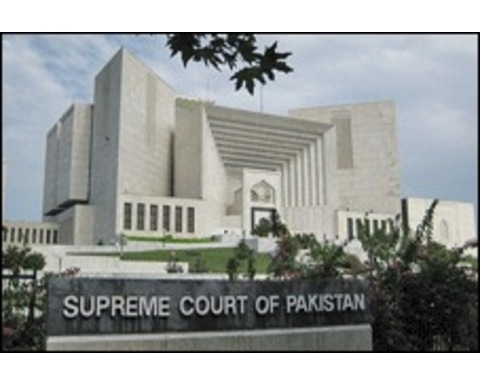



![[mariana+babar.jpg]](https://blogger.googleusercontent.com/img/b/R29vZ2xl/AVvXsEibhHLFT5WKHhhbjeGgtKBnNdKuh0DVvRKUSQz0bXQPDO0If4Sn5aa5cH2jw2Ec-HNTvhbCPcjQhTuIV1LgaoipOkM6MO2McpTjkio-dgem2pfmqU2PeZu7lgYW59xeJw1Ctt_tdhmBfS8/s1600/mariana+babar.jpg)


