Showing posts with label Frontline PBS. Show all posts

Saturday, October 1, 2011

US Funded Afghan Jihad & US Funded "Bacha Bazi" (Paedophilia).

Pakistan's ISI was used as a "go-between". CIA covert support to the Mujahideen in Afghanistan operated indirectly through the Pakistani ISI, --i.e. the CIA did not channel its support directly to the Mujahideen. In other words, for these covert operations to be "successful", Washington was careful not to reveal the ultimate objective of the "jihad", which consisted in destroying the Soviet Union. In December 1984, the Sharia Law (Islamic jurisprudence) was established in Pakistan following a rigged referendum launched by President Muhammad Zia-ul-Haq. Barely a few months later, in March 1985, President Ronald Reagan issued National Security Decision Directive 166 (NSDD 166), which authorized "stepped-up covert military aid to the Mujahideen" as well a support to religious indoctrination. The imposition of The Sharia in Pakistan and the promotion of "radical Islam" was a deliberate US policy serving American geopolitical interests in South Asia, Central Asia and the Middle East. Many present-day "Islamic fundamentalist organizations" in the Middle East and Central Asia, were directly or indirectly the product of US covert support and financing, often channeled through foundations from Saudi Arabia and the Gulf States. Missions from the Wahhabi sect of conservative Islam in Saudi Arabia were put in charge of running the CIA sponsored madrassas in Northern Pakistan. Reference: 9/11 ANALYSIS: From Ronald Reagan and the Soviet-Afghan War to George W Bush and September 11, 2001 by Michel Chossudovsky October 1, 2011 http://www.globalresearch.ca/index.php?context=va&aid=20958 

Ronald Reagan Dedication for Afghan Mujahideen - 1

URL: http://youtu.be/eYLBoXQTBqY

Ronald Reagan Dedication for Afghan Mujahideen - 2

URL: http://youtu.be/YXb_BUSU91s


Under NSDD 166, a series of covert CIA-ISI operations was launched.

The US supplied weapons to the Islamic brigades through the ISI. CIA and ISI officials would meet at ISI headquarters in Rawalpindi to coordinate US support to the Mujahideen. Under NSDD 166, the procurement of US weapons to the Islamic insurgents increased from 10,000 tons of arms and ammunition in 1983 to 65,000 tons annually by 1987. "In addition to arms, training, extensive military equipment including military satellite maps and state-of-the-art communications equipment" (University Wire, 7 May 2002). Reference: 9/11 ANALYSIS: From Ronald Reagan and the Soviet-Afghan War to George W Bush and September 11, 2001 by Michel Chossudovsky October 1, 2011 http://www.globalresearch.ca/index.php?context=va&aid=20958 

Fast Forward to the present days

As the United States deepens its commitment to Afghanistan, FRONTLINE takes viewers inside the war-torn nation to reveal a disturbing practice that is once again flourishing in the country: the organized sexual abuse of adolescent boys. In The Dancing Boys of Afghanistan, Afghan journalist Najibullah Quraishi (Behind Taliban Lines) returns to his native land to expose an ancient practice that has been brought back by powerful warlords, former military commanders and wealthy businessmen. Known as "bacha bazi" (literal translation: "boy play"), this illegal practice exploits street orphans and poor boys, some as young as 11, whose parents are paid to give over their sons to their new "masters." The men dress the boys in women's clothes and train them to sing and dance for the entertainment of themselves and their friends. According to experts, the dancing boys are used sexually by these powerful men. REFERENCE: The Dancing Boys Of Afghanistan | FRONTLINE | PBS Introduction April 20, 2010 http://www.pbs.org/wgbh/pages/frontline/dancingboys/etc/synopsis.html
http://www.pbs.org/wgbh/pages/frontline/dancingboys/


The Dancing Boys of Afghanistan (Bacha Bazi) 1 of 2

URL: http://youtu.be/ywWjjewqNDA

The Dancing Boys of Afghanistan (Bacha Bazi) 2 of 2

URL: http://youtu.be/sRhfthE_Ifg


WikiLeaks on US Contractors & "Bacha Bazi" (Paedophilia) in Afghanistan.

URL: http://youtu.be/SIzeErqwph4

Wednesday, 24 June 2009, 11:37
C O N F I D E N T I A L SECTION 01 OF 03 KABUL 001651
SIPDIS
DEPARTMENT FOR SRAP, SCA/A, INL, EUR/RPM
STATE PASS TO NSC FOR WOOD
OSD FOR FLOURNOY
CENTCOM FOR CG CJTF-82, POLAD, JICENT
KABUL FOR COS USFOR-A
EO 12958 DECL: 06/23/2019
TAGS PREL, PGOV, MARR, MASS, AF
SUBJECT: 06/23/09 MEETING, ASSISTANT AMB MUSSOMELI AND MOI
MINISTER ATMAR: KUNDUZ DYNCORP PROBLEM, TRANSPORT FOR PRESIDENTIAL CANDIDATES AND OTHER TOPICS
REF: KABUL 1480
Classified By: POLMIL COUNSELOR ROBERT CLARKE FOR REASONS 1.4 (B) AND ( D)

1. (C) SUMMARY: Assistant Ambassador Mussomeli discussed a range of issues with Minister of Interior (MoI) Hanif Atmar on June 23. On the Kunduz Regional Training Center (RTC) DynCorp event of April 11 (reftel), Atmar reiterated his insistence that the U.S. try to quash any news article on the incident or circulation of a video connected with it. He continued to predict that publicity would "endanger lives." He disclosed that he has arrested two Afghan police and nine other Afghans as part of an MoI investigation into Afghans who facilitated this crime of "purchasing a service from a child." He pressed for CSTC-A to be given full control over the police training program, including contractors. Mussomeli counseled that an overreaction by the Afghan goverment (GIRoA) would only increase chances for the greater publicity the MoI is trying to forestall.

2. (C) On armored vehicles and air transport for presidential candidates, Atmar pitched strongly to have the GIRoA decide which candidates were under threat and to retain control of allocation of these assets. He agreed with the principle of a level playing field for candidates but argued that "direct support by foreigners" demonstrated a lack of confidence in GIRoA. If GIRoA failed to be fair, international assets and plans in reserve could be used. On another elections-related issue, Atmar claimed that two Helmand would-be provincial candidates (and key Karzai supporters) disqualified under DIAG rules had actually possessed weapons as part of a GIRoA contract to provide security for contractors.

3. (C) Atmar also was enthusiastic about working out arrangements with the 2nd Marine Expeditionary Brigade (MEB) in RC-South to partner with the Afghan Border Police (ABP) on training and joint operations to extend GIRoA governance south. He is considering giving BG">BG Melham, a highly regarded Afghan officer, responsibility for ABP in Nimruz and Helmand provinces. END SUMMARY.

KUNDUZ RTC DYNCORP UPDATE

4. (C) On June 23, Assistant Ambassador Mussomeli met with MOI Minister Hanif Atmar on a number of issues, beginning with the April 11 Kunduz RTC DynCorp investigation. Amb Mussomeli opened that the incident deeply upset us and we took strong steps in response. An investigation is on-going, disciplinary actions were taken against DynCorp leaders in Afghanistan, we are also aware of proposals for new procedures, such as stationing a military officer at RTCs, that have been introduced for consideration. (Note: Placing military officers to oversee contractor operations at RTCs is not legally possible under the currentDynCorp contract.) Beyond remedial actions taken, we still hope the matter will not be blown out of proportion, an outcome which would not be good for either the U.S. or Afghanistan. A widely-anticipated newspaper article on the Kunduz scandal has not appeared but, if there is too much noise that may prompt the journalist to publish.

5. (C) Atmar said he insisted the journalist be told that publication would endanger lives. His request was that the U.S. quash the article and release of the video. Amb Mussomeli responded that going to the journalist would give her the sense that there is a more terrible story to report. Atmar then disclosed the arrest of two Afghan National Police (ANP) and nine other Afghans (including RTC language assistants) as part of an MoI investigation into Afghan "facilitators" of the event. The crime he was pursuing was "purchasing a service from a child," which in Afghanistan is illegal under both Sharia law and the civil code, and against the ANP Code of Conduct for police officers who might be involved. He said he would use the civil code and that, in this case, the institution of the ANP will be protected, but he worried about the image of foreign mentors. Atmar said that President Karzai had told him that his (Atmar's) "prestige" was in play in management of the Kunduz DynCorp matter and another recent event in which Blackwater contractors mistakenly killed several Afghan citizens. The President had asked him "Where is the justice?"

6. (C) Atmar said there was a larger issue to consider. He

KABUL 00001651 002 OF 003

understood that within DynCorp there were many "wonderful" people working hard, and he was keen to see proper action taken to protect them; but, these contractor companies do not have many friends. He was aware that many questions about them go to SRAP Holbrooke and, in Afghanistan, there is increasing public skepticism about contractors. On the other hand, the conduct of the Combined Security Transition Command-Afghanistan (CSTC-A) is disciplined. Looking at these facts, he said, he wanted CSTC-A in charge. He wanted the ANP to become a model security institution just like the Afghan National Army (ANA) and National Directorate for Security (NDS), and the contractors were not producing what was desired. He suggested that the U.S. establish and independent commission to review the mentor situation, an idea he said Ambassador Eikenberry had first raised. Atmar added that he also wanted tighter control over Afghan employees. He was convinced that the Kunduz incident, and other events where mentors had obtained drugs, could not have happened without Afghan participation.

ARMORED VEHICLES (AND AIR TRANSPORT) FOR PRESIDENTIAL CANDIDATES

7. (C) Atmar expressed strong opinions about the use of armored vehicles for travel by presidential candidates that he has requested be provided to MoI by the U.S. and UK. He said it was up to MoI to decide whether a candidate was under threat or not. Atmar opined that it should be an MoD responsibility to provide air transport for presidential candidates. Amb Mussomeli explained that we want a level playing field, which Atmar agreed was necessary. However, Atmar said there were two important considerations: 1) some of the electorate will view that the candidates are controlled by foreigners if provided non-GIRoA transport; and 2) bypassing the MoI or MoD with "direct support by foreigners" demonstrated a lack of confidence in the Afghanistan government. When Amb Mussomeli said MOD lacked adequate aircraft to cover all candidates, Atmar responded that MoD could ask ISAF for help but should retain control of the travel. Amb Mussomeli pointed out that some reasonably worried that such a plan will falter or will not be fairly implemented. Atmar answered "Just give us a chance. If we fail, then you have your own planes and plans in reserve."

DIAG-DISQUALIFIED CANDIDATES IN HELMAND

8. (C) In a discussion on two would-be provincial election candidates in Helmand who were disqualified by the Disbandment of Illegally Armed Groups (DIAG) program, Atmar said he had looked into requests to stand firm against their reinstatement, but it was a "big, contentious issue that is not explainable to President Karzai." Atmar said that the only reason these two candidates were barred was for having weapons, apparently against DIAG rules. In fact, he said, they were "contracted by the state" to have those weapons in order to provide security for contractors. He acknowledged that the "contract" had not been properly registered, and suggested that the GIRoA would take care of the registration.

AFGHAN BORDER POLICE (ABP) AND PARTNERING WITH THE MARINES IN RC-SOUTH

9. (C) Atmar enthusiastically proposed an MOI meeting with the leadership of the 2nd Marine Expeditionary Brigade (MEB) and CSTC-A to work out arrangements for good partnering, training, and joint operations with Afghan security forces in RC-South. The MEB would like two ABP companies (approximately 250 police) currently located near Lashkar Gah to move south, and to be mobile enough to move further south when opportunities arise. The MEB would like a customs officer to be attached to these ABP companies so that the reach of GIRoA governance can be extended when insurgent-controlled or dominated territory is opened. Atmar stopped short of making a final promise to give a highly-regarded Afghan officer, BG">BG Melham (whom he personally respects), responsibility for the ABP in Nimruz and Helmand provinces, but he was aware of concerns about the current responsible officer (BG">BG Noorzai).

KABUL INTERNATIONAL SCHOOL (ISK)

10. (U) Amb Mussomeli expressed concern over a plan by a District Police Chief to remove security barriers at ISK (an primary and secondary school partially dependent on USAID and other Mission funding support) that keep the road closed to

KABUL 00001651 003 OF 003

normal traffic. Removing the barriers could endanger the kids and teachers who walk between two compounds. Atmar said that he was very familiar with ISK and "no barriers would be touched," although he added that perhaps an arrangement could be made to unblock the road and have the ISK security personnel search vehicles.

EIKENBERRY

REFERENCE: US embassy cables: Afghan government asks US to quash 'dancing boys' scandal Thursday 2 December 2010 21.30 GMT http://www.guardian.co.uk/world/us-embassy-cables-documents/213720  Courtesy: Tell the UN to Stop Child Trafficking via Bacha Bazi in Afghanistan http://www.change.org/petitions/tell-the-un-to-stop-child-trafficking-via-bacha-bazi-in-afghanistan  Are Afghan Security Forces Complicit in Child Sex Trafficking? by Amanda Kloer · October 29, 2010 http://news.change.org/stories/are-afghan-security-forces-complicit-in-child-sex-trafficking  WikiLeaks: Texas Company Helped Pimp Little Boys To Stoned Afghan Cops By John Nova Lomax Tue., Dec. 7 2010 at 7:01 AM http://blogs.houstonpress.com/hairballs/2010/12/wikileaks_texas_company_helped.php  Wikileaks Reveals U.S. Tax Dollars Fund Child Sex Slavery in Afghanistan by Amanda Kloer · December 08, 2010 http://news.change.org/stories/wikileaks-reveals-us-tax-dollars-fund-child-sex-slavery-in-afghanistan 

Wednesday, December 8, 2010

Jang Group is "Selective" over Saudi Arabia & WikiLeaks.


Jang Group is very "fond" of quoting Foreign Sources particularly when Foreign Sources carry news against any Elected Government of Pakistan specially if the party is PPP and Leader is Asif Ali Zardari. So lets quote genuine News published in The News International and Other Foreign Sources on Kingdom of Saudi Arabia and Corruption therein.

Corrupt, Vile & Filthy: Arabs, Aal-e-Saud, & Wahhaabis. http://chagataikhan.blogspot.com/2010/06/corrupt-vile-filthy-arabs-aal-e-saud.html


NEW YORK: Saudi King Abdullah called President Asif Ali Zardari the greatest obstacle to Pakistan’s progress, according to an online report of New York Times that quoted Wikileaks as saying. The report further quoted King Abdullah as saying: “When the head is rotten, it affects the whole body.” The cables released by Wikileaks, the whistle-blower, disclose that aging monarch of Saudi Arabia, King Abdullah, as speaking scathingly about the leaders of Iraq and Pakistan. Speaking to another Iraqi official about Nuri Kamal al-Maliki, the Iraqi prime minister, King Abdullah said, “You and Iraq are in my heart, but that man is not.” The king called President Asif Ali Zardari of Pakistan the greatest obstacle to that country’s progress. “When the head is rotten,” he said, “it affects the whole body.” REFERENCE: Saudi King called Zardari greatest obstacle to Pak progress: report Updated at: 20 PST, Monday, November 29, 2010 http://www.thenews.com.pk/latest-news/5791.htm Saudi King called Zardari greatest obstacle to Pak progress: report Updated at: 0012 PST, Monday, November 29, 2010 http://www.geo.tv/11-29-2010/75020.htm

Wednesday, December 08, 2010, Muharram 01, 1432 A.H


'A picture speaks a thousand words' Sons of Late. King Faisal [Great Great Great Maternal Grandson of Mutawwa Sheikh Mohammad Bin Abd Al Wahab] Turki Al Faisal and Saud Al Faisal with NEO CON Ex- US Vice President Dick" Cheney [Wahabis are one big fraud] - Prince Saud, Prince Turki,Vice President and Mrs. Cheney http://www.saudiembassy.net/archive/2006/news/page562.aspx Man is known by the company he keeps DEATH SQUADS: Seymour Hersh, Dick Cheney & Secret Assassination Wing http://chagataikhan.blogspot.com/2009/05/seymor-hersh-dick-cheney-secret.html


ROVER’S DIARY: Blessed are the WikiLeaks revolutionaries —Babar Ayaz

It is ironic that the Saudis have labelled Zardari as a “rotten head”, while their whole body polity is rotten. This comment is like the pot calling the kettle black. Pakistan has much more respect for human rights and freedom to criticise the government, while Saudi Arabia is politically far behind


Blessed are the people who live in post-Second World War times, when humankind has progressed more than it has ever done before. Blessed are the people who live in the times of information technology. Blessed are the people who live in the times of democratisation of information. Blessed are the people who are using this technological revolution to bring out in the open what our rulers do behind closed doors. REFERENCE: DAILY TIMES Tuesday, December 07, 2010 http://www.dailytimes.com.pk/default.asp?page=2010\12\07\story_7-12-2010_pg3_4


- From left to right: Dick Cheney, Prince Bandar, Condoleezza Rice, and George W. Bush, on the Truman Balcony of the White House on September 13, 2001. [Source: White House] - Defense Secretary Dick Cheney takes a leading role in drawing up the plans for the US invasion of Iraq (see December 1990). He is appalled by what he calls the “lack of creativity” of the initial plans, drawn up by a number of senior generals. Cheney and Joint Chiefs Chairman Colin Powell spend days poring over the plans, with Cheney pressuring both Powell and the generals to make wide-ranging changes. But the generals respect Cheney’s input. “He wasn’t a micromanager like McNamara,” one general later recalls, referring to former Defense Secretary Robert McNamara, who planned much of the US’s Vietnam strategies. “And he wasn’t arrogant like [former Defense Secretary Donald] Rumsfeld. He wanted this one done right.” Overwhelming Force - Cheney joins Powell in advocating the “enhanced option,” adding 100,000 more troops to the initial invasion force to bring troop strength up to nearly half a million US forces slated to go into Iraq. Powell and Cheney have no intention of being undermanned by Iraq’s large ground forces. And Cheney wants to slough off the remnants of what many call the “Vietnam syndrome.” He wants a resounding victory. “The military is finished in this society if we screw this up,” he tells Saudi Arabia’s Prince Bandar (see August 5, 1990 and After). While Powell and Cheney see eye-to-eye on most invasion-related issues, they do disagree on one fundamental issue: the possible use of the Army’s tactical nuclear arsenal (see Mid-August, 1990). (Nuclear weapons will not be used in the Iraq invasion.) Limited Role of Congress? - Cheney sees no reason for Congress to have anything more than a peripheral role in the entire affair (see December 1990). Authors Lou Dubose and Jake Bernstein later write: “Despite the fact that going to war with Iraq would be a larger undertaking than the D-Day invasion of Normandy, Cheney argued that the president did not need the consent of Congress. He seemed more understanding of King Fahd’s polling of the royal family and calling Arab leaders (see August 5, 1990 and After) than he was of [President] Bush’s willingness to go to Congress for consent” (see January 9-13, 1991). [DUBOSE AND BERNSTEIN, 2006, PP. 101-102] REFERENCE: Late 1990: Defense Secretary Cheney Helps Plan Iraq Invasion http://www.historycommons.org/context.jsp?item=alate90invade#alate90invade Profile: Bandar bin Sultan a.k.a. "Bandar Bush", Prince Bandar http://www.historycommons.org/entity.jsp?entity=bandar_bin_sultan

ISLAMABAD: A WikiLeaks report has claimed that Saudi Foreign Affairs Minister Prince Saud al-Faisal, commenting on the assassination of former Pakistan People's Party chairperson Benazir Bhutto, had observed that he had been afraid of just "such an outcome" ever since she had decided to return to Pakistan. The WikiLeaks quoted the prince the prince as cautioning in a meeting held at the US Foreign Ministry on January 2, 2008, that the “US must not be seen publicly to be influencing Pakistan's internal affairs, lest it inadvertently inflame matters by provoking extremists to further violence." Prince Saud characterised Pakistan's internal situation as "serious and tense", and described the country's political environment as "poisonous". He emphasised the need to maintain stability, noting that the key challenge for then President Pervez Musharraf to maintain the unity of the Pakistani armed forces. He voiced strong support for holding planned parliamentary elections, but also said a limited postponement would be acceptable, given the current situation in the country. Postponing the elections could be "an opportunity for the Pakistanis to talk things out", he said. Prince Saud cautioned that Pakistan must be allowed to resolve its current political crisis internally, without overt, external pressure. REFERENCE: ‘Prince Saud feared Benazir would be assassinated’ By: Mian Abrar Published: December 03, 2010 http://pakistantoday.com.pk/pakistan-news/National/03-Dec-2010/Prince-Saud-feared-Benazir-would-be-assassinated

Nobody in Pakistan Press "Particularly The Jang Group" is interested in "Juicy Leaks on Saudi Corruption"


ISLAMABAD: The letter written by Saudi Prince Bandar bin Khalid bin Abdul Aziz Al-Saud to the Chief Justice of Pakistan alleging that substandard accommodation on exorbitant rates was provided to the Haj pilgrims from Pakistan in Makkah by the Government of Pakistan has turned up to be genuine. The foreign ministry has been informed about this by Pakistan Ambassador in Saudi Arabia, Alhaj Umer Khan Ali Sherzaie, through his D/O letter. The official confirmation from the Saudi Foreign Office is being followed, as the ambassador took up the matter with Alla-Din Al-Askari, chief of protocol Royal State of Saudi Arabia. Well-placed sources told The News here that the envoy had verified the authenticity of the communication to the Foreign Office here upon the information supplied by Pakistan’s Consul General in Jeddah Abdul Salik to him, who has reported to the embassy after a probe that the letter has been duly written by His Royal Highness, the Prince, who has a distinguished status in the Royalty. The letter was dispatched to the Chief Justice of Pakistan late last month and Justice Iftikhar Muhammad Chaudhary ordered the Ministry of Religious Affairs to report to the court within 15 days. The orders were made on 3rd of November. Later, the matter was also referred to the Foreign Office.


The Supreme Court, in its communication on the day, declared, “The Hon’ble Chief Justice of Pakistan received a letter purportedly written by Prince Bandar Bin Khalid Bin Abdul Aziz Al-Saud, alleging that substandard accommodation on exorbitant rates was provided to the pilgrims of Pakistan to Makkah-tul-Mukarramah by the Ministry of Religious Affairs, Government of Pakistan. It has further been alleged that hired buildings were 3.5 km away from Haram whereas he had offered to the Government of Pakistan to provide the buildings nearer to the Haram on cheaper rates. On the letter, the Hon’ble Chief Justice of Pakistan passed the order, This issue seems to be serious and may cause bad name for our government. Call for comments from the Ministry of Religious Affairs and this matter may be brought in the notice of the Ministry of Foreign Affairs.” Accordingly, comments were received from the Ministry of Religious Affairs and the Hon’ble Chief Justice of Pakistan passed the following orders: Copy of the comments be sent to Ministry of Foreign Affairs to look into this case in continuation of our earlier order. Let Foreign Office take up this matter on government to government level.” The Saudi prince told the Supreme Court that Pakistan’s Ministry of Religious Affairs is indulging in corruption while dealing with Haj pilgrims, the reports said. ‘’We offered cheaper accommodation within two kilometres of the Haj congregation venue but (this was rejected).’’ ‘Our offer was 3,500 Saudi Riyals per pilgrim but the Pakistani authorities rented out the accommodation,” he said. ‘The Pakistani pilgrims are still being charged 3,500-3,600 Saudi Riyals for this accommodation although the rent at such a far-off location is not more than 1,500 Riyals under any circumstances,’ he stated. Prince Khalid said in the letter that “there (is) concrete evidence of financial bungling and departmental corruption as far as the Haj affairs of Pakistani ministry is concerned”. He urged the court to take note of the alarming situation. Chief Justice Iftikhar Muhammad Chaudhry directed the secretary in-charge of the ministry to furnish a detailed response on the accusations made in the letter within 15 days. Federal Minister for Religious Affairs Hamid Saeed Kazmi told the National Assembly on the following day: “We have not received any such letter from the Saudi prince.”

“I have seen such reports only in the media. I want to assure that we will hold a thorough probe and stringent action will be taken against officials if proven guilty.” As many as 160,000 Pakistanis went to Saudi Arabia this year. Interestingly, secretary religious affairs ministry disputed the credentials of the letter as he was also supported by the minister subsequently. Now the minister has gone to Saudi Arabia to perform Haj with his family members as the leader of Pakistan’s delegation. Well-placed sources told this scribe that the federal secretary was part of the team that accorded the approval to the hiring of disputed accommodation and the officials of the same ministry are carrying out the investigations. REFERENCE: Saudi prince’s letter to CJ is genuine Updated at Thursday, November 11, 2010 By M Saleh Zaafir http://beta.thenews.com.pk/TodaysPrintDetail.aspx?ID=2005&Cat=13

During "Judicial Crisis in 2007" the same Saudi Arabia and their Vile, Corrupt, Pervert, Rascal Princes tried to Bribe the Chief Justice of Pakistan at the behest of Musharraf. The Honourable Chief Justice of Pakistan should have written letter to King Abdullah on this Naked Fascism of Saudi Arabia. Jang Group has removed [permanently] many news stories from their web cache to lie blatantly without being caught. Now in 2010 that lick-spittle Prince Prince Bandar bin Khalid bin Faisal Al-Saud Offices: Chairman of the board of directors, AL-WATAN newspaper http://www.pbs.org/wnet/wideangle/shows/saudi/cards10.html is writing a letter to CJP on Corruption??? Where was this suddenly found conscience when they kept watching silently the Judicial Murder of Bhutto and not only that they also accepted rather arranged the Exile of Mr. Nawaz Sharif [why the Prince didn't write any letter], instead of writing letters these "2000" Saudi Princes should take a deep breath and do some soul searching. My intention is not to condone corruption but unearth this "double standard" because the same Jang Group had viciously attacked Saudi Diplomat and Sheikh Sudais [Imam Kaaba] when they intervened in Lal Masjid Affair.


"QUOTE"


ISLAMABAD: The Saudi Ambassador to Pakistan Ali S Awadh Asseri met the deposed Chief Justice of Pakistan, Justice Iftikhar Muhammad Chaudhry, to extend an invitation for Haj, an offer that was politely declined. “Saying thank you, the deposed CJ told the ambassador he could not go abroad in the present crisis,” a family source said. Asseri went to see Justice Chaudhry at 10 am and remained with him for almost half-an-hour, the source told The News. The Interior Ministry, however, said it had no knowledge of the meeting but the interior minister said the ambassador did not need any prior permission to see the deposed CJ and he could go whenever he wanted. Although, many Western diplomats have been meeting politicians, Asseri is the first diplomat who was allowed to see Justice Chaudhry since his house arrest on November 3. Deposed Justice Bhagwan Das confirmed that he was in the picture about the meeting but said he did not know its details. A close confidante of Justice Chaudhry and leading lawyer, Athar Minallah, told The News that the Saudi ambassador went to see Justice Chaudhry for extending him an invitation of Haj. Minallah said that Saudi ambassador had also invited Justice Chaudhry before March 9 when he was first sacked. Later, the Saudi government had again extended the invitation after his restoration, he said. And now when the time for performing Haj is getting nearer with many intending pilgrims already flown to Makkah, Ambassador Asseri did not forget his last commitment and again went to remind Justice Chaudhry about this standing offer.


Minallah said Justice Chaudhry thanked the ambassador for inquiring his well being and extending the Haj invitation but said he could not accept it at this point of time. Justice Chaudhry told the ambassador that the people of Pakistan were passing through a critical phase of history. It would be therefore unwise on his part to leave them alone and to go for Haj. But he said he was deeply grateful for the invitation extended by the Saudi government. Justice Chaudhry also told the ambassador that he was entirely committed to the cause of rule of law and the restoration of the judiciary. According to Minallah, Justice Chaudhry was firm on his previous stand and no let-up was noticed in his strong determination. He said the continued confinement has failed to break Justice Chaudhry and he was as optimistic today as was before November 3.

Tariq Butt adds: “The former chief justice wants to perform Haj along with his family. We are prepared to facilitate his pilgrimage,” Ambassador Asseri told The News. He said Iftikhar Muhammad Chaudhry had requested to the embassy for visa to perform Haj, and “my meeting with him was about that.” The diplomat said there was also an outstanding invitation to Chaudhry for visit to Saudi Arabia that was extended to him five months back. At the time, he was the chief justice of the Supreme Court. On being approached by this correspondent, Caretaker Interior Minister Lt-Gen (retd) Hamid Nawaz said that to his knowledge, the deposed judge had so far made no request to the government, indicating his intention to go for Haj. “First, he has to write to the government showing his keenness for performing Haj. Only then, we will consider his case,” he said.

The government has repeatedly stated that none of the deposed judges is confined to his house and every one of them has free access to movement. However, no visitor is allowed to meet any of these justices as police continue to man different barricades on roads leading to the Judges’ Enclave and elsewhere. The latest refusal to a meeting with the former chief justice came when former prime minister Nawaz Sharif had made a bid on Thursday. “I will find out whether or not the former judge is going for Haj,” Interior Ministry spokesman Brig (retd) Javed Iqbal Cheema told The News. “I will let you know,” he said but did not call back. The Saudi ambassador said he did not discuss with the former judge any matter concerning Pakistan’s internal affairs. The deposed chief justice was not available for comment. Asseri’s meeting has assumed great importance in the prevailing situation when a logjam exists between the government and the judges of the Supreme Court and the high courts, who had either refused or were not called to take oath under the Provisional Constitution Order (PCO) that President General Pervez Musharraf issued on Nov 3. REFERENCE: Jang Group has removed [permanently] many news stories from their web cache to lie blatantly without being caught, here is the source for the quote : http://www.paklinks.com/gs/pakistan-affairs/271499-ex-cj-iftikhar-meets-saudi-ambassador-exile-deal-offered.html Saudi envoy meets deposed CJ, invites him for Haj Iftikhar declines invitation; says he cannot leave country in present situation By Umar Cheema Dec 7th, 2007 07:46 PM http://thenews.jang.com.pk/top_story...l.asp?Id=11593
http://www.thenews.com.pk/TodaysPrintDetail.aspx?ID=11593&Cat=13&dt=12/10/2007


ISLAMABAD: Saudi Ambassador, Ali Awaz Al Asiri called on confined former chief Justice, Iftikhar Chaudhry at his residence. Intelligence sources told that this meeting between the Saudi ambassador and the former chief justice lasted for about an hour at the Judges Colony, where the demands for the re-instatement of the Judges and other options deliberated. Sources told that following the parley with the chief justice, Saudi ambassador also visited the foreign office here and discussed matters of national importance. REFERENCE: Saudi envoy meets former CJ Iftikhar Chaudhry Updated at Friday, December 07, 2007 1330 PST http://thenews.jang.com.pk/updates.asp?id=33504 REFERENCE: Jang Group has removed [permanently] many news stories from their web cache to lie blatantly without being caught, here is the source for the above Umar Cheema's quote : http://www.paklinks.com/gs/pakistan-affairs/271499-ex-cj-iftikhar-meets-saudi-ambassador-exile-deal-offered.html


Saudi Arabia is ready to offer Pakistan's sacked chief justice Iftikhar Mohammed Chaudhry, shelter in the kingdom, Pakistani government sources told Adnkronos International (AKI). High-level sources told AKI, on condition of anonymity, that this was discussed when the Saudi Ambassador to Pakistan, Ali Awaz Al Asiri, called on the deposed chief justice at his residence in the capital Islamabad on Friday. They said that the meeting was set up by the Pakistani government. Al Asiri is believed to have invited Chaudhry and his family to make the Haj or Muslim pilgrimage to the holy city of Mecca in Saudi Arabia, this year. The Haj is scheduled to take place this month. Al Asiri is also believed to have offered Chaudhry and his family a prolonged stay in Saudi Arabia. Sources within the Saudi consulate in Karachi, on the condition of anonymity, also confirmed to AKI the offer of shelter to Chaudhry and said that the government of Saudi Arabia had tried to bring stability to Pakistan. Chaudhry was sacked as chief justice after President Pervez Musharraf declared a state of emergency in Pakistan on 3 November, citing rising extremism and an unruly judiciary. The former head of the Supreme Court was placed under house arrest. While opposition leader and former prime minister Nawaz Sharif was prevented from meeting Chaudhry on Thursday, just a day later Al Asiri was allowed to meet him. It is believed that the potential deal would help break the deadlock within opposition parties who are divided on whether to contest the January general elections if the sacked judges are not reinstated. A Saudi-brokered deal would be a face-saving gesture for Chaudhry and the entire opposition who need to deal with Musharraf's government and also support an independent judiciary to gain public support. REFERENCE: Jang Group has removed [permanently] many news stories from their web cache to lie blatantly without being caught, here is the source for the above Umar Cheema's quote : http://www.paklinks.com/gs/pakistan-affairs/271499-ex-cj-iftikhar-meets-saudi-ambassador-exile-deal-offered.html Saudi envoy meets deposed CJ, invites him for Haj
Umar Cheema Saturday, December 08, 2007 http://www.thenews.com.pk/TodaysPrintDetail.aspx?ID=11593&Cat=13&dt=12/10/2007


WikiLeaks cables: Saudi princes throw parties boasting drink, drugs and sex

Royals flout puritanical laws to throw parties for young elite while religious police are forced to turn a blind eye


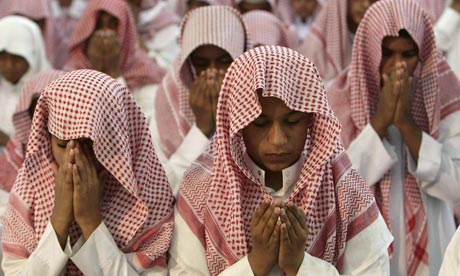
Saudi students at a prayer event in Riyadh
These Saudi students at a prayer event in Riyadh conform to the puritanical image of the country, but worldly pleasures are available behind closed doors to the very rich, WikiLeaks cables show. Photograph: Fahad Shadeed/Reuters

In what may prove a particularly incendiary cable, US diplomats describe a world of sex, drugs and rock'n'roll behind the official pieties of Saudi Arabian royalty.
Jeddah consulate officials described an underground Halloween party, thrown last year by a member of the royal family, which broke all the country's Islamic taboos. Liquor and prostitutes were present in abundance, according to leaked dispatches, behind the heavily-guarded villa gates.
The party was thrown by a wealthy prince from the large Al-Thunayan family. The diplomats said his identity should be kept secret. A US energy drinks company also put up some of the finance.
"Alcohol, though strictly prohibited by Saudi law and custom, was plentiful at the party's well-stocked bar. The hired Filipino bartenders served a cocktail punch using sadiqi, a locally-made moonshine," the cable said. "It was also learned through word-of-mouth that a number of the guests were in fact 'working girls', not uncommon for such parties."
The dispatch from the US partygoers, signed off by the consul in Jeddah, Martin Quinn, added: "Though not witnessed directly at this event, cocaine and hashish use is common in these social circles."
The underground party scene is "thriving and throbbing" in Saudi Arabia thanks to the protection of Saudi royalty, the dispatch said. But it is only available behind closed doors and for the very rich.
More than 150 Saudi men and women, most in their 20s and 30s, were at the party. The patronage of royalty meant the feared religious police kept a distance. Admission was controlled through a strict guest list. "The scene resembled a nightclub anywhere outside the kingdom: plentiful alcohol, young couples dancing, a DJ at the turntables and everyone in costume."
The dispatch said the bar featured a top shelf of well-known brands of liquor, the original contents reportedly replaced with sadiqi. On the black market, they reported, a bottle of Smirnoff vodka can cost 1,500 riyals (£250) compared with 100 riyals (£16) for the locally-made vodka.
In a venture into Saudi sociology, the diplomats explained why they thought their host was so attached to Nigerian bodyguards, some of whom were working on the door. "Most of the prince's security forces were young Nigerian men. It is common practice for Saudi princes to grow up with hired bodyguards from Nigeria or other African nations who are of similar age and who remain with the prince well into adulthood. The lifetime spent together creates an intense bond of loyalty"
The cable claimed it was easy for would-be partygoers to find a patron out of more than 10,000 princes in the kingdom. Some are "royal highnesses" with direct descent from King Abdul Aziz, while others are "highnesses" from less direct branches.
One young Saudi told the diplomat that big parties were a recent trend. Even a few years ago, he said, the only weekend activity was "dating" among small groups who met inside the homes of the rich. Some of the more opulent houses in Jeddah feature basement bars, discos and clubs. One high-society Saudi said: "The increased conservatism of our society over these past years has only moved social interaction to the inside of people's homes." http://www.guardian.co.uk/world/2010/dec/07/wikileaks-cables-saudi-princes-parties


Continuation of my earlier posts [watch the documentary]


Oil Wars The Kingdom Part 1


Oil Wars The Kingdom Part 2


Oil Wars The Kingdom Part 3


Oil Wars The Kingdom Part 4


Oil Wars The Kingdom Part 5


Oil Wars The Kingdom Part 6


Oil Wars The Kingdom Part 7


Oil Wars The Kingdom Part 8


Oil Wars The Kingdom Part 9


Oil Wars The Kingdom Part 10


Oil Wars The Kingdom Part 11


Oil Wars The Kingdom Part 12


Oil Wars The Kingdom Part 13


Oil Wars The Kingdom Part 14


Tuesday, January 12, 2010

Kamran Khan [Jang Group]'s Malicious campaign against ISI.

Jang Group particularly Mr Mahmood Sham (Group Editor Daily Jang), Mr Shaheen Sehbai (Group Editor The News International), Mr Kamran Khan (Senior Correspondent Jang/The News and GEO TV) and Mr Rauf Klasra (Senior Correspondent Jang/The News International) played a very dirty role after the murder of US Journlaist Daniel Pearl in Karachi in 2002. This very same Jang Group/GEO TV is now lecturing Pakistanis for Peace with India had itself launched a Vilification Campaign againt PPP and raised doubts on the Patiroitsm and Loyalty of PPP and President Asif Ali Zardari when they tried to formulate a policy on ISI, Kerry Lugar Bill, No First Strike, and Dialogues wih India. Now read what Jang and Times of India have jointly been saying and Jang Group/GEO TV/The News International have introduced a permanent link on their websites to promote Pakistan-India Peace. Now read as to how Kamran Khan with malafide intent involves Pakistan Army/ISI with Militants while giving an Interview to FRONTLINE PBS an American Public Affairs News Organization.

"QUOTE"


Kamran Khan - He is a Pakistani journalist and special correspondent for the Washington Post, based in Karachi. He maintains that Al Qaeda definitely moved into the tribal areas of Pakistan after the U.S. campaign in Afghanistan, but that Pakistani officials deny it because they fear U.S. intervention. He argues that at the same time Pakistani President Pervez Musharraf has allied himself with the U.S., he also has made an "unwritten compromise" to give more political power to Pakistani Islamist groups. This interview was conducted on Sept. 13, 2002.

Let's talk about Al Qaeda since Sept. 11, and what happened to them.

It has been bruised. It has been hurt, definitely. It lost the main hideout it had. It has lost the main sanctuary. There has been a tremendous blow to the prestige of the organization. So it's a wounded tiger, I would say.


[Is it] even still an organization?

I believe that it's an organization, as long as Osama bin Laden is alive, as long as Ayman al-Zawahiri is alive, as long as the other key players are still alive. I think, as an organization, Al Qaeda is still alive.


You think top leaders still in place?

Yes, Ayman al-Zawahiri is alive; Osama bin Laden is alive. If you talk about the cause and the motives of the organization, Mullah Omar is alive. We have new characters, new players in the game. ...


Many think, after 9/11, Al Qaeda went to the tribal areas [of Pakistan]. What you know about that?

Definitely they did. Definitely. The whole of Al Qaeda's moved into Pakistan. First they moved into the tribal areas. Pretty much they are there -- even today they are there. There is pretty strong evidence available to suggest that some of the Arabs who speak local native language, the Pashto, that wear native dresses, they look like native people. They are the guest of tribal people in South Waziristan and North Waziristan. I've been meeting people who know it for sure in their own areas --there are Arabs living there as guests of some tribal people.


I would think that some people in the government may also know, have some ideas. But as long as these people are not creating trouble and they are just sitting quiet, the government are not ready to confront them. They don't want to create a problem for themselves. So they moved into tribal areas, and then they moved into major cities, urban areas.

The greatest manifestation was the arrest in March this year of Abu Zubaydah in Faisalabad. The key players of Al Qaeda [were] in Faisalabad -- Abu Zubaydah and at least 11 Al Qaeda-ers. Faisalabad is a place -- it won't strike you at the first place that they are hiding at the central Punjab somewhere. So that shows that, yes, they moved across border into Pakistan. They moved into tribal areas, and from there they are now moving towards the cities. And we have very credible info that many of the Arabs were hiding in Karachi and in Lahore; maybe other places. ...

What is it about the tribal areas? I mean, people watching this program don't know what these tribal areas are or what they represent. What is it about these places that makes them such a good hiding place for Al Qaeda?

They are often categorized as semi-autonomous areas. But for all practical purpose, before 9/11, they were autonomous areas. There was no law there. The law was gun and drugs. These people trade in gun and guns only. There was no other thing. Maybe smuggling. So it was a lawless terrain, completely out of Pakistan's control.

These people don't accept any laws. They didn't even accept the Durand Line, the border between Pakistan and Afghanistan. They never had any travel documents to go into Afghanistan or coming back from there. So there are tremendous linkages there. These people have no law, no Pakistani law, government.


And they're in the same tribe as the Taliban?

Yes, in most cases. There are different types, but they share the area. They share the terrain. They share the culture, and they all share a very deep, religious leanings. They consider themselves ultra-religious people. Yes, the rest would like to call them the sheer fundamentalists.


We sent someone with a camera and a list of questions into [the tribal areas] recently. He asked questions of tribal leaders and whatnot, on the record, on camera. And they said, "No, we support the government. We are not going to harbor Al Qaeda." Why would they say that to us and say something different?

No, they are very intelligent people; don't consider them a [naÔve] tribesman and all. They are very intelligent people. They are talking to an American TV crew. They are not stupid. ...

They are serious about the business, what they are doing. There is a fire of remains and settling score with the Americans. Nobody should doubt that at all. That's why you see this activity in the east and in the south and southeast in Afghanistan. It can be that whatever is happening there is not indigenous Afghan reaction. There has to be some sanctuary across the border. There has to be some supplies from across the border. If nothing, some hideouts. ...

The basic thing, the bottom line with Pakistan is that they don't want to have an armed rebellion in the tribal areas. They don't want to take things to a limit where there is an armed rebellion, and there can be, because these people are armed to the teeth. They have heavy machine guns, they have got artillery, they have got light artillery, they have got tremendous amount of firepower with them. So the government of Pakistan is not really to challenge them. ...


So what about the war on terrorism and the coalition and cooperation with the United States?

It will continue. It will continue, but not at the cost of internal strife. Not at the cost of creating anarchy within Pakistan. Not at the cost of creating chaos within Pakistan. Not at the cost of creating the rebellion from the very strong religious lobby in Pakistan.

Mind you, this is the army is half a million, a very, very religious [faction]. I mean, these people are very religious. They cannot stand to any notion that the government or army is challenging the people who are religious people, who are religiously motivated people. So the army and the government, General Musharraf, has to be very cautious. That's why he's walking on a very tight rope. ...


What was [Abu Zubaydah] doing in Faisalabad?

He was just hiding there. They were having a very low profile there. They didn't have weapons, a lot of weapons, with them. They why they wanted to just stay cool there and waiting for their chance to react. ...


They've also come to Karachi, and we had an event here [on Sept. 11. 2002]. What happened?

There were many, many incidents there. The incident two days ago in Karachi, there was an information from neighborhood to the police that there are some suspicious people living here. Police did some reconnaissance, and then they went for a raid early morning Sept. 11. They faced fierce resistance from these guys. They are all definite Al Qaedas in the sense that they are Tajiks and they are Central Asians and two Arabs and all.


And Yemeni, apparently?

Yes. That's an Arab or Yemeni.


Have you received any briefings letting you know what's going on in that case?

They are still questioning these guys. But they have been told that, "We ran from Afghanistan and for the hideout. For us, this is a Muslim country."

Whenever these people are caught, they always play Islamic card. They always play a Muslim card. They like to influence their interrogators, and in many cases, they successfully do that. ...

They say that, "We have devoted our lives to Islam and Quran and Allah. So what problem do you have with us?" They usually ask their interrogators, and these people are very confident.

In most cases, they say, "You can kill us. No problem." That really baffles their interrogators, because if they are questioning a person who is ready to die, who says, "[If] you release me, you leave me, I'll go and I'll hit again." So that really baffled because an interrogator, to go to an extent to use a third degree, which may put some fear in the person he's interrogating that maybe he'll be killed. But these guys say, "Do whatever." These are very, very hard nuts. You can't make them speak without the third-degree measures, which are quite common in Pakistan, you know.


In terms of nationality, who are these people that are coming out of Afghanistan since October and coming to the tribal areas, coming to Faisalabad, coming to Karachi? What nationality are we talking [about]?

Mostly Arabs. Yemenis, I would say, Saudis, some Kuwaitis, some Palestinians.


Gulf Arabs?

Yes, yes, yes. And of course, Pakistanis, and of course, Afghanis, Chechens.


Are they going home? Are they going down to Karachi in order to catch a boat or--

Yes. Basically, it's not stationed to plot more action. These people at the moment who have escaped from Afghanistan -- I'm talking about the Al Qaeda in Afghanistan, which escaped from Afghanistan -- is looking for a hideout. It's on the run.

We can't say that they're sitting quiet and they are plotting, and they have been successful and all. We can't say that. They are on the run. They really fear that they may be caught any days. There is a great degree of mistrust in the ranks, because they think that the information going out, these raids and stuff, these arrests and all, it may be coming in from within their ranks. So there is some mistrust. But it's not a very, very well-entrenched organized force at the moment. ...


Any evidence that they're leaving Pakistan and going back to the Gulf?

Yes, yes, yes. There has been, yes. The some people who have their passports intact and all, these people have left and have gone off to Dubai. I understand that some people took also boats from Karachi and went off to the to U.A.E. There are several ports in the U.A.E. which you can access without being severely monitored.


Also, what about Iran?

Iran, of course. I understand that soon after October raids, there was a request made by some key Arabs to the Iranians in asking for passage. There is a Islamic code under which when some Muslims ask you for passage, you are obliged to provide that passage. I understand through a key U.A.E. diplomat that that passage was provided in the early days, and some people really went out. ...


There is talk we've heard that some of the major madrassas in Pakistan have harbored Al Qaeda -- the Haqqania Madrassa up near Peshawar, but also the Binori Madrassa here in Karachi.

I would think that not in the madrassas premises; there's a major intelligence penetration in these madrassas.


The ISI is in the Binori Madrassa?

Yes, yes, yes. They know what's going on there. But at the same time, you must understand that some of the key people are already with the ISI. I mean, they report back to the ISI. Maybe they are in the forefront of the anti-U.S. campaign or whatever--


So some of the Islamists are inside the ISI? And the ISI is looking--

And they report back to the ISI, yes, yes.


How does that work?

It works quite good, yes. I think that they have a very reliable penetration source of information. The bottom line here is that, "Look. Whatever you are doing, whatever you do, we understand. But mind you, we cannot afford to harbor Arabs here. We cannot afford to harbor non-Pakistanis here. So please, please cooperate with us on that count." There is a very deep connections between the religious madrassas, and the key religious scholars, and the establishment. ...


Doesn't President Musharraf need the Islamists in order to prosecute the Indians? Doesn't he need them to keep pressure on the Indians in Kashmir?

Absolutely.


So he can't offend these groups that are akin to Al Qaeda in their sympathies?

By all means. ... It's also because there are 50,000 strong, militant, armed people. That most of these people have deep connections with the establishment, with the security--


Security -- ISI?

--operators of Pakistan, the security operators, yes. The intelligence agencies. And they just can't do things which may provoke them, and which may create an internal rebellion of sorts. Not only that. Of course, these people have devoted themselves to jihad in India, at least, to jihad in Kashmir. ...

A lot of Pakistani security people say that no country has such a tremendous fifth column. You have 50,000 armed people who are ready to give their lives without asking for any favor or anything. These motivated people are an asset for any country with such a massive, such a big enemy. And with such a major problem boiling there. Of course, yes.


So can Americans trust Musharraf to crack down on his own people to rat out terrorists in Pakistan?


I don't know, because my perception is the Americans are basically interested in Al Qaeda -- people who were in Afghanistan, who have an anti-West, anti-America agenda. I'm not sure if the U.S. is really terribly interested about the people who were fighting in Kashmir. ...


Yes, but the Americans are concerned, [about] if you have good connections inside the ISI, inside this government. And you're telling me that the government or that the Pakistani militant groups, the fifth column, if you will, is serving as a sort of bed and breakfast for Al Qaeda.

In some cases, yes. But there has been a very intense pressure from the government on these groups -- I would say not pressure, but lobbying -- trying to convince these guys that, "Please don't have connections with Al Qaeda. Please don't have ties with Al Qaeda."

We have reasons to believe that the key jihadi organizations at their top level have severed their ties. Or they are not really to have connection, ties, with the Arabs, but maybe some breakaway factions doing this.


Kind of a messy situation to untangle, if you've got Al Qaeda and these jihadi groups being tight before 9/11, and now, after 9/11, the Americans pressure Musharraf to sort of untangle this mess. It's not something that gets done overnight.

It's very complicated. It's very complicated. It's a very difficult message to convey to these jihadis. But for these jihadi organizations, the focus is Kashmir. The agenda is Kashmir. And they have been told that, "If you have the focus on Kashmir, then you better not compromise your cause." ...

I think that the government is really satisfied that those groups now understand the language, and they don't want to be involved in any active anti-U.S. terrorist operation.


So the line is something like this: If you're fighting India, you're a freedom fighter. If you're fighting the Americans, you're a terrorist?

They have been told that you have been fighting as a freedom fighter in Kashmir, then no problem. It all started in 1990. Since 1990 until September 2001, there was no problem. There was no severe pressure on Pakistan to cut ties with these groups, to rein in these groups. There was some whispers here and there. But nothing serious. That's why it all continued here.


Why should the Pakistanis fight America's war for it?

For its own survival, for the economic reasons, to stay viable. If the country is facing economic crunch before 9/11, and also because General Musharraf, a military leader, wants legitimacy. He wants to survive. He wants to continue as the leader of the country. There are plenty of reasons.


I'm surprised that you think that Al Qaeda has any capability. My sense is that there's only a few hundred guys, they're scattered, they're in a defensive position and aren't in any position to be offensive.

That's very correct. But it doesn't mean that it's a dead organization, it cannot react, it will not react or whatever. The people who are on the run are basically who were in Afghanistan. But the sleepers, the sleeper cells all over the world -- it's not a very tightly knitted organization.

We are talking about people who floated around, who went to Afghanistan and returned back to these places. But these are people who are now self-energized, self-motivated. You don't need a central order to act from Osama bin Laden. So we are talking about loose sleeper cells all over the world.

Even before 9/11, I used to talk [to] people who are supposed to know all that. And they used to say very much before 9/11, that these people are not restricted to Afghanistan. ...


We talked to General Taj of the Frontier Corps in Peshawar. He contradicts you on the tribal areas. He says there's no Al Qaeda.

This is his job.


It's his job to say there's no Al Qaeda in tribal areas?

Absolutely. Because if now, the tribal area belongs to Al Qaeda, it means a direct American intervention. Americans would go mad. They'll say that "Yes, but you also agree with us, you must move fast. Otherwise, we'll come. We are coming. We're going to bomb these places out." So this is crucial for Pakistan to negate this impression that there are any Al Qaeda in Pakistan. ...


What do you know about the decision to let the FBI operate in the tribal areas? That must have been a difficult negotiation.

Oh, yes. But they always say that it's part of the 9/11 agreement which Pakistan had with the U.S., which included providing intelligence, allowing intelligence, technical facilities. They say that allowing Americans to have technical access in Pakistan.

But that's what the repeated assertion is from the government of Pakistan and President Musharraf also, that these people -- yes, they are doing something in tribal areas and other areas. But their work is restricted to technical cooperation.


Well, we know that the troops, the [U.S.] Special Forces come across the border, because the border's not demarcated.

That's right, yes.


Clearly, they're patrolling inside the Pakistani [territory].

Special Forces, they come and they say that "We don't know [whether] this was Pakistan or Afghanistan or whatever." They come and go and they come and go. Pakistan also allowed this to happen, because it gives them some leverage against the tribal leaders. They tell them, "Look. If you don't listen to the Americans, I'm going to come."

Three months ago, about four months ago basically, the tribal leaders were called and told that if you don't listen to the Americans, they are going to bomb you out here. And so you must understand this. That's why this very intelligent face from the tribal leaders. "No, no, no Al Qaedas, no, not at all. We do not provide any shelter. There's nothing."


How come reporters can't go into this area anymore?

Reporters can go. But the government says that we cannot guarantee your safety.


But they won't let me past a roadblock.

Yes. They would say that you have to have a government permission, a written government permission to--


A non-objection certificate?

Yes, that's right, yes.


But I can't get a non-objection certificate.

Yes, because they think that if you go inside, you'll be kidnapped, and you'll be made another Daniel Pearl.


You think that's true?

Partly, yes.


You think it's true that if I went into the--

You run a great risk if you go inside there. Sure. ...


No question in your mind that Al Qaeda has used those tribal areas as a sanctuary?

A sanctuary? Yes, absolutely, yes. Definitely. Oh, sure. Yes.


There's this notion that Musharraf is holding onto power. He's quashing opposition parties. At the same time, that's creating a real valid viable opening for Islamist extremists in the country.

Except for very few months just after 9/11, the Pakistani establishment and army had never had a direct confrontation with the religious groups or religious bodies. ...

You won't find now the government having any crackdown against any of the religious groups or any religious political parties. The religious political parties are much freer today than the Pakistan People's Party, or Pakistan Muslims. Their leaders are much freer than the key, say, the former prime ministers and the former ministers of the government. And now, we don't find any fireworks from the religious parts against Musharraf. ...

I have reason to believe, that there is an unwritten compromise between these religious groups -- erstwhile anti-Musharraf religious parties, and the government. The religious group now are back in action and they are moving freely. They are participating in election. There is no restriction. There has not been a single key religious leader who has been debarred from contesting election. ...


You're saying Musharraf has managed to do the impossible -- to cozy up with the Americans, give the Americans want they want, and at the same time, give more political power and more political space to the radical extremist, to Islamist parties?

Excellent job. Excellent job. I'll give him full marks for that. He is an ally to the U.S. and the war against terrorism, and now the religious parties are also not saying anything against him. This is an ideal situation for him.


It sounds like Saudi Arabia. It sounds like the same sort of power-sharing arrangement that the Saudis have worked out -- loyal to the Americans but give the religious extremists full rein over certain parts of society.

It's a good comparison. I would say it's a good comparison. ...


Do you think President Bush knows what kind of arrangement that he's gotten himself into here?

Oh, sure. He does, but I think he cannot afford to disturb the situation. He just cannot afford to, because he doesn't know. Because if Musharraf goes, what comes next?


But if the Islamist parties become stronger, that's going to end up biting them back as well.

My sense is that the Islamic parties, though they have compromised with Musharraf, but they have not lost the focus. And the campaign at the moment is squarely anti-U.S., is squarely anti-war-against-terrorism. It is overwhelmingly pro-Taliban. It is overwhelmingly pro-Al Qaeda. But nobody's touching them. Nobody's questioning them.


So it just gives them time to regroup?

Yes. These rabble rousers are out there. I mean, look at their statements. Look at their public rallies. Yet, there's no restriction.


It's a funny place, this. I go around, I talk to people. They say, "We like the Americans, we like--"

This is the whole issue, you know. How can this work? How can you be an ally with the U.S., and you have the jihadi parties, you don't have that kind of a comfortable tie with the same government?


And who's the architect of this?

General Musharraf himself.

"UNQUOTE"

COURTESY: FRONTLINE PBS.

IN SEARCH OF AL-QAEDA -INTERVIEW KAMRAN KHAN

URL: http://www.pbs.org/wgbh/pages/frontline/shows/search/interviews/khan.html