December 7, 1970, was a unique day for Pakistan. For the first time since independence in 1947, the voters were called upon to elect members of a National Assembly by direct vote. Ten days later, on December 17, they trekked to the polling stations again and elected members of provincial assemblies for each of the five provinces. Even the direct election of provin-cial legislators was a new experience for many voters-those who had come of age since the early and mid-fifties and those of Baluchistan of any age for these were the first direct elections since 1954 in East Pakistan, the first ever in Baluchistan, and the first since 1951 in Punjab and the North-west Frontier, and since 1953 in Sind. The voting fulfilled a promise made by the President, General Agha Muhammad Yahya Khan, when he assumed office from President Muhammad Ayub Khan in March 1969. Yahya then said, "I wish to make it absolutely clear that I have no ambition other than the creation of conditions conducive to the establishment of a constitutional government." He spoke of a "smooth transfer of power to the representatives of the people, elected freely and impartially on the basis of adult franchise."' By a series of steps recounted below the country moved from the proclamation of martial law on March 25, 1969 through the restoration of public political activity on January 1, 1970 to the voting in December. Further steps remain before the Martial Law Administration steps down and civilian government assumes office. The National Assembly, sitting as a constituent assembly, must draft a constitution in accordance with the Legal Framework Order of March 1970. Under the Order the constitutional document would be "presented to the President for authentication."2 The provincial assemblies remain in a state of suspended animation until such time as a constitution defining their duties and powers is put into force. The results of the elections both at the national and provincial levels showed a sweeping victory for the Awami League in East Pakistan and a substantial majority for the People's Party in West Pakistan. While the East Pakistan outcome was not unexpected, except perhaps in its magnitude, the voters of West Pakistan did not follow the conventional judgment of the prognositicators who had predicted that the traditional leaders-the so-called "Old Guard"-would resume the political leadership they had exercised before Iskander Mirza and Ayub instituted martial law in October 1958. Not the least of the reasons for inability to predict accurately has been the lack of electoral benchmarks along the way of Pakistan's political history.
ELECTORAL BACKGROUND

The parliamentary bodies which governed Pakistan following indepen-dence in August 1947 derived from the provincial elections held in British India in late 1945 and early 1946. These elections were held under the restricted franchise and separate electorate provisions of the Government of India Act of 1935. These assemblies were called upon to elect members of a Constituent Assembly (MCA) of India in July 1946. The MCA's were thus elected by an indirect method according to a formula of separate representation for each of the major religious communities. The Muslim League MCA's boycotted the sessions which began in New Delhi on December 9, 1946.3 It was not until the partition of India had taken place and the Constituent Assembly itself divided that the active work of drafting a constitution for the two independent successor states began in earnest. Those members remaining in India met in New Delhi and completed a constitution in about two and a half years. Successive universal franchise national elections have been held in India 1951-52, 1957, 1962 and 1967 with new elections scheduled for this spring. Those members opting for Pakistan convened in the new nation's capital, and began a longer quest for a constitutional document. In 1954 a basic law was formulated which called for a bicameral legislature, with the lower house directly elected on a universal franchise giving East Bengal (East Pakistan) a majority of the seats-and an upper house elected indirectly to represent the provinces of Pakistan in such a way as to give West Pakistan a sufficient majority in the upper house so that in joint sessions (to resolve disagreement over legislation) the representation of the two wings would be equal. The Constitution of 1954, however, was not put into effect by Governor General Ghulam Mohammad. Instead he dissolved the First Con.stituent Assembly in October 1954, and called for new elections to be held on essentially the same indirect basis as those of July 1946. Between 1946 and 1954 much had happened to the composition of the provincial assemblies, especially in East Pakistan. The 1945-46 provincial elections had provided the Muslim League with substantial majorities among the Muslim members of the assemblies in Punjab and East Bengal.
In Sind, however, the Muslim membership was sharply divided on factional lines, while in the Frontier a Congress government under Dr. Khan Sahib was in office at the time of independence. Provincial elections on a universal franchise basis were held in Punjab and the Frontier in 1951 and in Sind in 1953, each returning the Muslim League with substantial majorities. The 1954 provincial election in East Bengal, however, resulted in a crushing defeat for the Muslim League by the United Front, comprising principally the Krishak Sramik Party led by A. K. Fazlul Huq, the Awami League by H. S. Suhrawardy and the Nizam-i-Islam Party. The United Front won 223 of 237 Muslim seats, not only producing a result "almost beyond belief, both to the League and the United Front,"4 but also depriving many of the Bengali members of the Constituent Assembly of their support. A new Con- stituent Assembly was chosen in June 1955, again through indirect elections. The national representational formula of the new constitution for Pakistan was based upon "parity" between the two wings of the country, i.e., that East and West Pakistan would each elect the same number of members of Parliament even though that meant each member from more populous East Pakistan would represent a greater number of persons than those from West Pakistan. A bill to unite the provinces and former princely states of West Pakistan into a single province ("One Unit") was passed by the Constitu-ent Assembly and accepted by the provincial legislatures concerned in 1955.

The bill necessitated another electoral experience-to form the new West Pakistan Provincial Assembly-and at the same time created another under-represented area. Punjab with more than 60% of the population of West Pakistan agreed to limit itself to 40% of the seats, for a period of ten years. Members of the former provincial assemblies met district by district in 1955 to choose from among themselves or from outside their number the persons who would represent the district in Lahore, the capital of the unified province. In 1956 the Constitution of Pakistan was adopted and the country and its political leaders looked for direct elections under universal franchise to be held soon. The question of joint or separate electorates was not settled in the Constitution but left for the legislature to decide when enacting the electoral law. As a consequence the elections were repeatedly delayed. The anticipated elections were not held. On October 7, 1958, President Iskander Mirza dismissed Prime Minister Firoz Khan Noon, dissolved Parliament and proclaimed martial law with General Ayub Khan as Chief Martial Law Administrator. On October 27, Ayub in turn ousted Mirza, and began more than ten years of governance. Ayub proscribed political activity and moved against many of the country's prominent political figures with the Elective Bodies Disqualification Ordinance (EBDO) banning them from politics until January 1, 1967. Ayub's view of future electoral activity for Pakistan was rooted in his concept of Basic Democracy.5 Local repre
sentatives called Basic Democrats were to be chosen by direct election roughly at the rate of one for each thousand of population-80,000 in all, 40,000 from each wing-and were to be responsible for local administration by being grouped into Union Councils in rural areas and Union Committees in urban areas. This arrangement differed little from the panchayati raj system in India both before and after independence, but an additional power was given. The basic democrats collectively would form an Electoral College to choose the president and members of national and provincial legislatures. The first Basic Democrat election was held in December 1959 and January 1960. Martial law continued and the only electoral function of the Basic Democrats was to confirm the continued rule of President Ayub. This they did by an overwhelming majority in February 1960. Then they concentrated on their local government role. Ayub promulgated a new constitution in 1962 which required the Basic Democrats to exercise their role as an Electoral College for the National Assembly and the two provincial legislatures. The national body retained
parity between the two wings while that of West Pakistan continued the 40% limitation on Punjab. The country was delimited into territorial con-stituencies and the Basic Democrats from each constituency selected the membership of the assemblies. The 1962 election preceded the enactment of the Political Parties Act later in the same year so that the candidates in 1962 were all-at least on paper-independents. New polling for Basic Democrats was held in 1964 followed by further presidential and assembly elections in 1965.
FROM AYUB TO YAHYA

In the normal course of events the third election for Basic Democrats would have been held during 1969, followed by another round of indirect polling for president and legislators. The course of events, however, was anything but normal.6 Strong anti-Ayub rioting began in West Pakistan in late 1968 and spread quickly to East Pakistan, growing to the extent that at times in early 1969 it appeared that the law and order situation in the country had gotten out of hand. Ayub tried to control the situation and maintain his position. He called for a Round Table Conference in Rawalpindi in March 1969, at which all principal political parties would be represented. The meeting was convened but broke up without reaching an agreed solution to the political problems of the country. Earlier on February 22, Ayub sought to blunt the tide against the system by announcing that he would not be a candidate for re-election to the presidency. It seems likely he would have also conceded the almost unanimous demand that future elections be on a direct basis and that the electoral powers of the Basic Democrats be withdrawn. The East Pakistanis, led by Sheikh Mujibur Rahman of the Awami League who himself had just been released from prison, asserted
their claim to "one-man, one-vote" representation which would have given East Pakistan a majority in the new assembly. The break-up of the Round Table Conference was the penultimate step. On March 25, Ayub told the country that he could no longer carry on as President and that "the whole nation demands that General Yahya Khan, the Commander-in-Chief of the Pakistan Army, should fulfill his constitutional responsibilities."7 This is not the place to enumerate the causes of the downfall of Ayub. Many reasons have been put forward ranging from his own faltering health to the consequences of the 1965 conflict with India and encompassing charges of corruption in his regime and favoritism in his family.8 These and other causes can be debated, but one shortcoming pertinent to a dis- cussion of elections was the failure of the Ayub regime to respond to the growing political awareness in the country and the unhappiness with a system that concentrated political-and to an important extent, economic-power
in the hands of a relatively small number of persons. Furthermore, the Bengali complaints of unequal treatment were heightened under a constitu- tion which limited them to parity in the legislative branch of government. The new president moved quickly to restore order and to address funda- mental problems facing the nation. The mere announcement of martial law had a sobering effect on those who were still demonstrating. Two urban groups had spearheaded the demonstrations, labor and students. New labor
and educational policies were announced. Charges of corruption in the Ayub regime were met with the suspension of 303 civil servants and the subse- quent expulsion from the service of the majority of them when their cases were decided. New measures aimed at closer control of the industrial sector by the government were announced. Throughout the martial law period, Yahya maintained touch with the people through four monthly addresses to the nation, generally on the 28th day of the month, which were remarkably frank and more reminiscent of the fireside chats of Roosevelt than the broadcasts of Ayub. The Martial Law Administration did not ban political parties as in 1958 nor did it introduce restrictive orders similar to EBDO. Open and public political activity was temporarily barred, but was resumed on January 1, 1970 following Yahya's announcement on November 28, 1969, that elections would be held on October 5, 1970.9 In the same speech Yahya announced two other key decisions. First, the One-Unit government of West Pakistan would be dissolved and divided into four provinces-Punjab, Sind, Baluchi-
stan and the Northwest Frontier, i.e., the restoration of the situation prior to 1955 (except that the former princely states would be amalgamated with the neighboring provinces). Second, the new parliamentary body would be based on population and not on parity between the two wings, thereby giving East Pakistan a majority of the seats. He also decreed that elections would be direct and on universal suffrage "one man, one vote." Prior to assuming governing and legislative functions the assembly would be given a period of 120 days to draft a constitution; if it failed to complete this task it would stand dissolved and new elections held. Although in the Novem- ber 28 speech Yahya said provincial elections would follow the promulga- tion of the Constitution, he later decided that provincial elections would follow soon after the national elections and would take place before the constitution drafting work began. By these decisions Yahya went a long way toward meeting some of the existing political grievances. The end of One Unit and of parity took these two questions out of the political debate and instead has brought to the
fore the more difficult task of defining the meaning and extent of provincial autonomy.
THE CONTESTANTS

The nine months between the departure of Ayub and the beginning of public political activity were not devoid of private maneuverings and nego-tiations as the politicians prepared for the election campaign. The "Old Guard" especially in the west wing had been outstripped in the last few months of the Ayub period by the newer, mainly urban and small town, elements who were prepared to take to the streets against Ayub rather than fight political battles in more conventional ways. Now the "Old Guard" prepared to resume its leadership and bring the contest back to the level of political debate and maneuver as practiced before the collapse of 1958. The east wing, too, seemed to be prepared to renew the struggle of 1954 as the Muslim Leagues faced the remnants of the United Front, concentrated now in the Awami League. As it turned out, miscalculations were made in both wings. New elements entered politics and while in East Pakistan they supported an established political party, the Awami League, in the West, they turned to a new leader, Zulfiqar Ali Bhutto and his People's Party, the one standing for redress of Bengali grievances, the other for the improvement of the lot of the "underprivileged" in both urban and rural areas. The Muslim Leagues: The party of Muhammad Ali Jinnah, the creator of Pakistan-the Muslim League-was divided and in disarray. With the passage of the Political Parties Act in 1962, Ayub tried to seize control of the League as a vehicle for his regime and his supporters. He called a Convention of Muslim Leaguers; hence, his party became known as the "Convention" Muslim League. Other Leaguers saw Ayub as the antithesis of the program of Jinnah and Liaqat Ali Khan and, under the inspiration of Mian Mumtaz Muhammad Khan Daultana (himself barred from open association by the EBDO rules), reconvened the Council of the Muslim League under the presidency of former Prime Minister Khwaj a Nazimuddin; hence, the "Council" Muslim League was formed. By the time elections were held a third branch had been established. The views of the three parties on economic and social matters differed little; on the structure of Pakistan, somewhat. Council Muslim League (CML): Daultana, a former Chief Minister of Punjab and Defense Minister of Pakistan, was formally made the president of the party following the lifting of the EBDO restrictions in 1967. The CML claimed to be the true successor of the party of Jinnah, a claim par- tially validated in that many of the older members of the CML had indeed been Leaguers since the mid-forties and before while many older members of the other two Leagues had been Congressites, Unionists or non-Leaguers until the eve of independence and after. The principal area of strength appeared to be the Punjab from which both Daultana and provincial president Shaukat Hayat Khan came. The party could put forward the fair asser- tion that it, unlike other factions of the League, did not collaborate with Ayub. In fact, one of its leaders, Sardar Bahadur Khan, brother of Ayub, had led the opposition to Ayub in the 1962-64 assembly. It appeared the CML gained some following in Sind when Muhammad Ayub Khuhro, a former Chief Minister and Defense Minister, joined the party. In East Pakis- tan the CML was weak but included a number of politicians who achieved a level of prominence including Khwaja Khairuddin, a member of the Nawab of Dacca clan and a relative of Nazimuddin. The CML stood for the unity of Pakistan but had adjusted itself to recognize the claim of East Pakistan for greater autonomy and a greater share of the economic develop-ment funds of the country. Rumors circulated that Daultana would be prepared to go a considerable distance to compromise with the Awami League in drafting a constitution and forming a government. A point of disagreement between the two parties was removed by a government decision that elections would be held on a system of joint electorates rather than separate electorates as had existed both in pre-independence India and pre-Ayub Pakistan.
Pakistan Muslim League (Convention) (PML(C)):
Even after Yahya assumed power, Ayub continued to be President of the Convention Muslim League. He faced opposition to his continuance and-following a number of defections-eventually yielded office and assigned it to A. K. M. Fazlul Quader Chaudhury of East Pakistan. Ironically, Ayub a few years earlier had had his successor expelled from the party. Chaudhury and the party
retained a considerable treasury and set about using it. However, there were other claimants, litigation began and the Government froze the assets of the party prohibiting all claimants from use of the funds. The opponents of the PML(C) depicted it as a collection of "collaborators" with Ayub. Many of the better known "collaborators" retired from politics, became independents, or joined other parties, notably the "Qayyum" Muslim League or the People's Party. Those who remained in many cases presumably felt that their local influence was sufficient to overcome such charges and ensure their election. The PML(C) program looked toward a unified Pakistan with less concession to provincial autonomy than that espoused by the CML, toward a continuation of the "free enterprise" economy of the Ayub period, and toward a firm rooting of the society in Islam. In the last two the differences with the CML were minimal but the past association of the PML (C) with Ayub caused the CML to look with disdain on any overtures for an electoral alliance.

Pakistan Muslim League (Qayyum) (PML(Q)): Khan Abdul Qayyum Khan, former Chief Minister of the Frontier Province and a Central Minis-ter, was president of the Muslim League in 1958 when Ayub took over. After release from EBDO restrictions he joined the CML, supported a candi- date against Daultana for the presidency, and eventually split with the party. He then became a rallying point for dissident members of both the CML and the PML (C), organized his own party and welcomed a large group en masse from the PML (C) . The party is officially designated the All Pakistan Muslim League (APML) but is usually designated PML(Q) or QML in the press, after the leader. In the East, Qayyum attracted such former Ayub associates as Khan Abdus Sobur and Wahiduzzaman while in the West he brought together a number of important Punjabi landed families of conservative political background such as the Noons of Sargodha, Gilanis of Multan and Hassan Mahmud of Bahawalpur. In Sind, he won over some old Leaguers and in the Frontier he attempted to reconstruct the local party structure which kept him in office as Chief Minister. Qayyum and his party stand for a strong central government in Pakistan and less provincial autonomy than would be acceptable to the CML and the PML(C). He has also advo- cated some sort of confederative arrangement with the Islamic countries to the West, especially Afghanistan and Iran, a stand that probably is less meaningful to his East Pakistan associates. Locally, in the Frontier, the Qayyum League campaigned against the National Awami Party (Wali) by attacking the Congressite background of the Khudai Khitmatgars ("Ser- vants of God" or "Red Shirts") who form the base of the NAP(W) –
Pakistan Muslim League (Qayyum) (PML(Q)): Khan Abdul Qayyum Khan, former Chief Minister of the Frontier Province and a Central Minis-ter, was president of the Muslim League in 1958 when Ayub took over. After release from EBDO restrictions he joined the CML, supported a candi- date against Daultana for the presidency, and eventually split with the party. He then became a rallying point for dissident members of both the CML and the PML (C), organized his own party and welcomed a large group en masse from the PML (C) . The party is officially designated the All Pakistan Muslim League (APML) but is usually designated PML(Q) or QML in the press, after the leader. In the East, Qayyum attracted such former Ayub associates as Khan Abdus Sobur and Wahiduzzaman while in the West he brought together a number of important Punjabi landed families of conservative political background such as the Noons of Sargodha, Gilanis of Multan and Hassan Mahmud of Bahawalpur. In Sind, he won over some old Leaguers and in the Frontier he attempted to reconstruct the local party structure which kept him in office as Chief Minister. Qayyum and his party stand for a strong central government in Pakistan and less provincial autonomy than would be acceptable to the CML and the PML(C). He has also advo- cated some sort of confederative arrangement with the Islamic countries to the West, especially Afghanistan and Iran, a stand that probably is less meaningful to his East Pakistan associates. Locally, in the Frontier, the Qayyum League campaigned against the National Awami Party (Wali) by attacking the Congressite background of the Khudai Khitmatgars ("Ser- vants of God" or "Red Shirts") who form the base of the NAP(W) –
The "Islam-Pasands": The term Islam-pasand ("Islam-loving") was used specifically by Pakistan press and public to describe a group of political parties which in varying decrees were seen as religious-oriented and which cooperated to some extent with each other. The grouping here, however, will include some other groups in the religio-political spectrum but which did not cooperate with the others, e.g., the Hazarvi group of the Jamiat-ul- Ulema. In general terms all of the parties stood for a political, economic and social system rooted in Islam. There were sharp differences of opinion on interpretation of the meaning of an "Islamic system," especially in the economic field, and there were some disagreemnents between the Sunni and Shi'a Islamic sects.

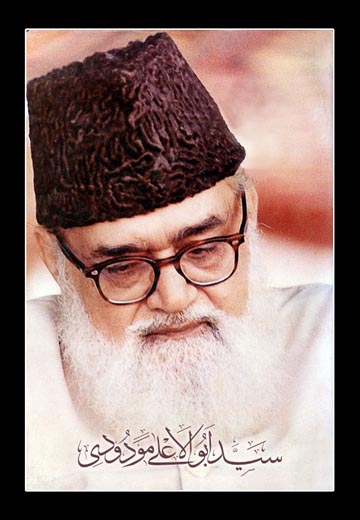
The Jama'at-i-lslami (JI): The best known of the group and one of the best organized parties in Pakistan is the Jama'at-i-Islami led by Maulana Syed Abu Al'a Maudoodi.10 Not unlike other Islam-pasands it was accused by the Muslim Leagues and others of opposing the partition of India. It was attacked by the left on its rigid adherence to Islamic ideology, as Maudoodi sees it. It was painted as supporting an arch-conservative economic system both by the left and by the Hazarvi group of the Jamiat. Organizationally the Jama'at is a closely-knit, well-disciplined group of followers of Maudoodi. It is largely confined to West Pakistan, although the elections showed the party had greater support-in terms of votes received-in East Pakistan than many had suspected. Its appeal is primarily to the middle class in larger cities and small towns, particularly to refugees from India, and has much less strength in rural areas. Karachi, with its greater refugee population, gave greater support to the Jama'at than Lahore, its headquar- ters. Other than Maudoodi, principal leaders of the party include Professor Ghulam Azam of East Pakistan and Mian Tufail Muhammad of Lahore. During the campaign the Jama'at enlisted the support of some prominent pre-Ayub politicians, such as former Punjab Governor Nawab Mushtaq Ahmed Gurmani, and some retired military officers, including General Umrao Khan.

Pakistan Democratic Party (PDP): The press discussed several attempts at merger of the parties opposed to Ayub, but these failed when the Awami League, CML and Jama'at refused to submerge their programs and identities into a larger party. Many of the potential candidates for a broad merger had experienced one burst of opposition unity when they combined to support Miss Fatima Jinnah in her campaign for the presidency against Ayub and in the legislative elections in 1964-65. They also coordinated to some extent during the Round Table Conference in early 1969. The PDP was put to- gether from a group of disparate elements. Former East Bengal Chief Minister Nurul Amin brought his National Democratic Front into the PDP and himself became all-Pakistan leader of the new party. A group of dissi-dent Awami Leaguers who opposed the Six-Point autonomist program also came in led by Nawabzada Nasrullah Khan of Punjab. Former Prime Minister Chaudhury Mohamed Ali brought the bulk of his Nizam-i-Islam Party into the fold. The Justice Party-political vehicle for Air Marshal Asghar Khan after his entry into the anti-Ayub lists in 1968-also merged into the PDP, but many left when the Air Marshal decided to pursue an independent course and eventually formed the "non-party" Tahriq-i-Istiqlal movement. These groups and some independents made up the PDP. Organization was loose and coordination poor. The party stood for autonomy but not to the extent as the mainstream Awami League, for a strong Islamic base to the country, and for a general program of economic and social justice falling short of the "Islamic socialism" preached by some other parties.

Jamiat-ul-Ulema-i-Islam: The Deobandi school of "nationalist" Muslims in pre-independence India is one ancestor of the Jamiat-ul-Ulema; another is the Majlis-i-Ahrar, an Islamic political party which cooperated with the Indian Congress Party before independence but has not been active in Pakistani electoral politics since partition. In 1969, the Jamiat split into two factions. The principal leader of the stronger and leftist faction is Maulana Ghulam Ghaus Hazarvi, listed in the table as JU(H), which tried to form an electoral alliance with the People's Party, favors labor participa- tion in the ownership of industry and the abolition of "landlordism." The more conservative faction-the JU (T) -is led by Maulana Eteshamul Haq Thanvi. It associated with the Jama'at-i-Islam and other Islam-pasand parties in a loose electoral alliance. The JU (H) drew its strength from the Frontier, home of both Hazarvi and Mufti Mahmud, All-Pakistan General Secretary, and Baluchistan, while the Thanvi faction claimed some support in Sind and Punjab.
.jpg)
Markazi Jamiat-ul-Ulema-i-Pakistan (MJU): Another religio-political grouping contesting the elections was created at a rally of Sunni theologians at Toba Tek Singh in June 1970, in part in response to an earlier meeting led by leftist Maulana Bhashani. The leader is Khwaja Qamaruddin Sialvi, an important Punjabi Sunni divine. Its party platform on political and eco-
nomic issues was not well defined, but it proposed an "Islamic system" which would avoid both capitalism and socialism. Strength was found in the areas where the associated pirs had their following, especially in Jhang District of Punjab, and also among refugee groups in Karachi.

The Awami League (AL): As the campaigning progressed the Awami League became almost exclusively a party of East Pakistan. The party in earlier days in the west, although weak, was not insignificant, but most of the West Pakistanis withdrew with Nasrullah Khan when the Six-Point autonomist program was adopted by the AL and went far beyond the con- cessions to provincial autonomy the west wingers were prepared to make." Led in its earlier days after independence by H. S. Suhrawardy, later Prime Minister, and by Maulana Bhashani, who withdrew to form the National
Awami Party, the AL had been a major force in vanquishing the Muslim League in the 1954 election in East Bengal and had been a coalition partner of the Republican Party of West Pakistan before the 1958 revolution. After Suhrawardy's death leadership devolved upon Sheikh Mujibur Rahman, a charismatic spokesman of Bengali aspirations. Mujib had spent a portion
of the Ayub period in jail, on the last occasion charged with involvement in the alleged "Agartala Conspiracy." His release and the dropping of charges against all those held was one of the demands conceded by Ayub prior to the Round Table Conference. His popularity and that of the AL grew rapidly during the campaigning. Dissatisfaction with the Government's
response to relief needs in the East Pakistan cyclone disaster of November 1970 added to Bengali grievances. The basic platform of the Awami League is the Six-Point Program which may be summarized as: a federal, parlia- mentary government for the country; transfer of all subjects except defense and foreign affairs to the provinces; separate but convertible currencies for each wing; all taxing power in the provinces which would make grants to the central government to fund its operations; separate accounting of foreign exchange earnings for each wing; and a separate militia for East Pakistan.'2 It has been charged by West Pakistanis and by East Pakistani opponents of the AL that the party's autonomist program implies separation.
While the party does not advocate that course, individual Bengalis who might favor it would likely find a temporary political home in the AL. Mujib draws his support from virtually all areas of East Pakistan and has particularly appealed to the student community, which has its parallel de- mands in the form of the Eleven Points. Party General Secretary Iajuddin Ahmad and economist Kamal Hussain are among the key advisers of Mujib. The party favors a moderately socialist economic program which has been embodied in the manifesto. Followers in West Pakistan are few. An attempt was made to strike an alliance with the Sindhi leader G. M. Syed, but Syed went alone into the election. A group of Awami League dissidents under the leadership of former Chief Minister Ataur Rahman Khan broke with the party to form the Pakistan National League (PNL) with a program not materially different from that of the parent body.

National Awami Party (NAP): The "Old Guard" left is represented by the NAP, now divided into three factions. The major split took place in December 1967, before the beginning of the anti-Ayub disturbances. One of the two branches further divided when a group from Baluchistan under the leadership of Khan Abdus Samad Khan Achakzai ("The Baluch Gandhi") withdrew as the campaign opened. In common with most post- independence political parties in Pakistan, the NAP had separate origins in each wing. The West Pakistan group of the unified party originated in the Azad Pakistan Party formed in 1951 by Mian Iftikharuddin, a leftist member of the Punjab elite and then owner of the Pakistan Times. It was joined by several regionalist groups including the "Red Shirts" of the Frontier led by Khan Abdul Ghaffar Khan ("The Frontier Gandhi"), Sindhi regionalists under G. M. Syed and the Baluchistan group of Achak- zai. In December 1957, a group of leftists under the leadership of Maulana Abdul Hamid Khan Bhashani broke with the Awami League, formed the NAP, and the West Pakistan elements joined it.13

National Awami Party (Wali Khan) (NAP(W)): The split in December 1967 has been described as one between "pro-Moscow" and "pro-Chinese" factions with the NAP(W) designated as the former.'4 The unified party, however, was too diverse in its range of political views for such a pat description of the break to be valid. Personalities and regional pulls within the party were equally important.'5 Khan Abdul Wali Khan, son of Abdul Ghaffar Khan, became the president of the anti-Bhashani segment. In East Pakistan the key leader who split with Bhashani was Muzaffar Ahmad. For a time, Mian Mahmud Ali Qasuri continued as president of the West Paki-stan branch of the party, a post he held before the split, but he later broke with the NAP(W) and joined Bhutto in the People's Party. The principal demand was the end of One Unit in West Pakistan and the restoration of the previous provinces, a general demand met by President Yahya before the campaigning began. The NAP(W) also supported maximum regional
autonomy. Its differences with the AL were in the economic field where the NAP(W) proposed a more strongly socialist program. The party had little following in Punjab and Sind and its strength in East Pakistan was more apparent than real. In the Frontier and to some degree in Baluchistan it was charged, especially by Qayyum, with favoring separation of the Pathan areas from Pakistan and of collaborating with India and/or Afghanistan. Nevertheless, its real strength lay in the Peshawar plain of the Frontier, the heart of the pre-independence bailiwick of the Khudai Khitmatgars. Ghulam Farooque, a former member of Ayub's cabinet who broke with Ayub, joined Wali Khan.

National Awami Party (Bhashani) (NAP(B)): Maulana Bhashani, who continued to lead the other segment of the party, was faced with further factionalism in East Pakistan as groups preferring to take extra-parliamen-
tary means to power broke with him.'6 Bhashani's followers include those belonging to the farthest left in the Pakistan political spectrum. Bhashani vacillated about participation in the elections, but had decided to take part before the cyclone struck East Pakistan. Possibly sensing defeat as much as believing that elections should not be held in the midst of tragedy, he asked his party's candidates to retire from the contest. Their names remained on the ballots but in the AL sweep attracted little attention from the voters. The program of the NAP(B) supported provincial autonomy to the same degree as the AL, extreme measures in the nationalization of the economy and closer relations with China. In West Pakistan the party has all but
disappeared despite a rather well attended peasants' meeting in Toba Tek Singh in March 1970, at which Bhashani presided. Mian Arif Ifitkhar, son of Iftikharuddin and former NAP member of the National Assembly, and Karachi trade unionist Kaneez Fatima were among the defeated candidates of the party in the West.

People's Party of Pakistan (PPP): All of the parties mentioned above either were in existence, or had their antecedents in parties in existence, before Ayub took over in 1958. Only one new major party appeared on the scene. When Foreign Minister Zulfiqar Ali Bhutto left the Ayub cabinet in 1967 he almost immediately went into active opposition and spent some time in jail before the fall of Ayub. Rather than join any of the existing opposi- tion parties he created the Pakistan People's Party, and was joined by a substantial number of sympathizers. Many came from the student groups who were challenging Ayub in the streets. Others came from the urban intel- lectuals who saw in Bhutto's leftism a program which would better their own condition. In rural areas Bhutto attracted some of the smaller zamindars and as the campaign wore on some larger ones as well such as the Qureshis and Khakwanis of Multan and a branch of the Noons in Sargodha. He moved to fill a near vacuum in Sind politics and brought many to the PPP. In East Pakistan, however, he received little response and no candidate of the party contested the elections in that province. The program of the party is summed up in the slogan: "Islam is our faith; Democracy is our polity; Socialism is our economy." The party issued a series of pamphlets giving greater detail and Bhutto himself wrote a widely read book in which he reviewed the past and stated his views of the future of Pakistan.1T The char- ismatic appeal of its leader gave the party a major asset in the campaign but little has been done so far in its short life to develop a strong organization. Others: A number of smaller, often regional, parties also participated, such as the Sind United Front led by G. M. Syed and the Baluchistan United Front, a counterpart in that province. A few "Old Guard" Hindus in East Pakistan resurrected the Pakistan National Congress while some Christians in West Pakistan set up the Pakistan Masihi League, which if only by its initials tended to confuse election reporting. Independents were not unex- pectedly numerous. Some were unknown but others were veterans of the past who for reasons of their own chose not to associate themselves with any party. In the Punjab alone such noted clans as those of Qizilbash, Kalabagh, Shah Jiwana (Abid Hussain), Leghari and Mazari avoided party identifi- cation. A few independents were successful; most lost the election; many even their security deposits.
THE SYSTEM

Yahya bad decreed that the elections be held on the basis of universal suffrage, direct voting, and single member territorial constituencies of ap- proximately equal size. Delimitation and other arrangements were in the hands of the Election Commission headed by a retired Supreme Court Jus- tice. The last census of Pakistan, that in 1961, was used as the basis for delimitation subject to the proviso that rational administrative boundaries should be used as constituency boundaries as well. Thus, to the extent pos- sible, seats would not cross district boundaries nor would they, for example, straddle a river over which there was no regular crossing available to can- didates and election officials. A basic membership of 300 was decided for the National Assembly, giving East Pakistan 162 seats and West Pakistan 138. In addition, 13 women would be elected to the Assembly by vote of the directly elected members, seven from East Pakistan and six from West. The 138 West Pakistan seats were further apportioned among the four new prov-inces and delimitation completed, hearings held and the final order issued in the Official Gazette. The size of the provincial assemblies was also fixed and a similar procedure followed. The procedures followed in nomination, scrutiny, security deposit and withdrawal followed those used regularly in parliamentary elections in the Commonwealth. The voting was done on a single paper ballot which was marked by the voter against the name and symbol of the candidate of his choice, folded and placed in the ballot box. Each candidate was assigned a symbol, with each recognized party reserving the use of its symbol for all candidates running with its endorsement. Counting was remarkably quick. Returning officers were instructed to begin the count immediately following the close of the polls and to continue until the results were known. Pakistan radio and television did an outstanding job by staying with the election coverage for upwards of 36 consecutive hours broadcasting reports received from returning stations by telephone, telegraph and wireless. During the campaign, the leader of each of the recognized parties was invited to use the television and radio facilities-all Government operated- to give a single address explaining his party's program. Each leader accepted in what was a new and educational use of the broadcast system. The press, free of Ayubian restraints, took an active and at times partisan role. Most parties could count on at least one supporter among the newspapers. The campaign in general-overly long as it exceeded eleven months-was carried on in customary fashion. Party leaders addressed public meetings and toured extensively, although in later stages many found it prudent to work more actively in their own constituencies than to range more widely. Martial law regulations tempered the behavior of the parties and the candi- dates to some degree, but personal attacks and sensational charges were not absent. Financing apparently was a problem for many candidates who had to draw on their own resources and could not look to national coffers for assistance.
THE RESULTS
As the evening of December 7 passed into night and Radio Pakistan began issuing bulletins on the early returns it soon became clear that the Awami League, as expected, was winning much more than a working majority of the seats in East Pakistan, and that the People's Party was achieving surprisingly strong support in Punjab and Sind. The list of the fallen "Old Guard" included the names of many who were prominent in the fifties while the names of the winners were often unfamiliar to those who listened to the continual outpouring of election data. The leaders of the two parties were eminently successful themselves. Mujib won two resounding victories in Dacca while Bhutto won five of the six seats he contested, including two in Punjab and three in Sind, losing only a seat in the Frontier by a small mar-tide, even Nurul Amin won his seat by a wide margin against the AL. The sweeping victory of the AL is seen by Mujib as a clear mandate to demand full implementation of the Six Points. He and his colleagues pledged
to carry out the program at a rally in Dacca on January 3, 1971.19 Punjab: Those who foresaw a survival of the "Old Guard" in Punjab, if not in East Pakistan, and a result along traditional tribal, clan and leader-
ship lines were due for a surprise. When the results were in, three quarters of the MNA's, five-eighths of the MPA's owed their allegiance to the People's Party, although the party polled only 40.7% of the vote for the National Assembly. Families which had been represented in legislative bodies since the 1921 election were defeated: Qizilbash, Gilani, Noon (albeit by another Noon), Shah Jiwana, Leghari, Hassan Mahmud (although both a Leghari and Hassan Mahmud did manage election to the Provincial Assembly) -
Some leaders survived including Daultana and Shaukat Hayat of the CML, but others like Air Marshal Asghar Khan and Nawabzada Nasrullah Khan failed to make the grade. Bhutto-a Sindhi-won substantial victories in Lahore and Multan. The result of the elections made it clear that the old order had changed in
Punjab, that the politicization of the countryside had progressed much far-ther than expected, and that many urban dwellers were ready to seek radical solutions to his problems. The influence of major landlords was no longer the dominant factor in Punjab politics and the bradri ("brotherhood") of caste and tribal connections controlling the vote had broken down. The pat- tern of the vote for the PPP did show distinct regional patterns. The party did well in the relatively prosperous areas of Lahore Division, eastern Mul-
tan Division, and along the Grand Trunk Road as far as Rawalpindi, areas where industrial development has taken place and the agriculturalists are moderately prosperous landowners. Along the Indus River valley traditional factors continued to operate as representatives of the Islam-pasands won many national and provincial seats. Bhutto's candidates were by no means all young radicals. Even he drew
on landlords-some of the "Punjab Chiefs" category, others of medium status-and in this respect may find resistance to the more socialist sections of his programs. The PPP will also be faced, like the AL, with the inex- perience of many of its legislators. In yielding his two seats in the Punjab,
to retain one in Sind, Bhutto has chosen more experienced politicians includ- ing Mahmud Ali Qasuri in Lahore, perhaps to offset this disadvantage. The CML, which some had expected to be the largest winner in the Punjab, did achieve second place but with only seven seats. The seven, however, to- gether with three other Muslim Leaguers from the other factions, are veteran political figures. In the period of constitutional negotiations such political skill and experience could be significant. Sind: Two-thirds of the MNA's from Sind are members of the PPP and with many independents joining the party, it will have a clear majority in
the Sind Provincial Assembly. In the National Assembly poll only Karachi City stood aloof from the PPP tide, but in the provincial election the party fared better in the city. Bhutto won three seats, in Larkana, his home, in Hyderabad and in Thatta. In Larkana he defeated the man once regarded as the "uncrowned king of Sind," former Chief Minister Muhammad Ayub Khuhro.

Sources: Dawn, December 21, 1970; Pakistan Observer, January 20, 1971.
NOTE: Others include one member each from Jamiat-i-Ahl-i-Hadees (Punjab), Sind Karachi Punjabi Pathan Muttahida Mahaz (Sind), National Awami Party (Achakzai) (Baluchistan), Baluchistan United Front (Baluchistan) and Nizam-i-Islam Party (East Pakistan).gin. (Of the other prominent candidates Qayyum was the only one to contest more than one seat and he won three out of three in the Frontier.) Because of the polarization of the results between the two wings it will perhaps be most useful to comment on them on a province-by-province basis. East Pakistan: The sweep of the Awami League was about as complete as it could have been. The AL won all but two of the 162 seats (and about 72% of the vote) in the National Assembly, possibly the greatest victory of any party in a free and contested election anywhere. The provincial election produced a victory only marginally smaller. Only one member of the "Old Guard" survived the onslaught in the national polling, former Chief Minister Nurul Amin, who had been defeated in the 1954 election by the United Front. The only other non-Awami League winner was a traditional leader of the Buddhist tribal community in the Chittagong Hill Tracts who chose to contest as an independent but who is expected to support the AL. Most of the candidates elected are persons without previous experience in legislative bodies at the provincial or national level. The gap of twelve years of martial law and indirect, controlled elections of the Ayub period had the effect of preparing few in East or West Pakistan for democratic political life. The Awami Leaguers elected are mostly young. The median age for the new MNA's is in the forties and that for MPA's in the thirties, meaning that they-especially the MPA's-were barely active in politics before the Ayub coup."8 The Awami League as a party captured the imagination of the Bengalis and their grievances and demands for provincial autonomy were personified by Sheikh Mujibur Rahman. The election displayed a "single issue" phe- nomenon, not entirely dissimilar from that of 1945-46 when the Muslims of northern India voted on the "single issue" of Pakistan. As the Muslim League in 1945-46 campaigned almost exclusively on the issue of "Pakis- tan," the AL fought the elections essentially on the issue of provincial auton- omy. The character of the government's response to the cyclone disaster of November 1970 also became a last minute election issue, accenting the AL program. Following the cyclone many non-Awami League political groupings sug- gested that their candidate retire from the election on grounds that it was not proper to conduct an election in the midst of such devastation. Despite claims by candidates of these parties, the retirement had little effect on the outcome. Realistically, almost all of those who retired had little hope of winning against the rising support for the AL. Awami League votes in individual National Assembly contests ran from 60% to as high as 90%o and more and no race in the province could be considered close. Mujib himself won two seats, one of them by a margin of 60-1. The popularity of the AL can be measured partly by the fact that the seat which Mujib surrendered was won unopposed by his economic adviser, Kamal Hussain. Although against the "8Dr. Rashiduzzaman has made a careful study of the background of the Awami League candidates. I am indebted to him for this portion of his data.
The pattern of voting differed from that of the Punjab. In Sind outside Karachi the PPP was able to enlist many of the wadera and pir type of tradi- tional leaders on its side. In some cases, it was the younger and personally less conservative members of the key families who looked to the PPP as a political vehicle, but they were nonetheless able to draw on the bradri voting influences of the past. More conservative traditional leaders went to the various Muslim Leagues and with but one exception were defeated in Na- tional Assembly contests and did relatively poorly in provincial contests. To some extent, it would appear, the younger elements of traditional families were attracted to the dynamic Sindhi personality who had attained such
popularity throughout the west wing. Karachi, however, presented a different picture. Although within Sind, it is a cosmopolitan, non-Sindhi city in which, among others, refugees from India have a prominent political voice. All of the five National Assembly seats in the heart of the city were won by refugee candidates of Islam-pasand parties (including one supported independent) while the two seats won by the PPP were in more suburban and affluent areas. In Hyderabad city, too, where the refugee population is numerous, an Islamic party candidate won the national seat. The pattern of refugee or non-Sindhi winners was continued in the provincial election, although the PPP took eight of 15 seats in Karachi. Only four of the PPP winners are Sindhis and all of the seven from other parties are refugees. Melding of representatives from rural up-country Sind with those from the Karachi city complex will be a challenge when a provincial administration is formed. Northwest Frontier: As if to support the comment made above that the Indus Valley districts of the Punjab showed much stronger traditional voting patterns, the westward extension of that area into the Frontier Province also showed similar tendencies. One result was that it, and Baluchistan, did not
return a clear majority of seats for any party at either the national or provincial level and the prospects for a future provincial administration are unclear.
Before the polling the main contest appeared to be that between the PML(Q) and the NAP (W). The leaders of both parties-Abdul Qayyum Khan and Abdul Wali Khan-stood from seats in the NWFP. Wali Khan
appealed primarily to the Pathans of the Peshawar plain who had supported his father, Khan Abdul Ghaffar Khan, and his uncle, Dr. Khan Sahib, in elections in 1937 and 1946, and to those who looked for increased provincial autonomy for the Frontier. Qayyum, accusing the NAP (W) of being anti- national, tried to rally around him those who, while agreeing to retain sep-
arate provinces in West Pakistan, believed the country best served by a strong central government. Peshawar City, the mostly Punjabi district of Hazara across the Indus and the former princely states to the north seemed to be the ground in which the Qayyum seed could best grow. When the na-
tional polling was over it became apparent that another element had entered
the system in that the "leftist" Jamiat-ul-Ulema-i-Islam faction led by Mau-lana Ghulam Ghaus Hazarvi polled surprisingly well. Qayyum won all three seats he contested, including one in which he defeated Sardar Bahadur Khan, a brother of former President Ayub Khan. Wali took his own seat but his party did not do well elsewhere. Former Ayub minister Ghulam Farooque won as a NAP (W) candidate while the only other seat won by the party was at the expense of the Hoti family in Mardan district. Hazarvi himself
was elected and among the five other successful JU(H) candidates was the party general secretary, Mufti Mahmud, who defeated Bhutto in Dera Ismail Khan, Bhutto's only defeat.
The provincial election, however, saw a revival of the NAP (W) which took a plurality of the seats. A last minute alliance with the PPP assisted the provincial PPP leader in his upset win over Qayyum in a Peshawar seat. The PML (Q) did finish second in number of seats, but the JU (H) was unable to follow up its earlier success and presumably will have limited influence in the provincial administration. Baluchistan: Never before had Baluchistan voted for either national or provincial legislators in direct elections. Although the NAP (W) won three of the four national seats and eight of 20 provincial seats, the unusually high number of candidates left the party with much less than wide support among the voters. The JU (H) took the other national seat, but as in the Frontier was unable to translate this into an equivalent share of provincial seats. Tradi- tional leadership in the former Baluchistan States Union has been rejected but it is too early to discern any pattern in the voting in the province. Percentages of votes polled by the various parties are, at this writing, only fragmentary and assumptions are subject to later confirmation, when an official election report is published by the Election Commission. It does appear, however, that the turnout in the National Assembly elections was substantial with about 60% reported nationwide, ranging from 69% in Punjab to 40% in Baluchistan.20 There were almost no incidents which would reflect on the conduct of the polling or of the voters. While prelimi- nary figures released quickly to the press had to be adjusted to conform to the official count, only one case was noted where a different winner was shown. Also only one election petition is reported to have been filed and given attention in the press, that for a national seat in Karachi which was
won by a very slender margin.
A rather large number of minority candidates contested although the number of those successful was small. In the Sind Provincial Assembly one Hindu was elected from Tharparkar District, the only successful minority
candidate from the west wing. In East Pakistan, however, a Buddhist and a Hindu were elected to National Assembly seats and a number to the provin- cial legislature. In a close election in East Pakistan the importance of minor- ity voters would be very great under a system of joint electorates. Separate
electorates had been a cornerstone of Muslim League policy since before independence and many felt that the system should have been reinstated for these elections. The AL, on the other hand, has favored joint electorates as a matter of policy. Given the choice between a Muslim League and an AL candidate the minority voter would probably be inclined to choose the latter. It is difficult to determine what the voting pattern of minority voters was in these elections, other than to state that in East Pakistan, as almost everyone
voted for the AL, it follows that the minority voter did also. In these elections every party enjoyed the position of being an "out." No party was "government" and members of the Yahya cabinet were barred from contesting the election.21 The sitting National Assembly was dissolved in March 1969 along with the provincial legislatures. Many members of the dissolved National Assembly did contest the elections, with results that tend-ed to show that incumbency in the Ayub period, especially as a member of the then President's party, was a liability.22 If 1967-68 assembly records remained accurate until the dissolution of the National Assembly, the 75 members from East Pakistan were divided-52 in the President's party and 23 in the opposition. Of the 52, only 30 appear to have stood for election in 1970, the majority for the National Assembly and only seven for the Pro- vincial Assembly. None was successful at the provincial level-three as
PML (C), two as independents, and one each as PML (Q) and CML. One of the National Assembly candidates was successful, but after switching to the AL. The other 22 lost-PML(C), 12; PML(Q), 8; PDP, 1; CML, 1. The
23 oppositon members produced 18 candidates, all for the National Assem-bly. Five of them were successful including Nurul Amin on the PDP ticket and four as Awami Leaguers. The other 13 were defeated-PDP, 3; PNL, 2; PML(C), 1; PML(Q), 1; CML, 1; independents, 5. In West Pakistan several former MNA's, especially in Sind, overcame the onus of association with the military regime by joining former Ayub asso-
ciate, Bhutto, in the People's Party. The 75 West Pakistani former MNA's included 64 from Ayub's party and eleven from the opposition. Only 44 of the 64 who then supported the government contested, 39 for the National Assembly and five for the provincial assemblies. Of the 39 at the national level ten won, one as an independent and nine as PPP candidates. Six of the PPP winners were from Sind including Bhutto's cousin and the other three
from Junjab including the former deputy speaker, Chaudhury Fazal Ilahi. National contest losers totaled 29-PML(Q), 11; PML(C), 8; CML, 5; MJU, 1; independents 4. For provincial assemblies two of the five were re-
turned-one each PML(Q) and independent-while three lost-PML(Q), 2; PML(C), 1. The eleven oppositionists from the Ayub period produced only six contestants in 1970, all for the National Assembly. Of these two
won-one each as NAP (W) and PML(Q). The four losers campaigned as CML(2), NAP(B) and independent. Thus, West Pakistan was, like East Pakistan, generally disinclined to return candidates who had served in the
1965-69 period, unless they had moved to join the PPP or AL. Some of the group of pre-1958 politicians who had been made subject to the EBDO restrictions campaigned in the 1970 elections. The years had, of
course, cut the group considerably in size as some had died and others re-tired permanently from politics. Some, however, were succeeded by relatives. The number actively working for election was much more numerous in West Pakistan than in East. In the latter the defeated candidates included former
Chief Minister Ataur Rahman Khan and former Minister Yusuf Ali Chaud-hury, both of whom had been EBDOed. It appears that as few as four EBDOnians won National Assembly seats in West Pakistan: Mumtaz Daul-tana of the CML in Punjab, Qayyum Khan in the Frontier, and Maula Bux Soomro and Ali Hasan Mangi in Sind, both as independents. Three more won provincial seats: Dost Muhammad Hakro in Sind, Muhammad Khan Leghari and Makhdumzada Syed Hassan Mahmud in Punjab, (although Hassan Mahmud was defeated in two national contests). The losers were more numerous and included such former high office holders as Syed Abid Hussain in Punjab, Pirzada Abdus Sattar, Qazi Fazlullah and Qazi Akbar in Sind and Colonel Amir Muhammad Khan of Hoti in the Frontier. Among West Pakistan EBDOnians many had been members of the Republican Party before 1958 and supported the Ayub political system from behind the scenes after 1962. With the lifting of the restrictions they tended to go into the Con- vention Muslim League and after Ayub's fall either to remain in the PML (C) or enter the PML(Q), going down with their parties especially in Sind and Punjab. There were some exceptions to this pattern, politicians who re-mained in the Muslim League before 1958, opposed Ayub, and were elected in 1970, Daultana and Qayyum the most prominent of them.
CONCLUSION
The Government of Pakistan, the candidates and the parties, and the people can be justifiably proud that Pakistan's first truly national election was carried out with complete freedom, order, and almost no complaint of irregularity. It is a significant and successful first step toward the restora-tion of democratic, representative, civilian government in a country which has experienced authoritarian government for so long. However, it is just the initial step. The next one will be the framing of a constitution which will be generally accepted throughout Pakistan and workable in governing the country. This will not be an easy task and will require a broad spirit of cooperation if the country is to make a success of returning to a democratic system.
Notes/References:
*The views expressed herein are those of the writer, and not of the Department of State or the Foreign Service.
1 Yahya's Address to the Nation, March 26, 1969.
2 Pakistan Times, Rawalpindi, March 30, 1970.
3 'See Granville Austin, The Indian Constitution, London, Oxford University Press, 1966, Chapter I, passim.
4 'Keith Callard, Pakistan, a Political Study, London, George Allen and Unwin, 1958, p. 58.
5 The text of a memorandum said to have been written by Ayub on October 4, 1954, is contained in Karl von Vorys, Political Development in Pakistan, Princeton, Princeton University Press, 1965, pp. 299-306.
6 'See Wayne Wilcox, "Pakistan in 1969: Once Again at the Starting Point," Asian Survey, X:2 (February, 1970), pp. 73-81.
7 Ayub's Address to the Nation, March 25, 1969.
8 See Wilcox, op. cit., and Robert LaPorte, "Succession in Pakistan: Continuity and Change in a Garrison State," Asian Survey, IX:11 (November, 1969), pp. 842-861. 'The elections were postponed, however, to December 7, 1970, as a result of late summer flooding in East Pakistan. When the cyclone and tidal bore devastated parts of East Pakistan in November 1970, election preparations had passed the nomination stage, and polling was postponed only in those constituencies directly affected by
the storm.
9 See Charles J. Adams, "The Ideology of Mawlana Mawdudi," in Donald E. Smith, ed., South Asian Politics and Religion, Princeton, Princeton University Press, 1966, Pp. 371-397.
10 The background and program of the East Pakistan wing of the Awami League is discussed in detail in M. Rashiduzzaman, "The Awami League in the Political Develop- ment of Pakistan," Asian Survey, X:7 (July, 1970), pp. 574-87. However, the article
does not discuss in depth the party in the west wing.
11 The full program is contained in the Awami League manifesto, Morning News, Dacca, June 8, 1970. 18M. Rashiduzzaman, "The National Awami Party of Pakistan: Leftist Politics in Crisis," Pacific Affairs, XLIII:3 (Fall, 1970), pp. 394-409. As in his article on the Awami League cited above, this article also concentrates on the East Pakistan wing of the party under consideration.
12 14ibid., p. 394. For example, after the split in the party Qasuri publicly opposed the full break-up of One Unit in the west wing. "8See Rashiduzzaman, op. cit., for data on the various factions.
13 "Zulfiqar Ali Bhutto, The Myth of Independence, Karachi, Oxford University Press, 1969.
14 Dawn, December 19, 1970.
15 Brothers of Finance Minister Muzaffar Ali Qizilbash and Agriculture Minister. Mahmud A. Haroon did contest and were defeated. In the heat of the campaign various parties charged that individual cabinet ministers or MLA authorities were aiding various other political parties opposed to them-although none acknowledged support given or received. "Lack of sufficient data at the time of writing precluded a similar study of provincial assembly members. It would appear, however, that the finding would not be significantly different.
CRAIG BAXTER was a Foreign Service Officer in the Department of State. Following his graduation from the Wharton School in 1951, Craig Baxter served in the U.S. Army for two years, before returning to Penn to earn his Master's Degree in Political Science. He went on to study Hindi and Urdu at the Foreign Service Institute, and served as a political officer in New Delhi, India, before returning to Penn to complete his doctoral studies in History in 1967. Dr. Baxter held various senior foreign service posts between 1965 and 1978 in India, Pakistan, Afghanistan, Ghana, and Bangladesh, and served as the Officer-in-Charge for International Scientific Relations for the Near East, South Asia, and Africa from 1978-80. He joined the faculty of Juniata College in Huntingdon, PA, in 1981 where he was a Professor of Politics and History, and Chair of the Political Science Department. Dr. Baxter authored 13 books and numerous articles on the history and politics of South Asia. He continued to lecture nationally and internationally, and consult with a variety of agencies including the National Foreign Estimate Center, the U.S. Information Agency, and the Department of State. He also served in leadership positions for several institutes and associations establishing and promoting Asian Studies. Through his legacy gift, Dr. Baxter will continue to impact scholarship in South Asian Studies long into the future. Pakistan Votes -- 1970 Author(s): Craig Baxter Source: Asian Survey, Vol. 11, No. 3 (Mar., 1971), pp. 197-218 Published by: University of California Press Stable URL: http://www.jstor.org/stable/3024655 http://cprid.com/history/5-Baxter%20Election%201970.pdf