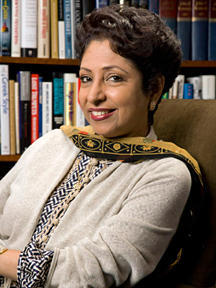
Showing posts with label Dr. Maleeha Lodhi. Show all posts

Tuesday, November 15, 2011

Credibility of Mansoor Ijaz.

WASHINGTON: Mansoor Ijaz, a Pakistani-American who claims to have delivered a secret message to US officials on behalf of President Asif Ali Zardari, said on Friday that his contacts indeed had delivered that letter to the then US military chief Admiral Mike Mullen. Earlier this week, Mr Mullen’s spokesman Captain John Kirby said that the admiral had not received any letter from Mr Ijaz. On Oct 10, Mr Ijaz claimed that President Zardari had sought Washington’s help for removing the army and ISI chiefs and had assured the Obama administration that he would cut all ties to militant groups if it assisted him do so. The president allegedly made this offer in a letter he gave Mr Ijaz for personally delivering it to American leaders. But earlier this week, The Cable, a publication associated with the prestigious Foreign Policy group, published a report based on a statement by Mr Mullen’s spokesman, saying that the admiral did “not know Mr Ijaz and has no recollection of receiving any correspondence from him”. Capt Kirby also said he “cannot say definitively that correspondence did not come from him — the admiral received many missives as chairman from many people every day, some official, some not. But he does not recall one from this individual”. In an email message to Dawn, Mr Ijaz pointed out that the denial confirmed his claim. “I never said I delivered anything to Admiral Mullen. What I wrote was — the memo was delivered to Adm Mullen at 1400 hrs on May 10,” Mr Ijaz wrote. “We have proof that Admiral Mullen received the memorandum and acknowledged it to the person who delivered it to him.” Mr Ijaz confirmed Capt Kirby’s claim that Admiral Mullen did not know the Pakistani-American businessman. “It is true that I do not know Admiral Mullen and have never met him. But the person I asked to take the memorandum to him — that person knew him about as well as anyone can. And that person knows me pretty well too,” Mr Ijaz wrote. REFERENCE: Mansoor Ijaz stands by his claim November 12, 2011 http://www.dawn.com/2011/11/12/mansoor-ijaz-stands-by-his-claim.html 

Mansoor Ijaz Propaganda Against Pakistan Army (FOX NEWS May 2011)

http://www.youtube.com/watch?v=BQh90sH9CgU


Credentials of Mr Mansoor Ijaz.

Mansoor Ijaz is founder and chairman of Crescent Investment Management LLC (CIM), a New York investment partnership since 1990 that includes among others Lt Gen James Alan Abrahamson (USAF Ret), former director of President Reagan's Strategic Defense Initiative and the renowned German architect Joachim Hauser. Crescent specializes in the use of quantitative modeling techniques to manage investment portfolios. 'We welcome the investment by Crescent Technology Ventures PLC. The Company's distinguished Directors and Advisers, including Lt Gen James Abrahamson (USAF Ret), Lt Gen Tom McInerney (USAF Ret), former CIA Director James Woolsey, Dr John Foster and Mansoor Ijaz, have long been contributors to US and global security initiatives. Their investment in Invicta represents a new chapter in their efforts to combat terrorist threats,' said Victor Sheymov, Invicta's president and CEO. The group’s new publicly listed technology fund, Crescent Technology Ventures Plc (CTV), is funding and developing the next generation of technologies focused on protecting vital infrastructure and providing for security against a spectrum of terrorist threats. The fund is preparing investments in five primary areas of concern: Internet and cyber-security, air and seaport cargo container security, stratospheric telecommunications platforms and alternative energy development. Former CIA Director Amb R James Woolsey serves as chairman of CTV’s Board of Advisers. Lt Gen Thomas McInerney (USAF Ret) serves as chairman of CTV’s Board of Directors. Mr Ijaz is CTV’s chief executive. REFERENCES: Profile of a SAJAer: Mansoor Ijaz, Financier, Op-Ed Columnist, and Television Commentator Crescent Technology Ventures PLC 09 August 2005 http://bestinvest.uk-wire.com/cgi-bin/articles/200508090939058850P.html  Benador Associates last updated: December 03, 2010 http://www.rightweb.irc-online.org/profile/Benador_Associates
Benador Associates http://www.benadorassociates.com/ijaz.php

Mansoor Ijaz's Partner Ex CIA Chief James Woolsey on War on Iraq

URL: http://www.youtube.com/watch?v=NrgjqOa8A48


Careful investigation leads one to notice that a number of intriguing groups of people and organizations converged on the events of September 11th, 2001. An example is the group of men who were members of Cornell University’s Quill & Dagger society. This included Paul Wolfowitz, National Security Advisors Sandy Berger and Stephen Hadley, Marsh & McLennan executive Stephen Friedman, and the founder of Kroll Associates, Jules Kroll. Another interconnected group of organizations is linked to these Cornell comrades, and is even more interesting in terms of its members being integral to the events of 9/11, and having benefited from those events. After the 1993 bombing of the World Trade Center (WTC), a company called Stratesec (or Securacom) was responsible for the overall integration of the new security system designed by Kroll Associates. Stratesec had a small board of directors that included retired Air Force General James Abrahamson, Marvin Bush (the brother of George W. Bush) and Wirt Walker III, a cousin of the Bush brothers. Other directors included Charles Archer, former Assistant Director in charge of the FBI's Criminal Justice Information Services Division, and Yousef Saud Al Sabah, a member of the Kuwaiti royal family.[1] Yousef Saud Al Sabah was also chairman of the Kuwait-American Corporation (KuwAm), which between 1993 and 1999 held a controlling share of Stratesec. The other owners of Stratesec were Walker and an entity controlled by Walker and Al Sabah, called Special Situation Investment Holdings (SSIH).[2] SSIH was said to form a group with KuwAm, and the group owned several other companies, including Commander Aircraft and Aviation General. In any case, the Kuwaiti royal family can be said to have benefited from 9/11 due to “The War on Terror” that removed Saddam Hussein from power. Of course, that was the second consecutive US war that Kuwait benefited from, the first being the 1991 Gulf War led by President George H.W. Bush. Stratesec director James Abrahamson was President of Hughes Aircraft from 1989 to 1992, when Prescott Bush Jr. was helping Hughes lobby Bush’s brother, the US President, to lift sanctions on the Chinese government. Abrahamson became a director of Stratesec in December 1997.[3] He also co-founded a company called Crescent Investment Management (Crescent) with the Pakistani-American, Mansoor Ijaz. Crescent’s board of advisors included James Woolsey, the CIA Director for President Clinton who became a PNAC signatory and Booz Allen Hamilton executive.[4] Mansoor Ijaz is the CEO of Crescent, and is a rare individual in that he claimed to have the ability to persuade several governments to extradite Osama bin Laden. After meetings with Clinton and his National Security Advisor Sandy Berger (who first introduced Woolsey to Clinton), Ijaz said that he could not convince them to work toward the extradition.[5] Additionally, Ijaz introduced the journalist Daniel Pearl, by way of a personal letter, to those in Pakistan who are believed to have been involved in his death.[6] Ijaz went on to become a Fox News correspondent, and he was a strong promoter of false claims leading up to the Iraq War, including WMDs and ties between Saddam Hussein and Al Qaeda.[7] Stratesec had contracts to provide security services for United Airlines, and Dulles Airport, where American Airlines Flight 77 took off on 9/11. Another client was Los Alamos National Laboratory (LANL), where scientists were working on the development of nanothermite, a type of explosive material that has since been discovered in the WTC dust.[8,9] REFERENCE: Carlyle, Kissinger, SAIC and Halliburton: A 9/11 Convergence submitted by Kevin Ryan on sat, 12/12/2009 - 4:51am http://911blogger.com/node/22120  http://forum.prisonplanet.com/index.php?topic=151588.0;wap2

Mansoor Ijaz, Shaheen Sehbai & Late. Daniel Pearl

"Every reporter has got to start somewhere. And the place Danny Pearl began, shortly after 9/11, was with a phone call to a number in Manhattan [to Ijaz Mansoor].... Danny called on a tip from Indian intelligence, which said Ijaz was wired with leading jihadis. ... Ijaz made introductions to three sources: Shaheen Sehbai, editor of The News, Pakistan's largest English-language daily; a jihadi activist he declines to name; and--most fatefully-- Khalid Khawaja, a Muslim militant and a onetime agent with Pakistan's Inter-Services Intelligence Agency (ISI) who counts among his very best friends Osama bin Laden. .... Musharraf himself said [the reason Pearl was killed] was because Danny was 'overly inquisitive.' And more than a few knowledgeable Pakistanis think the ISI was involved. When asked by Vanity Fair whether it shares that view, The Wall Street Journal issued a two-word written answer: 'No comment.'" Reference: The Journalist and the Terrorist Vanity Fair, August 2002 What Was Daniel Pearl Doing In Pakistan? http://www.htm2pdf.co.uk/output/2011/11/725a144c-3d5a-47b0-b64b-6508db336bb2.pdf
http://www.btinternet.com/~nlpwessex/Documents/pearlmission.htm


NEW YORK, Oct 3: A Wall Street Journal op-ed piece, which makes a strong case against any foreign investment, including funding by the International Monetary Fund, World Bank, and aid packages to Pakistan, was described as being "infantile, vindictive and without any credibility" by Foreign Secretary Najmuddin Shaikh. At a Press briefing on Wednesday night, Mr. Shaikh observed that the article, written on the eve of the most delicate talks with the International Monetary Fund, was due to a "pique" that the writer, Mr. Mansoor Ijaz, had against Pakistan government since he could not "derive sufficient benefit" from projects he had given which were rejected by the government. Meanwhile, a spokesman for the Pakistan Embassy in Washington told "Dawn" on Wednesday night that Mr Ijaz, who is chairman of the New York-based Crescent Investment Management, is vilifying and damaging Pakistan, because the embassy denied him 15 million dollars he had demanded to deliver votes in the United States House of Representatives for the passage of the Brown Amendment. The spokesman said that in 1995, after the Brown Amendment had made it through the US senate and then had to be voted on by the House, Mr. Ijaz came to the embassy along with his lawyers with a proposal which smacked of a "sting operation". Elaborating on Mr Ijaz's proposal, the spokesman said "Mr Ijaz wanted us to release fifteen million dollars for a satellite communications company R.D.D.A. which had done some work for Pakistan in 1979 for which they were not paid and they would sue the government to recover the monies".

"Ijaz told us that in this way you will kill two birds with one stone, one we will ensure votes in the US House for the Brown Amendment and the other the company R.D.D.A. will not sue you", the spokesman added. The spokesman said that when Ambassador Maleeha Lodhi was given this proposal she saw it as a trap wherein Pakistan Government could land in bigger trouble; so she turned down Mr Mansoor Ijaz's proposal saying that "it was illegal". In the Wall Street Journal article, Mr Ijaz has implied that Ambassador Lodhi used "aggressive tactics" in pushing for F-16 monies after the passage of the Brown Amendment because her brother, Amir Lodhi, was interested in the Mirage deal with France as he was the middleman as alleged in the article. Describing the article by Mr Ijaz as being 'outrageous and malicious against Pakistan's Ambassador to the United States, and saying "this is a total travesty of facts", the Pakistan Embassy in a Press release pointed out "Pakistan's publicly enunciated policy on the embargoed military equipment has been the consistent demand for the release of this equipment or the full reimbursement of the money paid". "It was the US Administration which took a decision in July 1995 to back legislation authorising the release of the military equipment except the F-16s, for which the Administration pledged to return the money. This was not Pakistan's decision but that of the US Administration and Congress", the Press release said. "Insinuations to the contrary make the preposterous assumption that Pakistan's Ambassador was in a position not only to determine the policy of the US Administration but also the decision of the US Congress on the F-16 issue". As regards Mr Ijaz, it was pointed out that he had been pushing Pakistan government to recognise Israel and he has himself visited Israel on several occasions, once on the invitation of Jerusalem's Mayor. Last year, Mr. Ijaz was given an award by a major Jewish organisation as being the "Humanitarian of the year" for establishing clinics and schools in Belgium and parts of Eastern Europe for the Jewish communities there. Ambassador Ahmad Kamal, who attended the award ceremony, praised Mr Ijaz and his "philanthropist activities". Then in his speech Mr Ijaz thanked Ambassador Kamal's wife saying "thank you Mrs Kamal for Dal, Roti and Kabab". When the Foreign Secretary was told about the incident he said, "We all make mistakes". REFERENCE: Author was denied $15m, claims Shaikh Our Correspondent DAWN WIRE SERVICE Week Ending : 10 October 1996 Issue : 02/41 http://www.lib.virginia.edu/area-studies/SouthAsia/SAserials/Dawn/1996/10Oc96.html#auth 

WASHINGTON, March 12: The Brown Amendment was bought and paid for by heavy Pakistani-American political donations but has yet to provide a single tangible economic benefit to Pakistan, the influential Wall Street Journal said on Tuesday. The Clinton administration s first-term policy effort aimed at improving relations with Pakistan, the strategic nuclear-capable Muslim state, has fallen flat, the paper said. The article was written by Mansoor Ijaz, a Pakistani-American investment tycoon running a multi-billion dollar money management firm, who also wrote a number of hard-hitting articles against the Benazir Bhutto government, exposing its corruption and incompetence last year. His remarks about heavy Pakistani donations to get the Brown Amendment passed could add a new dimension to the current congressional inquiries into Donorgate , the term being used for alleged sale of White House access and influence to mainly Asian donors by the Clinton administration. These remarks on Pakistan were contained as part of the article which dealt with Washington s handling of the Muslim World and the failure of the Clinton policy in South Asia. The relevant part of the article on Pakistan said: The Clinton administration s first-term policy effort aimed at improving relations with this strategic nuclear-capable Muslim state fell flat. The vaunted Brown Amendment, sending embargoed military equipment back to Pakistan, was bought and paid for by heavy Pakistani-American political donations but has yet to provide a single tangible economic benefit for Pakistan. If engaged properly, Washington s former Cold War ally could provide the strategic export route for Central Asian oil reserves. It could also provide a vital link in transporting natural gas from Oman s vast gasfields to energy-starved India. Yet, while political risk insurance and other protections for American investment remain blocked by American non-proliferation laws still in effect, Pakistan is busy creating other alliances, most notably with Beijing and Moscow. The implications of Pakistan s 1995 (alleged) purchase of nuclear ring magnets from China just as it was asking American legislators to ease sanctions against it, and its recent purchase of tanks from the Ukraine, are among the clearest indications yet of the failure of US policy in South Asia. If the US-backed World Bank funded a feasibility study for the proposed Oman-India natural gas pipeline, it might provide the needed impetus to build the pipeline overland through Iran and Pakistan - at half the cost of the deep-water route now contemplated. Such a move could bind the economic interests of Pakistan and India in a way that might finally encourage co-operation on a wide array of sensitive issues, including Kashmir and nuclear proliferation, the article concluded. REFERENCE: US journal sees flaw in Clinton policy towards Pakistan Shaheen Sehbai DAWN WIRE SERVICE Week Ending : 15 March 1997 Issue : 03/11 http://www.lib.virginia.edu/area-studies/SouthAsia/SAserials/Dawn/1997/15Mar97.html#more 

WASHINGTON, Oct 7: A key congressional committee voted unanimously on Wednesday evening to provide President Clinton indefinite waiver authority to lift military and economic sanctions on Pakistan and India. The amendment for the authority, moved by Senator Sam Brownback and commonly known as Brownback-2, is now almost assured a smooth sailing through the full houses of the Senate and House of Representatives as part of the larger Defence Appropriations Bill. The language approved by the committee practically takes away all the bite and sting of the Pressler Amendment without actually repealing the infamous law and is being viewed on the Hill as the biggest ever Pakistani victory in Congress. The final waiver came only after an epic battle between Pakistani and Indian lobbies and last minute long-distance interventions by Foreign Minister Sartaj Aziz, Petroleum Minister Chaudhry Nisar Ali Khan, Pakistani lobbyist Charlie Wilson and a prominent Pakistani-American Mansoor Ijaz, who used his clout with the Clinton Administration and key senators to pull it through. Congressional experts said the waiver authority was enough for President Clinton to remove all restrictions on Pakistan, including those on military sales including aircraft, tanks and other equipment as well as spare parts. "This would be enough for Pakistan to declare that the coercive atmosphere that existed has now been removed, paving the way for Islamabad to sign the CTBT," these experts said. The committee adopted the final version of the amendment after Conference Committee Chairman, Senator Ted Stevens from Alaska, gave his go ahead, but not before Islamabad moved fast and decisively to resolve a multi-million dollar dispute with an Alaskan Pipeline Company. Pakistan's biggest victory against an Indian lobbying juggernaut headed by former Republican Party chief Bob Dole, former congressman Steven Solarz and former senator Larry Pressler was mainly due to the team efforts of the Pakistani- Americans and their lobbyist who used their influence to get the hurdles past upto the last minute. The Embassy coordinated their effort. The last formidable hurdle which threatened to derail the process was the pending problem with an Alaskan pipeline company, VECO, which had lobbied hard on Alaskan Senator Ted Stevens to get their case sorted out before Stevens voted for the waiver law. Stevens, who chairs the key conference committee, and who is also the chairman of the defence appropriations committee with the last word on what his committee passes, put his foot down and in the last 24 hours Islamabad was told to either agree to VECO's demands or risk the entire process being put off for months, or even years. Mansoor Ijaz and Pakistani lobbyist former congressman Charlie Wilson, worked on the telephone for 20 hours, talking several times to Foreign Minister Sartaj Aziz and other high ups to get the VECO issue out of the way. The matter was rushed to the cabinet meeting on Wednesday morning and a decision was taken to involve the World Bank as an arbitrator in the dispute. Reference: Sanctions waiver approved By Shaheen Sehbai DAWN WIRE SERVICE Week Ending : 09 October 1999 Issue : 05/41 http://www.lib.virginia.edu/area-studies/SouthAsia/SAserials/Dawn/1999/09oct99.html#sanc 

A comprehensive blueprint of how and in which direction future relations between Pakistan and the United States would, or should move, is circulating in Washington's three main centres of power the White House, the Senate and the House of Representatives and many believe that there may not be a better practical alternative. President Clinton has acknowledged it, the Senate Foreign Relations Committee has adopted some of its proposals, Senator Larry Pressler agrees with most of it and the House of Representatives may not find a better "staged roadmap" to put U.S. Pakistan relations back on track, its sponsors claim. It has been put forward by some influential Pakistani-Americans in the form of a confidential memorandum which takes into account the pressing security and defence requirements of Islamabad as well as provides Washington a framework to achieve its own goals. The fine print, however, needs a deeper study. The man behind the whole idea is a 34-year old American of Pakistani origin, MIT and Harvard educated mechanical engineer turned nuclear physicist turned investment consultant who was introduced to Prime Minister Benazir Bhutto by a senior Pakistani diplomat in Washington as "the silent billionaire". Mansoor Ijaz runs a billion dollar investment management firm, claims he dines with President Clinton, is a Managing Trustee of the Democratic Party's National Committee and a Majority Trust Member of the Democratic Senatorial Campaign Committee, says he makes heavy donations which do move things for him on the Hill, produces a stack of letters written by almost anyone who is someone on the Capitol Hill, and boasts of his business connections outside the U.S. He is adviser to Nelson Mandela's South Africa, manages investments for many other countries and maintains three homes in New York, Toronto and Paris. His credentials are impressive and CNN and the Dow Jones Business and Financial Weekly "Barron's" provide him international media recognition by interviewing him on investment matters repeatedly. He and his other friends, in similar well placed position, say they have laid the ground work for the changes that have started to show in the U.S. policy towards Pakistan (meaning others were just paying lip service) and they have been at this job eversince the Pressler sanctions were imposed. Their claims are hard to be accepted or rejected at their face value but what has actually taken place in favour of Pakistan including the change of heart in the White House, the sympathetic mood of the Senate and the bipartisan support for an even-handed policy in South Asia, was originally outlined in Mansoor Ijaz's confidential blueprint. That gives his claims a bit more credibility that any Pakistani Government official would make us believe. But this also rings many warning bells as the rest of his plan has some serious implications for Pakistan and its security. Mansoor minces no words in stating that Pakistan and the United States will have to enter into a wider security arrangement in which Washington would have to provide the security umbrella and Pakistan would safeguard the interests of the west in that region as strategically Islamabad is now the only country with which the Americans could have an alliance to check fundamentalism and international terrorism. "Yes what I mean is that the Americans have to be given bases to operate in that part of the world, because they cannot always remain onboard their air craft carriers," he argued with cold logic in a two hour discussion last week.

His blue print suggests the same thing in camouflaged language, speaking of "strategic military cooperation" between the two countries. His words may have been taken by me as a routine boast of a well-placed Pakistani, many of whom are in the habit of exaggerating things to incredible limits, just to impress others about their reach and influence. But his words instantly reminded me of an important Congressman of the Democratic Party, David Bonior, who in a speech to the Pakistani American Congress, just a few days back talked of "common defence" between Pakistan and U.S. He had done so when the Ambassador of Pakistan, all other senior diplomats and many prominent Pakistanis were present and no one had questioned him. Ijaz's blueprint suggested modifications to the Pressler Amendment in three stages because easing the sanctions was "in the best national security interests of the United States and no one was interested in allowing Pakistan to fall under partial or complete control of the Iranians." These three stages were restoration of economic assistance, including OPIC, TDA and IMET in the first stage, allowing "non-control list" military spare parts and return of spare parts Pakistan had already paid for, increased military training and cooperation on anti-drug trafficking in stage two and going for strategic military cooperation in the third stage. No conditions were to be attached to the first two stages while the third stage had a hidden agenda, of roping in Pakistan's nuclear programme into the NPT net, if not directly by forcing Pakistan to sign the NPT, by persuading it to sign other international treaties like the Fissile Material Cutoff Treaty (FMCT) or asking Islamabad to comply with the requirements of the Missile Technology Control Regime (MTCR). The Senate Foreign Relations Committee and the House of Representatives have already approved the first two stages which would open economic assistance to Pakistan, reinstate OPIC cover for U.S. businesses, restore TDA paradigms and revive the military education and training programme (IMET) between the military establishments of the two countries. The blueprint had suggested there concessions in two stages but Ijaz says the Congress was in such a hurry that both the stages were crossed in one go. The argument he had put forward was that on these two stages there was a consensus that they were in the interest of the United States. His line of thought on restoring IMET was interesting. "For Pakistan the objective was clear: They need officer training and they want it from the best in the world. For its strategic long- term interests America can use the IMET forum to encourage the moderate elements in Pakistan's military (non-nuclear hawks and doves and non-religious extremists) to rise to the top ranks and thereby know intimately the type of minds that  are controlling the panic button...."

"American military training will be a step towards containment of 'mullaism' and other forms of extremism as the educational paradigms of Pakistani military," the blueprint argued. "There is also a growing feeling among moderate Pakistani military strategists that if the U.S. wants to see more effective containment of inappropriate Iranian behaviour, America needs to cast a life raft to the Pakistani military-a military that is in essence 'out of shape' to properly withstand the current Iranian offensive," it said. "Military training and spare parts will relieve sufficiently the hawkish pressure on Benazir Bhutto to ask for 'all or none' terms on Pressler modification. It will also get her to the next election date without damaging no confidence motions in Parliament by Nawaz Sharif (a decided nuclear hawk) and give us sufficient time to evaluate the stability of Pakistan's economy, military and politics before engaging in more strategic arms equipment contracts," it argued. For these two stages, Pakistan was supposed to continue cooperation in U.N. peacekeeping missions as well as in other field like checking international terrorism drug trafficking, heroin production, illegal immigration and counterfeit money production, besides reporting tangible progress on existing and outstanding human rights and democracy issues. The third stage of the blue print was the crucial part and though the first two stages have already begun to be implemented, implementation of the last stage could bring in a lot more trouble than anticipated.

This stage envisages a "broad range of possibilities, from 'control list' spare parts to strategic armaments that have non- nuclear capable characteristics, to consideration under appropriate conditionality of strategic weaponry that would serve U.S. national security objectives.." It said the time frame of this stage would depend on two critical issues. "First our conditionality on strategic military cooperation that Pakistan be a signatory to the successful negotiation of the FMCT for which the time frame of end of 1995 and early 1996 is indicated. Secondly, and in conjunction with the first issue, will be Pakistan taking tangible steps towards meeting the requirements of the MTCR including progress on the M-11 issue." The conditions stated in the blueprint are clear: Pakistan's inclusion in FMCT which means accepting verifications of the nuclear programme without actually signing the NPT. "FMCT is an elegant roadmap that achieves the most critical non-proliferation objectives of the U.S. within the existing framework of the NPT, without compromising the internal political sensitivities of the non-declared nuclear states," it says. The final proposal of the blueprint is after these three stages are crossed. It proposes that the President of the United States be given the flexibility, under the Pressler Amendment, to certify that the "proposed U.S. military assistance programme will reduce significantly the likelihood of the proliferation of weapons of mass destruction and their ballistic missile delivery systems." Ijaz explains that by including an "or" instead of an "and" in the Pressler Amendment, the President will be able to certify that in his view whatever military assistance was being provided to Pakistan would not help in its nuclear proliferation goals. "I can tell you that this blueprint is what meets the United States parameters of re writing the Pressler Amendment and it would be done on these lines, come what may. It has already begun to be implemented," he strongly argues brushing aside any other ideas that the Government of Pakistan or its Embassy in Washington may be floating.

He says Pakistan should get its money back, keep the money in an escrow account, wait for the President to get the new certification powers and then negotiate the F-16 deal which would then be possible without any congressional interference. Whatever the reaction of the U.S. authorities on these plans and proposals, at least President Clinton acknowledges them. On May 26 Clinton wrote to Ijaz: "Dear Mansoor, Thank You for your letter regarding Pakistan and for your comments about my meeting with Prime Minister Bhutto. I welcome your input on this mportant matter." Said Clinton: "We need to continue working on ways to solve the difficulties that derive from the Pressler Amendment and the sanctions that have been in place since 1990. I informed the Prime Minister that I was prepared to seek relief from the sanctions and that we would explore our options for return of the F-16s and equipment or of the money that Pakistan paid for U.S. equipment before the sanctions went into effect. I will continue to work with Congress on this important issue. "I appreciate knowing your perspective, and I'am glad you took time to write," Sincerely, Bill Clinton. REFERENCE: Dateline Washington : A blueprint Pakistan cannot ignore Shaheen Sehbai DAWN WIRE SERVICE Week Ending : 15 June, 1995 Issue : 01/23 http://www.lib.virginia.edu/area-studies/SouthAsia/SAserials/Dawn/1995/15Je95.html 

WASHINGTON, Jan 10: A senior Pakistan diplomat confirmed here on Friday what could turn out to be the crucial missing links in Benazir Bhutto's Mirage aircraft scandal, revealed by the New York Times in its 5,000-word special report on Friday. The NYT had documented and authenticated, for the first time, persistent reports in the Pakistan media that kickbacks were involved in the Mirage purchase deal. But the NYT report did not touch on the US dimension of the whole affair. The US dimension was connected with the purchase of the F-16 aircraft and unless the F-16 chapter was finally closed in the US, Islamabad could not explore any other option, specially not of the Mirage aircraft. To ensure that this chapter was closed, the Benazir Bhutto government coined the catchy phrase of "our planes or the money back" — a business slogan used extensively in the US to push sales. The purpose was to provide the US administration an easy outlet to get out of the commitment to sell the planes and thereby open the doors for Islamabad to purchase jets from other countries. The diplomat, number two man in the embassy, Zamir Akram, who was the right hand man of Benazir Bhutto's ambassador to the US, Maleeha Lodhi, was asked on Friday to confirm when was this catchy phrase of "money back" introduced as a policy option for Pakistan. The question was posed to him, on the record, after ambassador Riaz Khokhar had finished his news conference at the embassy and granted permission to this correspondent to ask the question from his number two. Mr Akram confirmed in his answer that the first time he heard the "money back" phrase was during the speech of President Farooq Leghari to the US, almost five months after Ms Lodhi had been posted in Washington.

He also confirmed that in the original draft of the Brown Amendment, the return of F-16 aircraft was included as part of the text. Another crucial point he agreed to was that before he arrived in Washington, Ms Lodhi used to meet US officials alone, without the presence of any diplomat who could record the minutes of those meetings. Mr Akram insisted that his answer should be reproduced completely, so that it was not taken out of context. According to him: "We were approached by Sen Hank Brown and he said I want to change or amend the Pressler Amendment. His original draft amendment, included everything, including the planes and everything. That was in the Senate foreign relations committee. When it came for vote for the first time, the committee approved the non-weapons part. There were two parts: Return of all the equipment and economic assistance etc. It was a step in the direction of amending Pressler. This amendment stayed in the committee until August/September when the administration itself decided that it would support it. During this period the Benazir Bhutto visit to Washington had taken place and President Clinton had committed that it was unfair to keep the planes and the money. The phrase of money back had been introduced for the first time by President Leghari when he came here, five months after Maleeha had assumed charge as ambassador. "Then the administration told us that from the original text of the Brown Amendment, they could release only the non-F-16 equipment but if you put F-16s in it, there will be too much opposition and we don't think it will pass. This was the administration's point of view which was conveyed to Mr Hank Brown and he conveyed it to us.

"Both Mr Brown and the embassy contested with the administration that if there was support it would be for the entire package, but they did not agree. Whether it was a deliberate act or not is something for the administration (to explain). "What I am trying to underscore to you is, that as far as my reading goes the decision not to include the planes in the package was taken by the administration." When Mr Akram was asked whether at any time he got the sense that the ambassador or anyone else was working on a specific agenda, he said: "I did not get the sense that she was working on her agenda." But then Mr Akram confirmed something very extraordinary, which was not denied by the ambassador or three other diplomats present at the news conference. He agreed with a journalist that Ambassador Lodhi used to visit the state department and other officials of the US administration alone, without taking any diplomat along to record the minutes. "That may be so, but before I had arrived. After I was here. I always accompanied her or if I was not available someone else from the embassy did," Mr Akram said. His statement corroborated statements made by at least four well-known Pakistani-Americans in the US about the role of the Bhutto Government, through her ambassador, in pressing the US administration for returning the money to Pakistan instead of the F-16 planes. These four persons — a Chicago businessman, New York investment banker Mansoor Ijaz, PPP leader in US Dr Bhatti and former journalist Tariq Zaheen — had recorded interviews with Dawn in 1995 and 1996 in which they claimed that Ms Lodhi had been pressing them to use their influence to urge the Clinton administration to return the money to Pakistan. A similar report by the correspondent of another Pakistani newspaper in Islamabad, published in April of 1997, was never denied by any of these gentlemen. REFERENCE: Mirage deal: the 'missing link' By Our Staff Correspondent DAWN WIRE SERVICE Week Ending : 17 January 1998 Issue : 04/03 http://www.lib.virginia.edu/area-studies/SouthAsia/SAserials/Dawn/1998/17Ja98.html#mira 

WASHINGTON, Nov 3: A senior US official responsible for counter-terrorism on Tuesday directly accused Pakistan of supporting training of militant groups in Afghanistan as well as providing "material support" to some of the Kashmiri militants. "There are numerous Kashmiri separatist groups and sectarian groups involved in terrorism which use Pakistan as a base...We have repeatedly asked Islamabad to end support of terrorist training in Afghanistan," Michael Sheehan, State Department's coordinator for counter-terrorism, told a Senate Foreign Relations sub-committee. The sub-committee hearing was called and presided over by Senator Sam Brownback and the list of experts who testified included a former CIA officer in Pakistan Milt Bearden, president of Stimson Centre Michael Krepon, John Hopkins University Central Asia Institute chairman Dr Fredrick Starr and a Pakistani- American businessman and columnist Mansoor Ijaz. Mr Sheehan recently visited India to coordinate US-Indian responses to terrorist threats but when asked whether he would also visit Pakistan soon, he said: "Hopefully." "Pakistan has frequently acknowledged what it calls moral and diplomatic support for militants in Kashmir who employ violence and terrorism against Indian interests. We have continuing reports of Pakistani material support for some of these militants," Mr Sheehan said. He named several Pakistan-based militant Islamic groups including Lashkar Taiba, Harkatul Jehad Islami and Hizbul Mujahideen, which, he said, "operate freely in Pakistan and support terrorist attacks in Kashmir." Asked by Indian and Pakistani journalists after his hearing whether he found any change in the policy after the overthrow of the Nawaz government, Mr Sheehan said: "We are still waiting for their responses and it is too early to judge whether there is any change." When a correspondent pointed out whether it was "business as usual" with the military government, he crisply said "no" but added: "We hope to work with them on all these issues." REFERENCE: US says Pakistan raining militants Shaheen Sehbai DAWN WIRE SERVICE Week Ending : 06 November 1999 Issue : 05/45 http://www.lib.virginia.edu/area-studies/SouthAsia/SAserials/Dawn/1999/06nov99.html#ussa 

Saturday, September 24, 2011

"LIE" with General (R) Musharraf, Maleeha Lodhi & Kamran Khan on GEO TV.


ISLAMABAD: Top American military commander General James Mattis met with Chief of Army Staff General Ashfaq Pervez Kayani on Saturday and discussed military relations between the two countries, DawnNews reported. The security situation in North Waziristan and on the Pak-Afghan border was also discussed. General Kayani demanded a joint investigation into cross-border attacks launched inside Pakistan from Afghanistan, DawnNews reported. General Mattis, head of US Central Command, arrived late Friday, a US Embassy spokesman said. Ties between Islamabad and Washington are in crisis after American officials stepped up accusations that Pakistan’s Inter Services Intelligence (ISI) was aiding insurgents in Afghanistan, including those who took part in an attack on the US Embassy last week in Kabul. Kayani said on Friday that the charges were baseless and part of a public “blame game” detrimental to peace in Afghanistan. Other Islamabad officials urged Washington to present evidence for such a serious allegation. Foreign Minister Hina Rabbani Khar warned the United States risked losing an ally in the war on terror. The row began when Admiral Mike Mullen, chairman of the Joint Chiefs of Staff, on Thursday accused the ISI agency of supporting Haqqani insurgents in planning and executing last week’s 22-hour assault on the US Embassy and a truck bombing that wounded 77 American soldiers days earlier. Kayani said the allegations were “very unfortunate and not based on facts”. The claims were the most serious yet by an American official against Pakistan, which Washington has given billions in civilian and military aid over the last 10 years to try to secure its cooperation inside Afghanistan and against al-Qaeda. The Haqqani insurgent network is widely believed to be based in Pakistan’s North Waziristan tribal area along the Afghan border. The group has historical ties to Pakistani intelligence, dating back to the war against the Soviets in Afghanistan in the 1980s. The relationship between the two countries has never been smooth, but it took one of its hardest hits when US commandos slipped into Pakistan on May 2 without informing the Pakistanis of their mission and killed al-Qaeda chief Osama bin Laden in Abbottabad, a town not far from Islamabad. REFERENCE: US Centcom chief visits Pakistan, meets Kayani Agencies (15 hours ago) Today http://www.dawn.com/2011/09/24/us-centcom-chief-visits-pakistan-amid-rift.html 


Who were the pioneers of the anti-Daud Afghan resistance? These were Ustad Rabbani, Hikmatyar, Ahmad Shah Masood and a host of others who came to Pakistan after October 1973. Note: Research , questionnaire,typing and editing done by Major A.H AMIN (Retired),Tank Corps then Assistant Editor Defence Journal , Karachi, April 2001. Reference: Major General (Retd) Naseerullah Khan Babar, Scandals & Shenanigans http://chagataikhan.blogspot.com/2009/06/major-general-retd-naseerullah-khan.html 


In September 2004 (THE KABUL TIMES THE AFGHAN GOVERNMENT NEWSPAPER) published the biography of Ahmad Shah Masood in which they acknowledged that he had received his Military Training in Pakistan. The Ustaad then was an instructor at the Commando School (SSG SCHOOL IN CHERAT) in 1974 where Massoud, Hekmatyar, Rabbani etc received training in various aspects of Guerrilla Warfare. The First practice of this training that they did in Panjsher valley was a total failure. From an eminent family of Sheikhs who came with Babar to India, topped the SSG Course of 1968, commissioned in 1 East Bengal, his brother died fighting against Saudi Forces in the Kaba in 1979, he trained all Afghans from 1974, I don't agree with his ideology, but he is great in his own right, here in Intercontinental with Lieut. General Sajjad Akram's brother and General Musharraf (who betrayed all our ideals despite great initial expectations). A Graduate of US Army Infantry School Fort Bening. He trained everyone including Mulla Umar and Karazi. REFERENCE: USTAAD OF USTAADS Sunday, February 15, 2009 http://int-history.blogspot.com/2009/02/ustaad-of-ustaads.html  Courtesy: Major A.H AMIN (Retired),Tank Corps then Assistant Editor Defence Journal , Karachi Understanding Each Other, Diversity and Dissent http://low-intensity-conflict-review.blogspot.com/ 


Pathological Liar : Refers to a liar that is compulsive or impulsive, lies on a regular basis and is unable to control their lying despite of foreseeing inevitable negative consequences or ultimate disclosure of the lie. Generally lies told by a pathological liar have self-defeating quality to them and don’t serve the long term material needs of the person. Therefore pathological lying is lying that is caused by a pathology, occurs on a regular basis, is compulsive or impulsive & uncontrolled, and has self-defeating, self-trapping quality to it. Lying or self-deception is a part of everyday human interactions. In many cases lying can be beneficial for those who lie and those who are being lied to. Most of this type of lying with positive consequences occurs in a controlled way, thoughtfully, with careful weighting of beneficial consequences. Unlike these, the lies told by a pathological liar are uncontrolled and are likely to have damaging consequences. Pathological lying covers a wide range of lying behavior, from pseudologia fantastica to habitual lying. Lying is a commonly found clinical component with people who suffer from impulse control disorders such as gambling, compulsive shopping, substance abuse, kleptomania etc. Pathological lying is generally caused by a combination of factors, which may include genetic components, dysfunctional or insecure childhood, dyslexia or other type of cerebral dysfunction. Such conditions may host environment that is likely to emerge chronic or pathological lying as an adaptive defense mechanism. Dysfunctional family, parental overprotection, sibling rivalry, mental retardation are among many causes of pathological lying. REFERENCE: Pathological Liar http://pathologicalliar.org/ 


KARACHI: Former army chief General (Retd) Pervez Musharraf has said that Pak-US relations have reached a critical stage and it’s time Pakistan took a decisive action in this regard. Speaking exclusively to Geo News on Aaj Kamran Khan Kay Saath, Musharraf said that the time has come for the army and ISI to come down the fence and decide to take or not to take action against Haqqani network. Otherwise, things may take a turn for worse, he said, adding indecisiveness is not going to help the situation at all. Musharraf went on to say that Pakistan should boldly take US into confidence on what’s its (Pakistan's) take on the issue. They must tell Washington whether they want to bust Haqqani network, he said, adding, even if they don’t want to then what is stopping them form doing it must be conveyed to US. REFERENCE: Time to act on Haqqani menace: Musharraf Updated 20 hours ago http://www.thenews.com.pk/NewsDetail.aspx?ID=23293&title=Time-to-act-on-Haqqani-menace:-Musharraf 

"LIE" with General (R) Pervez Musharraf & Kamran Khan on GEO TV - 1 (AKKKS - 23 Sep 2011)

URL: http://youtu.be/a-UeNntof_o


http://newsimg.bbc.co.uk/media/images/41402000/jpg/_41402660_bush_mush_apportbody.jpgISLAMABAD: US President George W. Bush’s 26-hour visit to Pakistan was marked by a thick veil of secrecy and security. Throughout his stay a tense calm prevailed in the capital with the country’s entire security apparatus, civilian and military, mobilised in top gear. Added to this was the battalion of American security personnel that created their own sophisticated security web at all sensitive points from Chaklala airbase to the Aiwan-i-Sadr to the US embassy. For the Pakistani media it was a long wait for Bush’s arrival at Chaklala that looked more like a US military base with Americans all over the place. Their large presence made Pakistani citizens feel like aliens. We were even frisked for security clearance by Americans in the open air. Also, one saw a shocking display of what one had hitherto heard of branded as American arrogance and insolence. Chewing-gum-chomping US security men barged in and out of the arrival lounge, as if walking into their private workspace. Even the daunting American sniffer dogs, with high-ranking titles like Sergeant and Major, specially flown in from Washington, felt quite at home. The usually all-pervasive Pakistani military men at the airbase were pushed into the backseat by the US security team headed by a highly-charged man called Mark.

Terse exchanges were also witnessed between the US security head and Pakistani military officers present there. On seeing a 35-member Pakistani media team arrive in a coaster at the airbase, four hours ahead of Bush’s arrival, Mark told the ISPR officer accompanying them: “I don’t need this bunch of people.” It was only after a little argument that the team was ‘allowed’ in. Later, he was furious because apparently at the main gate he had been held back by some Pakistani guard. Getting down from his car in a huff he said in a raised and threatening tone: “This is bullshit, I’ll talk to the general.” Probably his reference was to ISPR chief Maj-Gen Shaukat Sultan. The ISPR officers on duty were visibly irked by the high-handed American attitude and one of them had a showdown with Mark earlier in the day and had told him not to dictate terms but that had no effect. Amid all the security salsa with hi-tech American gadgetry, a s****y BMW outside the airbase terminal suddenly alarmed the American secret service agents when it started billowing smoke. The BMW was part of the elaborate US president’s Washington-imported cavalcade that had just lined up in the parking lot. It later transpired that the car radiator had heated up.

President Bush and First Lady Laura Bush commuted in Cobra and Black Hawk gunship helicopters during their brief stay in the capital. Land and aerial security cover were provided by heavily-armed vehicles and choppers that also included Chinooks. US secret service men and women were visible at entry points and on rooftops during the Musharraf-Bush summit at the Aiwan-i-Sadr. They looked rather suspiciously at every person and vehicle entering the premises. Helicopters hovered above the presidency while Mr Bush was there. Even as the two leaders emerged from their summit meeting and walked towards the majestic courtyard of the Aiwan-i-Sadr, there was a feeling perhaps their body language did not emanate the kind of cordiality witnessed at their two earlier summit meetings, at the White House in February 2002 and at Camp David in June 2003. As expected the questions from the American media were on war on terror and democracy while those from the Pakistani media focussed Kashmir, civilian nuclear technology and beef in the strategic relations.

Even in the seating arrangement there was a clear division, with the American media on one side and the Pakistani media on the other. Both in front of their respective leaders and both well controlled. There was a telling statement by a senior American journalist who covers the White House and was in the media team accompanying the US president: “There is no such thing as independent media in the US any more, particularly after 9/11. It is now all corporate driven and any one who challenges the US administration’s national security policies, his or her patriotism is challenged by the White House.” An interesting observation made by him was that the White House had tried to project Mr Bush’s visit to Pakistan as an assurance to Americans of his resolve to fight terrorism, that as commander-in-chief of America he was braving the high-risk ‘terrorist zones’ so he could engage with leaders there to strengthen US national security. The subtext of Mr Bush’s remarks at the press stakeout made that amply clear.

Yet another intriguing comment by this candid journalist was that the US media was being fed by some members of the Bush administration that if free and fair elections were held in Pakistan, there would be a danger of fundamentalists taking over the reins of power. His hunch was that this was perhaps an attempt by the White House to justify the Bush-Musharraf relationship. All took a sigh of relief when Air Force One flew off with Mr Bush and his delegation late on Saturday night at around 11pm. Life was finally back to normal. REFERENCE: Covering the Bush visit By Qudssia Akhlaque http://www.dawn.com/2006/03/08/fea.htm#1

"LIE" with General (R) Pervez Musharraf & Kamran Khan on GEO TV - 2 (AKKKS - 23 Sep 2011)

URL: http://youtu.be/yyPPzAc1DLA

http://newsimg.bbc.co.uk/media/images/41402000/jpg/_41402660_bush_mush_apportbody.jpgAs I left my office this evening I saw with apprehension three sinister dark helicopter gunships patrolling low over Islamabad. I wondered who they were protecting. Then I realised that a murderer, in fact a mass murderer, will be in town tomorrow. But the helicopters were not there to protect the people of Islamabad from this murderer but they were there to protect the murderer from the wrath of the people of the world. Tomorrow the most hated man in the world will be in town and will be welcomed by our President. Mush and Bush make a fine pair. Before Bush left Washington he said that he would ask Musharraf to close down terrorist camps in Pakistan. I wonder if our general will ask Bush to close down the biggest terror camp of them all, Guantanomo, where the terrorists are the US Army personnel who perform torture on the inmates. But why should he? He is after all implicated in these crimes against humanity. He and his Foreign Minister proudly proclaim that they are in the frontlines of the war against terror and that they have handed over more than 700 suspected Al-Qaeda terrorists to the US which incarcerates them illegally without trial and without recourse to any legal system in Guantanomo.

By their own words they admit that they have done illegal actions; midnight arrests of Pakistanis and foreigners and bundling into secret CIA flights without due process of law in front of Pakistani courts. So how can they protest? They are themselves complicit in these crimes against humanity, let alone the violation of the Pakistani constitution and Pakistani laws. But when did violation of the constitution or the law ever matter to the various generals who have run the country? Why should our good general protest about people illegally locked away in far Guantanomo? We have our own mini-Guantanomos right here in our own backyard. We have our own illegalities. According to the Human Rights Commission of Pakistan hundreds of Pakistanis have disappeared in the last few years. They have been picked up by intelligence agencies and never heard of again. Are they being tortured? Are they dead? No answers are forthcoming. In the name of fighting Al-Qaeda Pakistani villages have been bombed not only by the Pakistan army but by the US and many Pakistani civilians, including women and children, have been killed. Tomorrow there will be in Islamabad a man whose hands are covered in the blood of the innocents massacred in Afghanistan, in Rafah, Jenin, Jabaliya, Gaza, Najaf, Fallujah, Samarrah, etc. The killing in Iraq continues. Not content with creating chaos in Iraq with a daily death toll of more than a hundred, Bush is now intent on attacking Iran. He is not only a murderer but a pyrotechnician. Nero does not hold a candle to him Nero was content to see Rome burn but this madman wants to see the whole of the Middle East burn.

Arundhati Roy in an excellent article in the Guardian today (1 March) said that Bush is not welcome in India. Equally he is not welcome in Pakistan. If it wasn't for the complete security blockade of Islamabad and if there was democracy (that so much abused concept) and freedom of assembly in Pakistan, Bush would be welcomed by demonstrations against his policies in the US and worldwide. There is no country in the world, outside the United States, where he can move freely and where he will not face demonstrations. However much his security detail and his ever-obliging hosts try to shield him, he knows that he is an unwelcome guest wherever he goes. REFERENCE: Faheem Hussain is a Pakistani physicist. He can be reached at: hussainf@ictp.it http://www.countercurrents.org/


"LIE" with General (R) Pervez Musharraf & Kamran Khan on GEO TV - 3 (AKKKS - 23 Sep 2011)

URL: http://youtu.be/Nt3-gNy2zk4

And while the Sipah-e-Sahaba Pakistan and the Lashkar-e-Jhangvi stand officially disbanded, their most militant son and leader, Maulana Azam Tariq, an accused in several cases of sectarian killing, contested elections from jail - albeit as an independent candidate - won his seat, and was released on bail shortly thereafter. Musharraf rewrote election rules to disqualify former Prime Ministers Mohammed Nawaz Sharif and Benazir Bhutto, and threatened to toss them in jail if they returned from abroad, which badly undermined both Nawaz Sharif's Pakistan Muslim League and Bhutto's Pakistan People's Party (PPP). Musharraf has plainly given the religious groups more free rein in the campaign than he has allowed the two big parties that were his main rivals. In Jhang city, in Punjab province, Maulana Azam Tariq, leader of an outlawed extremist group called Sipah-e-Sahaba, which has been linked to numerous sectarian killings, is being allowed to run as an independent�despite election laws that disqualify any candidate who has criminal charges pending, or even those who did not earn a college degree. "It makes no sense that Benazir can't run in the election," says one Islamabad-based diplomat, "and this nasty guy can."

References: And this takes me back to Pervez Musharraf’s first visit to the US after his coup. At a meeting with a group of journalists among whom I was present, my dear and much lamented friend Tahir Mirza, then the Dawn correspondent, asked Musharraf why he was not acting against Lashkar-e Tayba and Jaish-e Muhammad. Musharraf went red in the face and shot back, “They are not doing anything in Pakistan. They are doing jihad outside.” Pakistani neocons and UN sanctions Khalid Hasan This entry was posted on Sunday, December 28th, 2008 at 6:00 pm. http://www.khalidhasan.net/2008/12/28/pakistani-neocons-and-un-sanctions/ For http://www.newsline.com.pk/newsJan2003/cover1jan2003.htm - General's Election By TIM MCGIRK / KHANA-KHEL Monday, Oct. 07, 2002 http://www.time.com/time/magazine/article/0,9171,361788,00.html

"LIE" with General (R) Pervez Musharraf & Kamran Khan on GEO TV - 4 (AKKKS - 23 Sep 2011)

URL: http://youtu.be/cLSuRqLVRBs

A VERY DARK AND DIRTY SECTARIAN PAST OF GENERAL RETD. PERVEZ MUSHARRAF

"QUOTE"

Gen. Zia chose Gen. Musharraf (then a Brigadier) in 1987 to command a newly-raised Special Services Group (SSG) base at Khapalu in the Siachen area. To please Gen. Zia, Gen. Musharraf with his SSG commandos launched an attack on an Indian post at Bilfond La in September, 1987,and was beaten back. Despite this, he continued to enjoy the confidence of Zia.

Gen. Musharraf has since then spent seven years in two tenures with the SSG and prides himself on being an SSG commando and projects himself as the greatest expert of the Pakistan Army in mountain warfare. When he recently received Gen. Anthony Zinni, the Commanding Officer of the US Central Command, he was dressed as an SSG Commando. In May,1988, the Shias, who are in a majority in Gilgit, rose in revolt against the Sunni-dominated administration. Zia put an SSG group commanded by Gen. Musharraf in charge of suppressing the revolt. Gen. Musharraf transported a large number of Wahabi Pakhtoon tribesmen from the NWFP and Afghanistan, commanded by bin Laden, to Gilgit to teach the Shias a lesson. These tribesmen under bin Laden massacred hundreds of Shias. In its issue of May,1990, "Herald", the monthly journal of the "Dawn" group of publications of Karachi, wrote as follows: " In May,1988, low-intensity political rivalry and sectarian tension ignited into full-scale carnage as thousands of armed tribesmen from outside Gilgit district invaded Gilgit along the Karakoram Highway. Nobody stopped them. They destroyed crops and houses, lynched and burnt people to death in the villages around Gilgit town. The number of dead and injured was put in the hundreds. But numbers alone tell nothing of the savagery of the invading hordes and the chilling impact it has left on these peaceful valleys." Gen. Musharraf started a policy of bringing in Punjabis and Pakhtoons from outside and settling them down in Gilgit and Baltistan in order to reduce the Kashmiri Shias to a minority in their traditional land and this is continuing till today. The "Friday Times" of October 15-21, 1992, quoted Mr. Muhammad Yahya Shah, a local Shia leader, as saying: " We were ruled by the Whites during the British days. We are now being ruled by the Browns from the plains. The rapid settling-in of Punjabis and Pakhtoons from outside, particularly the trading classes, has created a sense of acute insecurity among the local Shias." Zia became the first victim of the carnage unleashed by Gen. Musharraf on the Shias of Gilgit. Though the Pakistani authorities have not released the report of the committee, which enquired into the crash of Zia's plane in August,1988, it is widely believed in Pakistan that a Shia airman from Gilgit, wanting to take revenge for the May,1988, carnage, was responsible for the crash. REFERENCE: Talibanisation of the heart — by Dr. Abbas Zaidi, The writer is a researcher and has a PhD in sociolinguistics DATED 24 August 2010 http://criticalppp.com/archives/21850 Biography of General Pervez Musharraf: His Past and Present http://www.angelfire.com/al4/terror/musharraf.htm

"QUOTE"

In 1988, there was a violent uprising of the Shias in Gilgit, which was ruthlessly suppressed by Musharraf, who was given the task of dealing with the revolt by Zia-ul-Haq. Musharraf had a large number of Sunni Pashtun tribesmen from the Federally-Administered Tribal Areas (FATA) led by Osama bin Laden brought into Gilgit. They carried out a massacre of the Shias in the NA as well as the adjoining NWFP areas. It is believed by many in Pakistan that the crash of the aircraft in which Zia was travelling from Bahawalpur in August 1988 resulting in his death was caused by a Shia airman from Gilgit sympathetic to the TJP in retaliation for this massacre. To keep the Shias of Gilgit under control, Musharraf encouraged the the SSP, which had come into existence in the Punjab in the early 1980s at the instance of the Inter-Services Intelligence (ISI), to extend its activities amongst the Sunni population of Gilgit and to politically organise them against the the TJP. Since then, there have frequently been clashes between the TJP and the SSP followers in Gilgit, the latest outbreak of such violent incidents having taken place in June, 2001, before Musharraf's visit to India for the summit talks with Mr.A.B.Vajpayee, the Indian Prime Minister. REFERENCE: Musharraf�s Ban: An Analysis Author: B.Raman Publication: South Asia Analysis Group Date: January 18, 2002 URL: http://www.saag.org/papers4/paper395.html http://www.hvk.org/articles/0102/71.html The writer is Additional Secretary (retd), Cabinet Secretariat, Govt. of India, and, presently, Director,Institute For Topical Studies, Chennai.

"UNQUOTE"

Mr Shaheen Sehbai, the Group Editor, The News International (Jang Group of Newspapers) had written in the year 2000 that, "Every one in the present morally, intellectually and financially depleted Pakistan --the print media and its well-entrenched "gurus" among the foremost --- is shouting from the roof top for accountability of every one else.Yet no one has seriously demanded, nor does any one appear to be contemplating, any accountability of the media itself. The peers, naturally those who come out unscathed and "clean", should sit down to formulate lists of those who have been publicly demonstrating a lack of intellectual, moral and professional integrity. Big names like Minhaj Barna, Mushahid Hussain, Maleeha Lodhi, Wajid Shamsul Hassan, Nazir Naji, Ataul Haq Qasmi, Ayaz Amir, Hussain Haqqani, Irshad Ahmed Haqqani, Najam Sethi, Nasim Zehra, Jamiluddin Aali and many others who sought or accepted political, diplomatic or government jobs, or joined political parties as activists, should be asked to explain why they did not quit journalism to do so and why they continued to use the profession to get, keep or regain lucrative jobs or positions of power. How do they retain, or claim to retain, their objectivity and credibility, once they have demonstrated their political ambitions. In the least they should have apologised to the profession".REFERENCE: Who will Bell the Bad, Fat Cats? by Shaheen Sehbai January 5, 2000 http://www.chowk.com/articles/4687 Shaheen Sehabi on the Accountability of Media/Press. http://chagataikhan.blogspot.com/2009/10/shaheen-sehabi-on-accountability-of.html


"QUOTE"


Vol-2, Jul 27-Aug 02, 2002 | ISSN:1684-0275 | satribune.com


Special SAT Report

WASHINGTON: It is rare that any ISI operative, even a retired one, speaks out to the media. But Colonel Shuja Khanzada did so, five years after he was booted out by the political government and the army top brass did not come to his rescue.


His interview came after allegations in the Pakistani media that attempts were being by the then Benazir Bhutto Government to get the F-16’s money back from the United States to rush into buying new French Mirage planes through intermediaries, who would obviously make money.


This interview was recorded in late 1999 by Shaheen Sehbai on a long distance call to Attock, in Pakistan, where Mr Khanzada lived on his farms after resigning from the Pakistan Army as a Colonel in 1994. Some interruptions are regretted but they were technical and unavoidable.
SS: Colonel Shuja Khanzada, can you tell me, when did you come to Washington and what happened?

SK: I came in October 1992, and I was there till July 1994. This was the first time that an ISI officer was being posted to America. They were looking for a very professional officer and General Asad Durrani was the person who selected me and General Javaid Nasir finally then dispatched me though he was reluctant to dispatch me to America because I was doing a very good job here in Baluchistan and Afghanistan..

SS: You were in ISI at that time?

SK: I have worked in the field job in ISI for about 11-12 years.

SS: You were in the SSG (Commando units) before that?

SK: I have done a commando course, basically. I worked with them, and I was a very professional officer of the ISI, I have been working there for 12 years. I carried out one of the most difficult operational tasks assigned to me for the security of Pakistan. President Zia-ul-Haq conferred a gallantry award on me, that is Taghma-e-Basalat. I was given that because of all my operations, because of my professionalism. Then I came to America and then in July I got the orders to move back immediately to Pakistan.

SS: So, what was your experience like when you were here. You worked with how many ambassadors?

SK: I worked with Abida Hussain. Abida Hussain was a very professional lady. We had never met before, this was the first time that we were meeting and over the period of time she developed so much of confidence in me that she used to literally give me all the tasks and all the work , whatever was there on the Capitol Hill. She kept on introducing me to all the senators and congressmen and other people of the State Dept whom she knew. We had a very good team and we were doing a very good job. When she left, Akram Zaki came for a few days.

SS: But he never took charge, right?

SK: He was there for about a week or ten days in the office, he was there yes. The moment he came, he met me and said I have heard so much about you, you are going to be my right hand man here for working with me. It was a good experience with him. Mr Naqvi was then acting ambassador. We made a very good team and we had good harmony in the embassy. Then Dr Maleeha Lodhi came..

SS: So what was your experience with her?

SK: When she came to America, We had a good relationship. She said, I have heard a lot of praises from your DG ISI and I'll be needing your help. I assured her full support. We were really close. She would discuss anything with me and I could discuss anything with her and we were going fine. After some time I could make out things. Let me tell you a couple of things before that. In the last few months of Nawaz Sharif , there was a lot of pressure on the Americans, they wanted to undo Nawaz Sharif. That time Nawaz Sharif was very stable, the economy was picking up and he was doing an overall good job. We were going very strong in Kashmir. We were dominating Kashmir. The allegations of state-sponsored terrorism leveled by the Americans was a big pressure on Nawaz Sharif govt and the DG ISI who was then General Javaid Nasir. Now, in the meantime, Benazir came to America and she had come to Atlanta for CNN anniversary where she was the chief guest. She was accompanied by Zardari. I was told to go and receive her in Atlanta and be a protocol officer to her. When I went there to Atlanta, I went to receive her and got all arrangements for car etc ready, I saw that Mark Siegel was there also who was one time a lobbyist. When he saw me he was very upset and asked me what was I doing there. I told him I have come to receive the Leader of the Opposition. She said she would go with them. She had a number of other people to receive her.


A number of other (inaudible) on the committee were all there to receive her. She was more inclined to go to them than us. But we were staying at Omni Shoreham hotel . There at least we would have our breakfast with Benazir and Zardari. So I could make it out that she was getting a terrific reception in America. And she had been given appointments by all the people in the State Department, she had been even given appointment by the CIA chief and she kept insisting to me that her visit will solve a lot of problems. We'll get the F-16s and we'll do this and the state-sponsored terrorism charge will go. But I said at what cost. I hope it is not at the cost of nuclear program or Kashmir. She said no no, not at all. That was the main thing. Americans wanted to bring her over for that particular purpose. Roll back, one, and Kashmir, two and that she had agreed to totally. Then she came to Washington, met people. She met the CIA people. Khalid Hasan (journalist) was there, Zaidi (journalist) was there. Dr Fai (Kashmiri lobbyist) was there, I kept telling them these things. I said this is what I feel is happening. Whenever she comes, there will be a roll back. I told Dr. Fai to step up his campaign so that they don't get the impression that you are involved in the same issue. Now the (Nawaz Sharif) government was dismissed and finally she came over there, everything changed. Now, over the period of time, I felt that there is a roll back going on and the front at Kashmir was getting cold and this is not in the interest of Pakistan. Our security was being jeopardized because of this. Dr (Maleeha) sahiba was trying to get around for F-16s deal so that Pressler Amendment is repealed. I was of the opinion that there were two remaining installments of F-16s and there would have been big kickbacks in that. This lady (inaudible) was of Pakistan. We would have got F-16s, Pressler Amendment would go, and so hell with others things.

SS: Did you ever get any hard evidence that there were kickbacks or they were looking for kickbacks or they were working for kickbacks?


SK: Let me tell you something, General Kakar was then the Chief of the Army Staff and he was visiting US along with Gen (Khwaja) Ziauddin, Gen. Ali Quli Khan and Gen Jehangir Karamat. When they were coming, the Pakistani community and the Embassy were under the impression that he is coming as an envoy of Benazir Bhutto and probably he is going to talk to the Americans regarding (Nuclear Program) roll back or freeze whatever it may be. When (Gen.) Kakar arrived, I saw him. He was under tremendous pressure when he landed. He was coming for the first time as he had become the new (army) chief. He did not know what is going to transpire between him and the Americans. I gave him a short brief. I said you are here and you are going to assist a roll back or freeze. He said what, I said yes, this is the fix. He said, on my dead body. I said you are coming to the embassy tomorrow to address the officers, clarify this point too. He said yes I will. When he came to the embassy next day, in his address to the officers, he said, roll back and freeze on my dead body, no question! We will go ahead with our nuclear program, we will not compromise on anything. After he left, next day, the Pakistani papers gave front page headlines quoting (Gen.) Kakar. Dr (Maleeha) got very furious over that. She said who leaked this to the newspapers. Then Zahoor Malik (a diplomat handling the media) was made the target and Ghazanfar (another diplomat in economic section) was made the target. (a reporter/columnist) was called to the embassy, ... (another journalist) was called to the embassy and asked why this (had happened). She called me and asked who has done it. I asked her was there a secret about that. There was no secret.

SS: How many people were there when he made that speech?

SK: The whole embassy was sitting there.

SS: Then what was the secret?

SK: That's right what was the secret. She never wanted this to go to the papers. She thought we will keep it under wraps. There was a lot of fuss on that in the Embassy. It turned into a crisis. She literally sacked Ghazanfar, she sacked Zahoor Malik. But I took a firm stand on the issue. I said don't make it into a big fuss, leave it alone. We should actually be very proud that the General made that statement. Peoples sagging morale was restored and our grim faces were now OK. She was really very furious and there my relations turned very sore with her though I wanted to mend it. I said I talked to you having the interest of Pakistan in mind but she was not listening to anything. She was trying to find excuses to sack me. I even went to her to clarify things that I just wanted to do what was in the best interest of Pakistan. And when I talked to (General) Kakar that this thing has leaked he was very happy and said it was great. I'm no politician, I'm no man to get credit for these things but what I said I meant it. That completely changed the scenario.

SS: Why do you think she was doing that?

SK: What were they going to give to the Americans? If Benazir was to come for the second time and the Americans were going to push her into Pakistan the second time as the Prime Minister, it was clear on the cards. We knew that. Nawaz Sharif was on his way out. I spoke to (Gen) Javaid Nasir (then DG ISI) for one hour on telephone, and told him what was going on and told him that you people (Nawaz Sharif Government) should start packing up now. At a reception in Georgetown hosted by (Benazir supporter) Abdullah Riar, Senator Barbara Mikulski, member of select committee, opened her speech before 400 people saying "Prime Minister of Pakistan, Benazir Bhutto", and then said I am very sorry for the slip of the tongue. There was the indication right there, that she(BB) is coming. Americans wanted to bring her over for the main purpose of roll back and to end the Kashmir dispute. Americans were feeling very very itchy on the Kashmir issue. They said all the terrorism across the border is being done by you guys. So, what would they give in return, nuclear issue and this, we had nothing else in Pakistan to give.

SS: Do you believe Maleeha was actively working for that agenda?

SK: She was the fastest friend of Benazir, she was closest to Benazir , she and Benazir had the same thinking line. They were every time together. She was the confidant. She flew to London to get my posting done immediately. From London, the moment she came back from London, there was a signal lying that I should be transferred to Pakistan within 24 hours

SS: And who did that, Benazir or who?

SK: I was heading to New York when I was told by my PA that I had been posted back to Pakistan. I immediately called the CGS (Chief of General Staff), (General) Jehangir Karamat was the CGS. (Gen) Ali Quli was the DGMI and none of these officers knew about it. My DG ISI, Gen. Javaid Kazi also claims that he didn't know about it. It was all done by the prime minister and the establishment division.

SS: Could they do that without informing you or telling you?


SK: That is the sore point on which I'm still very very upset. That was the only time I needed the army to stand by me, what the hell is this. This is the wrong procedure. It should have been done by GHQ not by you, right. Everybody kept quiet on that issue. I said at least give me 3-4 days so I can pack up. In 24 hours I can come if you send a special plane. I m a disciplined person , I never wanted to create any fuss, nothing of that sort. With good memories, I just left the embassy, immediately. (In Pakistan) the first person who called me was General Kakar, he called me immediately and I went to him. He said I'm really sorry for what has happened to you. I have given my mind to Benazir but I can't help. I told him in the army we stand by one another, I was not a thief or robber. I did not do anything wrong. There are no character failings in me. I was working for Pakistan day in and day out. In 27 years of service, how professional an officer I have been. You guys let me down. He said I' m very sorry. Prime minister ordered in writing and I could not help. But we will take care of you. I said what care you have totally destroyed me. Then I went to (Gen) Jehangir Karamat, (Gen) Ali Quli. Everybody said we have given our mind but It has happened now , what can we do. That was a very very sad point in my career and my life. We gave so much to the army nobody stood by me. I told Kakar, had General (Mirza Aslam) Beg been there, or General (Asif Nawaz) Janjua been there, how dare they pull me out from there, I would have seen that. Or if somebody like Musharraf had been there, how could anybody put their hands on me and pulled me out. I am working for my country here and they know how hard I worked all these 12 years in ISI.

SS: While you were there, did you ever find anything involving Maleeha or her brother in any of the affairs?

SK: Her brother came here regularly and she visited him in New York regularly. He lived in NY. In this F-16 case, there were two installments left. They were doing their best to get the F-16s and pay the two installments. I told Maleeha on her first day that these people (Americans) would pull a lot of weight, a lot of their lobbyists would come to you telling you to pay the remaining installments, and will quote you the rules and regulations that the installments have to be paid. That's a different thing that the State Department has put a ban (on the delivery). (Previous Ambassador) Abida (Hussain) put her foot down and told the (US) Government that there is no question of any installments. I told Maleeha that she will have to stop these installments and that we are not going to pay.

SS: Did (former prime minister) Moeen Qureshi not stop the payments of installments?

SK: Yes he did but now the government had changed and they could have resumed it. Now Benazir was in power. On that issue she (Maleeha) would not talk to me and always asked me to forget about it. She said that is for me to look after. I felt that she and her brother were (Inaudible)... They were going to get the installment (Inaudible)….. the sub-marine deal and all that sort of things. There was another thing. At that time there were wheat shipments under PL-480 (to Pakistan). The Food and Agriculture Attache in the (Pakistan) Embassy, one Mr. Qazi, came to me and said something wrong is going on. He was an honest officer and is now Commissioner of Hyderabad. He said over the years shipments were being done by Pakistan (National) Shipping Corporation. PNSC was getting their money and every thing was going fine. But Qazi said Dr. Maleeha wants to change the system and wants to give it to some Greek Shipping company. He said he had written a letter to the Food and Agriculture Ministry not to do it as there will be lot of kickbacks and commissions. Why should Dr (Maleeha) be doing that if a system is going on without anything wrong. Her brother was also..... as hundreds of thousands of dollars were involved in commissions. I wrote a letter to the ISI headquarters to stop it immediately as it was not in the interest of Pakistan. People will get money in it. These things were going on but she went to London and sacked me.

SS: Whenever anything like this happened, you would inform your headquarter that this was going on?


"UNQUOTE""

ISLAMABAD, Sept 23: One of the country`s most prominent human rights activists has expressed her serious concern on the poor performance of the federal and provincial governments, but has warned against this being used as a pretext by the extra-constitutional forces to derail the democratic process. Asma Jehangir, who is also the president of Supreme Court Bar Association (SCBA), told Dawn that under no circumstances issues like the deteriorating law and order situation in Karachi or elsewhere could provide justification for any kind of military intervention. However, her fear was that “if civilian governments do not put their house in order, they would soon be sent packing”. In any case, she said, such a move would be disastrous for the country, and could result in more bloodshed and anarchy. Commenting on a recent media report of possible differences among the top military commanders, with some suggesting a possible take-over, Ms Jehangir said it`s good to know that the report was promptly rejected by the army. “I am happy that the story has been denied though the denial could have been a more forceful one,” she said. REFERENCE: No justification for military takeover, says Asma By Nasir Iqbal | From the Newspaper (19 hours ago) Today http://www.dawn.com/2011/09/24/no-justification-for-military-takeover-says-asma.html 

Ch Fawad Hussain on Samma TV with Kamran Shahid ''Awaaz'' (May 29, 2011) Part 1

URL: http://youtu.be/zOORt9gF3Mo


The SCBA president was also not happy that the Supreme Court asked Attorney General Maulvi Anwarul Haq to leave the courtroom during the Inter-Services Intelligence (ISI) briefing on Karachi. “Had I been the AG I would have resigned,” she said, adding this leaves people with the impression that intelligence agencies were not under the control of the civilian authorities. Commenting on the prevailing atmosphere of uncertainty, the SCBA chief expressed the hope that the days of legitimising military take-over under the so-called doctrine of necessity were gone, and that no court would endorse the overthrow of an elected government. Asma Jehangir was also concerned about what she referred to as the ever-increasing role of the intelligence agencies in the affairs of the country. She repeatedly stressed on the need for a transparent character for the intelligence agencies. REFERENCE: No justification for military takeover, says Asma By Nasir Iqbal | From the Newspaper (19 hours ago) Today http://www.dawn.com/2011/09/24/no-justification-for-military-takeover-says-asma.html 

Ch Fawad Hussain on Samma TV with Kamran Shahid ''Awaaz'' (May 29, 2011) Part 2

URL: http://youtu.be/V0GnmPsLRJY


Worried about the growing influence of the agencies over the media, the SCBA president suggested a completely transparent contact between such intelligence agencies and the journalists. She said apart from a public relations officer (PRO), who should remain identified, no other official of these agencies should meet or contact journalists. The Supreme Court Bar`s president also emphasised the need for evolving a consensus on politics. There was no denying the fact that when “toxic policies” had been inserted in our democracy, it would always be difficult for the politicians to come up to the expectations. “Our misfortune is that we do not have good politicians and we face serious problems,” she said, adding that the need was for constructive input to improve the image of the country. Nonetheless, she said, a democratic system that did not deliver should not be done away with; instead it needs to be improved. Asma Jehangir appreciated Chief Justice Iftikhar Mohammad Chaudhry`s call to superior court judges in which he asked them not to seek re-employment or lucrative posts after retirement and said the bar fully supported it. She also expressed her disappointment over the government`s failure to fill the vacancies of judges in the superior courts and added that she was inundated with letters or telephone calls by the relatives of the prisoners waiting for their appeals to be heard by the courts for years. REFERENCE: No justification for military takeover, says Asma By Nasir Iqbal | From the Newspaper (19 hours ago) Today http://www.dawn.com/2011/09/24/no-justification-for-military-takeover-says-asma.html 

Ch Fawad Hussain on Samma TV with Kamran Shahid ''Awaaz'' (May 29, 2011) Part 3

URL: http://youtu.be/YIdE9i4kyq4

Tailpiece for General (R) Pervez Musharraf & Co.

It is a moot point which crumbled faster: the twin towers of the World Trade Centre or the imposing ramparts of Pakistani pride? Just a few threatening statements from President Bush and Gen Powell and Pakistan's military government, usually so tough at home, conceded everything the Americans were asking for. We did not say, as forgivably we might have, that we would look into the US demands. We did not say that we would consult public opinion before formulating our response. To some extraordinary outbursts of arrogance from Washington we succumbed first and only later was a show made of consulting leaders of public opinion. We buckled under pressure. Alas, no other construction fits our swift capitulation. Perhaps, as General Musharraf has been at pains to explain, we had no other choice. But must we have bent that swiftly? Even if only for form's sake, couldn't we have paused to take breath before agreeing to every last item on America's imperious list of demands? And, pray, what precisely were we afraid of? That the US in its blind anger would make an example of us, flattening our airfields, destroying our installations, taking out our 'nuclear strategic assets'? These wretched assets were supposed to be our ultimate defence. Now they turn out to be our biggest weakness, useless against the crude blackmail to which we have been subjected.

Sadly, it's all in character. After India's nuclear tests in May 1998, a few threatening statements from that side threw us into a panic and made us carry out our own tests. Restraint would have won us international kudos and put India in a spot. But out of paranoia we frittered away an historic opportunity. It makes one wonder as to the kind of people we are. Listening to our bombast anyone would take us to be Greeks of the Homeric period. Anyone examining closely our national record would be struck by our pusillanimity. And our ability to shoot ourselves in the foot. But I bet the Americans who have a fair measure of Pakistan's capacity to withstand stress are not surprised. We have always been eager to serve their interests, often at great cost to ourselves and mostly without getting much in return. Once again we are gearing up for the same role despite bitter experience of having been repeatedly used and repeatedly abandoned.

What handsome revenge for America's debacle in Vietnam was the savaging of the Soviet bear in Afghanistan. A handful of Pakistani generals enriched themselves during that momentous struggle. But what did the country get? Guns, violence, drugs and a sea of refugees. All the glory America's, all the recurring costs Pakistan's. Anyone could be forgiven for thinking that history is being repeated. Surely, a measure of self-serving calculation is involved in the decision General Musharraf has taken on behalf of the nation: a vision of gratitude dollars pouring in, of our debt burden easing, of India being outsmarted, and of Pakistan being treated as honoured ally instead of a country down on its luck. But what did we get before that we are hoping for the wheel to turn this time?

We don't know what the US eventually decides. Afghanistan is not the easiest of battlefields and sending in ground troops carries enormous risks. But we do know that Pakistani territory and facilities will be used for any strike on Afghanistan. Such a concession, if at all to be given, should have come at the end of a process of mutual discussion and consultations, not right at the outset as we have done, hoping that the US out of the goodness of its heart will reward us later. We don't even know who'll take care of the refugees pouring into Pakistan. Should we then have pressed the panic button so quickly? Granted that it was our support for the Taliban which brought us into the focus of American pressure. But who was pushing the support-Taliban policy? The military, the ISI, the national security establishment. The people of Pakistan are now paying the price of this folly.

There was no shortage of voices questioning the wisdom of our Taliban policy: that it was fanning the flames of religious extremism at home and proving a source of disquiet for our friends abroad. The notion of 'strategic depth', so beloved of GHQ, also made no sense because blind support of the Taliban meant not enhanced defence but importing another set of problems into our midst. But the experts remained unfazed. Now under duress we are doing what should have been done long ago: distancing ourselves from the Taliban. At long last the right policy but for the wrong reasons. We are being told, however, that if we had not acted first India, which was rolling out the red carpet for the US, offering it every last facility, would have stolen a march on us, leaving us out in the cold to face American anger alone.

What nonsense is this? Must we see ourselves in India's mirror always? True, in order to paint Pakistan into a corner, India has tried to pander to American sensibilities (to its chagrin without much success). We had a duty to protect our flanks. But we could have paused for a moment. From which bases in the Rajasthan desert can a ground assault be mounted on Afghanistan? The key to any land action against Afghanistan is Pakistan and if the Americans are serious about any such action they have perforce to use Pakistani facilities. Had our nerve held we could have played for time in order to see what the US was willing to give in return. Admittedly, Pakistan is not Vietnam or Cuba. Our leaders do not take Ho Chi Minh as their model. Still, must we have caved in so quickly? How would the Lion of Damascus, Hafez Al-Assad, have played his cards in such a crisis? He would have spoken no unnecessary word, would have guarded his silence like the Sphinx and made the paladins of the State Department and the Pentagon come to Islamabad, refusing only to meet the American official (was it Armitage?) who said it was for Pakistan to decide whether it wanted to live in the 21st century or the Stone Age. Credible threats Assad would have weighed carefully. Arrogance he would have treated with contempt. Above all, he would not have displayed his hand prematurely.

This is not a summons to arms or any misplaced arrogance of our own. The winds blowing across our country may be too strong for us to deflect. But there is no reason for us to sully national honour by behaving in too supine a manner. In any case we are confusing two separate issues: support for the Taliban and bowing before American demands. Our Taliban policy was a prescription for folly. Even if we have friendly feelings for the people of Afghanistan, Pakistan cannot be sacrificed for the sake of any other country. But this is one thing, offering Pakistani territory for use against Afghanistan quite another. Have we carefully pondered the consequences of this move? How will our people take it? And what will be the cost to our already battered pride as a nation? We are being told to be wise. Wisdom does not lie in acting cravenly. What good is our half-a-million man army and our famous nuclear deterrent if in every crisis we are to crack under the first strain? This does not mean we take on the Americans. There is no need to tempt the gods or please our enemies by doing that. It only means that we let the Americans know, politely but firmly, that while we are only too ready to do the right thing, preferably under United Nations auspices, we are not willing to be pushed around or sell ourselves cheaply. Was it a sense of opportunity lost which made General Musharraf look so tense on Wednesday evening when he addressed the nation? It was not one of his best performances and certainly was a far cry from his conquest of Agra. He asked the nation to trust him. The nation has no choice: he is the captain on deck and it is he who must take the ship of state into safer waters. It would help, however, if even at this stage he opens the shut portals of his regime a bit to let in some fresh air so that decisions affecting the country's future are taken in a setting slightly broader than the cloistered world of the corps commanders. REFERENCE: A passion for selling ourselves cheaply By Ayaz Amir 21 September 2001 Friday 03 Rajab 1422 http://archives.dawn.com/weekly/ayaz/20010921.htm