The suroz is a bowed string instrument with a long neck, similar to a fiddle or sarangi and played vertically. It is considered the national instrument of the Balochs. - "Notwithstanding the emergence of a strong nationalistic feeling among the Baloch population both in Iran and Pakistan, the existence of pahlawan (professional singers of verse narratives), and the love for suroz (a bowed instrument played as an accompaniment to narrative songs and considered to be the national instrument of the Baloch) among the educated classes, there seems to be no future for the oral tradition in Balochistan." REFERENCE: Suroz http://en.wikipedia.org/wiki/Suroz
Attired in a traditional Balochi costume and holding a decorated Suroz (a local musical instrument) in his left hand with fingers on its strings, Suchu Khan is out to conquer the world with his music. “Race, colour, language, they are no barriers for me. At my concerts abroad hundreds of youth dance on my tunes in jam-packed auditoriums. It is all very heartening,” he says. Suchu Khan is a recipient of the prestigious Tamgha-i-Imtiaz conferred on him by the president of Pakistan. His is a familiar name among folk music lovers not only in Balochistan but throughout Pakistan. Those who hear him play the Suroz do not let him go away before playing popular folk tunes for them. Suchu Khan was born in 1962 at Sui, Dera Bugti, and hails from a family famous for Suroznawaz whose male members hold the ancestral tradition of playing it for centuries. It was his uncles Zehru and Tungau who discovered the talent in Suchu at a very young age and encouraged him to learn how to play the instrument.
Suchu was also fascinated by the melody of the instrument and accompanied his uncles to performances — be it tribal gatherings, stage or radio stations. He is grateful to them for what he is today. “They were great teachers,” he says proudly. “One needs a lot of dedication and hard work to learn the Suroz. Beside that, one needs a good teacher. The Suroz is played with the help of fingertips which is not at all simple.” Encouragement from his audiences over the years has meant a lot to Suchu Khan. “Once just after my performance, Ata Shad (Baloch/Urdu poet) came on stage and kissed my fingertips. It was a great moment for me. Since then I have received many awards and appreciation but I have never been able to forget his gesture. Even today I often visualize the scene after every performance. It helps me work harder at my performances,” he says. He admits that surviving on music is tough and the journey has been a long and turbulent one. “There are many talented artistes in Balochistan who are not as fortunate. They hardly get noticed. One finds exceptionally talented musicians and singers among the Balochi nomads.”
Suchu is a widely travelled artiste. He had performed in the UK, France, Germany, Belgium, Italy, Spain, Greece, Norway, Denmark, Russia, Thailand, Philippine, Syria, Iraq, Jordan, Libya, Abu Dubai and Dubai. “Wherever I go, my pride on being a Pakistani goes with me,” he says. While abroad, he says he considers himself a cultural ambassador of Pakistan. “People ask me questions about my country, province, art, language and culture. “I tell them that Pakistan is quite rich in art and music. Suroz is a part of our heritage since time immemorial and I explain to them how this instrument is carved out of wood of the Parpuk tree that grows wild in Balochistan. They take a lot of interest and sometimes ask me to sell it to them,” he laughs. He expresses generous gratitude to all who encouraged him, specially the music production team of PTV and Radio Pakistan, Quetta. “They promoted me and my art. Without their patronage it would have been difficult. Had there been more like them, it would have been good for folk music,” he says. “I intend to set up an institute where I will teach talented youth how to play the Suroz. I want this tradition to continue and this art to live longer. It can be promoted through apprenticeship programmes under Lok Virsa or the arts councils network, provided they engage veteran musicians to pass this art on to the next generation,” says Suchu Khan. REFERENCE: Truly enchanted By Babar Baloch November 20, 2005 http://archives.dawn.com/weekly/images/archive/051120/images6.htm
Muhammad Alam Lohar was a prominent Punjabi folk music singer of Pakistan.He died in 1979 in an accident. He is also credited with popularizing the term and song Jugni. Alam Lohar was born in the small village of Aach Goach in Gujrat District, in Punjab, Pakistan into a family of blacksmiths. He was gifted with a melodious voice and began singing as a child. Alam Lohar developed a new style of singing the Punjabi Vaar, an epic or folk tale. He is famous for his rendition of Waris Shah’s Heer, which he has memorized in 36 styles and forms. He recorded his first album at the age of 13 and has outsold all other singers in Pakistan (Verified in records kept with HMV Pakistan 1979)
Alam Lohar - Jugni (classic original)
URL: http://youtu.be/0VuJ5_W-3eY
ALAM LOHAR - MIRZA MASSI KOL JANDA (ALAM LOHAR)
URL: http://youtu.be/Crnn37jWTak
In his childhood he used to read sufiana kalaams, Punjabi stories and participate as a young child in local elderly gatherings expressing a vocal only art form in reading passages of great poets. From many of the gatherings out of the rural background rose a great singer that could influence his audience with elements of joy peace, happiness and sadness. Further on: he started going to festivals and gatherings on a regular basis and within these performances he rose to become one of the most listened to singers in South Asia. In the 1970s it was the Queen's Jubilee event in the UK and there was a singing competition between all Commonwealth Countries and after all performances: Alam Lohar won the award as the best performance and was handed a gold medal for his unique and God given voice. Throughout the period of 1930's and until his passing away in 1979 he has dominated Folk singing in Pakistan and been a major singer in Punjabi and Sufi singing throughout the entire World. In many rural villages the local traditional people have called him 'Sher-e-Punjab' or 'Heerah' meaning diamond.
ALAM LOHAR - MEIN NEEL KARAIYAN (ALAM LOHAR)
URL: http://youtu.be/eJ1posqv6jg
Alongside his God given voice and singing in difficult high and low pitches he had a unique style of singing with his Chimta. Now the Chimta has been around for centuries as it was a tool used in gathering livestock in rural settings or used as a aid in other activities, but Alam Lohar has the unique credit that he single handedly popularised this instrument globally and modified its use and changed its outlook.
ALAM LOHAR - BURA KITTE SAHIBAN (ALAM LOHAR)
URL: http://youtu.be/n2vU84xlgJI
ALAM LOHAR - TOO JEEVAIN BARIWALEYA (ALAM LOHAR)
URL: http://youtu.be/zJwIipzvU7M
Other than being a famous singer, Alam lohar was also a great poet writing his own songs and kalaams and also had another quality that he used old books of Sufi saints and stories and brought them in a song format: which gave his songs overwhelming great lyrical content which could make people cry and express joy at the same time. The word "Jugni" was his creation and he created this term from reading many Sufi writings and represented this word as a spiritual feeling of ones experience of the world. Furthermore he was the pioneer of introducing the writings of Saif Ul Mulook and Mirza Shabaan in a song format.
ALAM LOHAR - BOLE AKBAR BADSHAH (ALAM LOHAR)
URL: http://youtu.be/mOSRJprgWcc
Alam Lohar had another quality that he had overwhelming singing stamina - he was renowned to sing all night and sometimes without the music technology we have with PA systems now-nevertheless his strong voice could be heard in large gatherings. In rural punjab he used to sing from village to village and without any modern music technology: his voice reflected with the background of the natural echo caused by the stillness of the night. In essence, later on Alam Lohar organised a full-fledged theatre with a complete orchestra. His troupe toured all over Punjab for religious and seasonal festivals and was one of the first Pakistani as well as South Asian singers to sing internationally in almost all countries that had people from the South Asian region.
ALAM LOHAR - LIVE - AYE ISHQ DA ROG AWALLA AYE (Baba Bullay Shah)
URL: http://youtu.be/u7P6myajv8Q
Alam Lohar died in an accident near Sham ki Bhaitiyan on July 3, 1979. He was laid to rest in Lala Musa, Punjab, Pakistan. He was given the Pride of Performance award in 1979 by General Zia Ul Haq in Islamabad and has received numerous awards within his lifetime. He is a pioneer in cultural and Folk styled singing and has in his own right become a folk story. He set a bench mark and many Punjabi and other folk singers have greatly been influenced. Therefore he has left a great legacy of a unique style of singing which is still followed in Pakistan by Punjabi as well as other folk singers. One of the greatest singers of all time: he is seen and remembered through his son Arif Lohar who has continued in the same tradition. May he rest in Peace - & May God grant him Peace - Alam Lohar http://en.wikipedia.org/wiki/Alam_Lohar
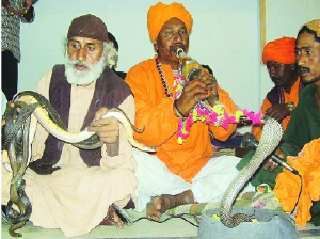
Historically, the earliest evidence of snake charming can be traced to the Egyptians. Till the early 1990s, it was quite normal to see snake charmers wandering in the streets with their colourful bulging bag hanging on their shoulder. Their serpents were in baskets or pots hanging from a bamboo pole slung over the shoulder. These charmers usually wore very colourful attire, comprising a turban and long kurta and had mostly long and curly hair. Necklaces of shells or large beads and earrings would make their personality even more mysterious. They usually attracted people's attention by playing a special flute-like instrument made from gourd, known as 'been'. Once a sizable crowd had gathered, the snake charmer would play the flute and a snake eventually emerged from the cane or straw basket. It is commonly believed that the snake actually dances to the tune of the flute but in reality, the snake can't hear anything. It actually moves with the motion of the flute that the charmer moves while playing it. Baba Kamesha, a 60-year-old snake charmer, has been in this profession for the past 20 years. It is his family profession and even the children in his family are involved in it.
Misri Jogi & Companion with Murli (Snake Charmers of Sindh)
URL: http://youtu.be/34OWd4k3Igs
Kamesha learnt all about snakes, which he calls saanpon ka ilm, from his master Log Bengali. He disclosed that a snake charmer keeps wandering — visiting villages, towns and cities and also spends years in desserts and jungles to search for serpents. Kamesha got his snake from Balochistan's desert. "An inexplicable relationship exists between a snake and its charmer, the jogi," Kamesha confesses. According to him, a snake never hurts its master; and the master, for his own part, is not scared of being bitten by the snake, even poisonous ones. And in case of a snake bite, the jogi uses traditional remedies to treat himself and keeps a white mysterious powder in his pocket which he applies instantly on the bitten area. These days, snake charming has almost vanished because no one is really interested in watching a poor man's art and his serpent's performance. REFERENCE: Feature: Fading with time By Wajiha Jawaid | InpaperMagzine March 5, 2011 http://www.dawn.com/2011/03/05/feature-fading-with-time.html
Late. Iqbal Jogi on Murli
URL:
HYDERABAD, Jan 20: Snake charmers called Jogis in Sindhi warned on Saturday that many rare species of snakes were fast becoming extinct in Sindh and demanded that the government should set up an institution to preserve and conduct research on the reptile. A group of Jogis said while addressing a press conference at the Hyderabad press club that the government should also establish an educational institution for them. Arjun, an expert on snakes, said that the snakes feed on meat, mud and milk and advised the government to set up an institution to preserve the snakes which were fast becoming extinct. He said that the snakes' venom and meat could cure many diseases such as tuberculosis and jaundice and disclosed that Jogis administered a soup prepared from snake meat to their children and believed the diet would help them tell one kind of snake from the other. He claimed that there were 900,000 snakes and 100 scorpions in the province. He said that the most famous specie of snakes were Umel Karo, Pandam, Karar and Lundi and among them Lundi was the most dangerous, which was found only in Sindh. Mohammad Urs Behrani, Syed Mureed Ali Shah and Aslam Channa also addressed the conference. Jogis had brought with them some snakes, which were put on display in glass containers. REFERENCE: HYDERABAD: Snake charmers call for research Bureau Report January 21, 2007 Sunday Muharram 01, 1428 http://archives.dawn.com/2007/01/21/local28.htm
Baloch has a rich musical culture. Music has a significant role on all occasions except ceremonies of death. Most of the Balochi Music is based on Zaheerag which is a kind of melancholic music. The instruments used are mainly a flute, locally called Nal, Tamboora and Soroz. Thanksgiving dances are made of joy at the time of positive weather changes and harvests, which are collectively performed in groups. A special religious dance is carried out by a Baloch sect known as Chogaa. Another common Baloch folk dance is known as Dochaap. In this dance men gather and dance in groups, clapping hands with the movement of foot, neck and head with rhythmical music on drums. On various occasions, women also move in a circle clapping their hands. Other dances include the Lewa, which is thought to be of Arabic origin, along with Latti and Hambo said to be of ancient Balochi origin, are also very popular.
Balochi music achieved an extraordinary development which is due in great part to a type of artist and artisan cast whose members are called Osta (master) and whose origins are unknown. The Ostas appeared among the Baloch tribes (particularly theRend), offering to put their music at the service of the tribes ancestral knowledge. Even if the Ostas occupy a modest position, they can at least boast of belonging to prestigious lineages of musicians.
Ziarekan by Sabzal Samigi
URL: http://www.youtube.com/watch?v=L8jftsL9tq4
In fact, there are reasons to think that they are the descendants of the Lulismentioned in the ancient chronicles. In these chronicles, a fifth-century Persian king asked an Indian king to send him musicians so that his subjects could listen to music while drinking their wine. Ten thousand Lulis were thus dispersed over the territory of Iran to put their talent at the service of the people.
Sabzal Samigi
URL: http://www.youtube.com/watch?v=dUS_Ip54vHs
It is impssible to verify whether these are the same tribes as those from which the present-day musicians of Balochistan are descended, which would make them descendants of the first Gypsies. In fact, there are many parallels between Balochi musicians and other groups who are also considered to comprise a part of the initial "Proto-Gipsy" nucleus, for example, certain Sindi groups and the castes of Langaw musician of Rajistan
Balochi Chaap [Folk Dance] as Mengal Perform it in Nushki
Festive Songs
Feasts on the occasion of a marriage or circumcision are important social and cultural events in which music plays a large role. Wedding songs in genres called Salonk andNazenk for the groom and bride, respectively, belong to the most purely Balochi layer of the repertory, which also includes lullabies and funerary chants.
Each stage of the feast corresponds to particular songs. Marriages provide the occasion for singing both Sawts ----popular songs on themes of love and separation, and ghazals, which typically use learned Persian poetry. Most of these traditional songs can be performed by the participants, but these days, hosts prefer to invite a variety of instrumentalists and female vocalists----all amplified----to give more cache to the event.
Even during the intimate ceremonies reserved for women, it is possible to engage a group of male musicians to animate the party. To describe all the stage of a complete wedding would take too long, but brief descriptions of a few of the central events will show how music in involved.
Laila O Laila by Late. Faiz Muhammad Baloch
Aye Naz Husn-e-Wala by Late. Faiz Muhammad Baloch
A wedding takes place several days and is announced in the street by performers playing the Sorna, a loud oboe, and Dohl, a drum. In the house of the bride (Banur) a curtain is drawn down the middle of a room, behind which the young woman remains for several days, tended to and fed by 8 or 10 women who are close to her.
Each evening the women feast, sing, and dance among themselves while playing theDohl and Kuzag, an earthen water jug. Meanwhile, the men have erected a high tent canopy (Tanbu) in the courtyard or in the street and pass the time singing and dancing under it. The first evening, the hands of the bride are decorated with henna (Enny) while the women sing songs (Nazenk) that correspond to this ceremony, as well as other songs. Another evening, they wash, make up, and apply perfume to the bride, all the while singing still other songs. The same scene takes place in the house of the groom
Masqat-e-Mairok by Late. Faiz Muhammad Baloch
Wash Gushi by Late. Faiz Muhammad Baloch
Nazenk are sung each time he is the object of a particular type of care. After several days, the groom is led to the house of the bride.
This procession provides the occasion for another musical interlude in the street with the groom. After the nuptial benediction, Nazenks are sung, and the party begins.
Kharmo Kay Bassonay by Akhtar Channal Zehri [Brahvi]
URL: http://www.youtube.com/watch?v=w7M8Q6eCU4o
Parkoi's Lado [Brahvi]
URL: http://www.youtube.com/watch?v=FQPl2SS_3zs
In present-day Baloch society, wedding songs are constantly being lost, and old musicians deplore the fact that nowadays most of the beautiful wedding song like theNazenk and Salonk have been forgotten, and people sing whatever they want at wedding ceremonies. Marriage songs are also practiced for feasts given at the time of a circumcision, and the term Salonk, which appears in most of the songs, designated both the groom and the young boy who is at the center of the festivity.
Secular Celebration and Trance Ritual
The performance of music for weddings or circumcisions can also assume the character of trance music through rhythmic acceleration and a narrowing of the melodic range. In this atmosphere, the music elicits bursts of joy and dance, bringing to mind the modes and rhythms of trance music, yet with different texts.
Conversely, certain trance melodies are very close to secular repertories, particularly lullabies and Nazenk, or are simply borrowings, superficially adapted. Music for celebration can lead to a certain excitation and in return, trance music and ritual can animate a celebration. The bride and groom are pampered like a patient undergoing spirit exorcism, and the celebration ends with a good meal. Despite these affinities, however, the two repertories are quite distinct and never mixed together in a ritual.
Trance rituals reserve a central place for music, and integrate elements of shamanism with the traditions of popular Sufism. When someone becomes ill and cannot be healed by doctors, the person is taken to a Khalife (Shaman), and melodies are played which cause the khalife to enter into trance, and manages to treats the sick person, who often himself enters into trance, and manages to appease the evil spirit.Guati-Damali music can also be simply for pleasure, between friends, and without ritual
Brahvi Chap [Folk Dance of Balochistan]
URL: http://www.youtube.com/watch?v=xsdsUw71JU8
Kand maye jani kand Balochi song by Khadim Hussain Bugti
Its melodies reflect a simple structure, but abundantly and skillfully ornamented, inspired by Sufi litanies (Zhikr) and the invocations of saints. One type of ritual reveals African stylistic influences: the spirits are of African origin, and certain of the melodies were composed by Balochi musicians of African origin.
Preferred instrument of professional Balochi musicians is the Sorud, or fiddle. It is cut from a block of wood (Parpuk, sometimes Mulberry) in a complex shape which suggests a skull and whose soundboard consists of the skin of a gazelle or goat. It is strung with four strings played with a small bow whose sound is amplified by 6 or 8 sympathetic strings. All metered vocal and instrumental performance is accompanied by a rhythmic drone on the large lute called Tamburag, which has two strings, one of which is doubled. Its playing seems simple, but it contains many rhythmic subtleties.
The Benju or Benjo is a dulcimer fitted with a keyboard. It was originally a mere musical toy, but after important improvements made by Balochi craftsmen, it has become a regular part of the Balochi instrumentalism. The Balochi Benju is an imposing instrument----three or so feet in length, with a loud and brilliant sound, and a range of more than two octaves. It can reproduce any traditional style, and these days is found in Sindhi music as well.
The Doholak is a Tambur of Indian origin made from a tree trunk and shaped like a barrel about, 2-3 feet long, the two sides are decorated with skins linked together bystrings whose length can be adjusted, permitting the player to adjust the tension REFERENCE: Maqam; Musical Magazine (Quarterly) Summer & Autumn 1999 By: Ashraf Sarbazi Pages: 126 - 129 August 14, 2009 11:16 PM EDT http://www.balochmedia.org/content-67.html A CULTURAL ANTHROPOLOGY OF BALUCHIS August 12, 2009 07:49 PM EDThttp://www.balochmedia.org/content-53.html Knowing the facts about Balochi music, instruments, styles and masters http://balochistanmusic.blogsky.com/?PostID=17
Assuming classical music has not been given its due and has been neglected in this country, then folk music doesn’t even come into the picture. Whereas classical has an elitist, almost aristocratic aura to it, folk is, to hijack populist terminology, the music of the people. Handed down from generation to generation, these ancient tunes and stories have survived the tests of time and are living reminders of our pastoral past. But as in other fields of the performing arts, sadly, the people who have kept alive the traditions of folk music are a forgotten few. Aziz Baloch is one such artist.
Balochi Folk Song by Aziz Baloch
URL: http://www.youtube.com/watch?v=4E7Jeyy5m_g
Though slowed by age and ill health, this Pride of Performance award winner still has enough in him to get even the most timid of audiences onto their feet with his stirring renditions of Balochi folk tunes, including the evergreen Laila-o-Laila, popularized by the late Faiz Mohammad Baloch. A sprightly 68 years old, the Karachi-born Baloch has an interesting, if at times sobering tale to tell.
“I was born in 1935 in Lyari’s Gul Mohammad Lane. I still live in the same house. I actually come from a family of sportsmen as both my elder brothers were footballers. But music was always prominent in our house. My maternal uncle, the late Khair Mohammad Baloch was my ustad as he taught me the basics of music. I almost became a professional footballer, but the pull of music was just too strong. So, in 1960 I quit football and started concentrating on music full time,” says Aziz Baloch about his early years.
When he decided to make a career out of music, he sought out Bilawal Belgium, one of the foremost exponents of the banjo ever to come out of Pakistan, and became his student. But to truly hone his skills, he decided he needed a strong classical base to master the subtleties of folk.
‘I used to get a nominal stipend from the government. About two-and-a-half years ago, not only I but many other senior artists stopped receiving it. I wrote to the prime minister about this. I am a heart patient and since my medicine is quite expensive, that stipend went a long way. Now, it is getting harder and harder for me to keep up with the costs’
“My target was always folk music. But to bring maturity into my music, I needed a classical base. I sought out various ustads and, as a matter of fact, I’m still learning. A person can learn at any age. To this day, If I meet someone I can learn from, I take full advantage of it.”
During the late ’60s, Baloch cut his first album, and this paved the way for his debut performance at Radio Pakistan, Quetta.
“In 1967 I performed my first radio concert at the Quetta station. This was followed by a performance on television in Karachi in ’68. I also performed Urdu ghazals from the Karachi radio station. Along with Balochi and Urdu, I have also performed in Sindhi and Seraiki. To perform on radio, one must have a complete command over diction – whatever language one chooses. People used to ask me being a Baloch, how come I was singing in Urdu. What’s the harm in that? Can’t a Baloch speak or sing in Urdu?” He says with a hearty chuckle. With the exception of Peshawar TV station, Baloch has performed in nearly all of the nation’s major cities, though he has visited Peshawar – albeit only for a football match during his youth!
Aziz Baloch has also travelled quite a bit with government sponsored cultural troupes, having visited the United States, the UK, Belgium, Russia – during its heyday and after the fall of the Soviet Union —, Iraq, Malaysia and the Philippines among others. The Gulf states, particularly the UAE, Bahrain and Oman, are like travelling within Pakistan because of the considerable Baloch population these nations host. Though the senior artist is grateful for all that he has, he does make it a point to express his displeasure with the timing of the Pride of Performance award he recently received.
Shap Darain Diwan by Aziz Baloch
URL: http://www.youtube.com/watch?v=_CvmfFaoUjY
“I should have gotten that award ten years ago. When they contacted me to tell me that I had been selected, I made my feelings very clear to them. I have been serving the country through my art for the past 40 years. I have served as an ambassador of this country’s culture abroad. Still, I suppose it is better late than never.”
Though he is a keen performer, Aziz Baloch has never really been a prolific maker of albums. To date, he only has eight records to his credit. Talking about his art, Baloch reveals that in Balochi music, the equivalent of a raga is known as zaheerok.
“Zaheer means to remember in Balochi. Just as there are various ragas in classical music, there are various zaheeroks in Balochi folk music. For instance, there is the Kurdi zaheerok. The Kurds and the Baloch are basically one race if you examine our history. Then there is a zaheerok called Ashraf-Durra, based on the story of two brothers. It really is a very deep discipline with an ancient history.”
To bring folk to a wider audience, would Baloch consider collaborating with a rock or pop artist if a fusion number became the demand of the day?
“Why not? By the grace of Allah, I consider myself a very versatile singer. As I’ve studied music, that’s no big deal. I’ve even recorded jingles about glucose and all sorts of other stuff! I did a project with Tajdar Adil not too long ago in which I sang with only the accompaniment of a keyboard and banjo. The genres might change, but the song remains the same, the sur doesn’t change,” comes the reply.
VSH E Sohb (VSH NEWS ) Aziz Baloch 01
URL: http://www.youtube.com/watch?v=kEpo222domY&feature=related VSH E Sohb (VSH NEWS ) Aziz Baloch 02
Along with singing, the dexterous Baloch also plays the tamburo, harmonium, tabla and dholak. Though he has had a long and illustrious career, what does he foresee for the future of Balochi folk music? Will the torch pass on to a new generation of Baloch artists, or will the traditions fade away into history?
“There are a few young artists that are showing a lot of promise. There are not too many in Karachi, but if you go to Balochistan, particularly Makran, there are a few artists who are trying really hard. For Balochi music to prosper and grow, Balochi poets are essential. Nowadays there is also a rise in the number of young poets. When I was starting out as an artist, there was a clear dearth of Balochi poets. On the surface, the developments are positive but I have something to say to these young artists. I think that they are abandoning the very essence of our culture. The new tunes do not reflect Baloch culture at all. Some sound like qawwali while others are inspired by filmi music. Incorporating new instruments into the creative process is fine, as is adding variety to your compositions, but these youngsters should not forget the spirit of Baloch culture,” says Aziz Baloch in a serious tone.
VSH E Sohb (VSH NEWS ) Aziz Baloch 03
URL: http://www.youtube.com/watch?v=u_25niQa6E0&feature=related VSH E Sohb (VSH NEWS ) Aziz Baloch 04
When folk and pop are both placed in the balance and weighed, the former comes out as heartfelt and genuine, while most of the time the latter appears shallow and trite. For this the singer has a ready answer.
“The reason folk music sounds genuine is that it belongs to us. Can you say the same thing about pop? Pop is not ours. Folk, whatever language it is sung in, belongs to us, thus that is why it goes straight to the heart,” replies Baloch.
VSH E Sohb (VSH NEWS ) Aziz Baloch 05
URL:
What is the subject matter most often addressed by Balochi folk tunes?
“The poetry is mostly in praise of one’s homeland. There are also songs that sing the praises of the bravery of Baloch people. Epics, especially dedicated to Mir Chakar Khan Rind who went to the aid of Mughal emperor Humayun with 40,000 Baloch soldiers, are very popular. But that tends to stray into the territory of Balochi classical music. These are known as dastaans. These marathon tunes are sometimes based on 500 to 600 line poems, the rendition of a single song sometimes stretching to over three hours! As you can imagine, that’s heavy-duty work. Folk singers tend to stick to lighter themes but still, the influence of classical singing and dastaans permeates,” explains Baloch.
Aziz Baloch concludes the interview with an earnest appeal.
“I used to get a nominal stipend from the government. About two-and-a-half years ago, not only I but many other senior artists stopped receiving it. I wrote to the prime minister about this. I am a heart patient and since my medicine is quite expensive, that stipend went a long way. Now, it is getting harder and harder for me to keep up with the costs of my medication. I would be highly obliged if the people concerned in the government could revive this stipend for us aging artists.” REFERENCE: ‘I should have gotten the Pride of Performance 10 years ago’ By Qasim Abdallah Moini September 28, 2003 http://www.dawn.com/weekly/images/archive/030928/images8.htm
Late. Faiz Muhammad Baloch [1900-1980] He Received the pride of Performance from the Govt. of Pakistan. He visited China, Russia, USA, Canada, Afghanistan, Germany, France, South Korea,Lebanon, Spain, Aljazire, and UK. Faiz Muhammad joined Radio Pakistan in 1948 regularly. He taught by Ustad Noori and Ustad Kher Muhammad(Mama Khero) He also got education of Classical Music by Ustad Ramzan. He got his first marriage in Makran, from his first wife he had Shafi Muhammad.His son lived in Lyari (Dariyabad) Karachi. He Worked in Kemari (Karachi) as Labour. From his second marriage in Karachi he had, Mah Bano, Kher Jan Faiz, Taj Muhammad, Tajul Kazbano, Sher Mohammad, Zarr Bano, Noor Muhammad, Bilquess. Courtesy: http://baask.com/diwwan/index.php?topic=3514.0
Allan Fakir, A singer in the traditional mannerism of Sindh, Allan’s early career was spent singing in villages and marriage ceremonies. His voice had a high range of vocal expressions. Allan Fakir particularly known for his ecstatic style of performance marked with extreme devotional rhetoric and sufi dance singing. His peculiarly funny body language and distinctively pleasing facial expressions marked with a broad smile, were always amusing for his audience at live performances.
Alaf Allah, Meem Muhammad Aen Ali
URL: http://www.youtube.com/watch?v=eln_c8XoeXk
Allan Fakir was born in 1932 in the ancient village of Aamari in Jamshoro District, taluka Manjhand, Sindh. His mother died soon after his birth. He spent his childhood in Manjhand, a town between Sehwan and Hyderabad. He belongs to the Mangrasi tribe the Mangarhars are believed to bring happiness and welcomed on festive occasions for their gift of melody. According to the traditions of this caste, Allan Fakir's father used to beat the drum and sing traditional songs at weddings and Faqir's brothers still do the same job.
Allan Faqir, Live stage perfomance, HO Allah ho allah
Fakir is an Arabic word, and implies a Sufi or a mystic. Thus in the real sense of the word, a Fakir is a person, who leads an independent life marked by piety, abstinence from material needs, and contentment in the available resources. It must not be confused with the rather loose usage of the same word implying a begger, in the local languages Urdu, and Sindhi.
Alfee Ishq'a Ji Allan Faqir
URL: http://www.youtube.com/watch?v=86XpcoocLwA
When he was only a teenager, Allan Fakir developed a habit of singing melancholy songs which his father did not like. Deprived of a mother's love, he went off in search of someone who could replace that love. He arrived at the tomb of Shah Abdul Latif Bhitai in Bhit Shah and started living there.Faqir's memory was sharp even though he could not read and write. Hearing the traditional Latifi Raag sung every night touched his heart. Encouraged by Faqir Zawar Qurban Ali Lanjwani and Moolchand Maharaj, he began singing Bhitai's poetry at the shrine and ultimately spent twenty years there until meeting Mumtaz Mirza, who introduced him to Radio Pakistan and ptv in Hyderabad and helped him to learn the correct pronunciation of Bhitai's poetry. Eventually, he became a performing legend. In appreciation of his services to folk culture, he was given a job and a small house at the Institute of Sindhology. He was originally appointed as an officer to help promote Sindhi culture, but due to his illiteracy, he was eventually demoted to the post of peon. Allan Fakir received the President's Pride of Performance award in 1980, the Shahbaz Award in 1987, the Shah Latif Award in 1992 and Kandhkot Award in 1993. Allan Fakir died on 4 July 2000. [References: OPF Almanac/Wikipedia ممتاز علي وگهيو http://www.sindhsalamat.com/showthread.php?p=23068]
Allan Faquir - soye kam kareinde
URL: http://www.youtube.com/watch?v=qUtrG_kqwQU
KARACHI: Sindh's most charismatic son Allan Faqir, who popularised the music of Sindh without letting it lose out on its inherent folk or its intrinsic mystical elements, died in Karachi on Tuesday. He was 64. One of the most celebrated Sindhi folk artist, Allan leaves behind a wife Badan Bibi and five children -- Feroz, Faheem and Waseem and two daughters Farzan and Suhana. His earthly remains were taken to Hyderabad in the evening and then to Bhitshah for burial.
He lay at the Liaquat National Hospital, very frail, a slight reed of a man and at 64 had few physical reserves left to fight the onslaught of the multiple complications. Last week, Allan Faqir was brought to Karachi from Jamshoro after he suffered a stroke, which was progressive. The blood flow to his brain was insufficient, said the hospital doctors. Allan had a medical history. He underwent a by-pass surgery in 1985. He was a diabetic patient. He suffered from hypertension in addition to his liver condition.
Allan Faquir - BANDA SOI KUM KARAINDAY
URL: http://www.youtube.com/watch?v=0cx4-hHfONE
The recipient of the Pride of Performance 1987, Life Long Achievement Award 1999, the Bhitai Award in 1991, Allan Faqir had toured China, former USSR, the United States, the United Kingdom, France, Germany, Brussels, Belgium, South Korea, Japan, Turkey and Italy. He grew to be a rage. When touring the USA in the 70s, it was announced via radio that when Alan sang "Rim Jhim Barsay Badal Aaya" it would rain. The meteorological department did not forecast rain, but after Alan sang his piece, it did rain that day. He walked down the Manhattan in New York dressed in his regalia and people thronged the streets behind him awestruck.
Allan Faquir - Echoes Of Sufi Chants
URL: http://www.youtube.com/watch?v=axf5Fk_TpUE
Courtesy: Mr. Saqib Tahir
Probably the most celebrated Sindhi folk artist, Allan lay critically ill and totally neglected by the government, according to his admirers. The "Vai" wizard who spun his magic within the country and outside it had been ignored by them, one grief-struck admirer said. No medical facilities were provided to him as a matter of policy, he added. The government has not immediately clarified his admirers' accusation. To his lot fall visitations from eminent people, careful to have their pictures taken but unwilling to make provisions for artistes of his calibre to be looked after when so gravely ill.
The Federal Health Minister and the Sindh Law Minister Shahida Jameel visited him in the hospital but took no initiative to make provisions for the financial care of this great artist and neither was the provincial government forthcoming with any monetary assistance. The Secretary of the Department of Culture Hamid Akhund was his only benefactor - but that was on a personal level.
The music wizard with his black flowing hair and beard, flashing eyes, comic gestures and delightful dances lies still. Allan, who mesmerised thousands with his antics, was a mere wisp of a man in a hospital bed. Painter-writer Zafar Kazmi who shares a birthday with this singer of the Bhitai raag has mentioned time and again that he too was nursed by Allan's mother along with Allan when both were babies, and those children nourished by her showed remarkable health and resilience.
Born in the little village of Amri near Khairpur [Correction: ancient village of Aamari in Jamshoro District, taluka Manjhand, Sindh], Allan put the hamlet on the map since he began singing on the Bhitshah stage in 1967 clad in his blue ajrak, a black "lathi" with bells jangling at one end in his ring embellished hand, and his Faqir's trademark the "kashkol" around his neck. He was the son of Dayam Ali, a famous "dhol" player.
The playful Allan was what is called a chakar or a comedian in the early part of his career and his mischievous smile and mannerisms reflected this even as he soared to success singing the Shah's Vai. He sang folk songs at weddings and enacted the various ceremonies that are customary at such functions and gained much popularity and love but it was his renditions of the 'Vai', a lyrical poem, accompanied by the "dhamboor" that gained him appreciation and recognition here and internationally.
It was Allan's irresistible renditions of the Shahjo raag in his unique style that caught the attention and the imagination. His song "Huma Huma" with Mohammad Ali Sheiki became one of the most popular numbers ever as did his "Rim Jhim Barsa Badal Aaya" penned by Zafar Kazmi and sung with much love. His "sur Sumundi" is incomparable. Allan Faqir's most remarkable contribution is his inimitable way of rendering Bhitai's "Vai" making it easier to understand than that which is sung at the Mazar. REFERENCE: Allan Faqir passes away DAWN/The News International, KARACHI 5 July 2000, Wednesday, 2 Rabi-us-Saani 1421 http://www.karachipage.com/news/Jul_00/070500.html
Extremely Thankful to Saaeen Xafar Sindhi for his guidance
علڻ فقير سنڌ جي اداس روح جو راڳي
الهه بخش راٺوڙ
ڀٽ ڌڻي جو هي فقير پي ٽي وي جي ڪنهن موسيقي جي پروگرام ۾ جنهن جي ميزبان مهتاب چنا هئي، ان ۾ امر گيت ”اتني بڙي جيون ساگر ۾“ ڳائي رهيو هو، هن اڃا پنهنجو گيت ڳائي بس ئي ڪيو ته کيس ”االله الله ڪر ڀيا“ جي فرمائس ٿي ۽ هو محمد علي شهڪي سان گڏ اهو گيت ڳائي رهيو هو، علڻ فقير ڏانهن مهتاب چنا پنهنجو هٿ وڌايو ۽ چيو فقير منهنجي قسمت جي باري ۾ ڪجهه ٻڌائي سگهين ٿو؟ فقير مسڪرائيندي سندس هٿ ڏسڻ لڳو ۽ پوءِ وري هو ٻيو ڪلام ڳائڻ لڳو، هي ساڳيو علڻ فقير هو جنهن جو سنڌ جي ديسي سرن سان عشق هو، هو ڳائيندو هو ته سندس دلين جي سڀئي راز ان جي مک ۽ نرڙ تي اچي ويندا هئا. ان جي من ۾ جيڪي اداسي، محبت ۽ پيار هوندو هو اهو ڄڻ گيت جي صورت ۾ اوتجي ٻاهر اچي ويندو هو.
علڻ فقير جنهن جو آمري جي ميراثي خاندان سان واسطو هو ان جا وڏڙا شادين مرادين ۾ ڳائي وڄائي پيٽ گذر ڪندا هئا. پر هي فقير ننڍي هوندي کان ئي بي چين ۽ اداس هو. هو اداسي ڀريا گيت ڳائيندو هو، جيڪا هن جي والد کي نه ڀائجندي هئي ۽ کيس تڪليف ٿيندي هئي ته سندس پٽ ايترو ويڳاڻو ڇو آهي ۽ پوءِ علڻ فقير پنهنجي ان اداسي جو علاج ڀٽ ڌڻي جي مزار تي ڳولي لڌو. هو سڄي سڄي رات ڀٽائي جي پڌر تي ويٺي لطيفي راڳ ٻڌندو هو ۽ جڏهن ٽيڙو غائب ٿي ويندو هو ۽ ڪَتي نڪري نروار ٿيندي هئي ته هن جي مک تي هلڪي ٿڪاوٽ ٿيندي هئي ۽ اتي ئي سمهي پوندو هو. هن فقير اهو چلو ڪيترن ئي سالن تائين پچايو ۽ ڀٽائي جي راڳ کي پنهنجي من ۾ سمائيندو رهيو ۽ پوءِ هڪڙو اهڙو ڏينهن آيو جو هن جي نينهن اڇل کاڌي ۽ ڀٽائي جون وايون ڳائڻ شروع ڪيائين. ڄڻ ڀٽائي جا سمورا سر هن جي اندر ۾ پيهي ويا هئا. هن جي موسيقي سان محبت ۽ تڙپ کي ڏسي ڀٽائي جي فقيرن، فقير زوار قربان علي لنجواڻي ۽ مولچند مهاراج هن کي لطيفي رستو ڏيکاريو ۽ هي فقير رواني سان ڳائيندو رهيو. ڪيترن ئي ڏهاڪن تائين هو ڀٽائي جو مهمان بڻجي راڳ جي سيوا ڪندو رهيو ۽ آخرڪار هو ڪنهن جواهري جي ور چڙهيو ۽ کيس پهريان ريڊيو پاڪستان ۽ پوءِ پي ٽي وي تي آندو ويو، هن سنڌي ۽ اردو ۾ گيت ڳايا جيڪي گهڻو ڪري مقبول ٿيا، شيخ اياز جو مشهور گيت ”عشق اسان وٽ آرائين جيان آيو جهول ڀري، آيو جهول ڀري ڪوئي ڪيئن ڪري“ ڳاتو ته ڄڻ سڀني جي من کي آواز ملي ويو.
اداس دل رکندڙ هي فقير دنيا جي ڪنڊ ڪڙڇ تائين وڃي پهتو، هن جي راڳ ٻڌندڙن جو هڪ خاص حلقو پيدا ٿيو، اهي جيڪي ڀٽائي شناسي جا پارکو هئا انهن ته علڻ فقير کي پنهنجي من ۾ ويهاري ڇڏيو، هو جڏهن ”سچل جي وائي تن ۾ الله او من ۾ ا لله “ ڳائيندو هو ته سندس مک جا سمورا ايڪپريشنس ڏسڻ وٽان هوندا هئا، هو پنهنجي سموري جسماني، روحاني ۽ دماغ جي سگهه سان ڳائيندو هو، ائين لڳندو هو ته ڄڻ هو راڳ جي تپسيا ڪري ٿو. راڳ ڄڻ هن جي عبادت بڻجي وئي هئي ۽ ان ۾ ئي هن هر شئي کي ڳولي لڌو هو، هن جي دل کي تڏهن ئي سڪون مليو ٿي، جڏهن هن صوفي شاعرن جي ڪا وائي يا ڪو ڪلام ڳاتو ٿي، هي فقير جنهن سنڌ ۽ هند کان سواءِ ڏيهه ۽ پرڏيهه جي خاڪ ڇاڻي ان کي ايتري ته محبت ۽ پنهنجائپ ملي جو هن جو راڳ سان پيار وڌي ويو، هو سنڌي راڳڻين کي ڳائيندو رهيو ته جيئن دنيا وارن کي اها سڌ پئجي سگهي ته سنڌ موسيقي جي معاملي ۾ ڪيتري نه شاهوڪار ۽ پاڻڀري آهي. پر ان کي سر جي ضرورت هئي جيڪو علڻ فقير جي صورت ۾ ملي ويو.
اڄ جڏهن علڻ فقير جي يارهين ورسي ملهائي پئي وڃي ته ان موقعي تي کيس ڀيٽا ڏيڻ لاءِ شايد اهڙا لفظ نه هجن جيڪي ارپي سگهجن. هن جو ڀٽائي، سچل ۽ ٻين صوفي فقيرن سان محبت جو تسلسل سندس پٽ جي صورت ۾ موجود آهي. علڻ فقير جي پٽ کي وري به شابس هجي جو هو ساڳي خاص ڪاسٽيوم ۽ انداز سان پنهنجي والد جي راڳ کي جاري رکي رهيو آهي پر ماسٽر چندر جهڙو وچولي پرڳڻي جو مها راڳي جڏهن ڀارت هجرت ڪري ويو ۽ هن کي پنهنجي ڌرتي ماتا سنڌ ڇڏڻي پئي ته ان دوران هن پنهنجي پٽ گوپي چندر کي راڳ جي تربيت ته ڏني پر هن کي مايا ايترو ته موهيو جو ڀارت ڇڏي آمريڪا هليو ويو ۽ واپس ورڻ جو نالو به نه ورتائين. پر گهٽ ۾ گهٽ علڻ فقير جي پٽ پنهنجي پيءَ جي لڄ رکي ۽ پنهنجي ان ورثي کي اڳتي وٺي وڃي رهيو آهي. علڻ فقير جنهن کي ڪيترائي ايوارڊ مليا هن کي صدارتي ايوارڊ، پرائيڊ آف پرفارمنس، شهباز ايوارڊ، شاهه لطيف ايوارڊ ۽ ٻيا ڪيترائي ايوارڊ ڏنا ويا، هو هينئر انهن ايوارڊن جي ڪري زنده ناهي پر اها سندس موسيقي سان محبت ئي هئي جنهن کيس هينئر تائين عوام ۾ جيئرو رکيو آهي، هينئر به جيڪڏهن ڪو علڻ فقير جو ڪلام جهونگاريندو آهي ته ٻڌندڙن کان دانهن نڪري ويندي آهي ۽ چوندا آهن ته اڙي هي ته علڻ فقير جو ڪلام آهي. هنن کان ته شاعر ئي وسري ويا آهن ۽ صرف راڳي ياد رهجي ويا آهن. علڻ فقير هينئر به لکين دلين تي پنهنجي سر ذريعي راڄ ڪري ٿو ۽ هن جو ديسي رقص ماڻهن جي اکين اڳيان ڦري رهيو آهي.
A music concert is on, continuing till the wee hours of the morning. Many vocalists and instrumentalists are showing their skills. Every performer thinks that his was the best performance on the stage. One girl in the audience is overwhelmed by the performance of an instrumentalist and becomes such an admirer that she falls in love with him. Cupid’s arrow has done it’s work and one fine day they tie the nuptial knot.Incidentally, this happened in Delhi, a little before Independence. The artist was Munir Sarhadi, the sarinda virtuoso who won laurels in the country and abroad, and the girl was Banu Begum, who attended a concert in Delhi, filled with a galaxy of vocalists and instrumentalists from all over the subcontinent. A young Munir had gone there with his illustrious father, Ustad Pazeer Khan, who was employed by the All India Radio at that time.
Muneer Sarhadi - Pa Sarinda Naghma
URL: http://www.youtube.com/watch?v=wP38VVT29rU Courtesy: DaPashtoSazAwaz | April 24, 2010 Sarinda Player - Muneer Sarhadi
Sarinda, folk fiddle of Afghanistan, Pakistan, and northern India. The deep wood shell has a skin belly up to its narrow waist but is open thereafter on both sides of the fretless fingerboard; the body is commonly shaped like a pouch or bag. The three melodic strings are gut or horsehair. Some versions have sympathetic strings like those of the sarangi. Courtesy: Encyclopaedia Britannica http://www.britannica.com/EBchecked/topic/524344/sarinda
As usual our bureaucratic clique, societies and the so-called organizations meant for the promotion of art, remained unmoved while the maestro was on his deathbed. His only source of living, the radio salary was not enough to provide him the medicines. On May 23, 1980 he died in abject poverty
Muneer Sarhadi - Pa Sarinda Naghma
URL: http://www.youtube.com/watch?v=gu8fbLFvk1w
Munir Sarhadi, the Peshawar-born musician, later rose to fame not only in Pakistan but also won laurels abroad. A winner of the Pride of Performance, the legendary instrumentalist was perhaps the only artist after his father who achieved that recognition in playing the traditional instrument. Paradoxically, his death in 1980, was marked by utter poverty and neglect — an end most of our artists often meet.
Muneer Sarhadi - Pa Sarinda Naghma [Janan me Talay Dey, Ma Rabalalay Dey]
URL: http://www.youtube.com/watch?v=a0bojLHO5zg
Munir was born in 1922. His father was the great scion of sarinda players of Pushto music. In his childhood he showed no interest in learning the instrument which was not liked by some of his family elders. His father left for Delhi where he had gotten a job at the All India Radio. His uncle and custodian, Khushmir Khan tried to persuade him to learn the music but all in vain. One day, a dejected Munir left Peshawar and travelled to his father’s city. His father did not want to teach him and took him to Ustad Afzal Hussain, one of his colleagues at the radio. There Munir began learning vocal music.
Muneer Sarhadi - Pa Sarinda Naghma [Halak naray Chinar dey, Jenai Da gulo wana]
URL: http://www.youtube.com/watch?v=Co3s73xBDj0
It is then that the young boy developed interest in sarinda. When his father left for work everyday, he would pick up the sarinda and start practising it. This continued for quite some time. One day his father came a bit earlier than his scheduled time and was stunned to see that Munir was playing the instrument with great skill. Ustad Pazeer Khan was so overjoyed that he gave his own sarinda to Munir and then began teaching him the intricacies of music and sarinda playing. With the skill he saw in his son, Ustad Pazeer Khan knew what lay ahead for Munir.
Soon after, the father and son decided to visit Peshawar for a vacation. It was also a family reunion and obviously in a family of musicians there had to be music. Munir’s family was astonished to see him pick up the sarinda and play it. The masterly handling of the bow and strings produced such scintillating compositions that everybody was enthralled. To see the young lad, who was not interested in music, playing like a wizard, was no less than a miracle.
Muneer Sarhadi - Pa Sarinda Naghma
URL: http://www.youtube.com/watch?v=MNR8MRjJb1M
After a short stay at Peshawar, both the father and son went back to Delhi where they played the instruments and also sang thumries and ghazals at various concerts, to supplement the earning. At one concert when Munir began playing the sarinda everybody in the audience was taken over by its magic. One veiled girl was simply mesmerised. She began attending every concert of Munir and ultimately both tied the knot.
Muneer Sarhadi - Pa Sarinda Naghma [Tappay]
URL: http://www.youtube.com/watch?v=jvvUhNKkUaI
When Independence took place Delhi became a hotbed of violence, and with the help of a friend in the army the family managed to reach Pakistan safely and decided to settle in Lahore. Finding no place at Radio Pakistan, Lahore and roaming jobless for quite some time, they finally moved to Peshawar in very poor conditions.
Muneer Sarhadi - Pa Sarinda Naghma [Da Sta Pa Stargo Kay ba Su Patay shi]
URL: http://www.youtube.com/watch?v=IdggCJfkyxk
Here the father and son were able to get jobs in Radio Pakistan. In 1949 Ustad Pazeer Khan died of respiratory disorder and it was now Munir Sarhadi who had to advance the tradition of sarinda playing. Munir, through his strenuous riyaz and able guidance of the father, had become a master of sarinda and was in great demand all over Pakistan. He attended almost all the concerts and music festivals that used to be held at various centres. The PIA Academy, which was established to promote art and culture of the country, took him to various parts of the world including China as member of the troupe where his performance was highly applauded.
Muneer Sarhai - Pa sarinda naghma
URL: http://www.youtube.com/user/DaPashtoSazAwaz
Munir Sarhadi’s technique was very imaginative. He played every raga and folk composition with masterly ease. Sarinda, the fretless stringed instrument, is comparatively a difficult instrument in the string family as it has little space between the bridge and knobs, and requires extra ability to produce the three octaves. Munir, through his extra effort, easily acquired this skill and played classical taans to folk lehra as an accomplished performer. He had the ability to sing, play and also compose music. He was so engrossed in the music and sarinda that he hardly passed a day without playing it after he decided to learn it and make it a living. While his father excelled in folk tunes and classical music, Munir created a fusion of the two. This is evident from the films Dara-i-Khyber, Baghi and some other films of which he composed the music. He blended classical music with some variations from Pushto music and vice versa. For his services towards the promotion of music, he was awarded the Pride of Performance.
Muneer Sarhadi - Pa Sarinda Naghma
URL: http://www.youtube.com/watch?v=-wV3SGqbEeE Muneer Sarhai - Pa sarinda naghma
URL: http://www.youtube.com/watch?v=4Q0RmBmIXnk
Personally he was a simple, hard working and dedicated person. He had no greed for money and worldly comforts. Throughout his life his main concern was music. He longed for the company of the learned. Perhaps this was the reason that in the last days of his life he lived a miserable life. As usual, our bureaucratic clique, societies and the so-called organizations meant for the promotion of art remained unmoved, while the maestro was on his deathbed. His only source of living, the radio salary was not enough to provide him the medicines and on May 23, 1980 he died in abject poverty, yet with honour and dignity, leaving behind an invaluable contribution towards music. After his death only one of his sons, Aijaz Sarhadi has kept up the family tradition of sarinda playing and is known well in the Pakistani music world. REFERENCE: SPOT LIGHT: Munir Sarhadi — the sarinda virtuoso By Shaikh Aziz January 20, 2002 http://www.dawn.com/weekly/images/archive/020120/images8.htm
North Indian Classical Music Archive http://sarangi.info/sarangi/sarhadi/


 Suchu is a widely travelled artiste. He had performed in the UK, France, Germany, Belgium, Italy, Spain, Greece, Norway, Denmark, Russia, Thailand, Philippine, Syria, Iraq, Jordan, Libya, Abu Dubai and Dubai. “Wherever I go, my pride on being a Pakistani goes with me,” he says. While abroad, he says he considers himself a cultural ambassador of Pakistan. “People ask me questions about my country, province, art, language and culture. “I tell them that Pakistan is quite rich in art and music. Suroz is a part of our heritage since time immemorial and I explain to them how this instrument is carved out of wood of the Parpuk tree that grows wild in Balochistan. They take a lot of interest and sometimes ask me to sell it to them,” he laughs. He expresses generous gratitude to all who encouraged him, specially the music production team of PTV and Radio Pakistan, Quetta. “They promoted me and my art. Without their patronage it would have been difficult. Had there been more like them, it would have been good for folk music,” he says. “I intend to set up an institute where I will teach talented youth how to play the Suroz. I want this tradition to continue and this art to live longer. It can be promoted through apprenticeship programmes under Lok Virsa or the arts councils network, provided they engage veteran musicians to pass this art on to the next generation,” says Suchu Khan. REFERENCE: Truly enchanted By Babar Baloch November 20, 2005 http://archives.dawn.com/weekly/images/archive/051120/images6.htm